Photo to Handmade Chenille-Stem Figure
Transform a reference photo into a hand-bent chenille-stem figure, then photograph it alone on a table in a vertical 3:4 frame.
Example outputs
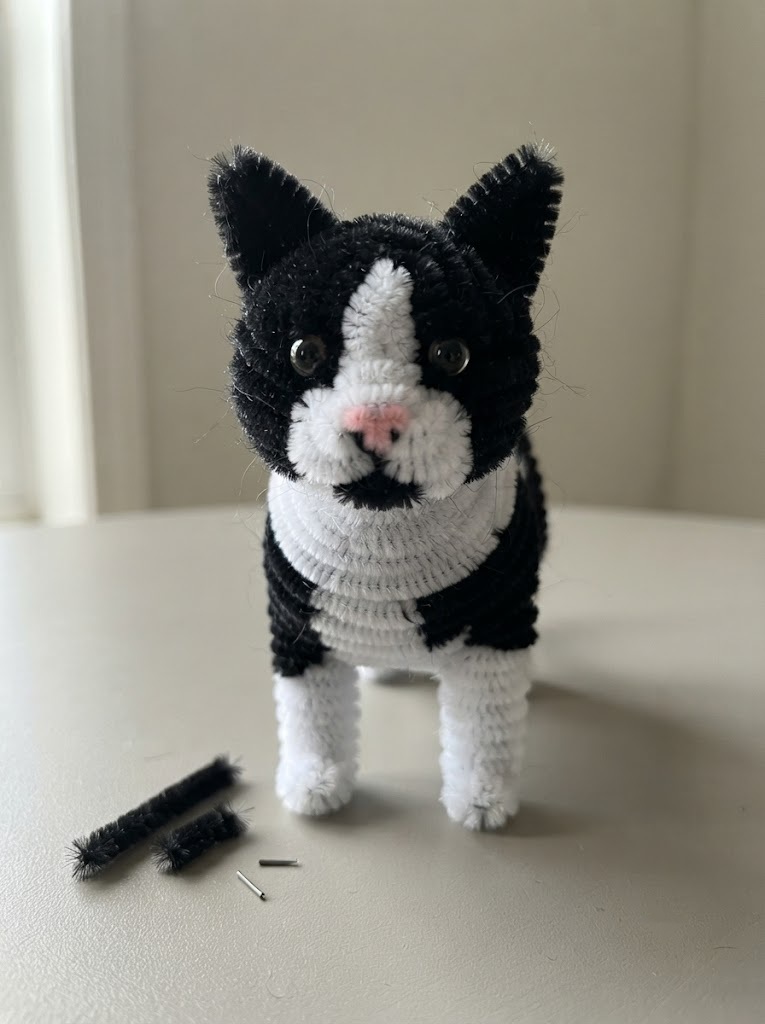
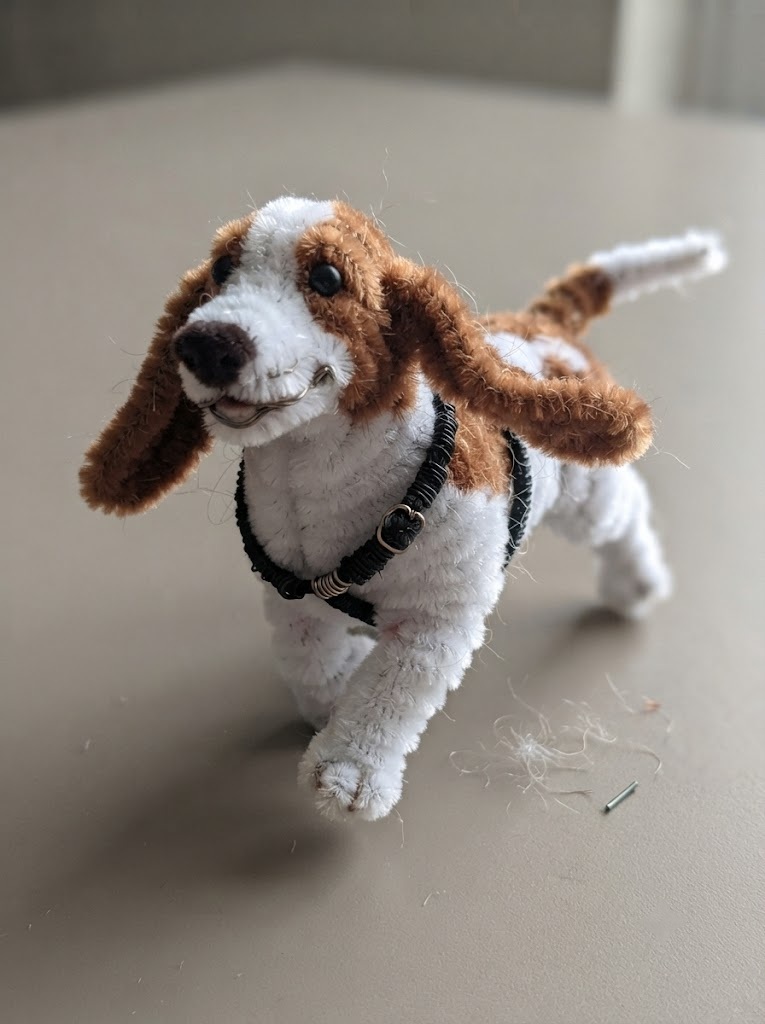
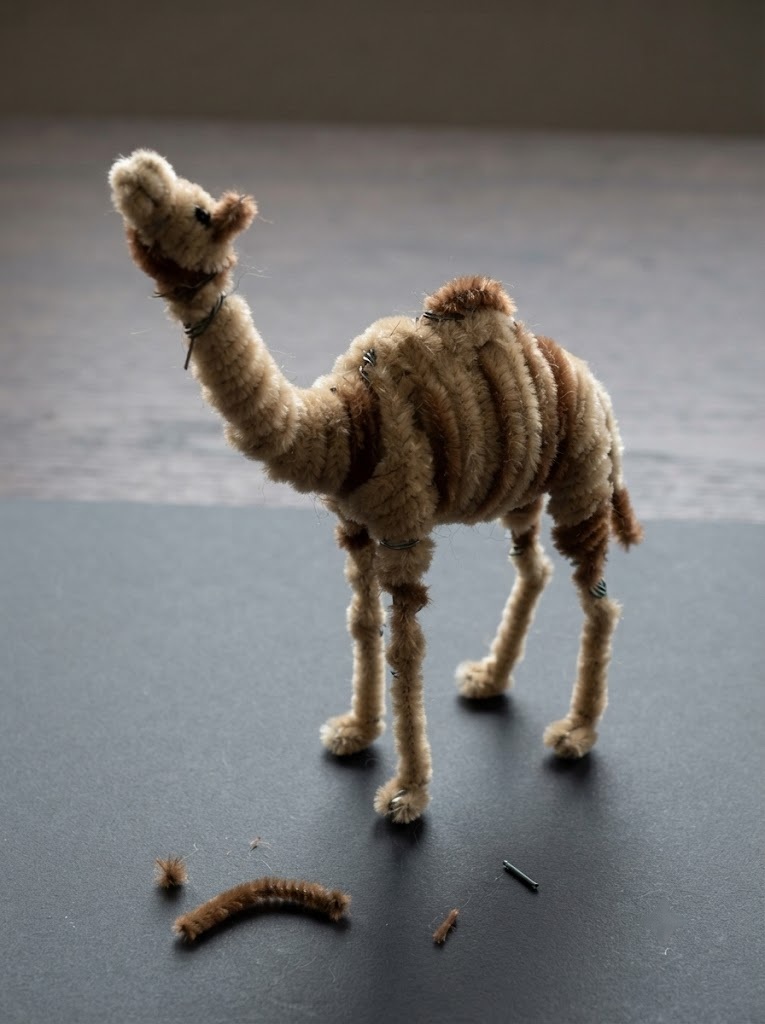
Prompt template
- Format
- Text
- Inputs
- Reference_photo (image) · Required
- Outputs
- Finished_figure_photo (image)
Turn the attached photo into one figure bent by hand from pipe cleaners (chenille stems), and photograph the finished figure standing on a table. Output one single vertical image in a 3:4 frame, with no grid and no before-and-after pair.

Preserve the photo's subjects, their number, their pose, and the direction they face. Add nothing and remove nothing. The camel has only one dark dot on its face. The dog's harness has a metal ring and a coil of bare wire. A few stray hairs by the cheek can pass for whiskers.

THE FIGURE ON THE TABLE
The finished figure stands on a plain matte surface in soft window light from one side, with a short contact shadow beneath it. It is about the size of a hand. Two or three loose fibres and one snipped wire end lie on the table nearby, left over from making the figure. Nothing else is in the frame.

HOW THE FIGURE IS MADE
Every part is a chenille stem: a thin wire core with short fibres twisted all the way along it. Each stem has real thickness, about a pencil lead plus its fuzz, so no part of the figure can be finer than a stem. Leave out details thinner than one stem rather than drawing them.

Make long, thin parts—such as a leg, tail, ear, or handlebar—from single stems bent to shape. Build thick parts by winding one stem tightly around itself or around a core, with the rows of the coil side by side and each row visible as its own ridge.

Where two stems meet, twist one around the other two or three turns and leave the twist visible. Tuck the ends back into the body; in one or two places, let a cut wire tip show through the fuzz.

Keep the fuzz matte. Individual fibres should stick out along every shape's edge and break its outline, so no line in the picture is clean. Light crossing the pile should create a soft halo instead of a bright point. Colours should look lighter where fibres catch the light and deeper between the rows.

The wire inside lets the figure hold a pose without being exact. Let one side sag a little, a bent leg differ slightly in angle from the other, and the whole figure lean a few degrees.

Use flat craft-pack colours taken from the photo and rounded to the nearest stem colour the maker had in the drawer. Markings from the photo must carry over as separate colours of stem worked into the winding, never as paint—for example, a white chest, a dark patch over one eye, or a stripe along a flank.

If a person is in the photo, preserve their hair length, stance, and clothing colours. Do not draw faces. Make an eye from a tiny, tight coil of dark stem or one small dark bead, and nothing more. Make anything a subject is holding, wearing, or standing on from stems as well, and keep it in its original place.

Do not rebuild the photo's background. The figure stands alone on the table.

FAILURE CONDITIONS
- No letters, numbers, signatures, logos, stamps, or watermarks anywhere in the frame.
- At least three places must show countable rows of a coiled stem. Without these, the figure reads as moulded felt, and it is not felt.
- No outline on the figure may be clean and unbroken by stray fibres.
- No hard, mirror-like highlights on the chenille; fuzz does not have such highlights.
- Use no more than six colour families of stem.
- No part of the figure may float or lack a visible twist joining it to the rest.
- The number of people, animals, or vehicles must match the photo.
- Do not give faces drawn or printed features, eyebrows, or a painted mouth. A small glossy bead for an eye is acceptable.
- The frame may contain only the figure, the loose fibres, and the surface it stands on. No hands, tools, pliers, or second figure.
- The frame must be vertical, not horizontal or square.

IF YOU CANNOT DO ALL OF IT
Prioritize visible coil rows and a fuzzy, broken outline. If the photo's pose is difficult to hold with wire, let the figure stand a little straighter rather than inventing a stand or base.

Output one single vertical image.
What you'll create
A hand-sized pipe-cleaner figure preserves the reference subjects and pose with visible coil rows and fuzzy broken edges. Soft side-window light and a short contact shadow reveal the bent wire and fibers.
Frequently asked questions
Can a support base be invented?
No; the source prefers a slightly straighter pose rather than adding a stand.
Comments
Tried this prompt? Share what you made, compare results, or ask a question