Denim Street-Fashion Editorial Portrait
Create a polished Japanese/Korean-inspired studio fashion editorial using separate references for the outfit and the model’s identity.
Example outputs
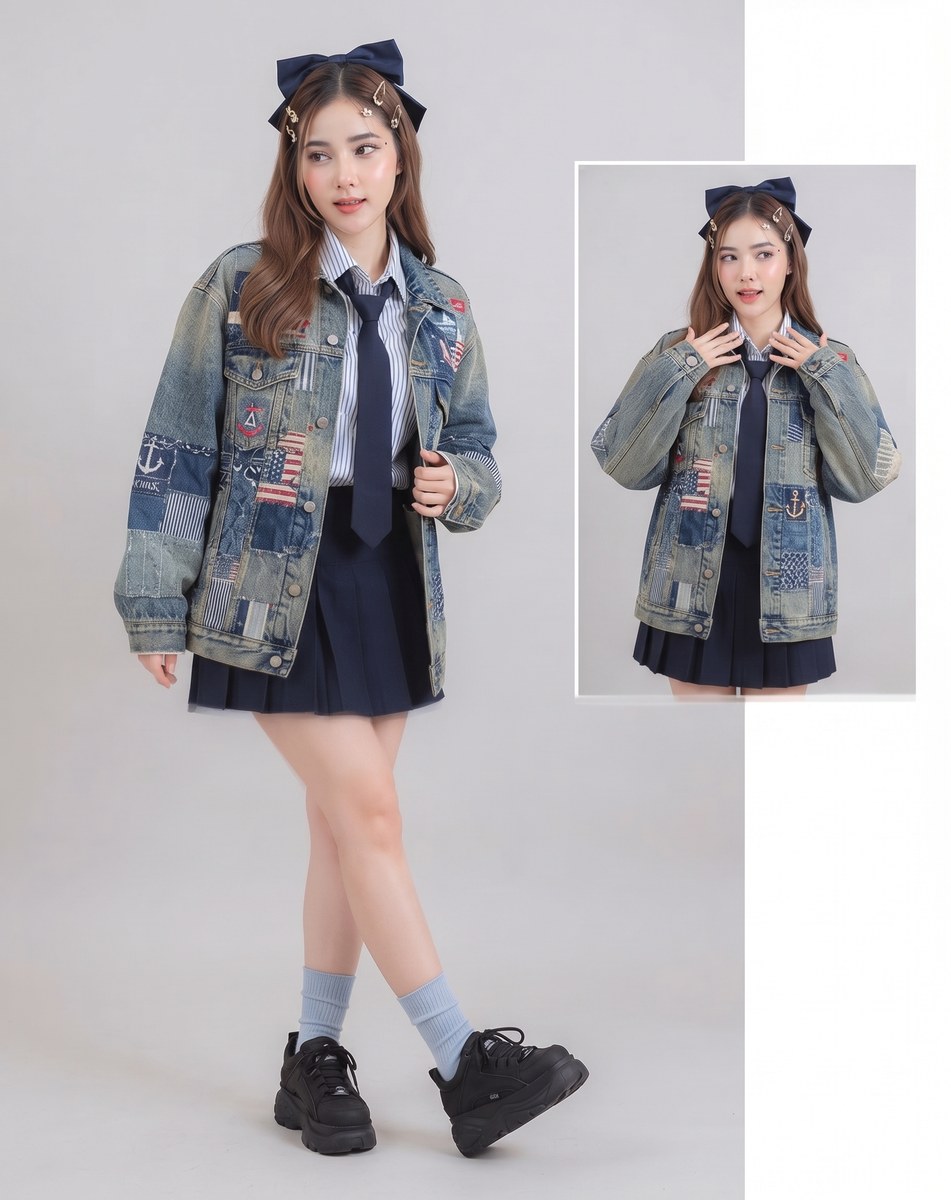
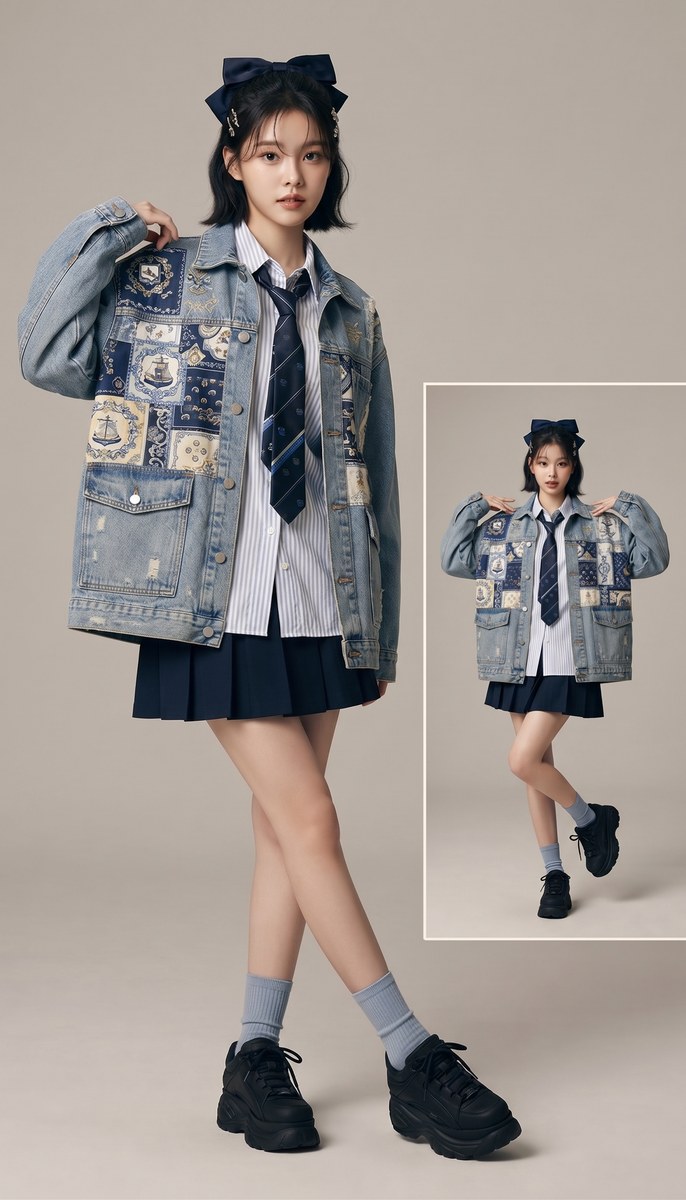
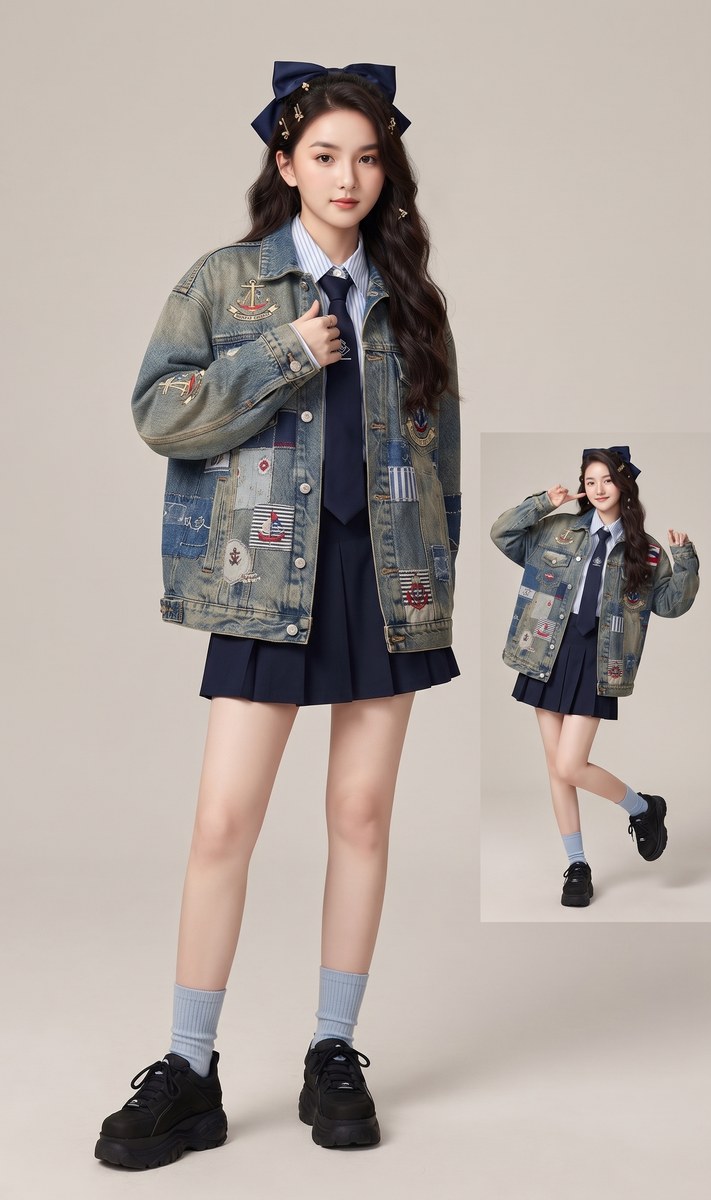
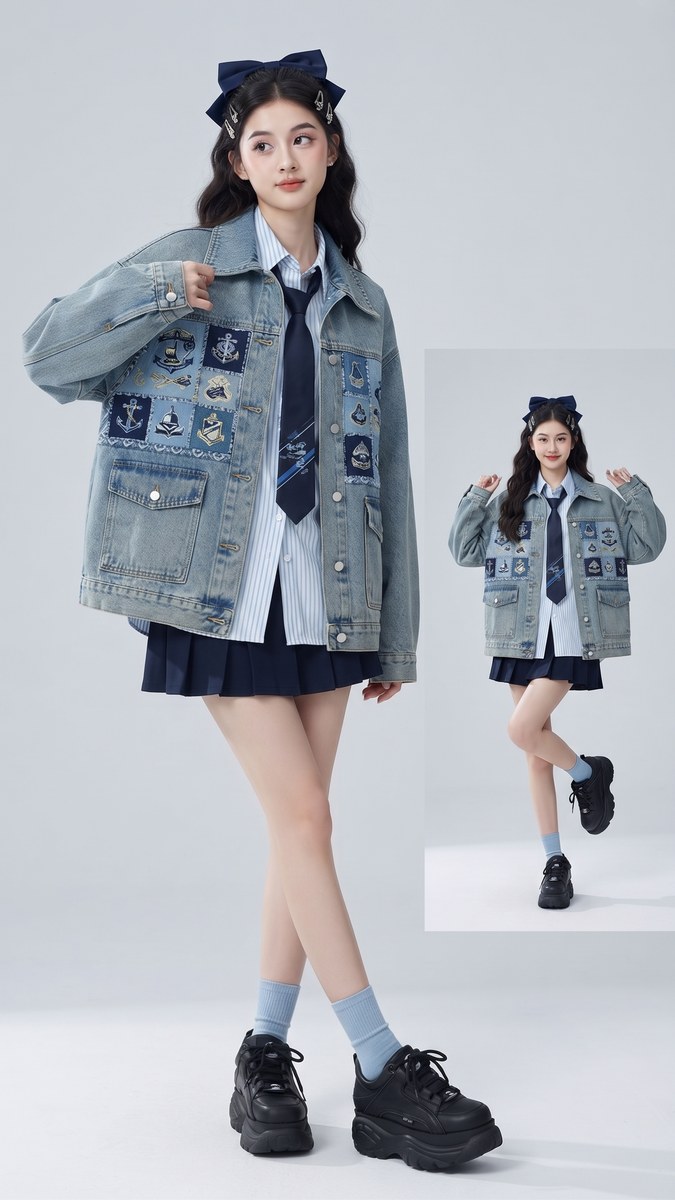
Prompt template
- Format
- Text
- Inputs
- Clothing_reference_image (image) · Required Model_identity_image (image) · Required
- Outputs
- Fashion_editorial_photo (image)
Create a high-end Japanese/Korean-inspired fashion editorial photo based on the provided clothing reference image. Use the provided model image as the identity reference for the model: preserve the model’s exact facial features, face shape, skin tone, body proportions, hairstyle, and overall physical appearance. Do not redesign or alter the model’s identity.

OUTFIT: The model wears an oversized vintage-wash light blue denim jacket with a relaxed, slightly boxy silhouette. The jacket has a large pointed denim collar, long oversized sleeves, silver metal snap buttons down the center, visible denim seams, natural faded-wash texture, subtle distressed details, and multiple decorative denim patchwork panels on the front. The patchwork features intricate blue, navy, white, and muted yellow embroidered or patterned motifs with a vintage nautical and decorative aesthetic. Large functional flap pockets are positioned on the lower front, with additional decorative patchwork pocket panels around the chest and waist area. The jacket is worn open or partially buttoned.

Underneath the denim jacket, the model wears a crisp white-and-light-blue vertically striped button-up shirt with a slightly oversized fit. The shirt has a pointed collar and long sleeves. A dark navy necktie is worn loosely around the neck, featuring subtle blue and white decorative graphics or patterns.

The lower outfit consists of a short dark navy pleated mini skirt, creating a youthful Japanese/Korean school-fashion-inspired silhouette. The model wears light blue ribbed crew socks and chunky black platform sneakers with thick sculpted soles, black laces, layered panels, and a slightly futuristic streetwear appearance.

ACCESSORIES: Add a large dark navy/black ribbon bow positioned on top of the model’s head, integrated naturally with the hairstyle. Include small, subtle metallic hair accessories or clips near the side of the hair. Keep accessories coordinated with the navy-and-denim color palette. No visible logos, brand names, military insignia, or text.

MODEL & HAIR: Use the provided model reference for the face, body shape, hairstyle, and identity. Keep the model’s natural facial characteristics unchanged. The long hair should fall naturally around the shoulders and back, with soft layered strands and gentle volume. Do not copy the face from the clothing reference image; use it only as the outfit reference, and use the model image as the person and identity reference.

POSE: Create a confident yet playful fashion pose. The primary pose is a three-quarter standing pose with the body slightly angled away from the camera. One hand gently lifts or holds the edge of the denim jacket near the shoulder or collar, while the other arm hangs naturally or lightly touches the jacket. One leg remains straight while the other leg is slightly bent and positioned forward, creating a dynamic fashion-model silhouette. The posture should feel relaxed, youthful, cute, and editorial rather than stiff.

CAMERA ANGLE & COMPOSITION: Full-body fashion photography, with the camera positioned approximately at waist-to-chest height, slightly below eye level to emphasize the outfit and create flattering proportions. Use a three-quarter front view while keeping the entire outfit clearly visible from head to shoes. Center the model in the frame with enough negative space around the body. The clothing should be the main visual focus.

SECONDARY POSE / INSET OPTION: If generating a composite fashion presentation, include a smaller full-body secondary image of the same model on the right side, showing a different playful standing pose: both hands raised near the jacket collar or shoulders, one knee slightly bent and crossed in front of the other. Maintain exactly the same outfit, face, hairstyle, and accessories.

BACKGROUND: Use a minimal, clean studio background in soft warm light gray or off-white. No furniture, scenery, or distracting objects. The environment should resemble a professional fashion e-commerce studio combined with a Japanese/Korean fashion editorial aesthetic.

LIGHTING: Use soft, diffused studio lighting from a large frontal key light with gentle fill light. Add subtle shadows beneath the model and around the clothing folds. Keep even illumination across the denim texture, embroidery, shirt, skirt, socks, and sneakers. Add natural soft highlights to the hair and face.

PHOTOGRAPHY STYLE: Premium fashion catalog photography, Japanese street-fashion editorial, clean commercial styling, realistic fabric texture, highly detailed denim fibers, visible embroidery and stitching, natural skin texture, realistic hair strands, sharp clothing details, subtle depth of field, professional studio photography, soft contrast, refined exposure, and realistic proportions.

IMPORTANT: The provided model image is the only source for the person’s identity. Preserve the model’s face, body proportions, skin tone, hair, and recognizable physical characteristics. Use the clothing reference only for outfit design, styling, pose, composition, lighting, and photography direction. Do not merge the reference model’s face or body with the provided model. Keep the outfit design highly accurate and consistent.
What you'll create
A reference model wears a relaxed boxy jacket with a pointed collar, silver snaps and faded seams. Precise garment construction anchors the street-fashion styling.
Frequently asked questions
Should the clothing reference supply the face?
No. It controls styling while the separate model image supplies identity.
What jacket hardware is specified?
Silver metal snap buttons.




Comments
Tried this prompt? Share what you made, compare results, or ask a question