Streetwear Fashion Editorial with Torn-Paper Collage
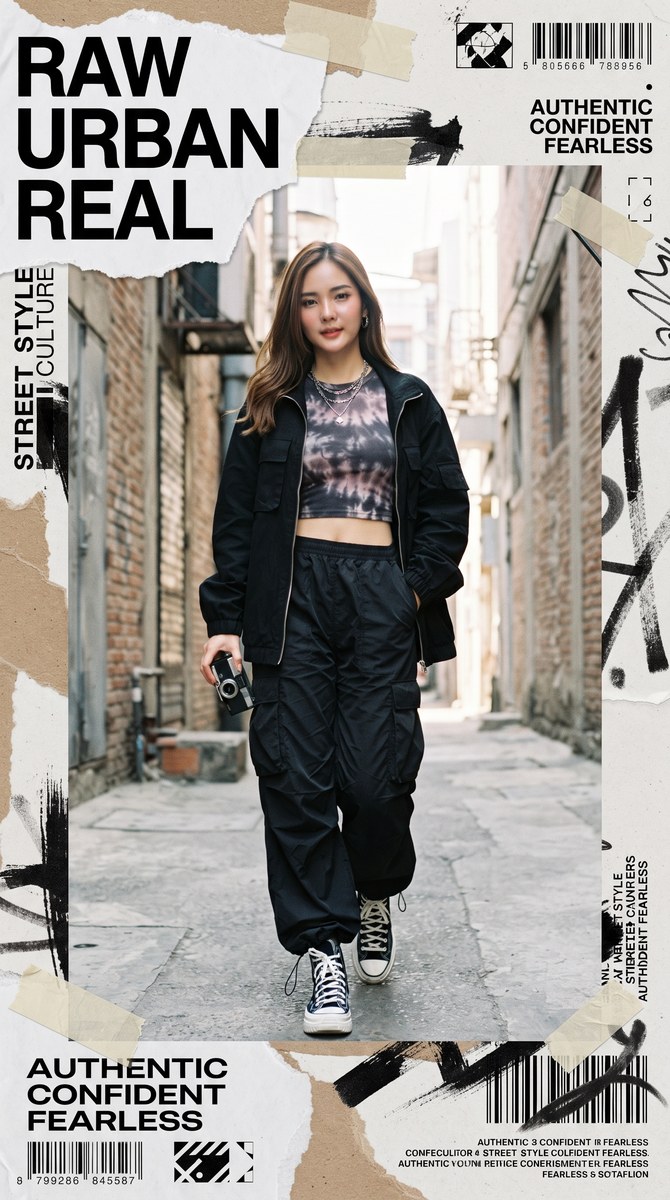
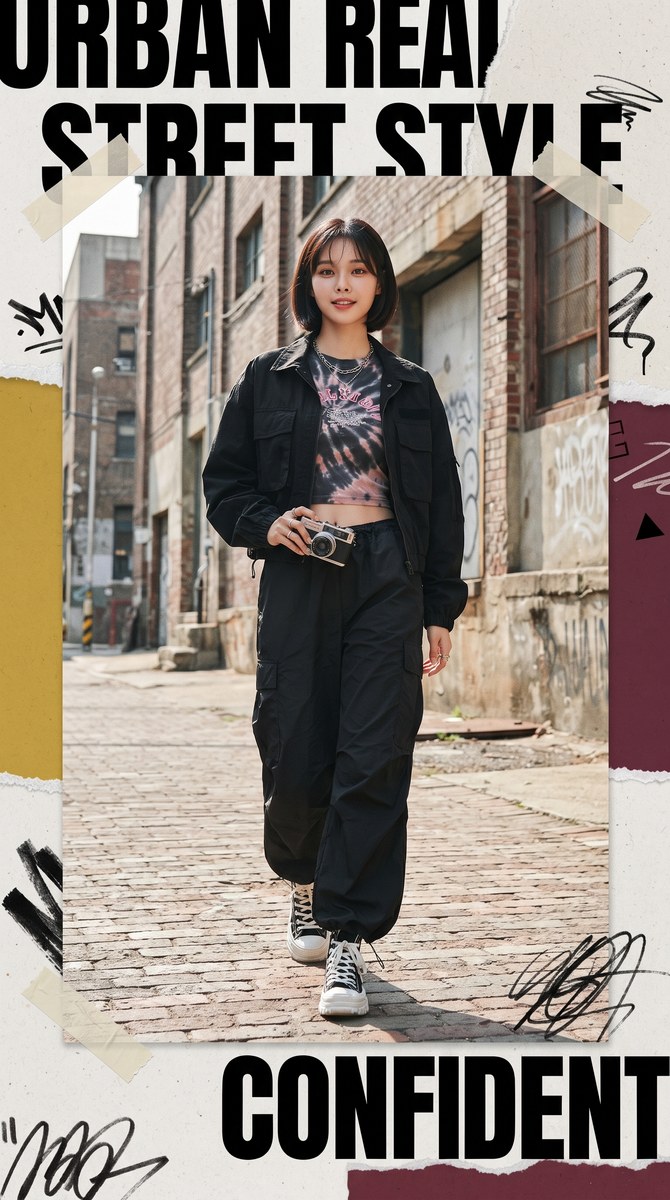
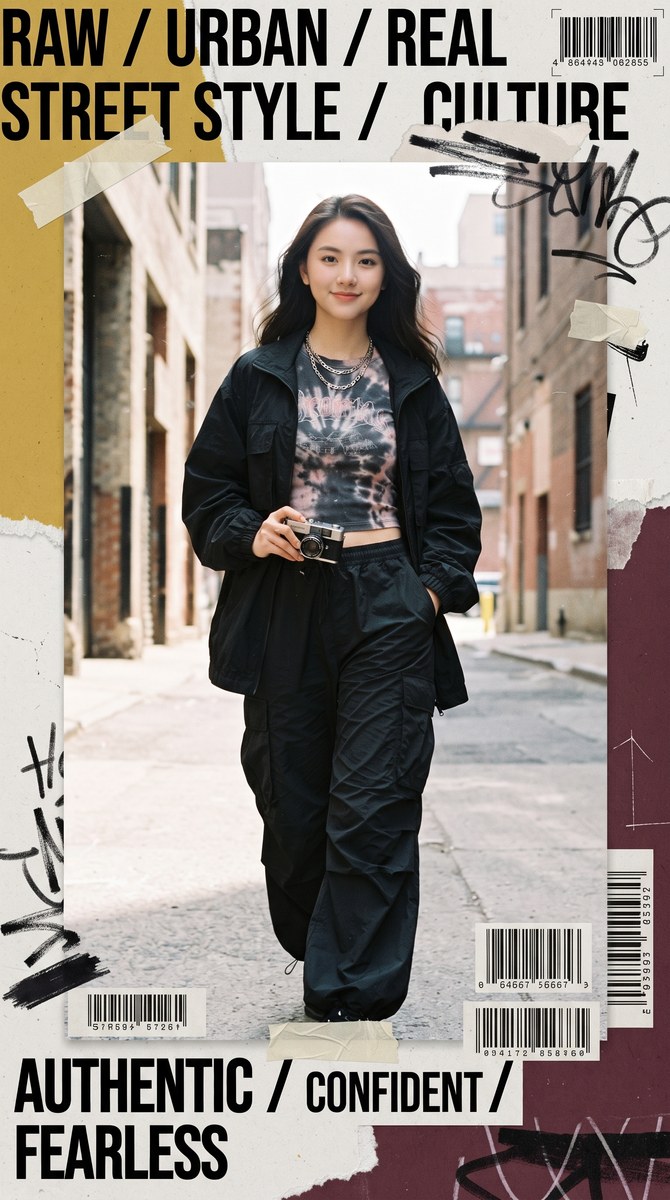
Create a premium urban streetwear fashion editorial combining a full-body street photograph with a layered torn-paper magazine collage.
Example outputs
Prompt template
- Format
- Text
- Inputs
- Reference_image (image) · Required
- Outputs
- Editorial_fashion_image (image)
Create a high-end editorial streetwear fashion photograph using the uploaded reference image as the identity and physical appearance reference for the model. Preserve the model’s facial structure, face shape, skin tone, body proportions, hairstyle, hair length, hair texture, and overall physical characteristics from the uploaded reference image. Do not redesign or alter the model’s identity. The model can be replaced by any newly uploaded reference photo while keeping the exact same outfit, styling, pose, composition, camera angle, lighting, and visual concept described below.

SUBJECT & APPEARANCE:
A confident young adult female streetwear fashion model walking naturally toward the camera in an urban city environment. Use the uploaded reference image strictly for the model’s face, body shape, proportions, hairstyle, hair texture, and physical appearance. Maintain realistic anatomy and natural facial details. The model has a relaxed, confident expression with a genuine subtle smile, looking slightly toward the camera.

OUTFIT:
Black oversized utility-style lightweight jacket with a slightly cropped silhouette, worn open at the front. The jacket has a structured collar, long sleeves, a subtly loose fit, multiple utility details and flap pockets, matte technical fabric, and realistic fabric folds and stitching.

Underneath, a fitted cropped sleeveless/short-sleeve graphic tie-dye top with a distressed urban aesthetic. The crop top ends above the waist and subtly reveals the midriff. The tie-dye pattern consists of muted charcoal black, dark gray, dusty pink, faded mauve, and off-white tones, with irregular organic color transitions and a vintage washed texture.

Bottom: oversized black nylon cargo parachute pants with a loose, voluminous silhouette, high-waisted elastic waistband, multiple functional cargo pockets around the thighs and lower legs, technical lightweight fabric, natural wrinkles and folds, and slightly tapered/elastic cuffs around the ankles.

Footwear: black-and-white high-top chunky canvas sneakers with a thick white rubber sole, black canvas upper, white toe cap, white laces, and a slightly worn streetwear appearance.

ACCESSORIES:
Layered silver necklaces with multiple different chain thicknesses and lengths, including a small pendant. Minimal silver jewelry. The model is holding a vintage compact film camera in one hand at approximately waist/chest level. The camera has a classic metallic body, black details, a prominent lens, and realistic buttons and texture. Do not add excessive accessories that distract from the outfit.

POSE & BODY LANGUAGE:
Full-body walking pose, captured during a natural step forward. One leg is positioned slightly ahead of the other, creating dynamic movement. The upper body is relaxed and slightly angled. One arm is naturally bent while holding the vintage camera; the other arm hangs naturally beside the body with a subtle bend at the elbow. Shoulders are relaxed. Head is slightly raised. The model has a confident but effortless street-style attitude. Show natural walking motion, not a stiff fashion pose.

CAMERA ANGLE & COMPOSITION:
Vertical 9:16 portrait composition. Full-body fashion photography. Position the camera approximately at waist-to-lower-chest height, with a subtle low-angle perspective to make the model appear confident and visually dominant without exaggerating body proportions. Face the camera almost directly toward the model, with a very slight perspective angle. Center the model slightly toward the middle of the frame.

Use a 35mm–50mm full-frame photography look, realistic perspective, and moderate depth of field. Keep the entire body and shoes visible. Leave enough negative space around the model for graphic editorial elements. The model should remain the primary visual focus.

LOCATION / BACKGROUND:
Raw urban street photography environment: a narrow city alley/street surrounded by aged brick buildings, concrete pavement, weathered walls, subtle industrial architecture, and realistic urban textures. Bright natural daylight enters between the buildings. Keep the background slightly blurred while retaining enough environmental detail to establish the streetwear atmosphere.

LIGHTING:
Natural bright daylight, with directional sunlight coming from the upper side/front and creating realistic highlights on the face, jacket, and hair. Add soft but defined shadows on the pavement. Mix slightly warm sunlight with neutral urban ambient light. Use high dynamic range, realistic skin tones, detailed clothing texture, and cinematic yet authentic street photography lighting.

PHOTOGRAPHIC STYLE:
High-end urban streetwear fashion editorial, raw fashion magazine photography, authentic street culture aesthetic, contemporary youth fashion campaign, slightly gritty but premium. Realistic photography, subtle film grain, slightly desaturated colors, muted blacks, warm highlights, natural contrast, tactile textures, and subtle analog film character.

EDITORIAL GRAPHIC TREATMENT:
Surround the central photograph with a sophisticated torn-paper collage / mixed-media fashion magazine layout. Use layered off-white recycled paper textures, rough torn edges, masking tape, distressed paper, black ink brush strokes, hand-drawn graffiti marks, rough scribbles, barcode graphics, geometric graphic elements, and subtle photocopy textures.

Add large, bold, black condensed sans-serif typography partially cropped by the frame, inspired by experimental streetwear magazines. The typography should feel oversized, raw, and editorial. Include small secondary typography blocks such as “RAW / URBAN / REAL”, “STREET STYLE / CULTURE”, “AUTHENTIC / CONFIDENT / FEARLESS”, and other abstract fashion editorial microtext. Text should function as graphic design elements rather than overpowering the model.

Incorporate mustard yellow, off-white, black, and deep muted burgundy/red graphic paper sections around the photograph. Use imperfect torn edges and overlapping paper layers. Add subtle black marker strokes, arrows, circles, scribbles, and abstract hand-drawn marks.

VISUAL EFFECTS:
Realistic film grain, subtle paper grain, distressed print texture, slightly imperfect ink registration, photocopy texture, subtle halftone details, realistic shadows between paper layers, tactile collage depth, slight analog color variation, and editorial print imperfections. Keep the central model photograph sharp and highly detailed.

QUALITY:
Photorealistic fashion photography, highly detailed skin texture, realistic hair strands, realistic fabric texture, accurate anatomy, natural hands and fingers, detailed jewelry, realistic vintage camera, realistic shadows and reflections, premium fashion campaign quality, sharp subject, cinematic depth of field, professional magazine photography, 8K detail.

IMPORTANT IDENTITY / REFERENCE RULE:
The uploaded reference image controls ONLY the model’s identity and physical appearance: face, facial structure, skin tone, body proportions, hairstyle, hair length, hair texture, and recognizable physical characteristics. Do not copy the clothing, pose, background, or composition from the reference image. Replace the model naturally into the exact streetwear styling and scene described above. If a different model reference image is uploaded, use that new person’s face, body, hair, and physical characteristics while keeping the same fashion styling, pose, camera angle, lighting, environment, collage design, and overall visual direction.
What you'll create
An adult subject walks naturally toward the lens within a fixed fashion composition. Source identity and body features remain separate from the designed wardrobe and collage setting.
Frequently asked questions
Does the identity photo determine the original clothing?
No. Written styling directions control the outfit.
May a new uploaded model replace the person?
Yes. The visual concept stays while the model reference changes.




Comments
Tried this prompt? Share what you made, compare results, or ask a question