Orange-Lit Low-Angle Fashion Editorial Portrait
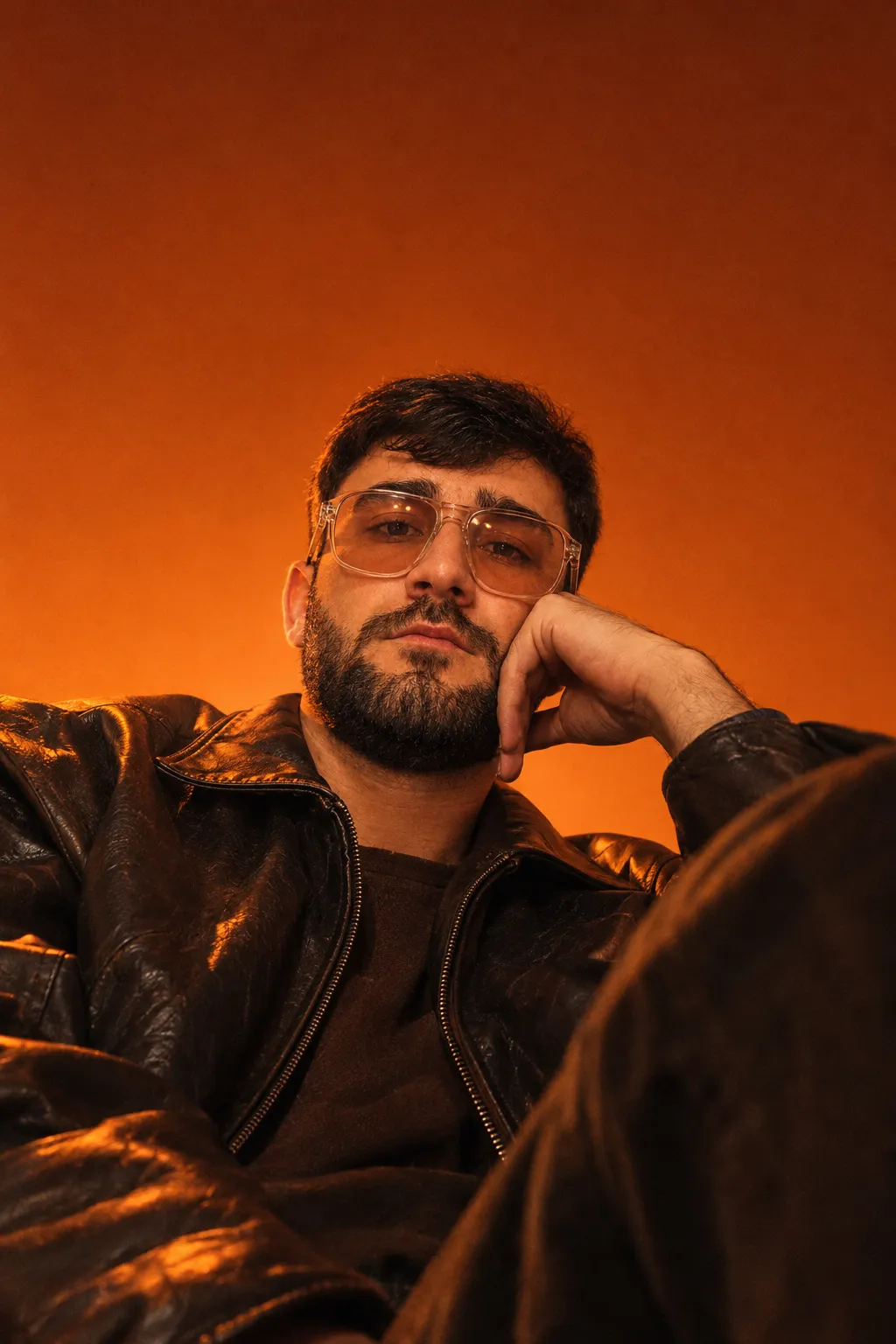
Create a cinematic, photorealistic fashion editorial portrait of the same young adult man shown in the uploaded identity reference, in a minimalist studio with dramatic warm orange lighting.
Example outputs
Prompt template
- Format
- Text
- Inputs
- identity_reference (image) · Required
- Outputs
- fashion_editorial_portrait (image)
Create an ultra-photorealistic cinematic fashion photograph of a young adult man, captured from an extreme low-angle perspective inside a minimalist studio environment dominated by warm orange light.

IDENTITY & FACE

Use the uploaded identity reference as the ONLY identity reference for the main subject.

Preserve the subject’s exact recognizable identity and natural facial anatomy:
- Identical face shape and proportions
- Forehead and natural hairline
- Eyebrow shape, thickness, and placement
- Exact eye shape, size, and spacing
- Natural iris appearance
- Nose bridge, tip, and nostrils
- Cheekbones
- Lips and mouth shape
- Jawline and chin
- Ears and neck proportions
- Natural skin tone and complexion
- Realistic pores, fine skin texture, and subtle imperfections
- Natural facial asymmetry
- Original age and overall appearance

The subject must look like the same real person from the reference image, not a generic fashion model.

No face redesign, face-swap appearance, beautification, artificial symmetry, plastic skin, excessive skin smoothing, altered ethnicity, age change, exaggerated masculine features, or celebrity resemblance.

POSE & COMPOSITION

Recreate the distinctive composition of the reference photograph.

The camera is positioned very low, below the subject’s eye level, looking upward toward him. The subject is seated or crouched very close to the camera, creating an intimate and slightly imposing perspective. His upper body leans subtly toward the camera.

One arm is bent, with the hand supporting the side of his face:
- Elbow positioned lower in the frame
- Forearm angled upward
- Relaxed hand resting naturally against the cheek or jaw area
- Loose, anatomically correct fingers
- Relaxed, effortless posture

The head is tilted slightly toward the supporting hand. His gaze is directed downward toward the camera.

Expression: calm, serious, slightly introspective, relaxed, confident, emotionally restrained, and naturally subtle. No exaggerated smile.

The composition should feel spontaneous and editorial rather than posed like a commercial studio portrait.

CAMERA ANGLE

Use an extreme low-angle perspective. Place the camera approximately at chest or waist level, or slightly below the subject, and point it upward. The low perspective should make the subject’s upper body appear powerful and visually dominant while maintaining realistic human proportions. Keep the face as the main focal point.

Use realistic perspective distortion from a close camera position, but avoid unnatural stretching. Foreground elements may appear noticeably larger because of the close, low-angle camera placement.

CLOTHING

The subject wears a dark brown or black oversized leather jacket with genuine leather texture, visible natural wrinkles, subtle creases, realistic seams, a slightly worn surface, soft glossy highlights, natural folds caused by the seated pose, an open front, a visible zipper, and an oversized, relaxed silhouette.

A dark or muted warm-toned shirt or top is partially visible beneath the jacket. The clothing must look physically real, heavy, and tactile. No futuristic clothing, CGI material, or perfectly clean synthetic surfaces.

GLASSES

The subject wears large, oversized, transparent or lightly tinted vintage-style glasses with thick transparent frames, large rounded lenses, a subtle amber or brown tint, realistic reflections, visible transparent glass, accurate frame geometry, and natural contact with the face.

The eyes remain partially visible through the lenses. Reflections should enhance realism without completely obscuring the eyes.

LIGHTING

Illuminate the entire scene with strong, warm orange or amber cinematic light. Use a dominant palette of deep burnt orange, amber, warm copper, dark brown, black, and subtle golden highlights.

Use a large, soft, warm light source positioned above and slightly in front of the subject, combined with stronger directional orange illumination. The light creates warm highlights across the forehead and cheekbones, glowing reflections in the glasses, bright orange highlights on the leather jacket, deep cinematic shadows beneath the jaw and clothing, and subtle rim light around the hair and shoulders.

The background should be a smooth orange gradient, darker burnt orange near the upper edges and corners, transitioning to brighter saturated orange behind the subject. No visible studio equipment, hard horizon line, or distracting background objects.

SHADOWS

Preserve strong, deep cinematic shadows. The shadows on the jacket and lower body should fall almost into black. Maintain detail in the darkest areas without making them artificially bright. The contrast should resemble a professionally photographed fashion editorial using controlled studio lighting.

FOREGROUND

A large portion of the lower-right foreground is occupied by the subject’s bent leg or knee, or clothing-covered body, extremely close to the lens. This foreground element should appear significantly larger because of the low-angle perspective, creating a strong diagonal composition from the lower-right corner toward the center of the frame.

Keep the foreground darker and slightly softer than the face. The face and glasses remain the sharpest visual point.

DEPTH OF FIELD

Use a shallow but realistic depth of field:
- Face and glasses: tack sharp
- Leather jacket: sharp around the upper torso, gradually becoming softer toward the edges
- Foreground leg or body: noticeably softer due to its proximity to the lens
- Background: smoothly blurred orange gradient

Use natural optical falloff, not artificial digital blur.

CAMERA & LENS

Use the look of a professional full-frame digital or analog cinema camera. Approximate setup:
- 35mm–50mm full-frame lens
- Close focusing distance
- Low camera position
- Wide cinematic perspective
- Realistic optical distortion
- Shallow depth of field
- Natural lens falloff
- High dynamic range

The image should feel like a photograph captured by a professional fashion photographer rather than a digitally generated image.

IMAGE QUALITY

Aim for extremely high photographic realism, with realistic skin pores, fine hair strands, individual eyebrow hairs, realistic eyelashes, authentic leather grain, microscopic jacket texture, realistic glass reflections, natural fabric fibers, subtle imperfections, physically accurate shadows, and realistic highlights.

No CGI appearance, 3D-rendered look, plastic skin, artificial sharpening, excessive HDR, or overprocessed beauty retouching.

FILM LOOK

Blend premium modern fashion photography with raw analog cinema aesthetics. Add subtle 35mm film grain, fine photographic noise, gentle halation around bright orange highlights, subtle lens bloom, restrained chromatic aberration, slight organic softness, realistic highlight roll-off, and natural tonal compression.

The final image should resemble an authentic 1990s–2000s experimental fashion editorial photograph, captured with modern high-end photographic quality.

COLOR GRADING

Use a strong monochromatic orange atmosphere while maintaining realistic tonal separation. Include warm orange highlights, deep reddish-brown shadows, very dark blacks in the jacket and foreground, and subtle golden skin highlights. Avoid oversaturated neon orange. The skin must remain naturally recognizable beneath the warm lighting.

FRAMING

Use a vertical fashion editorial composition, approximately 2:3 or 4:5. Leave a large amount of negative space above the subject. Place the subject in the lower-middle portion of the frame, with the orange background dominating approximately the upper half. Position the face slightly above the vertical center.

Create strong diagonal lines through the arm, jacket zipper, shoulders, and foreground leg. Use a balanced, asymmetrical composition.

OVERALL MOOD

The image should feel intimate, mysterious, stylish, raw, confident, and cinematic, like a candid frame from an experimental luxury fashion campaign or an underground European fashion film. Keep it minimalist, moody, sophisticated, masculine, editorial, and photographically authentic.

The final result must look like a real photograph of the same person from the identity reference, photographed in a professional orange-lit studio—not an AI-generated image.

NEGATIVE PROMPT

Generic male model, different person, altered identity, face swap, redesigned face, beautified face, plastic skin, excessive retouching, airbrushed skin, artificial symmetry, changed facial proportions, changed jawline, changed nose, changed eyes, changed lips, different ethnicity, younger face, older face, celebrity resemblance, CGI, 3D render, illustration, painting, cartoon, synthetic skin, waxy skin, unrealistic anatomy, deformed hands, extra fingers, missing fingers, distorted glasses, warped lenses, malformed jacket, fake leather, excessive HDR, oversharpening, excessive saturation, neon lighting, flat lighting, washed-out shadows, bad perspective, unnatural body proportions, artificial bokeh, low resolution, blurry face, distorted facial features, duplicate limbs, unnatural pose.
What you'll create
An adult man appears from a steep upward studio perspective under amber-copper light. Thick rounded frames retain partially visible eyes while realistic clothing and deep shadows emphasize tactile fashion detail.
Frequently asked questions
Should reflections completely hide the eyes?
No. The eyes remain partly visible through the lenses.
What colors dominate the lighting?
Burnt orange, amber, warm copper, brown and subtle gold.
Comments
Tried this prompt? Share what you made, compare results, or ask a question