Rubber-Stamp Travel Record Poster
Create a separate 3:4 travel-record poster for each uploaded photo, pairing the preserved original photo with a rubber-stamp-style interpretation of the same scene.
Example outputs

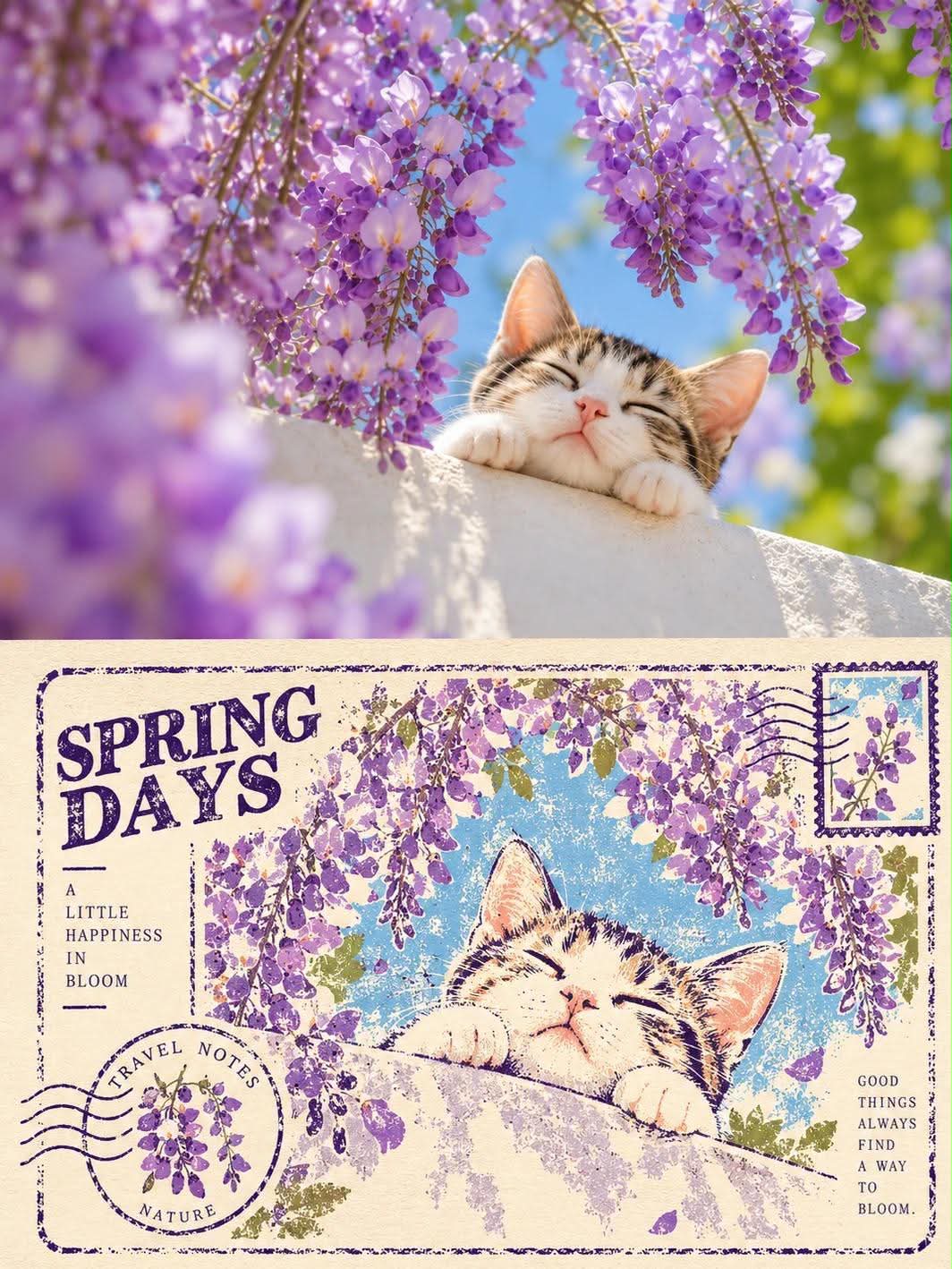
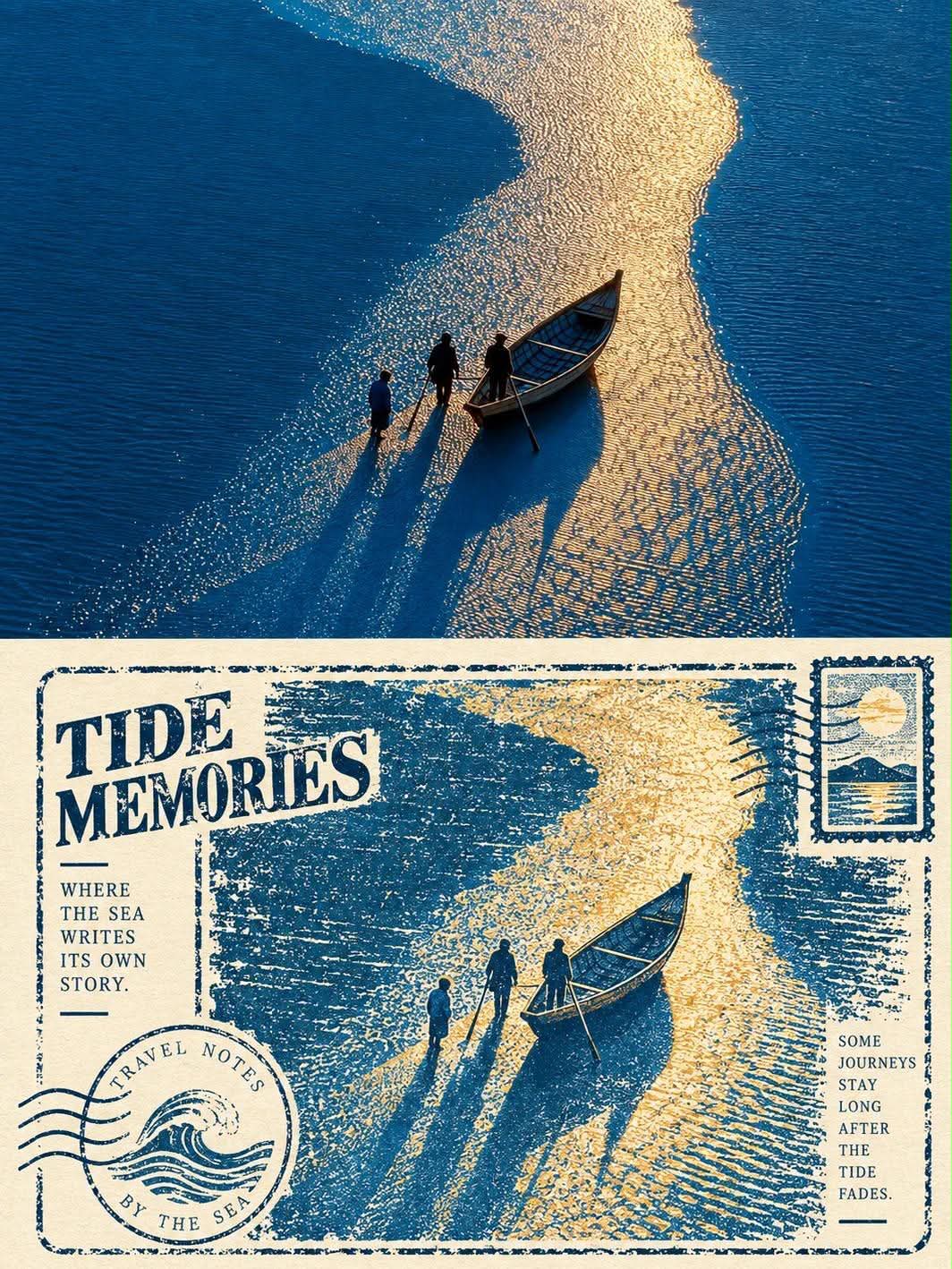
Prompt template
- Format
- Text
- Inputs
- Uploaded_photo (image) · Required
- Outputs
- Travel_record_poster (image)
For each uploaded photo, create one separate “rubber-stamp travel record poster.” Produce exactly one finished image per photo. Do not make a collage, combine multiple photos, or reuse the same text across different photos.

Use a 3:4 vertical composition divided into equal upper and lower halves, each occupying 50% of the image. Do not draw a prominent dividing line.

In the upper half, preserve the corresponding original photo in full: keep the identity of its subject, the proportions of people or objects, terrain, architecture, plants, spatial relationships, pose, perspective, natural light, shadows, depth of field, realistic textures, and original color mood unchanged. Allow only subtle, publication-quality photo color grading and extremely fine film grain. To fit the vertical format, you may crop naturally or extend the background slightly, but do not stretch, distort, move, replace, or redraw the subject, and do not add unrelated elements.

Remove all visible English text, logos, brand marks, watermarks, corner badges, and platform artifacts from the original photo. After removing them, keep the background material and lighting naturally continuous.

In the lower half, use the same photo as the sole visual reference and transform it into a rubber-stamp travel-record poster scene. Preserve the original’s main outlines, scene structure, visual center, spatial flow, representative details, inherent colors, and mood, but reinterpret and arrange them in the style of hand-printed rubber stamps, vintage travel commemorative stamps, and independent-publication prints. Give the print subtly uneven edges and slight ink bleed, with visible paper fibers; keep the texture restrained and refined.

For each photo, derive original short English copy from its visual clues—for example, a sense of place, architectural features, natural scenery, a person’s demeanor, seasonal light, or a travel memory. Do not use identical copy across different images, and do not reproduce English text, logos, or watermarks from the original photo. Integrate the English lettering naturally into the stamp design. It may include a short title, a date-like number, a place-like phrase, or a commemorative stamp mark, but its content must come from visual clues in that particular photo and be freshly rephrased.

Keep the prompt itself in Chinese, while all text appearing in the image must be in English. Make the upper and lower halves clearly contrast: the upper half is the real original photo, and the lower half is a rubber-stamp travel-record reinterpretation of that same photo. Keep the theme consistent without simply copying the photo.
What you'll create
The original photograph fills the upper half while a carved-print reinterpretation records the same scene below. Text derives from each source rather than a repeated caption template.
Frequently asked questions
May the same caption be reused for all photos?
No. Wording is freshly grounded in each source.
What language appears in the image?
English.







Comments
Tried this prompt? Share what you made, compare results, or ask a question