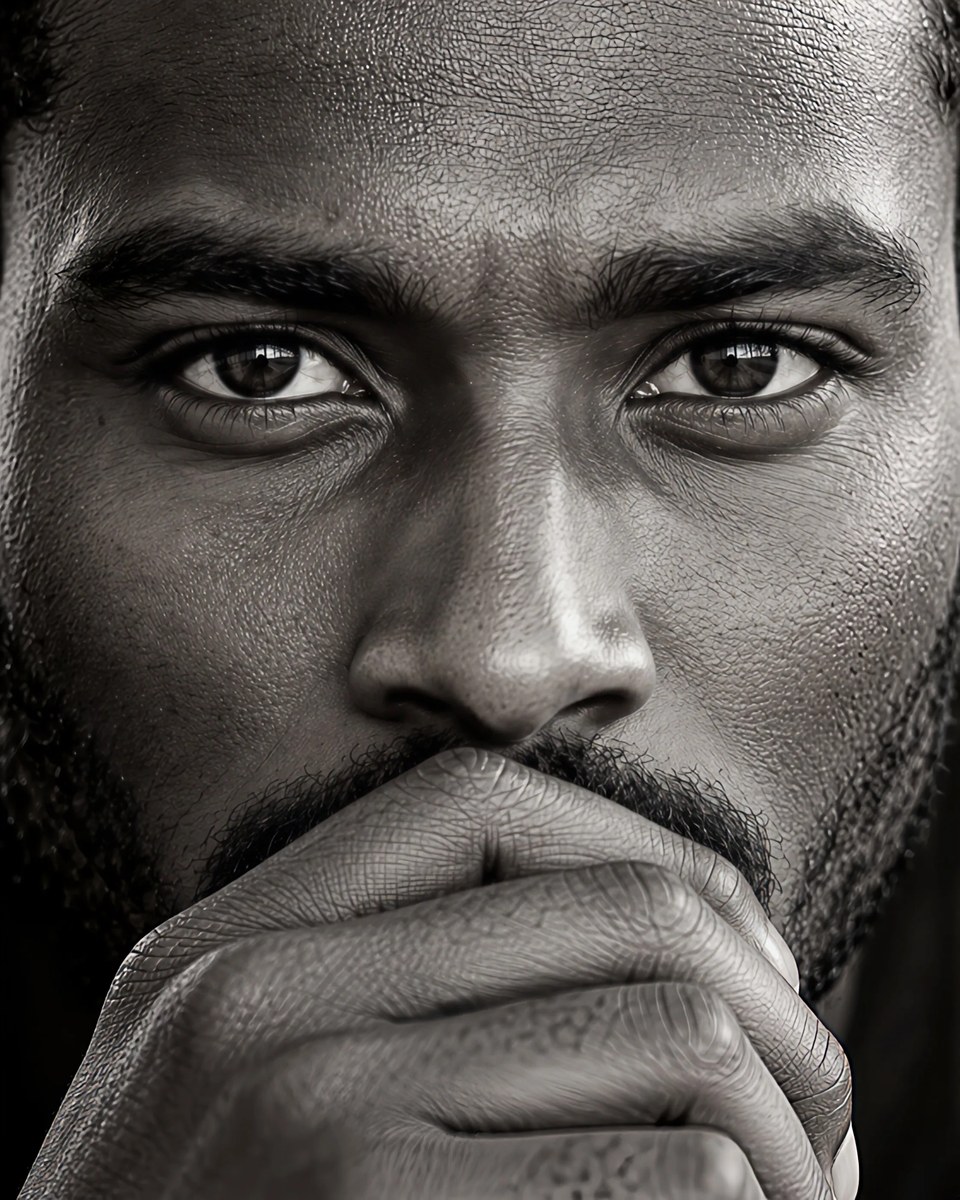
Dramatic Black-and-White Extreme Close-Up Portrait
Create a tightly framed, high-contrast monochrome portrait that preserves the reference person’s identity and emphasizes an intense gaze and a hand partly covering the lower face.
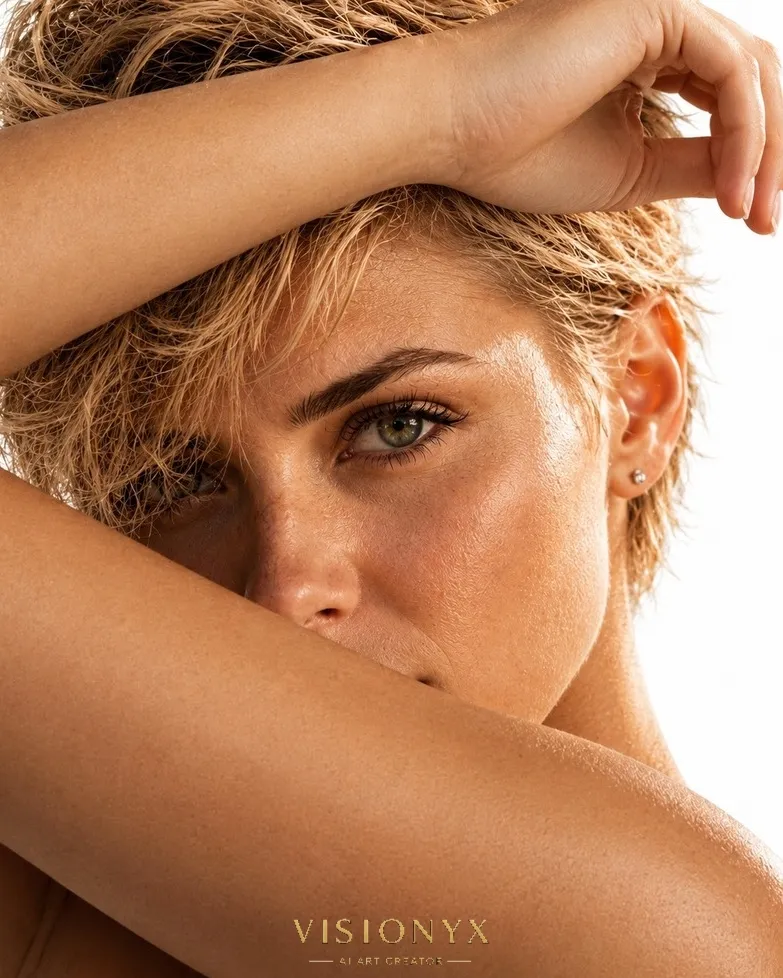
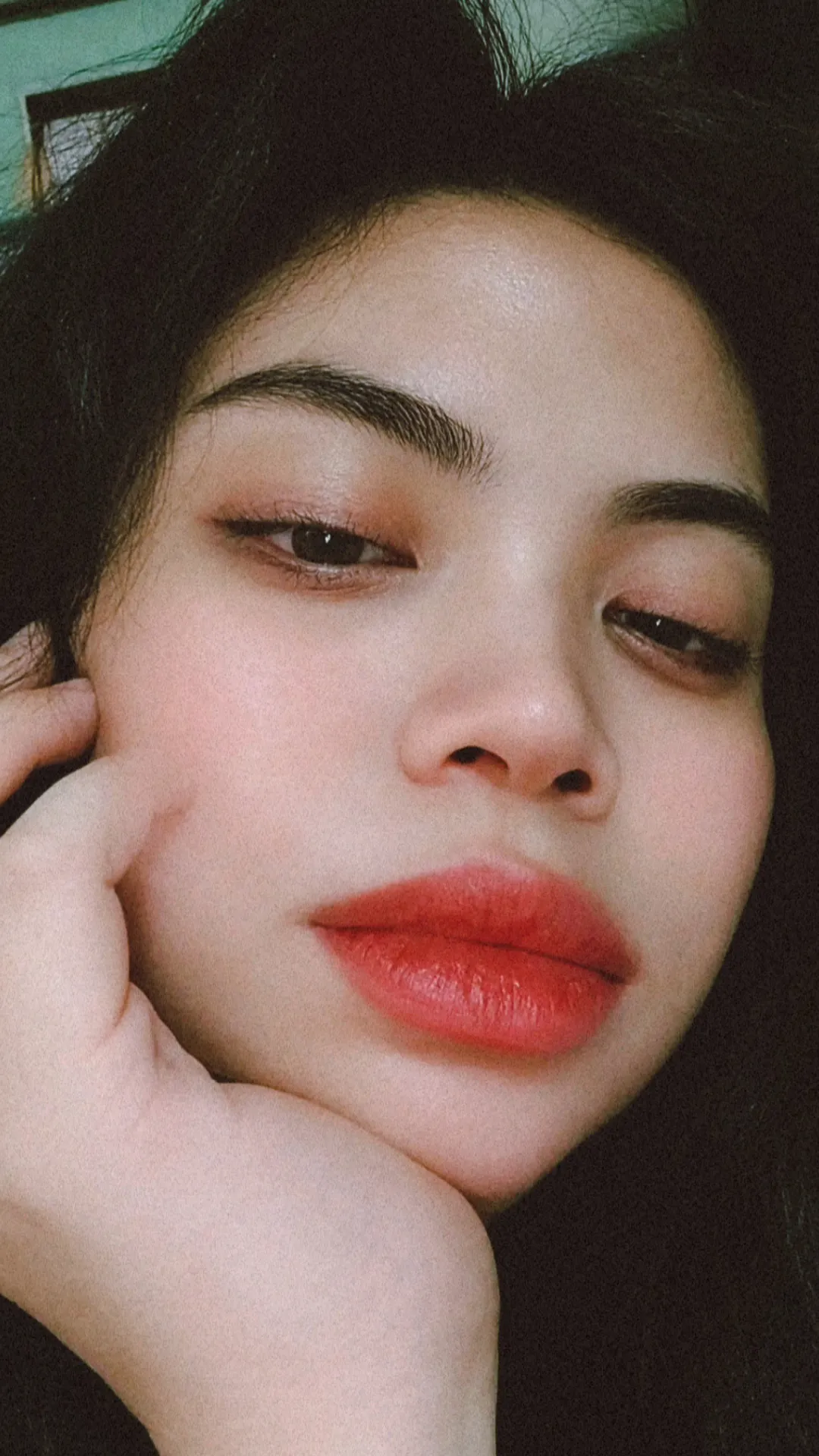
Example outputs
Prompt template
- Format
- Text
- Inputs
- Reference_photo (image) · Required
- Outputs
- Portrait (image)
Create an ultra-photorealistic, dramatic black-and-white extreme close-up portrait using the uploaded photograph as the sole authoritative facial identity reference. Depict an adult person with intense eye contact, raw emotion, natural facial character, and a mysterious, contemplative atmosphere. Convey masculine intensity where appropriate, without assuming or changing the subject’s identity. Reproduce the visual impact of fine-art monochrome portrait photography with exceptional photographic realism.

Preserve the person’s recognizable facial features, apparent age, natural facial proportions, forehead, brow structure, eye shape, eye colour translated naturally into grayscale, nose, cheekbones, skin texture, facial hair if present, and distinguishing characteristics. Do not substitute a generic model, artificially de-age, excessively beautify, or substantially reshape the face.

CAMERA ANGLE AND FRAMING:
Use a vertical 4:5 composition. Photograph directly in front of the subject at eye level, with the camera extremely close to the face. Use a professional full-frame camera with a 100mm macro portrait lens perspective, approximately f/5.6, ISO 400, and a 1/160-second shutter speed. Maintain realistic facial compression, exceptional optical sharpness, natural proportions, and controlled shallow depth of field.

Frame the face extremely tightly. Both eyes must dominate the upper portion of the composition, positioned horizontally so their outer corners almost touch the left and right canvas edges. Make the eyes appear exceptionally large through close framing, not artificial enlargement.

Show the forehead, deep brow contours, and natural forehead lines extending toward the top edge. Crop away the hairstyle, hairline, crown, and top of the head completely. Position the nose centrally, extending toward the lower half of the image. Place one clenched or loosely curled hand horizontally across the lower face, with the upper surface of the fingers and knuckles immediately beneath the nose, partially concealing the mouth, lips, chin, and lower face.

Let the hand occupy approximately the lower third of the composition as a strong foreground element. Preserve anatomically correct fingers, realistic knuckles, skin folds, and natural hand proportions. The upper forehead and lower hand may extend beyond the image boundaries. Do not show the complete head, hairstyle, shoulders, clothing, or surrounding environment.

FACIAL EXPRESSION AND POSE:
Capture an intense, unwavering gaze directed straight into the camera. Lower the eyebrows subtly to create a thoughtful, serious, emotionally compelling expression. Maintain natural facial asymmetry, authentic age-related details, realistic eye reflections, subtle under-eye texture, fine eyelashes, and individually defined eyebrow hairs.

The hand should create a thoughtful, guarded gesture suggesting introspection, determination, secrecy, or quiet emotional strength. Avoid exaggerated aggression, artificial expressions, and theatrical posing.

LIGHTING AND SHADOWS:
Use dramatic, high-contrast cinematic chiaroscuro lighting. Illuminate the subject primarily from the upper camera-right side with a large, soft, directional light source. Create controlled highlights across the right forehead, eyebrow, eye, bridge of the nose, cheekbone, and upper hand.

Let the camera-left side of the face fall into rich, deep shadows while retaining faint natural detail in the darker eye, eyebrow, and surrounding skin. Use subtle reflected light to preserve three-dimensional facial structure without removing the dramatic shadow contrast. Maintain smooth tonal transitions, deep charcoal blacks, luminous silver-gray highlights, and realistic shadow falloff. Avoid flat illumination, harsh flash effects, excessive glow, and artificial HDR processing.

COLOUR AND PHOTOGRAPHIC FINISH:
Render the entire portrait in pure black and white, with no colour tint, sepia, or selective colour. Use a fine-art monochrome tonal palette of deep blacks, charcoal shadows, soft mid-grays, and restrained silver highlights.

Capture highly detailed natural skin pores, fine wrinkles, subtle facial imperfections, realistic eyebrow hairs, individual eyelashes, moist reflective eyes, natural iris patterns, delicate hand creases, and authentic skin texture. Maintain exceptional microcontrast, refined photographic grain, and professional editorial sharpness without artificial smoothing or oversharpening.

DEPTH OF FIELD AND ATMOSPHERE:
Keep both eyes exceptionally sharp and in focus, emphasizing the irises, pupils, eyelashes, and delicate catchlights. Maintain strong focus across the central facial features, with a subtle, natural reduction in sharpness toward the closest portions of the hand and the extreme edges. The face and hand must fill the entire frame, leaving no visible background. Create an intimate, powerful, psychologically compelling portrait with a timeless, mysterious, cinematic atmosphere.

FINAL COMPOSITION REQUIREMENTS:
Make the eyes the unmistakable focal point. Keep both eyes fully visible, with their outer corners almost touching opposite canvas edges. Show the forehead but exclude all hairstyle and the top of the head. Maintain the dramatic hand placement, asymmetrical shadow distribution, monochrome tonality, realistic identity, and exceptionally tight facial crop.

Avoid cartoon styling, illustration, artificial eye enlargement, plastic skin, facial distortion, excessive retouching, visible clothing, distracting backgrounds, and unrealistic anatomy.

Use a vertical 4:5 aspect ratio, with full-frame height emphasis and a cinematic poster layout.
What you'll create
An adult face fills a vertical monochrome portrait at eye level. Grayscale skin detail, natural imperfections and a contemplative expression deliver a fine-art photographic study.
Frequently asked questions
Should the subject’s identity be changed to fit a masculine stereotype?
No. Intensity is adapted where appropriate without changing the reference identity.
Is visible clothing part of the composition?
No. The negative constraints exclude visible clothing in the extreme close crop.




Comments
Tried this prompt? Share what you made, compare results, or ask a question