Irresistible Puppy Eyes — Rustic Table Portrait
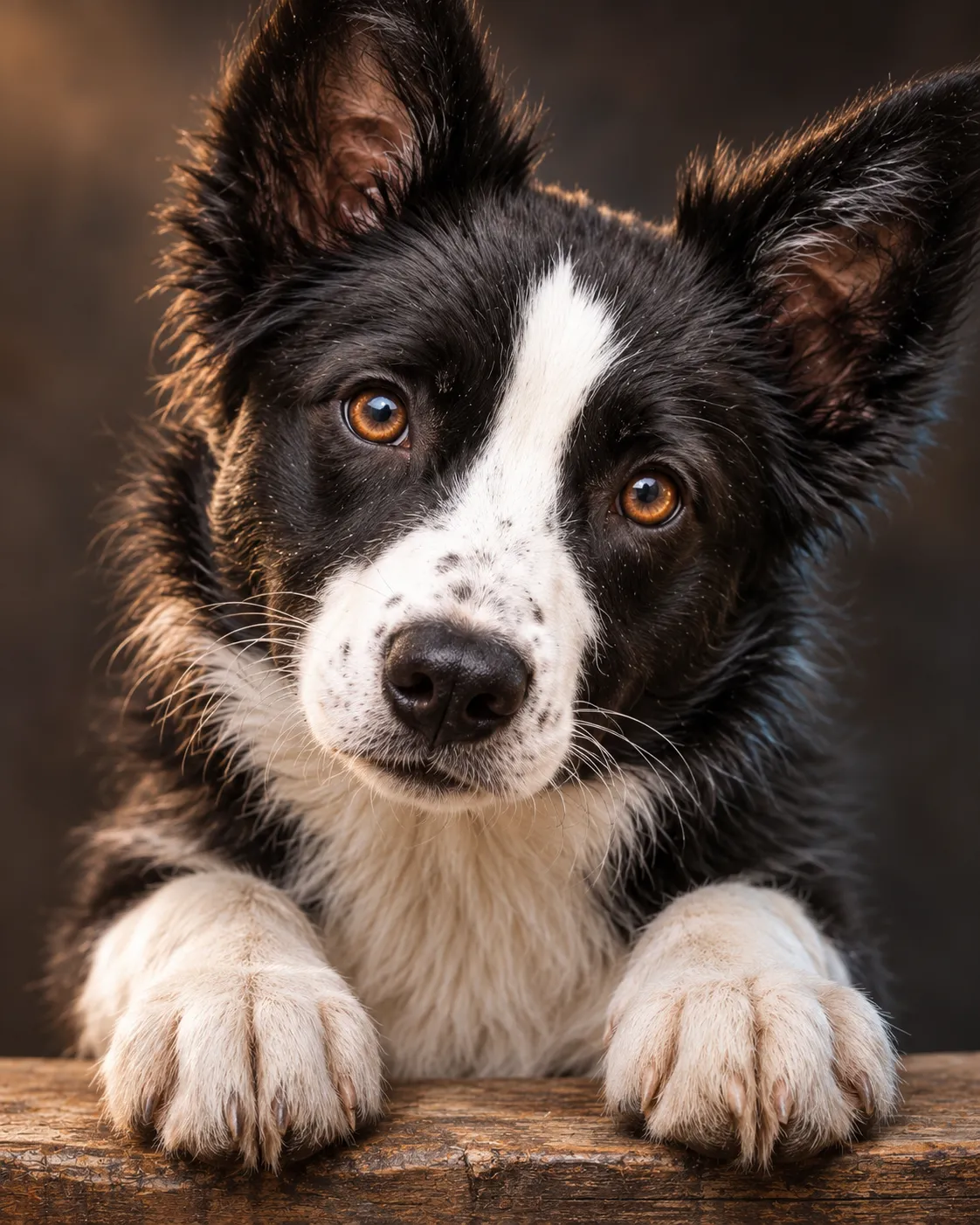
Create a photorealistic, close-up portrait of a curious puppy resting its paws on a rustic wooden table, using an uploaded image as an identity reference.
Example outputs
Prompt template
- Format
- Markdown
- Inputs
- Reference_photo (image) · Required
- Outputs
- Puppy_portrait (image)
Create an image using the uploaded image as the reference.

## Style and subject identity
Create an ultra-photorealistic, highly detailed, emotionally captivating close-up portrait of an adorable black-and-tan puppy with enormous expressive amber-brown eyes, a slightly tilted head, floppy ears, and two oversized front paws resting naturally on the edge of a rustic wooden table.

Use the uploaded photograph as the authoritative identity reference. If it depicts a dog, preserve its recognizable breed characteristics, facial proportions, coat pattern, eye colour, markings, apparent age, and distinctive features. If it depicts a person, creatively reinterpret the subject as an expressive canine character, incorporating recognizable eye colour, expression, personality, and distinguishing visual characteristics wherever naturally possible. Prioritize authentic canine anatomy rather than an unnatural human-dog hybrid.

## Camera angle and framing
Use a vertical 4:5 intimate portrait composition. Position the camera directly in front of the puppy, approximately at eye level, with a very slight downward perspective toward the paws.

Use an 85mm full-frame portrait lens, approximately f/2.8, ISO 100–200, and a 1/250-second shutter speed. Create natural facial compression, realistic optical perspective, exceptionally sharp eyes, and a shallow depth of field.

Frame the puppy’s face extremely close to the camera, dominating approximately 75% of the image width. The forehead approaches the upper boundary, while both floppy ears extend outward and are slightly cropped by the left and right canvas edges.

Tilt the puppy’s head approximately 12–15 degrees to one side for a heartwarming, inquisitive expression. Position both front paws prominently across the lower foreground, resting on the edge of a weathered rustic wooden table. Make the paws appear large because of their proximity to the camera, with visible individual toes, realistic claws, and detailed fur.

Keep the entire face, both eyes, nose, and mouth visible. Let the lower chest and body gradually disappear into the softly shadowed background. Emphasize the full-frame height in the vertical portrait composition, with a cinematic poster layout.

## Facial expression and details
Capture an irresistible, innocent, curious expression with wide-open, glossy eyes gazing directly toward the viewer. Emphasize realistic amber reflections, sharply defined pupils, delicate iris patterns, subtle tear-line moisture, and bright natural catchlights.

Create a richly detailed black nose with realistic pebbled texture, tiny moisture highlights, delicate whiskers, individual muzzle hairs, natural brow markings, and softly rounded cheeks. Preserve authentic puppy proportions, with a broad forehead, gentle muzzle, naturally floppy ears, and a relaxed closed mouth.

## Fur and texture
Render extraordinarily detailed, individually distinguishable fur strands, with deep charcoal-black colouring, subtle silver-blue highlights, and rich warm caramel-tan accents. Emphasize the fine direction and layering of fur across the forehead, cheeks, muzzle, ears, chest, and paws.

Introduce subtle fine-lined, almost hand-engraved microtexture into the coat while retaining convincing photographic realism. Render the wooden tabletop with natural grain, weathered scratches, fine cracks, and soft reflected light.

## Lighting and colour
Use intimate cinematic studio portrait lighting with a large, soft warm key light from the upper left and a subtle cool fill light from the opposite side. Create delicate silver highlights across the black coat, golden illumination around the muzzle and eyebrows, and softly glowing amber eyes.

Maintain rich chocolate-brown, charcoal-black, muted bronze, warm caramel, and subtle slate-grey tones. Use deep yet detailed shadows, controlled highlights, natural reflections, and refined cinematic contrast.

## Background and atmosphere
Position the puppy against a dark, softly blurred studio background featuring muted brown, charcoal, and warm grey gradients. Maintain a quiet, intimate, heartwarming atmosphere with no distracting objects or artificial scenery. Apply creamy background bokeh, realistic light falloff, gentle vignette shading, and smooth tonal transitions.

## Image quality
Create a professional pet portrait photograph with 8K-quality detail, ultra-realistic fur, natural animal anatomy, precise eye reflections, realistic depth, exceptional texture clarity, beautiful tonal separation, and premium fine-art photographic finishing.

Avoid cartoon styling, exaggerated artificial eyes, plastic-looking fur, distorted paws, extra toes, unnatural anatomy, excessive sharpening, painterly effects, text, logos, and watermarks.

-- ar 4:5
What you'll create
A puppy rests two large front paws on a wooden table, tilting its head toward the camera. Realistic canine anatomy, amber-brown eyes and natural fur detail anchor the intimate close portrait.
Frequently asked questions
Can a person’s photo be used?
Yes. The brief permits a canine reinterpretation of recognizable eye color and personality while retaining authentic dog anatomy.
If the reference is already a dog, what is preserved?
Breed traits, markings, coat pattern, apparent age and distinctive features remain recognizable.






Comments
Tried this prompt? Share what you made, compare results, or ask a question