The 1980s Game Girl
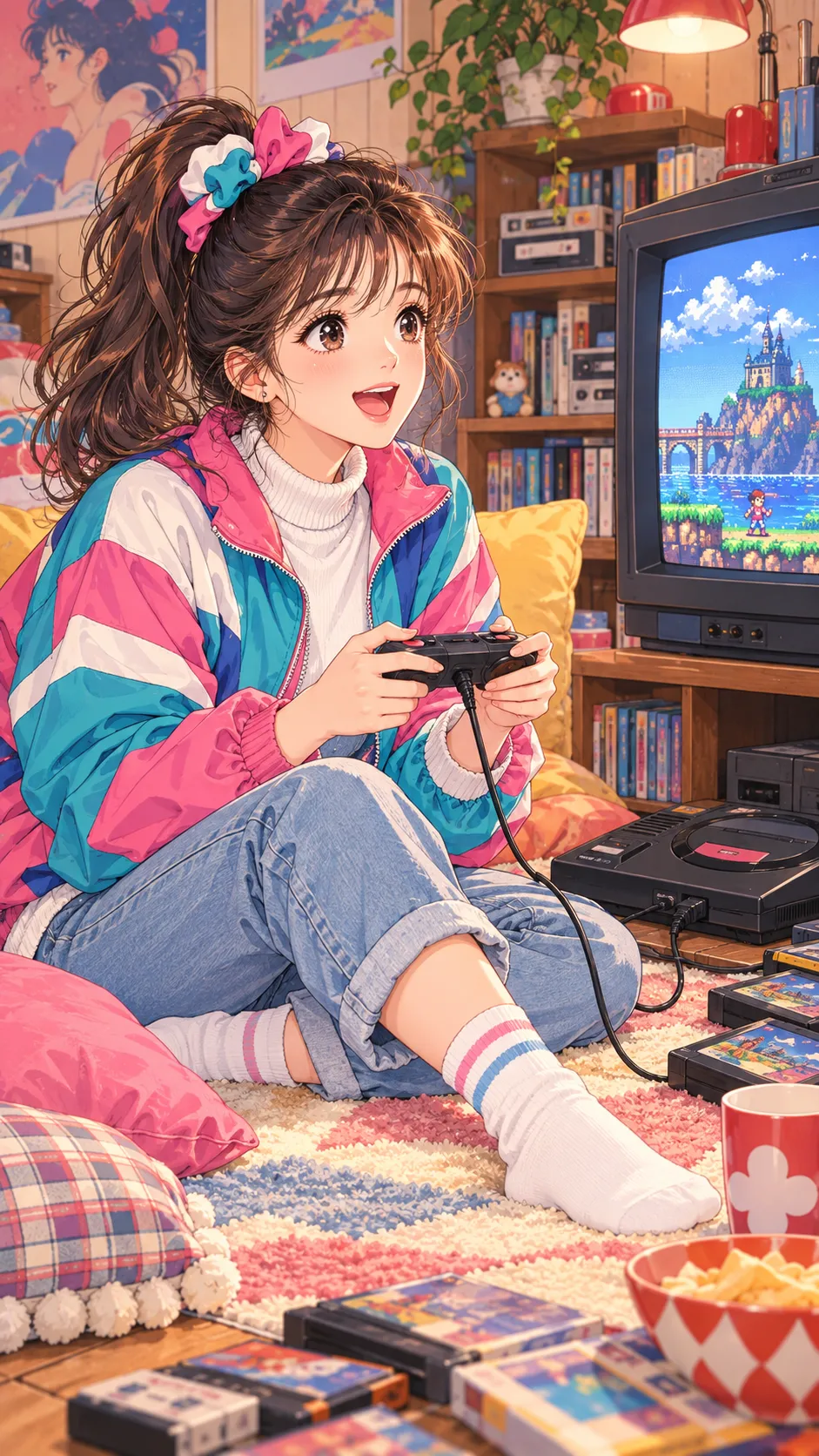
Create a detailed, hand-drawn 2D shōjo manga illustration of a fashionable heroine enjoying a game in a nostalgic 1988 Japanese home.
Example outputs
Prompt template
- Format
- Markdown
- Outputs
- Illustration (image)
Create a one-of-a-kind, exceptionally cute 1980s retro-gaming fashion heroine, celebrating the October 29, 1988 Japanese release of Sega’s 16-bit Mega Drive. Evoke late-1980s Japanese home culture and fashion, and the excitement of a new era of home gaming. Depict a joyful, nostalgic gaming moment in a Japanese home in 1988, combining period-appropriate details with the polished, delicate beauty of a contemporary shōjo manga color-cover illustration. Make this compelling fashion art, like the opening feature of a 1980s fashion magazine—not a product showcase for a game console.

**Heroine**

The main character is a fictional Japanese adult woman with a doll-like, exceptionally cute face, large jewel-like sparkling eyes, delicate eyelashes, and lovely, well-proportioned features. Her expression should naturally convey the fun, curiosity, and excitement of being absorbed in a game.

Choose a hairstyle freely for each image: high ponytail, side ponytail, softly rounded bob, short haircut, wavy hair, or half-up style. You may add 1980s-inspired accessories such as a large ribbon, scrunchie, headband, or hair clip. Vary her hairstyle, hair color, expression, and pose between images.

**Fashion design**

Choose one cohesive style inspired by Japanese youth culture of the late 1980s:

1. **80s POP GIRL:** An energetic, pop look combining boldly colored sweatshirts, color-blocked tops, and voluminous sleeves.
2. **RETRO SPORTY:** A look featuring a colorful sporty jacket, a high-neck top, and retro sportswear.
3. **COLORFUL STREET:** A playful streetwear look combining an oversized top, distinctive patterns, and pop accessories.
4. **DENIM SWEETHEART:** A casual, girly look combining high-waisted denim, a cute blouse, and a cropped jacket.
5. **80s IDOL GIRLY:** 1980s idol-inspired fashion featuring puff sleeves, ribbons, a flared skirt, and a glamorous neckline.
6. **VINTAGE CASUAL:** A warm vintage look combining retro knitwear, a cardigan, and a checked skirt.
7. **PREPPY GAME GIRL:** A smart, cute preppy look combining a collared blouse, knit vest, and pleated skirt.
8. **RETRO FEMININE:** A classic, delicate look featuring a frilled blouse, high-waisted skirt, and elegant vintage accessories.

Keep the outfit centered on one style and visually cohesive; do not mix styles indiscriminately. Fully cover the chest and keep the design modest and elegant. Use opaque fabric for skirts.

**Indoor footwear — important**

The setting is an ordinary Japanese home in 1988. The heroine must not wear shoes indoors. Do not depict her wearing outdoor shoes such as sneakers, pumps, or boots on a carpet, tatami mat, or sofa. Choose socks to suit the outfit, such as white slouchy socks, socks with cute stripes, retro-colored socks, ribbed socks, socks with a small motif, or simple white socks. Use natural designs appropriate to the late-1980s setting. Do not depict the extremely bulky slouch socks that became popular later as a standard 1988 style. Coordinate the socks’ color and pattern with the outfit. If sneakers appear as a prop, keep them in an appropriate place such as the entryway; do not place outdoor shoes on indoor carpets or cushions.

**Color and personal styling**

Do not fix the outfit’s main color. Freely use a broad palette that may include red, royal blue, turquoise, emerald green, yellow, orange, purple, pink, white, and black. Pink is a natural option, but do not over-rely on any one color. For each image, devise a different combination of main and accent colors, patterns, materials, and accessories. Build the palette around roughly two to four colors. Balance bold 1980s flair with shōjo manga charm rather than making the outfit merely loud and colorful. Create a distinctive, one-of-a-kind look that suits the heroine.

**Game console and props**

Include one black, stationary 16-bit home console inspired by the original Japanese Mega Drive released in 1988. It should have a low, horizontally elongated shape and a design around the circular cartridge-slot area on top. Use one black wired controller inspired by the early model, with a directional pad and three main action buttons. Use one console, one controller, and one television as the basic arrangement.

The television should be a CRT model used in a Japanese home in the late 1980s. Its screen may show an imaginary 16-bit pixel-art game inspired by the gaming culture of the era; do not accurately reproduce a screen from an existing game. Show the console-to-TV connection and controller cable naturally. Keep the console and props secondary to the heroine, prioritizing her appeal. Do not show trademarks, logos, readable text, or numbers.

**Pose and composition**

Show the heroine enjoying herself in a Japanese home gaming room. Choose a natural pose, such as sitting comfortably with her legs bent on the carpet, sitting cutely on a floor cushion, playing on a sofa, looking eagerly forward to starting a game, or smiling with satisfaction after finishing one. Do not fix the pose; choose one that best presents the outfit and character.

If she holds a controller, have her hold a single controller naturally with both hands. Make the position of each hand clear, with natural placement of the thumbs and other fingers. Avoid extra or duplicated fingers gripping the controller. If the hands become difficult to depict clearly, place the controller on the floor or a table and let both hands rest naturally instead.

Depict exactly two arms, two hands, and two legs. Show anatomically correct connections between arms, wrists, and elbows, with the correct number of fingers and natural leg placement. Avoid crossed arms, extra fingers, duplicated hands, arms disappearing into sleeves, and unnatural joints.

Use a slightly pulled-back composition that shows the outfit and socks attractively. Do not make the face too small; keep the heroine’s expression and fashion as the focus of the image.

**Background**

Set the scene in a cute, retro gaming room in a Japanese home in the late 1980s. Make the interior bright, warm, and domestic, with the feel of Japan in 1988. Arrange period-appropriate items naturally, such as a CRT television, black home console, game cartridges, colorful cushions, retro furniture, cassette tapes, and small decorative objects. Use a carpet or rug suited to a home of the period. Ensure furniture and props fit the 1988 setting. Do not include game consoles from the late 1990s onward, modern flat-screen TVs, or smartphones.

Do not depict windows, window frames, outdoor scenery, mirrors, or reflections. The walls may be styled tastefully with retro wallpaper, a small display shelf, or a simple poster. Do not put readable text on posters. Avoid complex geometric patterns and excessive decoration. Do not overcrowd the background; keep the heroine’s cuteness and fashion prominent.

**Art style and finish**

Create a stunning contemporary shōjo manga color-cover illustration as a fully 2D, hand-drawn image. Use delicate, crisp linework; beautiful, well-proportioned facial features; clear, translucent-looking eyes; and carefully rendered hair. Use vivid, bright colors with soft, beautiful cel-style coloring as the main approach. Delicately distinguish the textures of fabric, frills, ribbons, denim, knitwear, and socks.

Do not use a photographic or live-action look, 3D CGI, 3D animation, a figurine-like appearance, or excessively realistic textures. Convey the 1980s atmosphere while giving the character the refined, polished beauty of contemporary shōjo manga.

Final requirements: entirely 2D, ultra-high detail, vertical 9:16 composition, no text. Depict a one-of-a-kind, exceptionally cute 1980s retro-gaming heroine enjoying a game in a Japanese home in 1988.
What you'll create
A fictional adult woman enjoys a game in a late-1980s-inspired interior, with freely varied hair, pose and coordinated fashion. Oversized tops, denim, preppy layers or vintage knitwear support a polished fully 2D cover-like scene.
Frequently asked questions
Is the console meant to dominate as a product showcase?
No; the source prioritizes the heroine’s fashion and gaming moment over product presentation.


Comments
Tried this prompt? Share what you made, compare results, or ask a question