Split-Photo Geometric Editorial Poster
Create a separate 3:4 editorial poster for each uploaded photo, pairing a faithfully preserved photograph with a flat geometric character illustration.
Example outputs
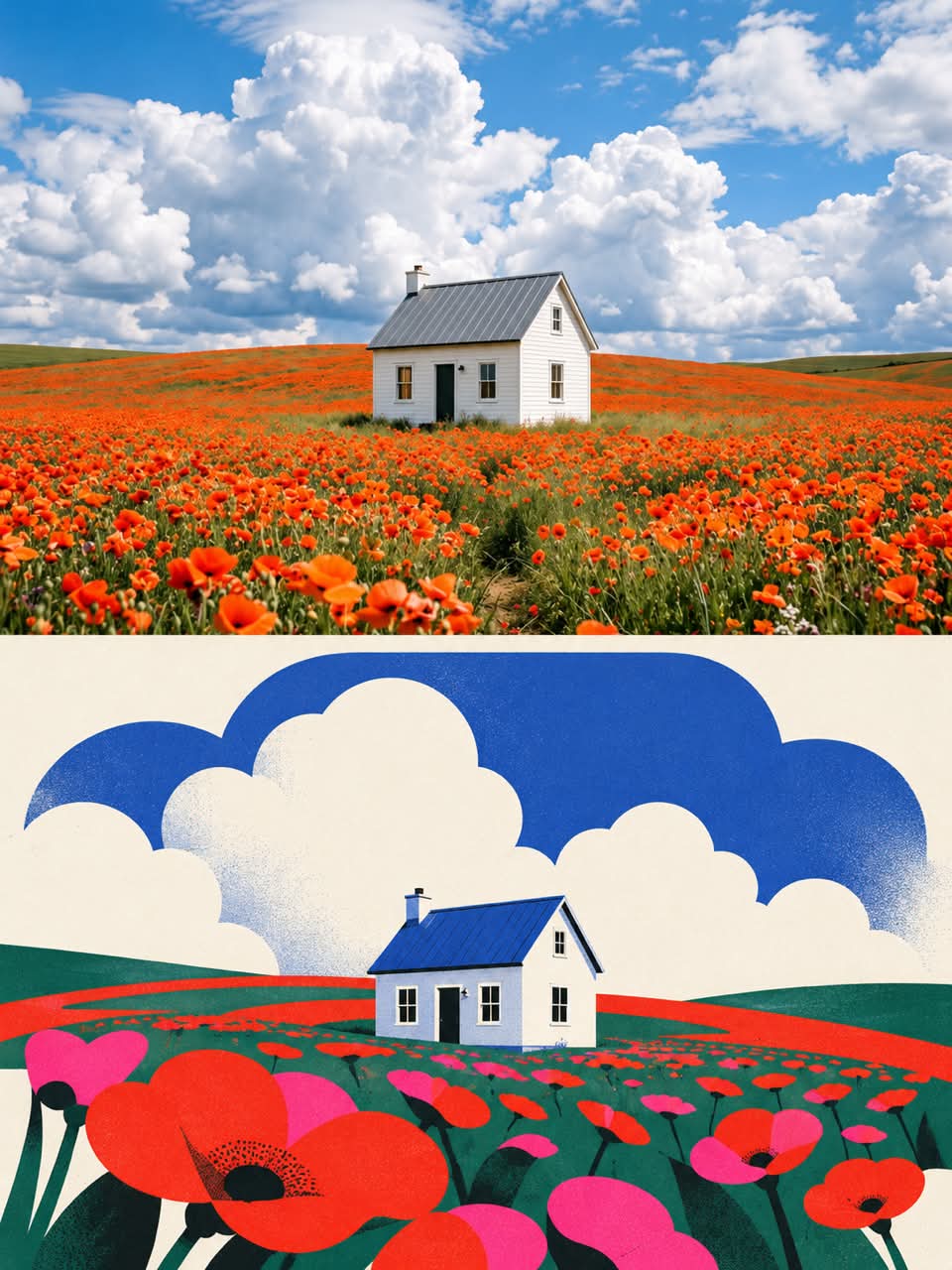
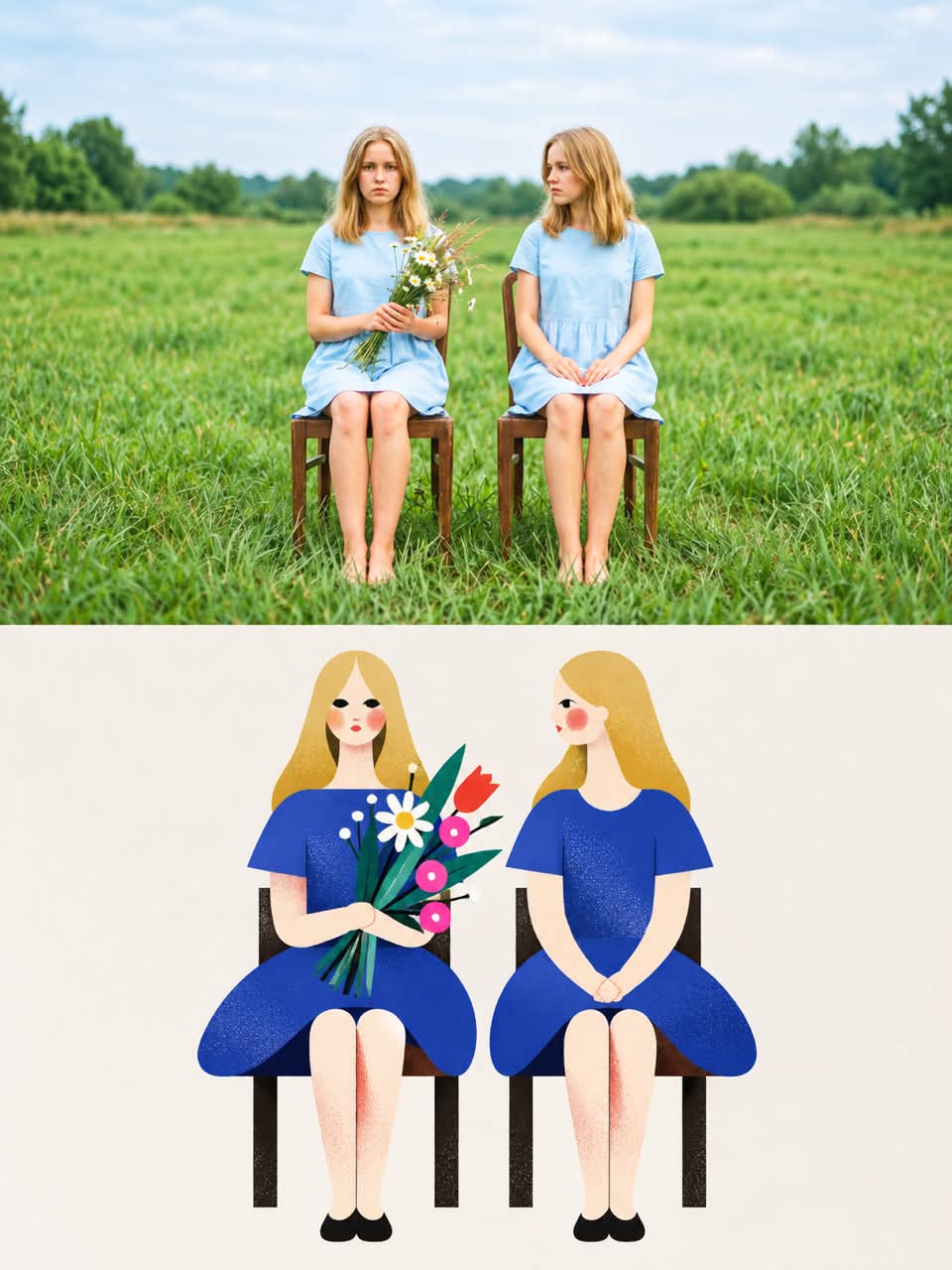
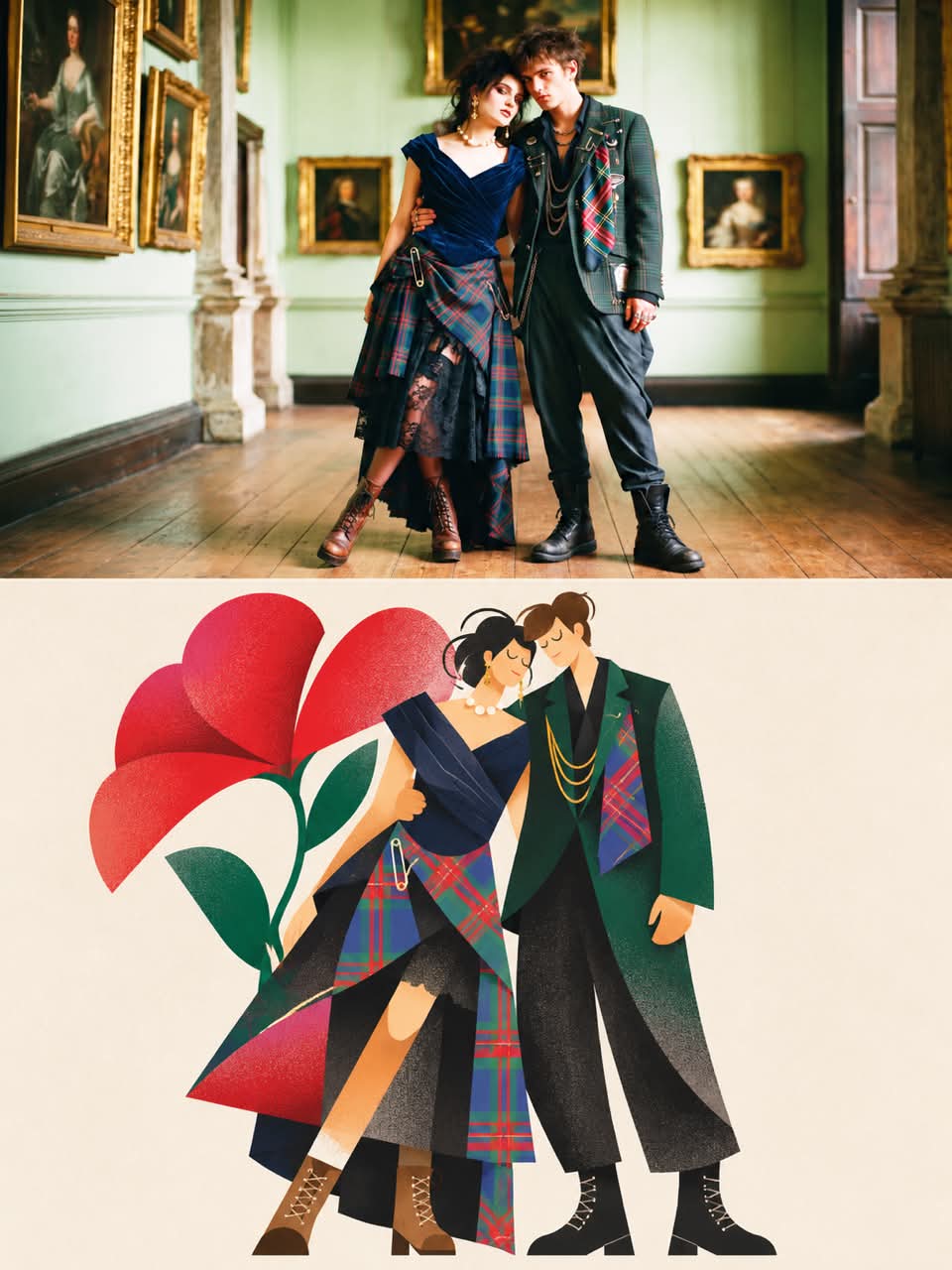
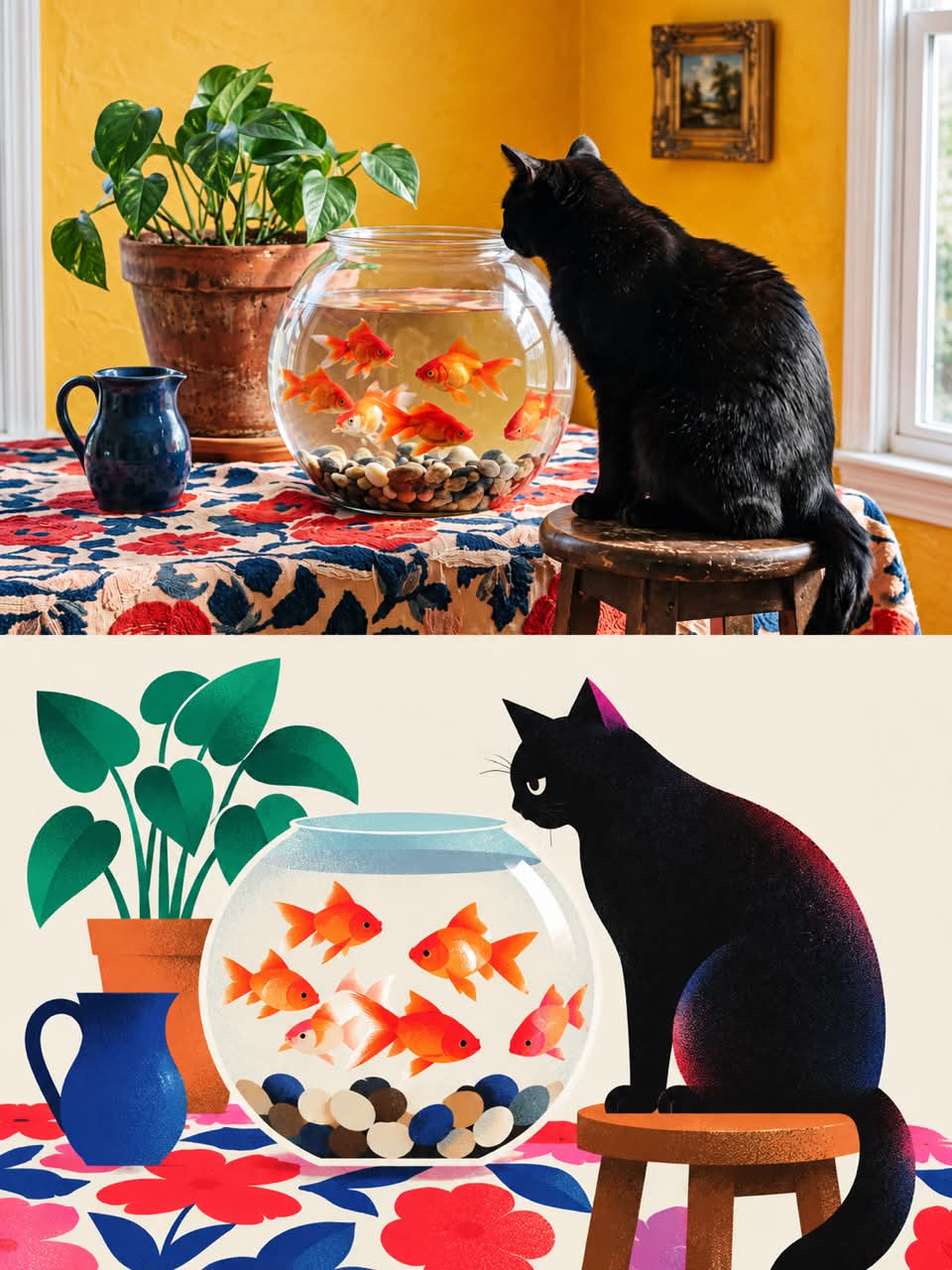
Prompt template
- Format
- Text
- Inputs
- Uploaded_photo (image) · Required
- Outputs
- Editorial_poster (image)
Create one independent high-end editorial poster for each uploaded photo. Do not combine multiple photos into a collage. Process each photo and output it as a separate poster.

OVERALL FORMAT

Use a strict 3:4 vertical composition. Divide the canvas horizontally into two exactly equal sections, with a precise 1:1 height ratio: the top half occupies exactly 50% of the canvas and the bottom half occupies exactly 50%. Make the two sections feel visually connected as one refined art-publication cover.

TOP HALF — ORIGINAL PHOTOGRAPH

Preserve the original photograph as faithfully as possible. Keep the main composition, subjects, identity, facial features, body proportions, poses, expressions, clothing, objects, and spatial relationships unchanged. Preserve the realistic photographic texture, natural lighting, shadows, atmosphere, and original color mood. Apply only subtle, sophisticated editorial color grading to create the feel of a premium magazine photograph, contemporary art book, or high-end independent publication. Keep the image photorealistic and authentic, never overly retouched or artificially stylized.

If necessary to fit the 3:4 composition naturally, extend the sky, ground, walls, or surrounding environmental background. Make any background extension seamless and photographic. Never stretch, distort, reshape, replace, or alter the main subject.

BOTTOM HALF — EDITORIAL CHARACTER POSTER

Create a finished editorial character poster inspired by the uploaded reference image. Preserve the subject's recognizable identity, hairstyle, clothing details, pose, and important visual characteristics while translating them into a sophisticated flat geometric illustration.

FORMAT

Use a vertical 3:4 composition with an edge-to-edge warm off-white paper background. Create one standalone poster with a clean editorial layout.

CHARACTER

Depict one adult character constructed from a few oversized asymmetric geometric shapes. Use slightly exaggerated proportions, a small head, elongated capsule-like limbs, simple mitten-style hands, and one oversized object integrated naturally into the pose and silhouette. Preserve the subject's recognizable appearance while simplifying details into graphic shapes.

STYLE

Use flat geometric illustration, asymmetric proportions, crisp color blocks, soft airbrushed shading, subtle dark-to-color spray gradients where shapes overlap, fine print grain, and delicate stippling mostly inside darker areas. Aim for a refined contemporary editorial-poster aesthetic.

FACE AND EXPRESSION

Use minimal black cut-paper facial features: simple crescent eyes and a minimal mouth. Communicate emotion primarily through the character's full-body gesture and silhouette rather than detailed facial expression.

PALETTE

Use warm off-white #F3F1EB, near-black 10100F, hot pink #F553D2, warm red #F42726, cobalt 293EA1, and emerald 13785D. Keep colors flat and graphic, with controlled soft gradients only where forms overlap.

Keep the character and oversized object as the main visual focus. Use generous negative space and a balanced editorial arrangement. The object should visibly affect the overall silhouette and feel integrated into the character's pose.

NEGATIVE PROMPT FOR THE ILLUSTRATED SECTION

No extra text, logos, outlined cartoon style, glossy 3D, realistic skin, photorealism, coarse canvas texture, busy background, extra limbs, distorted anatomy, excessive facial detail, photorealistic shading, random objects, clutter, or watermark.
What you'll create
The source remains faithful above while a simplified illustrated version fills the design section below. Large shapes preserve recognizable pose and important silhouette details.
Frequently asked questions
Is the lower figure meant to have realistic skin?
No. It is geometric illustration.
May extra unrelated objects fill the space?
No. Random objects and clutter are excluded.


Comments
Tried this prompt? Share what you made, compare results, or ask a question