Watercolor and Pencil Fashion Illustration from a Reference Photo
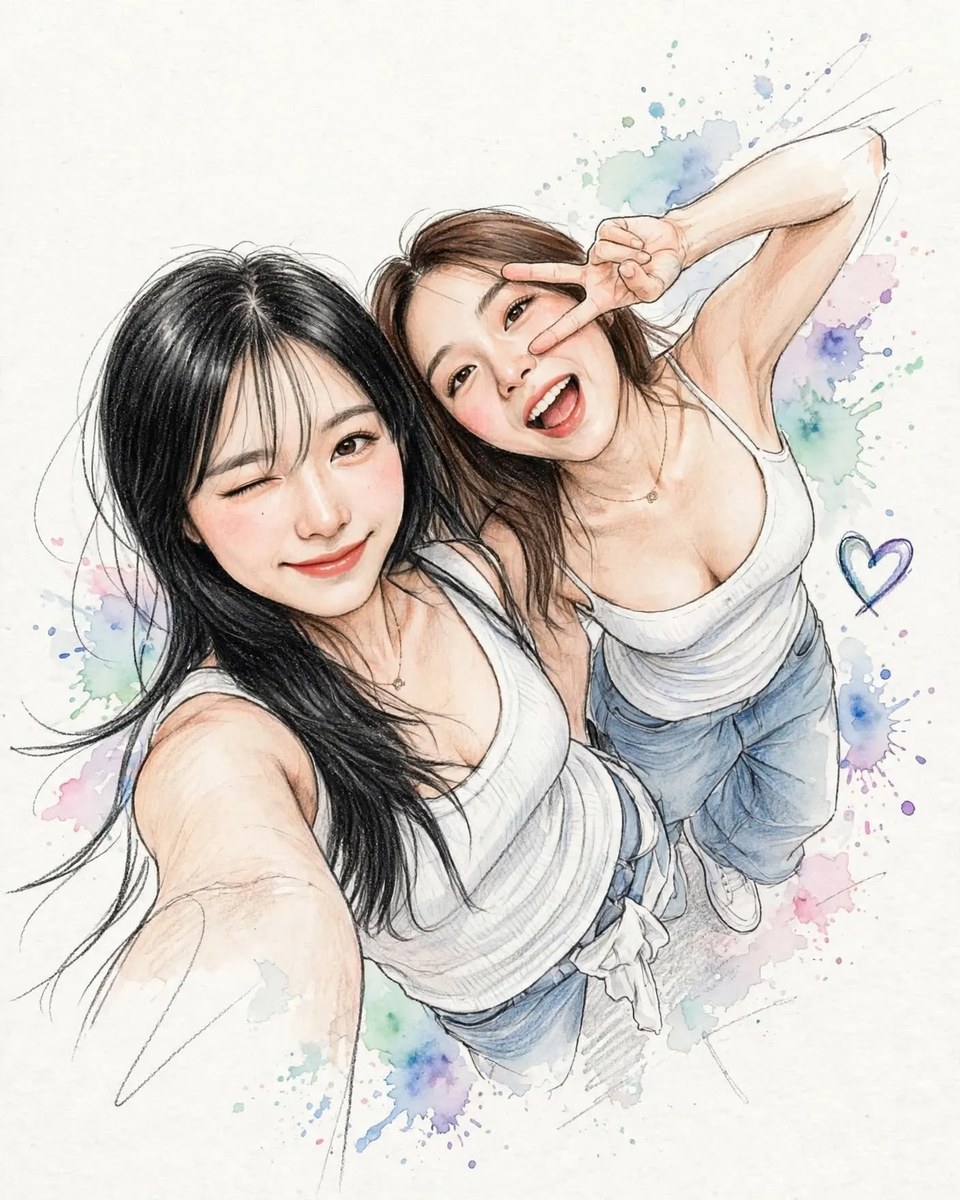
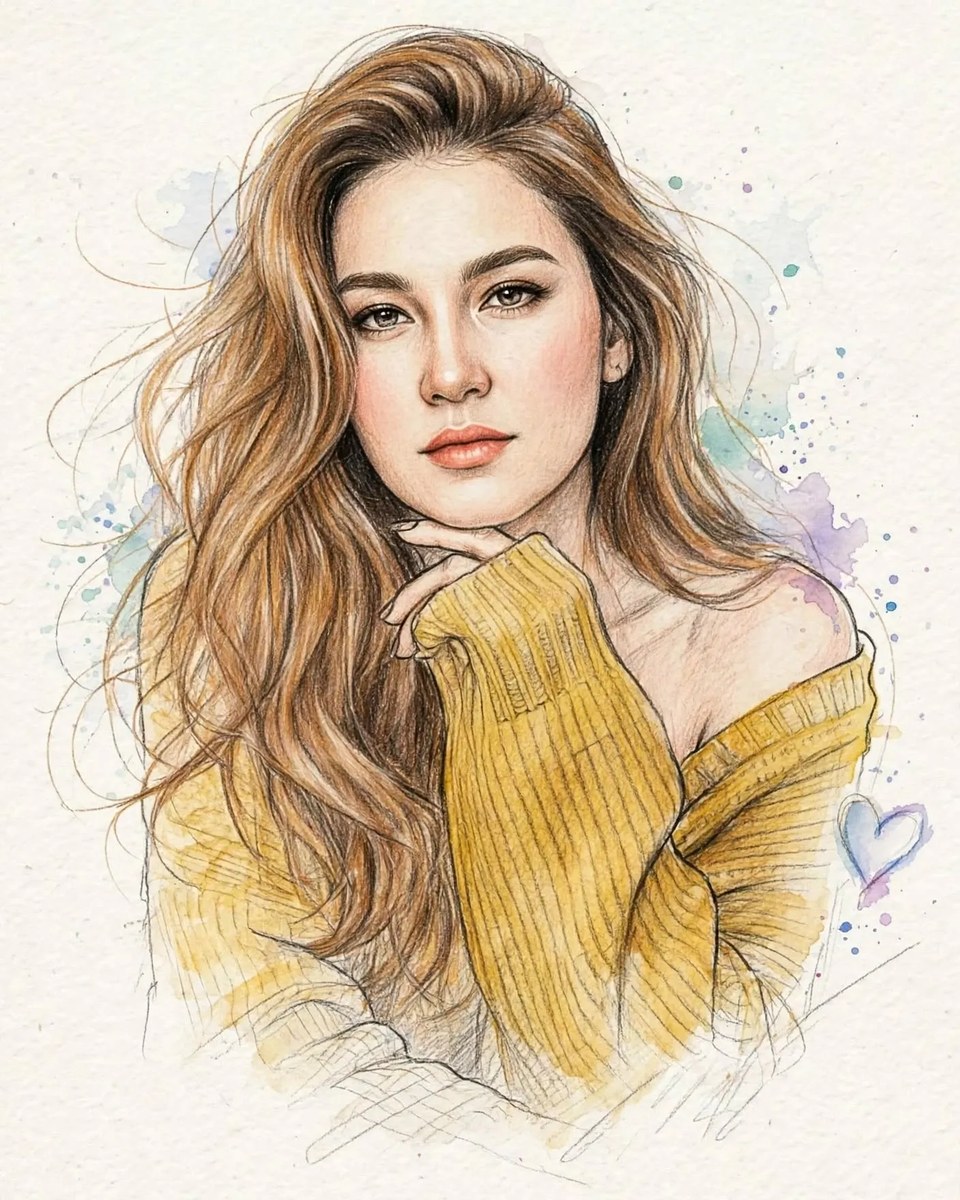
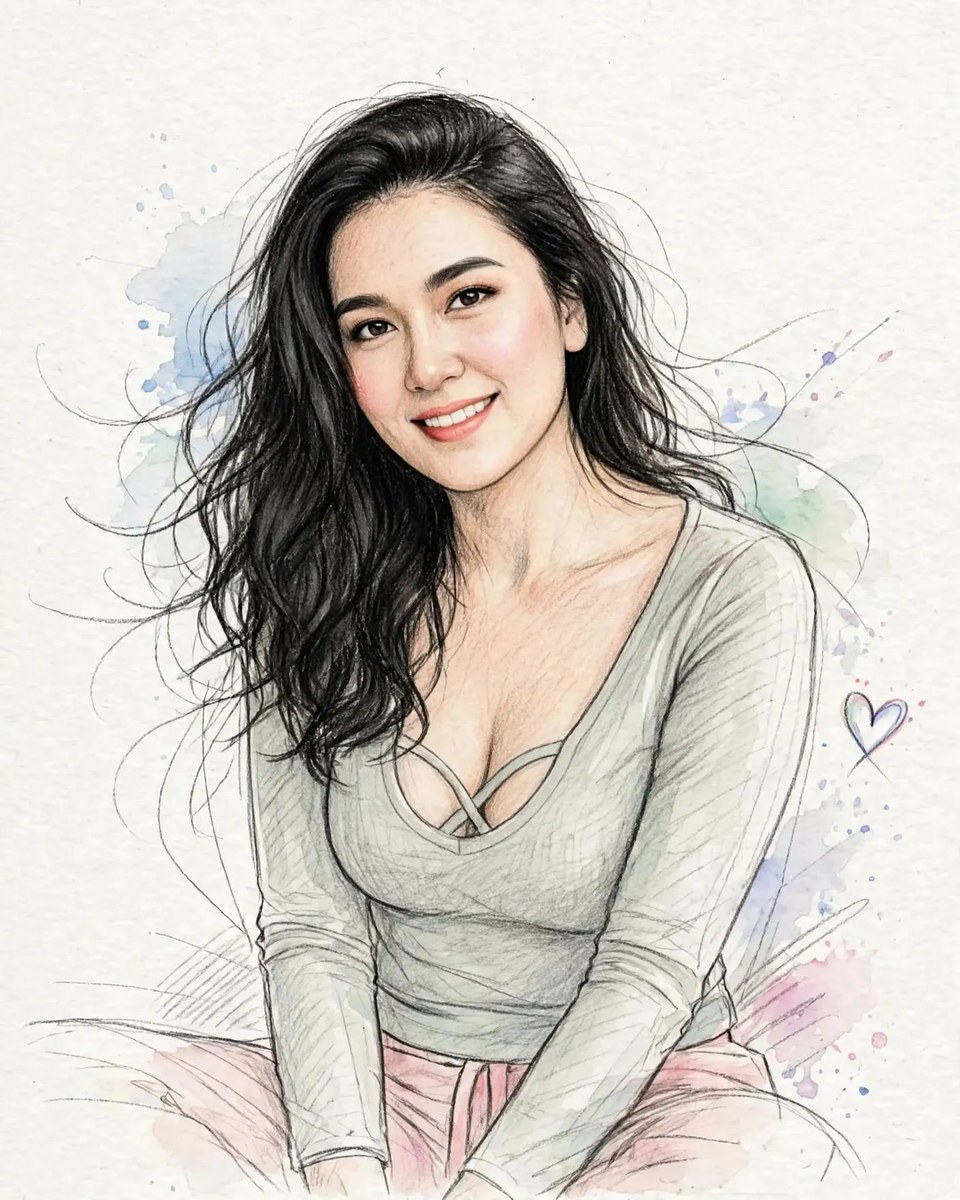
Transform a reference photo into a semi-realistic fashion illustration with colored-pencil details, light watercolor washes, and a clean white sketchbook background.
Example outputs
Prompt template
- Format
- Text
- Inputs
- Reference_photo (image) · Required
- Outputs
- Illustration (image)
Use the uploaded photo as the sole reference for the subject’s appearance. Transform the figure into a high-end, semi-realistic fashion illustration in a watercolor-and-pencil sketch style—not a photograph.

Accurately preserve the subject’s face shape, facial-feature proportions, eye and eyebrow shapes, nose, lips, expression, gaze, hairstyle, hair color, bangs, head angle, body orientation, gestures, clothing, accessories, and distinctive props. Do not alter the subject’s design or beautify them into a generic AI face. Do not enlarge the eyes, shrink the nose, or change the shape of the face or lips.

Blend semi-realism, colored pencil, light watercolor washes, and fashion sketching. Make the face the most detailed element, with a clear, bright, natural skin tone, preserved white-paper highlights, and a soft rosy flush. Give the eyes natural highlights and delicate eyelashes. Keep the lips’ original shape and color them in a natural shade, such as coral pink, dusty rose, or the color in the photo; they should look clear yet translucent.

Strictly maintain the original hairstyle and hair color. Use black, dark gray, and dark brown, with touches of light-colored pencil and watercolor, to create depth and tonal variation. Add numerous natural, fluid black-and-gray sketch lines. Vary hair strokes in length, depth, and continuity; let some strands extend naturally beyond the outline and follow the actual direction of hair growth. Keep black hair deep black, not light gray.

Match clothing colors exactly to the photo: pink stays pink, blue stays blue, red stays red, and so on. Illustrate the clothing with colored-pencil shading, short marker strokes, light color washes, and black-and-gray structural lines. Leave approximately 20%–30% of the paper white, including color breaks and uncolored areas, and avoid the flat look of digital coloring.

Retain all recognizable elements from the photo, such as flowers, glasses, earrings, hair accessories, hats, scarves, headphones, jewelry, and bags. Match their original colors and shapes. Use bright, clean white drawing paper as the background; do not redraw the photo’s environment. Keep about 85%–90% of the image area clean white. Add only a few free-flowing colored-pencil or marker strokes in sky blue, lake blue, mint green, lavender, and pink behind the hair, on the shoulders, and along the sides of the body. These small areas should remain clear and vibrant, not overly desaturated.

Maintain an unfinished-sketch aesthetic at the figure’s edges. Let the ends of the hair, shoulders, garment hems, and body contours fade or break off naturally, creating negative space that blends with the paper. In the negative space beside the figure, add a small hand-drawn heart with a blue, purple, or pink outline and an empty center.

The overall impression should be clean, white, bright, luminous, elegant, and lively, with authentic hand-drawn strokes and a stylish illustrative feel. Make the face radiant but not pale, the eyes clear and expressive, the lips naturally colored, the black hair deep, the clothing’s original colors vibrant, the decorative color strokes distinct, and the black-and-gray sketch lines firm and clear. Luminous does not mean faded.

Do not include AI-generated influencer faces, 2D/anime/Manhwa styles, digital CG or 3D, oil painting, heavy impasto, traditional academic sketching, charcoal, pure watercolor, children’s crayon style, uniform thick black outlines, overall low saturation, hazy or grayish tones, white fog filters, a faded or washed-out appearance, an exact replication of the photographic background, complex scenery, text, logos, or watermarks.

Use a portrait 3:4 aspect ratio.
What you'll create
The subject’s original pose, clothing and facial proportions become detailed pencil work with light watercolor washes. Preserved white-paper highlights and a rosy complexion keep the illustrated face clear and expressive.
Frequently asked questions
Should it reproduce the photographic background exactly?
No. Exact background replication and complex scenery are excluded.
Can the facial proportions be idealized?
No. Eye size, nose, lips and face shape stay faithful to the reference.




Comments
Tried this prompt? Share what you made, compare results, or ask a question