The Octopus Merman
Create a hyper-realistic cinematic underwater portrait of an octopus-merman among ancient submerged ruins, using a supplied face image as a mandatory identity reference.
Example outputs
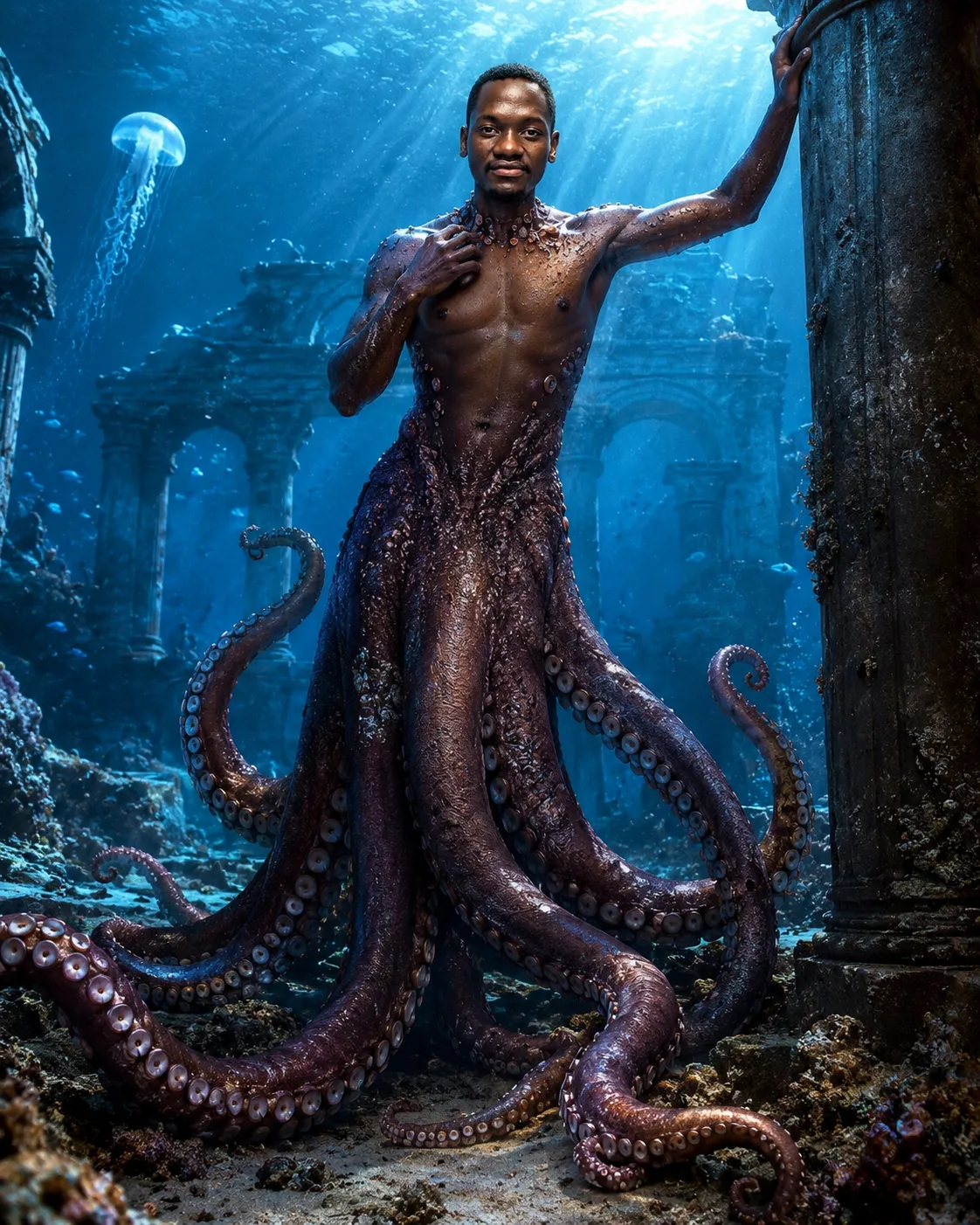
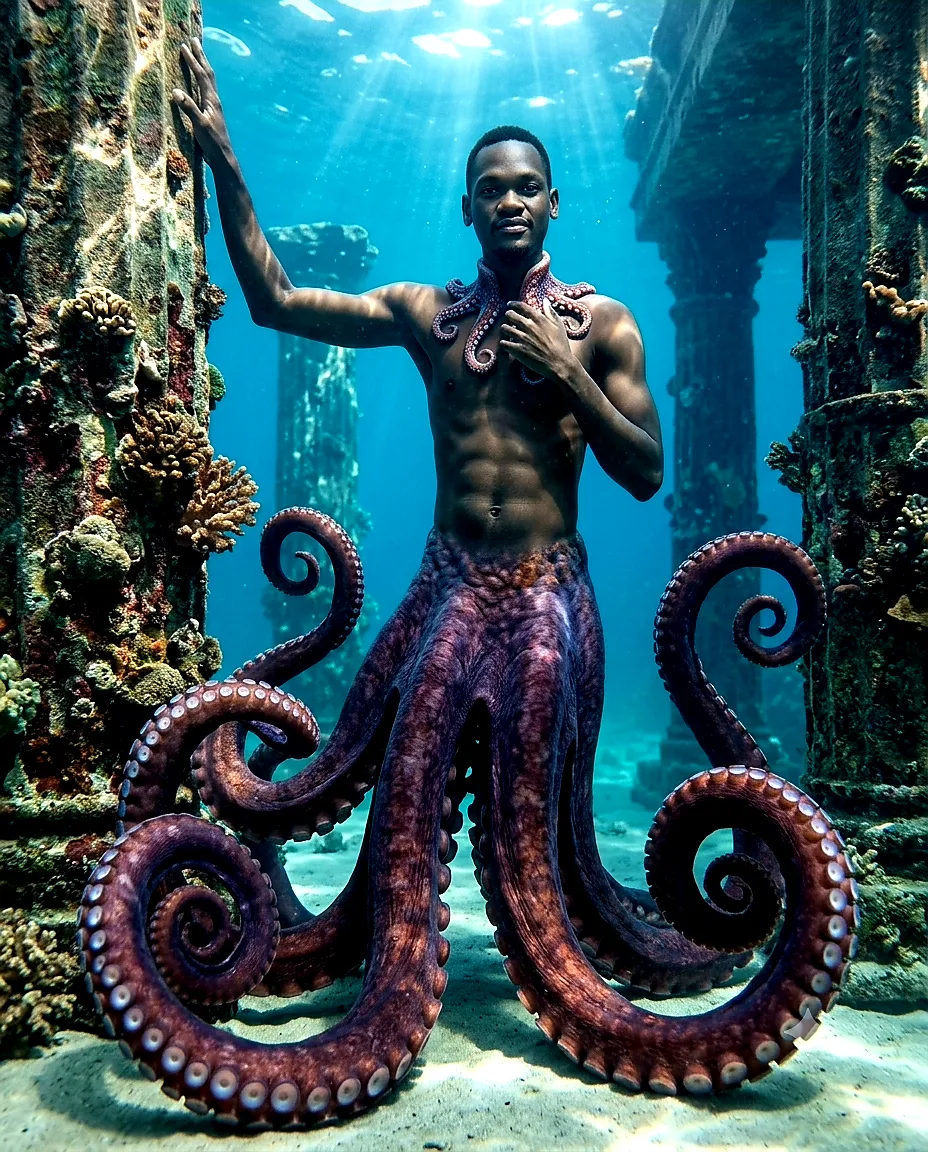
Prompt template
- Format
- Text
- Inputs
- Face_reference (image) · Required
- Outputs
- Underwater_character_portrait (image)
Use the supplied face as a mandatory reference. Create a person whose characteristics faithfully match the reference image, preserving the model’s visual identity, real proportions, presence, body structure, and natural appearance with absolute fidelity. Do not artificially embellish or plasticize the face, distort the character, or alter the model’s real biotype.

Create a hyper-realistic, cinematic, editorial underwater photograph of an elegant, magnetic, biologically plausible, and visually rare octopus-merman. Use a 4:5 vertical composition and show the character in full, from head to the tips of the tentacles, in a setting of ancient submerged ruins.

Organize the creature’s anatomy clearly, with approximately one-third human and two-thirds animal. The upper part should be a natural human torso; the lower part should be a much longer, dominant octopus-tentacle structure that is visually the protagonist. The human part must look real, with a normal, natural body faithful to the reference image: a proportional human torso, no muscular or defined abdomen, no athletic exaggeration, and no artificial definition. Keep the appearance true, organic, and consistent with the model.

Make the transition between the human and animal parts seamless, organic, and biologically convincing. Replace the entire lower half with multiple real, long, thick, fluid, elegant, anatomically plausible octopus tentacles, ideally eight or otherwise clearly readable as several main tentacles. They should emerge naturally and elegantly from the hips and lower abdomen. The tentacles should make up approximately two-thirds of the creature’s total anatomy, clearly longer and more dominant than the human part.

Give the tentacles organic, choreographed movement: some raised and curved to the sides, others resting on the sandy ground, and others slithering through the surrounding space. Create a majestic, living, hypnotic, sculptural silhouette. Define the suction cups clearly on the inner faces of the tentacles, with realistic materiality; make them smaller near the tips and larger in the thickest areas. The surface should look moist, shiny, and textured. Use a palette of abyssal purple, deep wine, burnt copper, dark lilac, wet graphite, and subtle blue reflections for the animal part, with realistic physical sheen and no plastic appearance.

Around the neck, create an organic, octopus-inspired biological collar made of short, fleshy, refined appendages integrated into the skin, like living armor wrapping around the neck, clavicle, and base of the neck. Add subtle octopus-inspired organic textures to the shoulders, arms, sides of the torso, and transition at the hips, including chromatophores, vivid spots, a wet texture, and small clusters of discreet suction cups integrated into the body. Keep these details natural and sophisticated.

Pose the octopus-merman upright among the submerged ruins in an elegant, dominant, natural stance. Raise one human arm so it rests against a column on the right side of the scene; let the other hand gently touch the biological collar near the neck and chest. Have the character look directly at the camera with a serene, intense, beautiful, confident, magnetic expression.

Set the scene in an ancient submerged temple with worn stone columns, ruined arches, a sandy floor, rocks, marine textures, and discreet corals attached to the structures. The water should be crystal-clear blue, deep, luminous, and physically realistic. Sunbeams should pierce the surface and descend diagonally across the character, creating realistic caustics on the skin, tentacles, columns, and floor. Include a translucent jellyfish floating in the background to the left of the composition, suspended particles, convincing ocean depth, and very subtle marine fauna.

Use premium, natural, cinematic, physically realistic lighting that enhances the wet sheen of the skin, the relief of the suction cups, the depth of the ruins, and the creature’s imposing presence. Aim for maximum graphic realism, naturalness, refined optical clarity, and extreme texture, including real skin pores and micro-variations and the physical refraction of water. Avoid apparent CGI, exaggerated glow, incoherent anatomy, incorrect hands, a plastic-looking face, excessive musculature, a fish tail, a terminal fin, a traditional mermaid appearance, an artificial-looking setting, text, and watermarks.
What you'll create
A reference person becomes a complete tentacled marine hybrid in a cinematic underwater setting. Natural facial texture and coherent anatomy combine with optical water depth.
Frequently asked questions
Does the character have a conventional fish tail?
No. The template explicitly excludes a fish tail and terminal fin.
Are tentacle tips cropped away?
No. The full character is visible to their tips.
Comments
Tried this prompt? Share what you made, compare results, or ask a question