Expectation vs. Reality: 1997 MTV Editorial
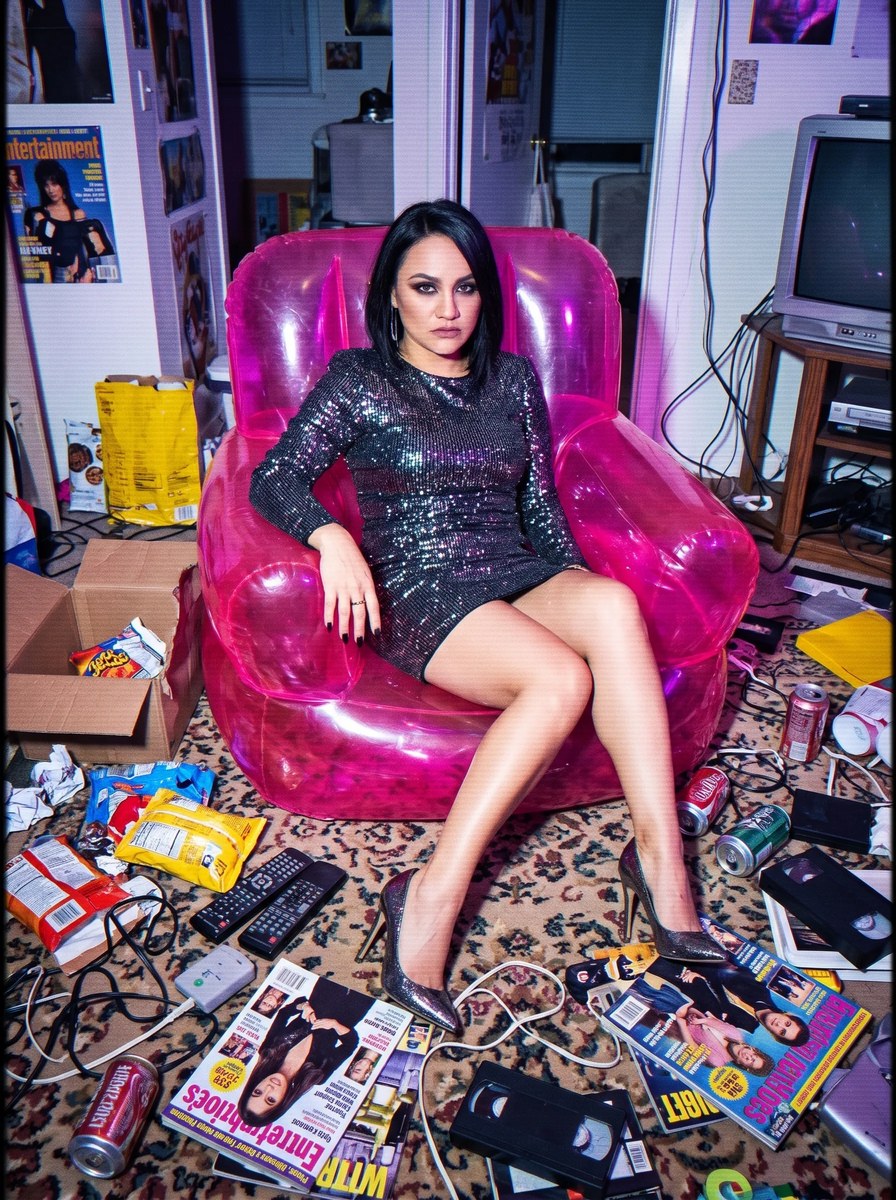
Create a surreal fashion-editorial photograph contrasting glamorous styling with everyday clutter, with a deliberately absurd 1990s MTV/VHS broadcast look. Preserve the identity of the person in the required reference photo.
Example outputs
Prompt template
- Format
- Text
- Inputs
- Reference_photo (image) · Required
- Outputs
- Editorial_photograph (image)
Create a surreal editorial photograph with the look of an experimental MTV program from 1997. The concept is “Expectation vs. Reality”: Pinterest promised one thing; life delivered another.

Use the supplied reference photograph as the primary and required source for the depicted person’s identity.

VISUAL IDENTITY PRESERVATION
Preserve the person’s identity and recognizable individual facial features as faithfully as possible, including:
- The original shape and structure of the face.
- The distance, shape, and placement of the eyes.
- The eyebrows, nose, lips, and facial contours.
- Bone structure, cheekbones, jaw, and chin.
- Natural skin tone, undertone, and texture.
- Apparent age and individual characteristics.
- Original body proportions and physique.
- Natural hair characteristics and reference appearance, except where this prompt explicitly requests a change.

CREATIVE TRANSFORMATION
Identity fidelity must not restrict the requested artistic transformations. Freely change clothing, makeup, hairstyle, accessories, facial expression, pose, gestures, framing, lighting, setting, composition, and art direction, provided these changes do not erase the person’s identity. Carry out every feature explicitly requested in this prompt, even if it differs from the reference photograph. Adjust facial expression, posture, and body language to suit the scene.

Apply these priorities:
1. Preserve facial identity and individual characteristics.
2. Carry out explicitly requested physical and aesthetic changes.
3. Adapt clothing, makeup, pose, and expression to the creative direction.
4. Follow the editorial concept in the setting, lighting, and visual treatment.

Do not replace the reference person with a generic model who merely looks similar. Do not artificially beautify them, slim their face, change their proportions, or excessively smooth their skin unless explicitly requested. The result must be recognizably the same person as in the original photograph, convincingly placed in the new visual world.

Depict an adult woman wearing a glamorous dress and high heels, seated in a completely awkward way in an inflatable armchair. Surround her with scattered packages, remote controls, magazines, and other household objects. Combine fashion-editorial glamour with everyday disorder. Have her look directly at the camera with an expression of theatrical resignation. Create a contrast between sophisticated production and a ridiculous situation, using hot pink, yellow, and electric blue, direct-flash lighting, and a deliberately absurd composition.

1990s MTV / ANALOG VHS LOOK
Add analog VHS tape noise, subtle horizontal tracking distortions, chromatic aberration, color bleeding, soft interlaced-video texture, natural magnetic-tape degradation, electronic grain, slight signal instability, saturated colors, and the characteristic contrast of 1990s and early-2000s television. Make the image look like a frame captured directly from an old television broadcast.

VISUAL RESTRICTIONS
- Do not turn the image into a drawing or illustration.
- Do not exaggerate tape defects to the point that they obscure the face.
- Do not add real MTV logos or random text.
- Do not use watermarks, captions, or illegible television-interface elements.
- Keep anatomy, hands, expressions, and proportions realistic.
- Concentrate the analog noise in the image without destroying important details.
What you'll create
A reference-based person becomes the subject of an experimental comedic photograph. Real anatomy and restrained analogue noise support a period television-art mood without hiding identity.
Frequently asked questions
What is the central concept?
A mismatch between expectation and reality.
Should noise erase important details?
No. Facial and other key details remain readable.


Comments
Tried this prompt? Share what you made, compare results, or ask a question