- Category
- Design & Image
Adaptive Ribbed-Glass Optical Art Diptych Poster
Transform each uploaded photo into a high-resolution 3:4 editorial poster with an adaptive ribbed-glass optical-art composition.
By Threads — Published on — Modified on
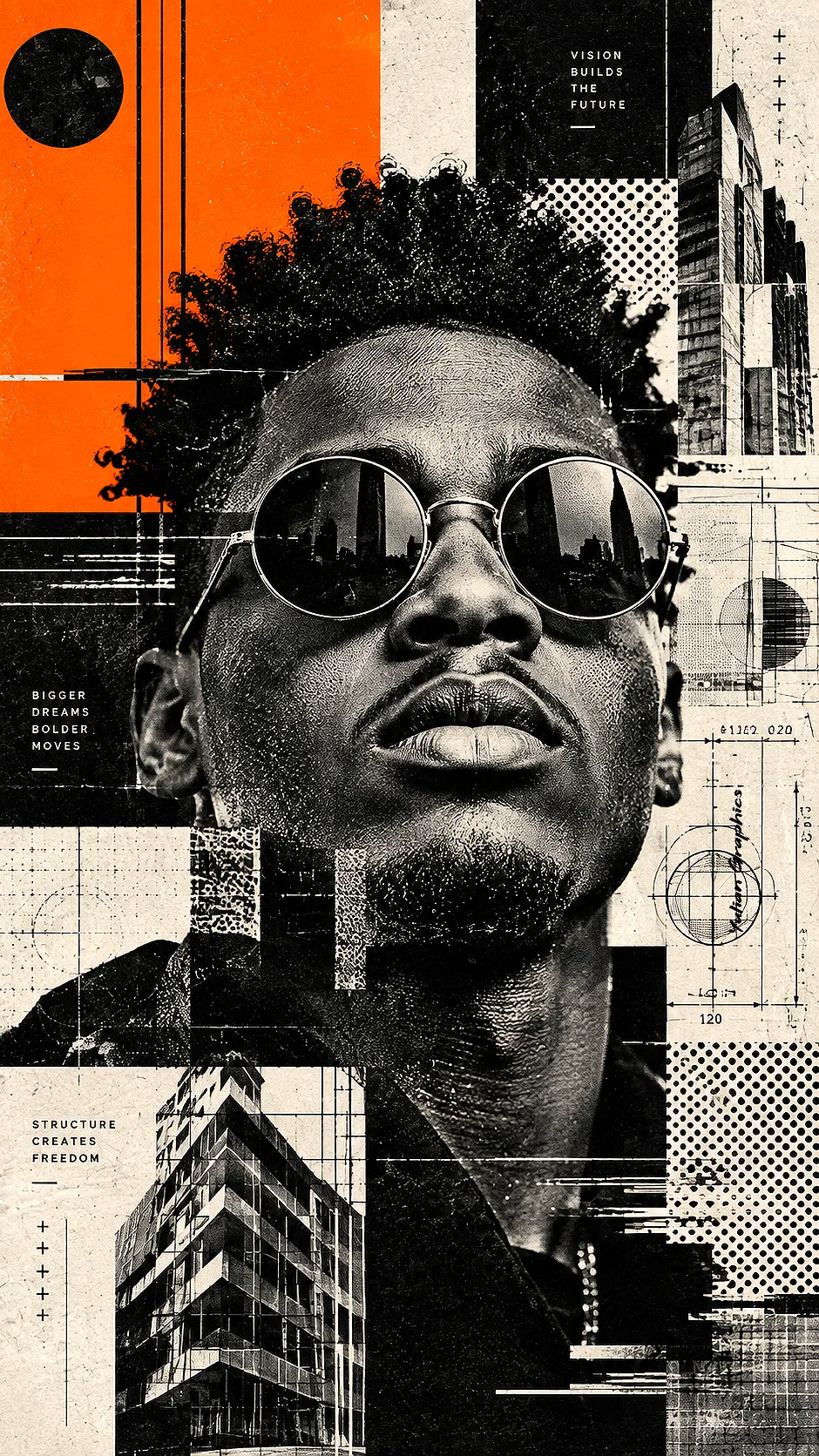
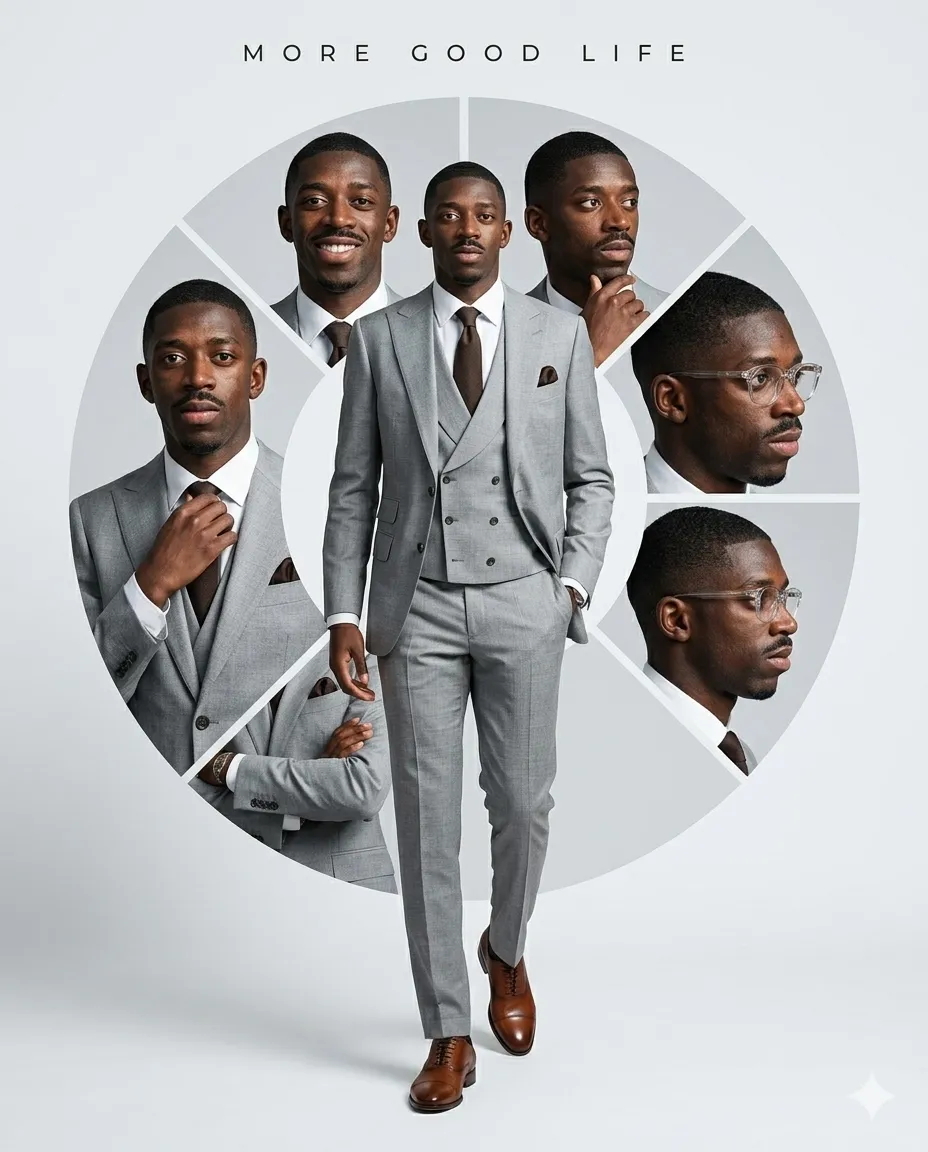
Example images


Prompt template
0 copies
- Format
- Text
- Inputs
- Uploaded_photo (image) · Required
- Outputs
- Poster (image)
For each uploaded photo, generate a separate, independent 3:4 vertical experimental optical-art diptych poster. Do not combine or blend multiple photos. Divide the canvas into equal upper and lower halves, joined by a straight horizontal line. Do not add a frame, card, torn-paper edge, curled edge, or collage shadow. Blend real photography, precision ribbed glass, contemporary optical art, geometric sculpture, luxury advertising, and Swiss minimalist editorial design. Derive the glass shapes, number, orientation, perspective, and arrangement from the original photo’s subject, movement, space, lighting, shadows, and visual center of gravity. Do not use a fixed template.

In the upper half, preserve the original photo in full. Do not alter the subject’s identity, facial features, expression, action, clothing, outline, structure, material, position, proportions, viewpoint, perspective, colors, depth of field, grain, motion blur, or lighting. Only subtle, refined color grading, exposure optimization, and natural background extension are allowed. The original photo must fill the top, left, and right edges and extend to the dividing line. Add no glass, text, or decoration in this half.

In the lower half, use the same original photo as the sole reference. Preserve the subject’s identity, facial features, pose, structure, proportions, original colors, and spatial atmosphere. Proportional scaling, reasonable cropping, and repositioning are allowed, but do not change the subject’s identity or essential form. Place adaptive transparent ribbed glass in front of the original subject, integrating it through selective occlusion, realistic refraction, overlapping perspective, and directional extension. Keep the photography clear outside the glass. Do not replace the background or make the glass look like a floating overlay.

The glass may take the form of a large continuous pane, slender strips, curved panels, rings, triangles, trapezoids, irregular cutouts, or segmented radial structures. Determine its quantity and scale from the composition. For action or motion photos, use progressively tilted, offset strips that converge. For portraits, use soft curves and restrained framing. For architecture, arrange the glass along the perspective axes. For flowers and other natural subjects, echo their curves. For still-life subjects, use precise, minimalist cutouts. Establish a clear hierarchy of primary glass, supporting glass, and any necessary rhythm layers; do not stack elements randomly.

Inside the glass, use continuous, uniform, ultra-fine transparent microprisms at approximately three to five times the density of ordinary ribbed glass. The optical grating may be vertical, horizontal, diagonal, radial, or curved to follow the surface. Give the glass realistic thickness, beveled edges, Fresnel reflections, natural transmission, soft highlights, and refraction. Any localized magnification, compression, displacement, strip-like mirroring, or texture distortion must derive from the original image. Avoid coarse prisms, metal blinds, plastic texture, a simple striped filter, neon outlines, and strong rainbow dispersion.

Make the glass overlap the subject deliberately. Keep approximately 60–70% of key facial features clear, and do not obscure them repeatedly. Glass edges may extend beyond the subject or the canvas, but the spatial layering must remain convincing.

Use asymmetrical balance, varied visual density, and generous negative space in the lower half; let the negative space retain the original photo’s background color. Add a genuine English title of 2–5 words, a short subtitle, or a number. Use a fine, high-contrast Didot-, Bodoni-, or Canela-style serif with minimalist sans-serif type. Arrange the typography freely in response to the subject and visual movement. Do not obscure the focal point. Do not include garbled text, pseudo-English, a logo, or a watermark.

Output only one high-resolution 3:4 vertical poster for each uploaded photo.


Comments — 0
Tried this prompt? Share what you made, compare results, or ask a question.