- Category
- Art & Illustration
Appenzell Folk Costume Fashion Illustration
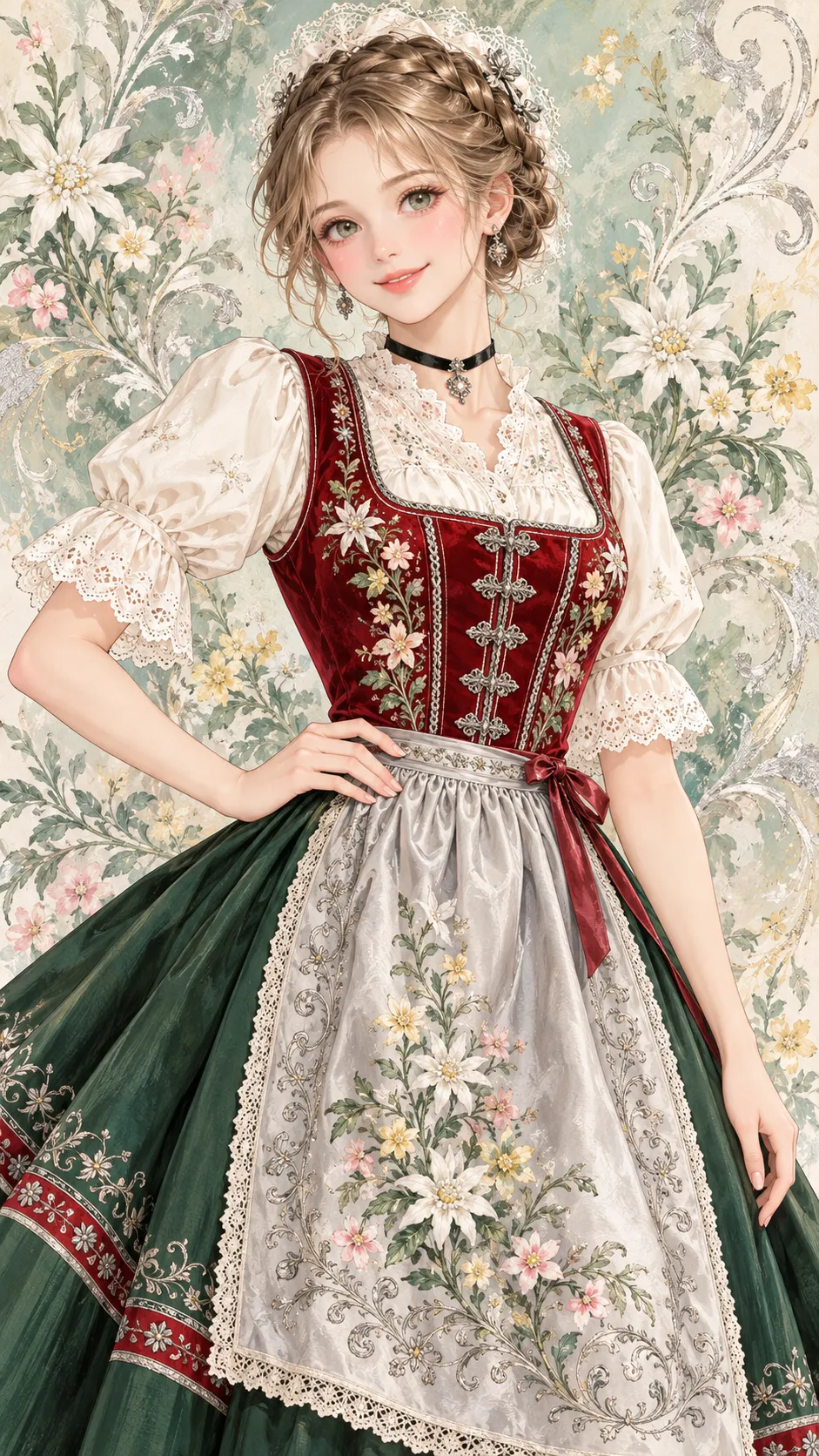
Create a refined, shoujo-manga-inspired 2D editorial portrait of an adult woman in an original Swiss Appenzell-inspired folk costume.
By Threads — Published on — Modified on
Example images
Prompt template
- Format
- Text
- Outputs
- Fashion_illustration (image)
Create a luxurious, romantic, fully 2D fashion illustration in a vertical 9:16 format. Depict an elegant adult woman in an original costume inspired by the traditional clothing culture of the Appenzell region of northeastern Switzerland. Respect the regional tradition without claiming to reproduce the clothing of any specific village or locality. Reimagine its traditional clothing structure as a sophisticated contemporary luxury-fashion illustration.

The subject is not dancing. She is posing elegantly for a high-fashion magazine portrait, presenting her costume. Her appearance should be graceful and endearing, with the polish of a European high-fashion model.

## Face and hair

Give her a lovely, approachable face reminiscent of a shoujo-manga heroine: large, luminous grayish-green eyes; softly rounded cheeks with natural color; refined eyebrows; elegant rose-pink lips; and a gentle, bright smile. Preserve her sweetness and avoid an excessively mature appearance, strong makeup, or a provocative expression.

Her glossy hair is honey brown. Naturally braid the hair on both sides and gather it into an elegant low updo at the back of her head. Make the braids follow the shape of her head and show their strands clearly. Leave a few soft wisps around her face. Do not let a long braid hang over her shoulder. The result should feel like a neat, charming European traditional hairstyle.

## Lace headpiece

Adorn her hair with a small, elegant headpiece inspired by traditional women’s headwear from Appenzell. Use soft ivory lace with delicate openwork and small botanical motifs, following the head naturally from the crown toward the back. Add restrained antique-silver decorative pins. Position the piece so it does not hide the beautiful braids. Show how the headpiece sits naturally in the hair. Do not use a huge hat, crown, flower crown, or excessive feathers.

## Costume

Use a harmonious palette of vivid deep crimson red, refined forest green, soft ivory, and silver gray. The costume has five distinct elements: an ivory traditional blouse, a crimson decorative bodice, a full forest-green skirt, a silver-gray apron with floral embroidery, and understated antique-silver jewelry. Clearly depict the fabric, layering, and construction of each garment.

### Blouse

Use a soft ivory traditional blouse with modest puff sleeves rounded naturally at the shoulders and ending just above the elbows. Finish the cuffs with delicate white lace. Keep the neckline modest and covered, with small gathers and fine white-thread embroidery. Suggest the texture of soft cotton and maintain natural shoulder-to-arm anatomy.

### Bodice

Make the fitted bodice from vivid, deep crimson velvet, tailored elegantly to follow the body without an unnatural waist. Arrange small antique-silver fasteners neatly in a vertical line down the front, with a narrow decorative line at the center. Add delicate Alpine-wildflower-inspired embroidery along the edges and sides: small white edelweiss-like flowers, pale cream-yellow flowers, soft pale-pink flowers, and fine sage-green leaves. Leave plenty of crimson velvet visible rather than filling the fabric with embroidery. Finish the bodice edges with narrow antique-silver trim.

### Skirt

Give her a long, deep forest-green skirt that spreads naturally from the waist in generous pleats. Suggest the soft, subdued quality of fine wool blend or silk, with natural fabric weight and elegant draping. Keep most of the skirt a beautiful solid forest green. Add a narrow crimson decorative line at the hem and restrained antique-silver botanical embroidery above it. Maintain the natural silhouette of traditional clothing; do not make the skirt an excessively voluminous Rococo gown, and do not add large ruffles or multiple layers of tulle.

### Apron

Layer a distinct silver-gray decorative apron over the front of the skirt. Use fine fabric with a soft sheen in an elegant, light pearl-silver gray. Center a delicate bouquet embroidery inspired by Alpine wildflowers: white edelweiss-like flowers, small pale cream-yellow blooms, soft pale-pink petals, and fine sage-green leaves. Add narrow antique-silver botanical motifs around it. Concentrate embroidery around the center and hem, leaving ample open fabric so the flowers stand out. Finish the apron edge with narrow ivory lace and tie it at the waist with narrow crimson apron strings. Let it hang naturally as a separate garment and clearly distinguish its boundary from the forest-green skirt.

### Jewelry

Use a narrow black-velvet choker with a small antique-silver pendant featuring a delicate botanical motif, plus small silver drop earrings with restrained floral details. Keep the jewelry subtle so the crimson bodice and floral embroidery remain the focus. Do not add huge gemstones, crowns, or excessive fantasy ornaments.

## Pose and anatomy

Show a quiet, polished fashion pose, not a dance movement. She stands naturally with her body turned slightly away from the front, her face naturally directed toward the viewer. Place her weight lightly on one leg and create a subtle, natural angle between her shoulders and hips. Keep her back gently straight and her shoulders relaxed. Tilt her head just slightly and give her a calm smile.

Her right arm hangs naturally from the shoulder, with the elbow gently bent and her right hand resting lightly at the right side of her waist. Let the thumb follow the side of the bodice and place the other fingers softly toward the front of the waist. Do not flare the elbow outward or bend the wrist unnaturally. Show a natural curve from shoulder to elbow to wrist.

Her left arm hangs naturally beside her body, with the elbow slightly relaxed. Let the left hand rest against the side of the skirt, fingers lightly curved and gently touching the fabric. She must not grip or lift the skirt, and the arm must not be hidden behind her body. Do not have her hold the skirt hem. Keep both arms close to a natural, elegant pose: do not spread them wide, raise them overhead, twist the body excessively, or suggest she is dancing. The pose should feel feminine, refined, and softly natural.

Give anatomical accuracy priority. She has one shoulder, arm, and hand on each side. Show a natural connection from each shoulder through the upper arm, elbow, forearm, wrist, and palm, with realistic limb lengths. Each hand has one thumb and four fingers. Avoid extra or fused fingers, unnatural joints, overly long arms, and twisted wrists. Ensure the puff sleeves cannot be mistaken for extra arms. Make the right hand’s contact with the bodice natural. If necessary, let clothing naturally obscure some fingers rather than forcing every finger into view. Prioritize believable anatomy and the subject’s beauty.

## Composition

Use a vertical 9:16 composition, with the woman large and near the center of the frame. Frame a medium-long portrait, primarily from the top of her head to below the waist or around the thighs; do not force a full-body view. Make the face, lace headpiece, braids, blouse, bodice, skirt, and apron embroidery clearly visible. Place her face naturally in the upper part of the frame and do not crop the top of the headpiece. Clearly show how the shoulders connect to the arms, make the right hand resting at the waist legible, and include the apron’s central embroidery. Leave a moderate amount of space around her without making her too small.

## Background

Use a sophisticated, flat-art wall inspired by Appenzell’s Alpine flowers and decorative traditions. Base it on soft pale mint green, creamy white, pale pearl gray, and restrained antique silver. Include abstracted small edelweiss-like flowers, pale cream-yellow blossoms, soft pale-pink petals, fine sage-green leaves, and graceful curved botanical motifs. Reinterpret the Alpine wildflowers as contemporary art. Keep the pattern subtle so it does not compete with the costume, and let the crimson bodice and forest-green skirt stand out against the light background.

Do not depict a realistic mountain landscape, snowy peaks, wooden houses, tourist landmarks, a stage, or an audience. Do not add a giant halo, excessive metallic ornament, or a symmetrical decorative frame. The background must remain less prominent than the woman.

## Art style and final presentation

Create a premium, beautiful, fully 2D illustration combining the charming character design of shoujo manga with sophisticated luxury-fashion illustration. Use large, luminous eyes, soft cheeks, fine and beautiful contour lines, carefully braided hair, a refined traditional lace headpiece, a richly decorated crimson bodice, delicate Alpine floral embroidery, a soft ivory blouse, a beautiful forest-green skirt, and an elegant silver-gray apron. Render the face and skin clearly as illustration, using soft hand-drawn brushwork and graceful linework.

Do not use photography, photorealism, 3D CGI, a figurine-like appearance, or excessively realistic skin. The final image should be bright, colorful, romantic, and richly detailed, with a beautiful contrast between crimson and forest green. Present an elegant adult woman inspired by Swiss Appenzell folk-dance traditions and costume culture, wearing the lace headpiece and braided updo, smiling gently, and standing still with one hand lightly at her waist and the other naturally lowered beside her skirt. Emphasize the fine folk embroidery, natural anatomy, dignified posture, and refined abstract background. Aim for the appearance of a premium, full-page fashion-magazine artwork celebrating the charm and graceful traditional beauty of Appenzell.

No text, logos, or watermarks.




Comments — 0