Candid Flash Photo at Night
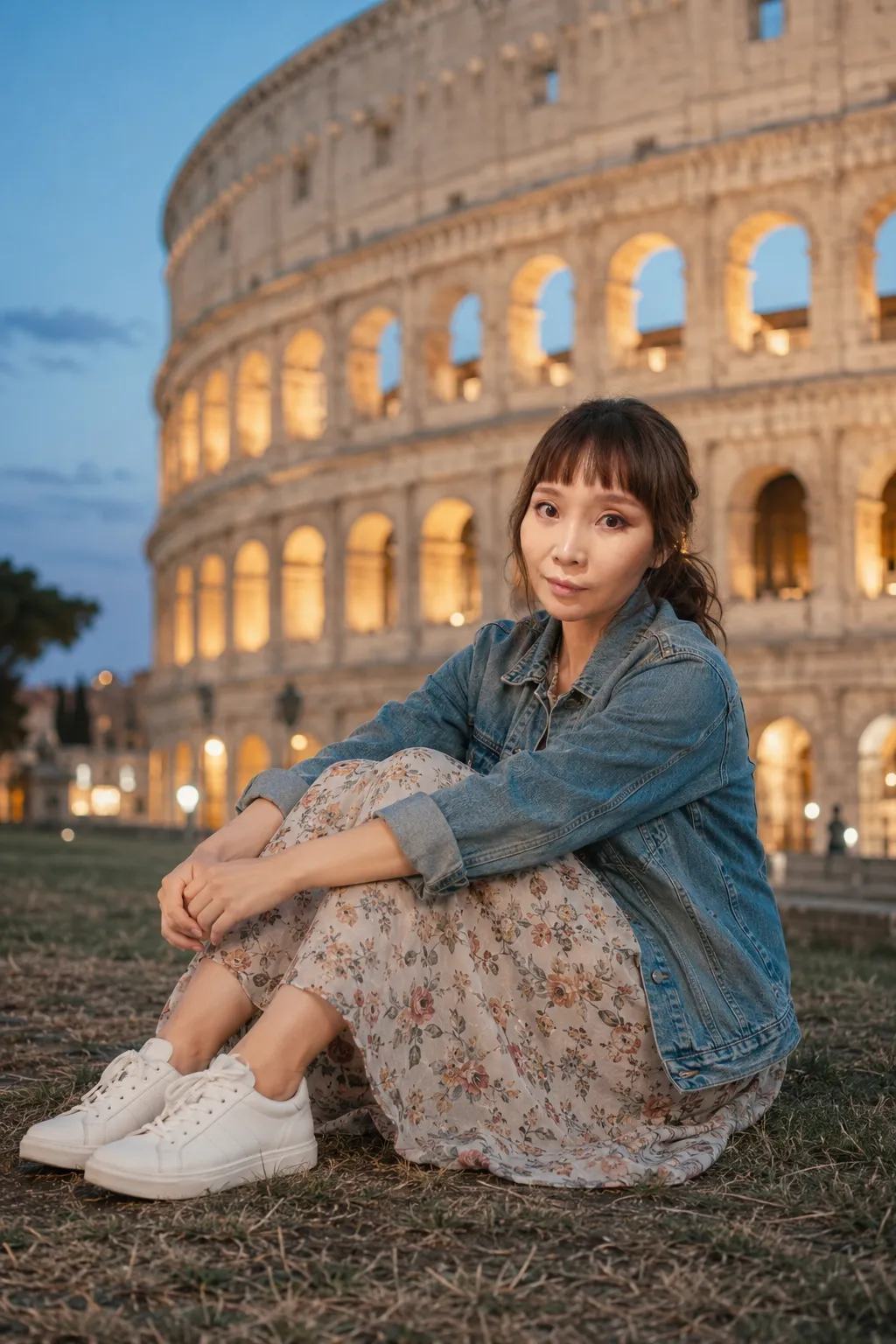
Create an imperfect, close-up nighttime snapshot from a reference image while preserving the subject’s identity, hair, and original clothing.
By Threads — Published on
Screenshots

Prompt template
Use the uploaded reference image. Preserve 100% of the subject’s likeness: do not change facial features, proportions, eye shape, brows, nose, lips, cheekbones, jaw, face shape, skin tone, or other distinctive traits. Keep the face fully recognizable. Preserve the reference hair’s exact length, color, type, texture, density, and styling. Preserve the original outfit from the reference image; do not replace it with a white T-shirt or change its color, cut, or material.

Create a spontaneous, accidentally captured nighttime home snapshot in an iPhone or old consumer webcam camera aesthetic. It must feel like a real candid photo, not a staged fashion shoot. Use a very tight horizontal close-up, photographed from extremely near and slightly to the side at face level. The girl fills almost the entire frame. She is seated partly sideways and leaning slightly forward, with a subtly hunched back. Her shoulder faces the camera and is raised to cover the lower part of her face, leaving her eyes, upper nose, forehead, and a small area of cheek visible. Her head is turned slightly in three-quarter view.

At the instant of capture, she sharply turns her head a little to the side. Her gaze drifts slightly off-camera rather than locking perfectly onto the lens. This quick movement creates natural directional motion blur across the face, upper nose, and hair. Keep the eyes readable and the face recognizable; the blur should resemble real head or camera movement, not artificial defocus. Her very long, voluminous hair falls freely down her back and partly forward, with a few messy strands across her forehead and cheek. Some strands shift with the movement and have subtle natural motion blur. Let the shoulder and upper clothing contribute naturally to the composition.

Use a direct, close-range built-in camera flash that sharply illuminates the visible face, eyes, shoulder, and nearest hair. Create localized bright reflections on the moist eyes, skin, lashes, and hair. The flash should feel harsh and accidental, like a real night snapshot. Keep the room very dark: walls and interior recede quickly into deep gray-black shadows beyond the flash, but do not make the background perfectly black or empty. Allow a few barely discernible soft silhouettes or traces of room texture.

The eyes look naturally moist and slightly tired, with mild puffiness and redness, but no exaggerated crying. Keep the gaze lively, lashes long and fluffy, and expression unsmiling. Emphasize the feeling of an unprepared, extremely close nighttime photo taken at home in the dark: strong contrast between the partially lit face and nearly dark room, close camera, raised shoulder, moving hair, and a slightly messy domestic atmosphere.

Handheld, slightly imperfect framing, with mild asymmetry. Some hair, shoulder, or part of the face may extend beyond the frame edges. Fill the image edge to edge, full-bleed, with no white border.

Give the photo a visible digital low-light noise, organic film grain, slight JPEG compression, soft sharpness, subtle halation, slight highlight bloom, matte blacks, subdued shadows, natural dynamic range, and a raw, unprocessed feel. Avoid sterile modern digital cleanliness. Keep skin texture, hair, eyes, eyelids, and lashes natural and realistic. No plastic skin, beauty filter, airbrushing, or artificial smoothing.

Avoid 8K, ultra-sharp or high-detail enhancement, HDR, artificial clarity, a clean digital look, studio lighting, flat lighting, glossy fashion photography, smiling or cheerful expression, passport-style composition, a frontal symmetrical portrait, a white oversized T-shirt, or any change to the original clothing.

SHARPNESS 50
--ar 9:16 --raw --style motion 50


Comments — 0