- Category
- Photography
Crimson Threads: Dark Forest Editorial Portrait
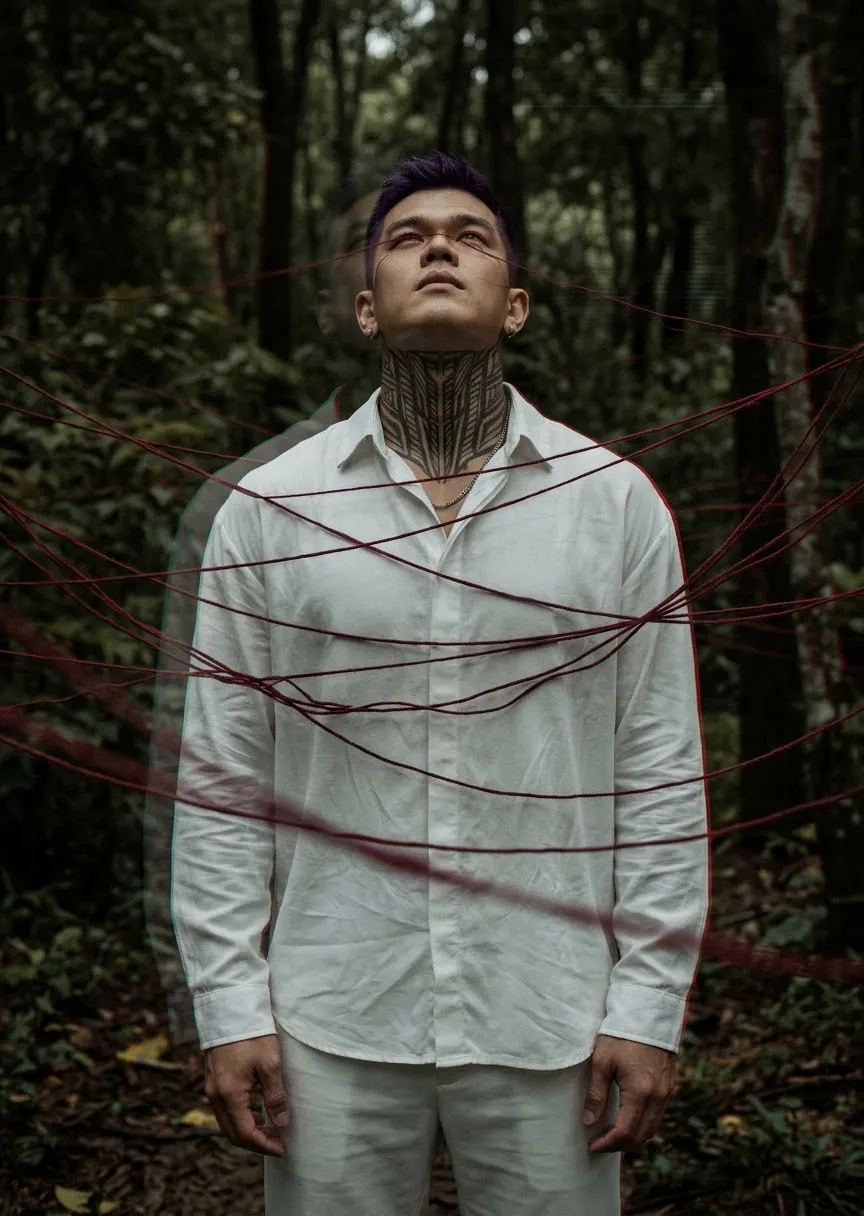
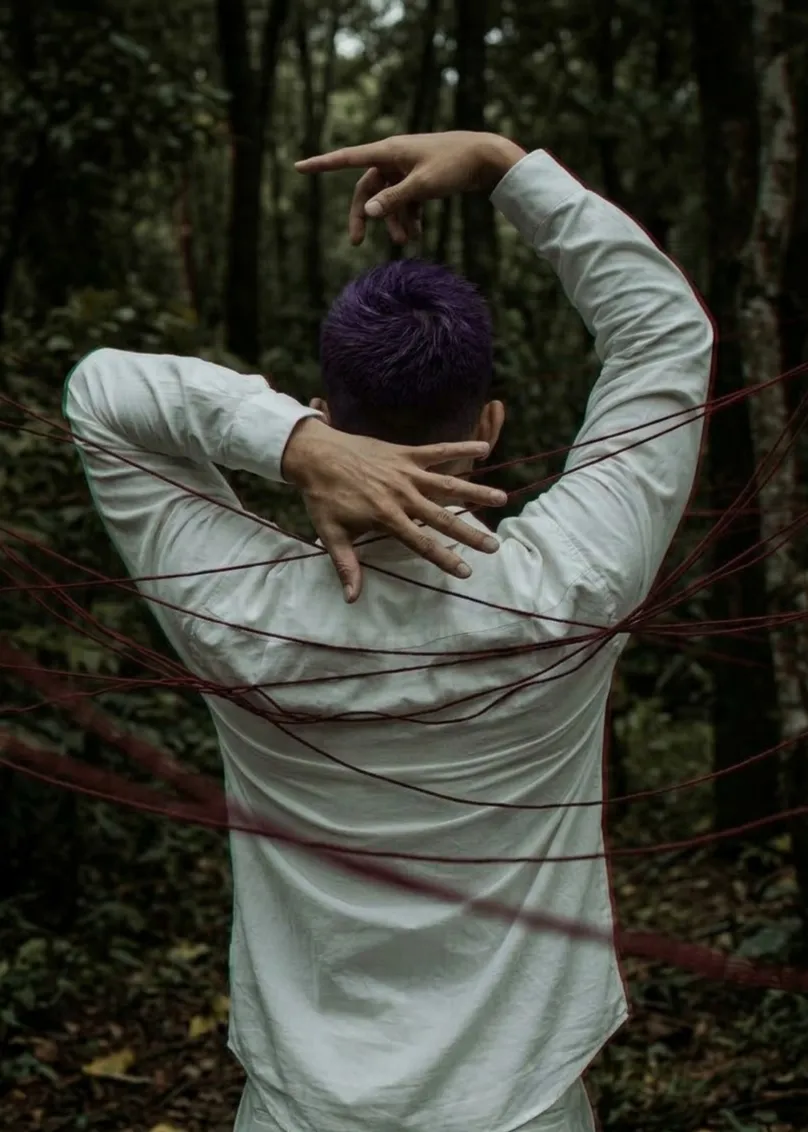
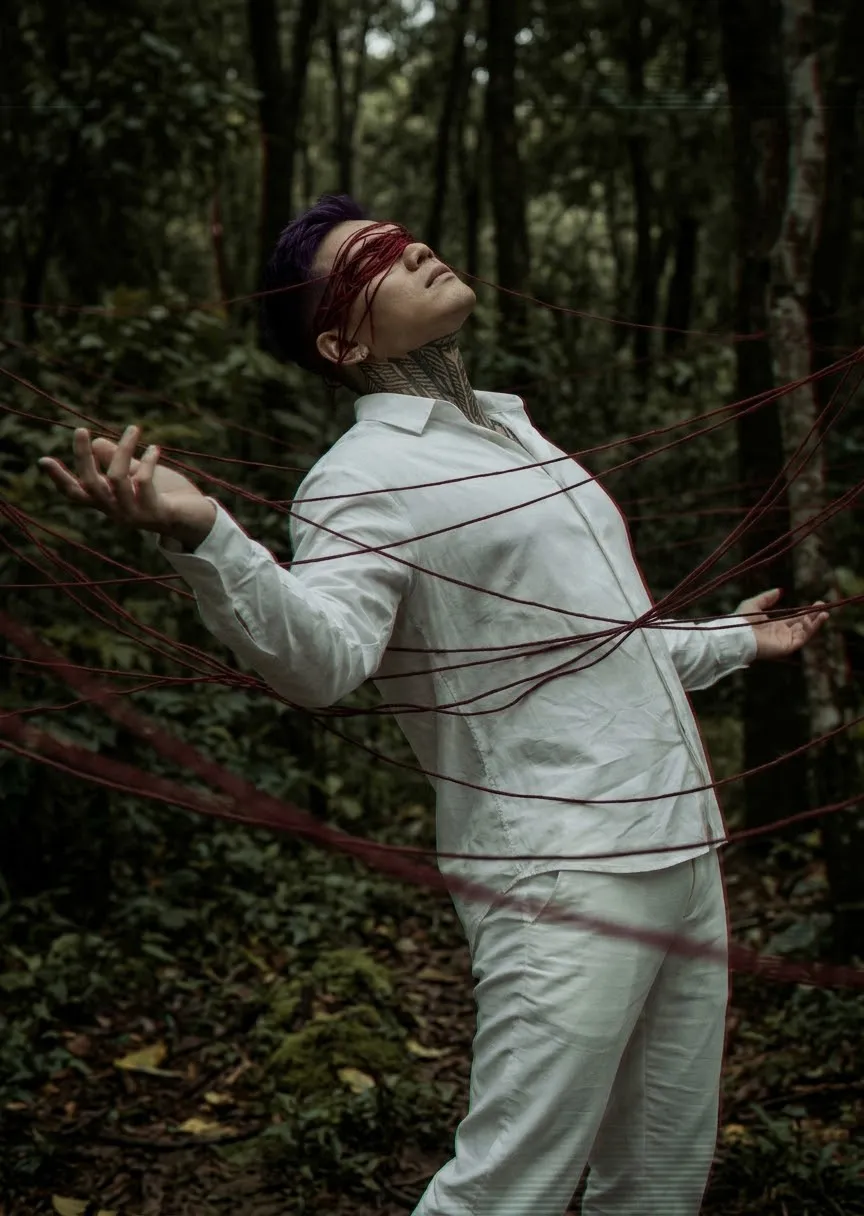
Create a photorealistic cinematic portrait that preserves the supplied subject’s identity and matches a reference pose, with a white outfit, crimson threads, a shadowy forest, and subtle analog glitch effects.
By Threads — Published on — Modified on
Example images
Prompt template
0 copies
- Format
- Text
- Inputs
- Subject_Identity_Image (image) · Required First_Pose_Reference (image) · Required Forest_Reference (image) · Required
- Outputs
- Cinematic_Portrait (image)
Create an ultra-photorealistic cinematic portrait using the supplied subject image for exact identity preservation, the first pose reference for precise body positioning, hand gestures, and composition, and the forest reference for its dark, earthy atmosphere. Recreate the sculptural hand arrangement, dramatic monochrome aesthetic, tangled crimson threads, and subtle analog glitch effects. Use a vertical 5:7 aspect ratio.

IDENTITY AND APPEARANCE
Preserve the exact face, facial structure, skin tone, eyes, nose, lips, eyebrows, and every distinctive feature from the supplied subject image. Preserve the exact hairstyle, hair color, length, texture, volume, and hairline. Do not redesign or replace the subject’s appearance.

POSE AND HAND POSITION — MATCH THE FIRST POSE REFERENCE
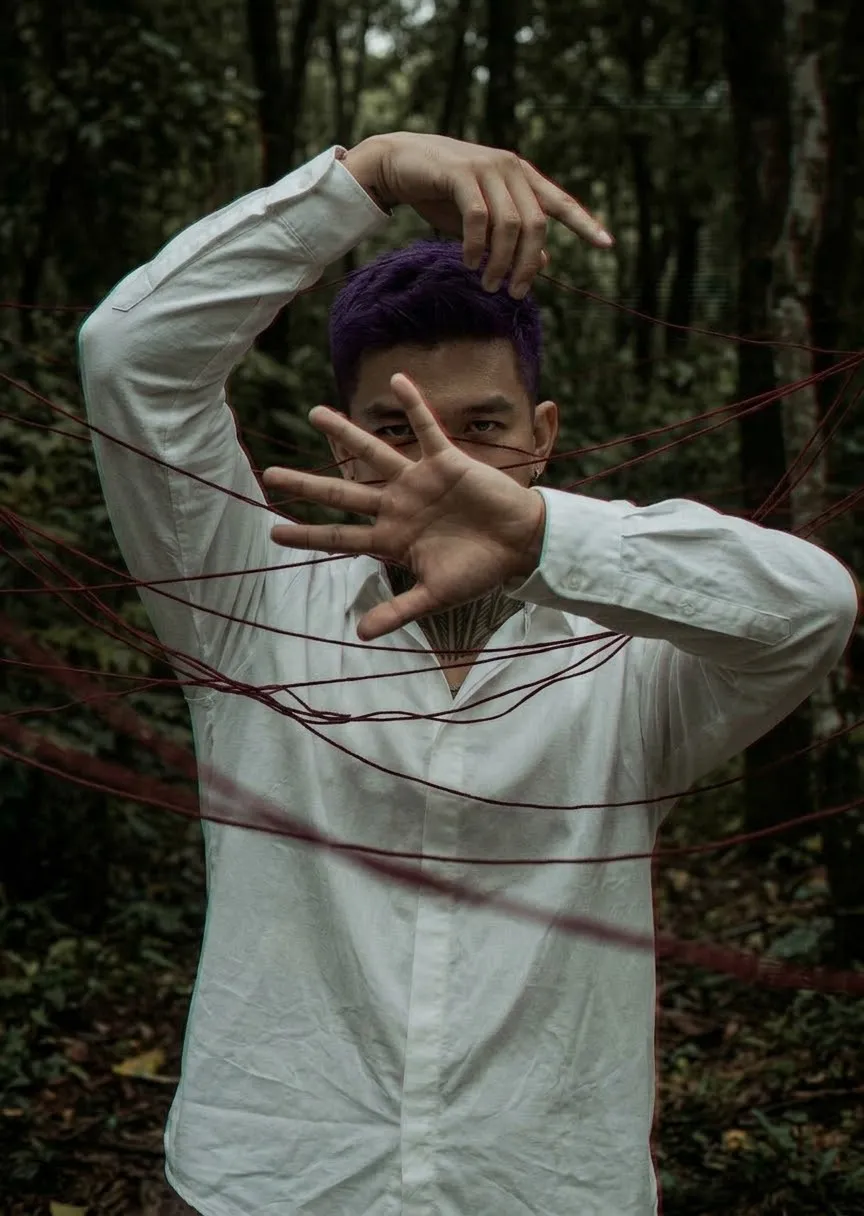
The subject stands upright with the upper body facing the camera. Both arms are lifted and curved around the head to create an intricate, sculptural frame.

The upper arm rises above the head and bends gracefully at the elbow. The upper hand hovers above the forehead, with the wrist gently flexed and the fingers loosely curved downward. The index finger extends almost horizontally while the other fingers bend naturally toward the space above the head.

The second arm bends in front of the face. The palm faces outward toward the camera, positioned close to the lens. The fingers spread apart in an expressive, irregular arrangement: the index finger extends sideways, the middle and ring fingers angle downward, and the remaining fingers form a natural, asymmetrical fan.

The foreground hand partially obscures the face, covering much of the central facial area. Only portions of the eyes, forehead, or face remain visible through the spaces between the fingers. The hands appear large relative to the face because they are closer to the lens, with realistic perspective rather than anatomically oversized proportions.

The fingers appear elongated due to perspective, but their joints, nails, knuckles, and natural curvature remain anatomically accurate. The wrists and elbows form graceful, asymmetrical arcs around the head.

The head is slightly lowered and tucked behind the foreground palm. The visible eyes look through the gaps between the fingers toward the camera, creating an intense, mysterious, guarded expression. The mouth remains relaxed and partially hidden.

Replicate the reference’s distinctive hand silhouette and spatial arrangement; do not substitute a generic hands-over-face pose.

OUTFIT
The subject wears entirely white clothing: a loose, white, long-sleeved shirt with realistic folds, slightly relaxed shoulders, and a clean editorial silhouette, paired with white trousers. The sleeves gather naturally around the wrists and elbows as the arms rise. Keep all fabric textures realistic and softly illuminated.

CRIMSON THREADS AND ENVIRONMENT
Thin, dark-crimson threads stretch across the foreground and between the subject and camera. Several strings cross diagonally near the raised arms, while others pass horizontally across the lower face, shoulders, and chest. A few delicate strands loosely surround the hands without hiding their gestures.

Place the subject in a dense, shadowy forest clearing with deep olive-green foliage, muted brown leaves, and dark tree trunks. Preserve the dark, earthy, slightly underexposed atmosphere of the forest reference.

CAMERA AND LIGHTING
Create a close-up to medium-close portrait framing the head, both arms, hands, and upper torso. Use a slightly low camera angle and a portrait-lens aesthetic with realistic perspective. Make the foreground palm prominent and detailed while keeping the face partially visible through the fingers.

Use soft, diffused forest daylight, restrained highlights on the white fabric, deep olive shadows, muted crimson accents, subtle atmospheric haze, and delicate analog film grain.

SUBTLE GLITCH EFFECT
Add restrained red RGB separation along selected hand and arm contours, faint horizontal VHS tracking lines near the image edges, and barely perceptible ghosting around the background trees. Keep the fingers, visible eyes, and facial details realistic and undistorted. Do not use heavy digital tearing.

NEGATIVE PROMPT
Different face, altered identity, changed hairstyle, incorrect hand gesture, hands in a different position, both palms covering the face completely, fists, clenched fingers, extra fingers, missing fingers, fused fingers, broken wrists, duplicated arms, distorted anatomy, oversized head, tiny body, artificial skin, heavy glitch, extreme pixelation, neon strings, glowing threads, bright forest, overexposed white clothing, CGI, illustration, watermark, text, logo.

FINAL REQUIREMENTS
Match the first reference’s precise raised-arm configuration: upper hand curved above the head, foreground palm facing the camera, fingers spread across the face, and eyes peering through the gaps. Preserve the subject’s identity and hairstyle from the supplied subject image. Include the white outfit, crimson threads, dark olive forest, and subtle analog glitch. Use a vertical 5:7 aspect ratio.




Comments — 0