- Category
- Design & Image
Dark Romantic Torn-Paper Editorial Portrait
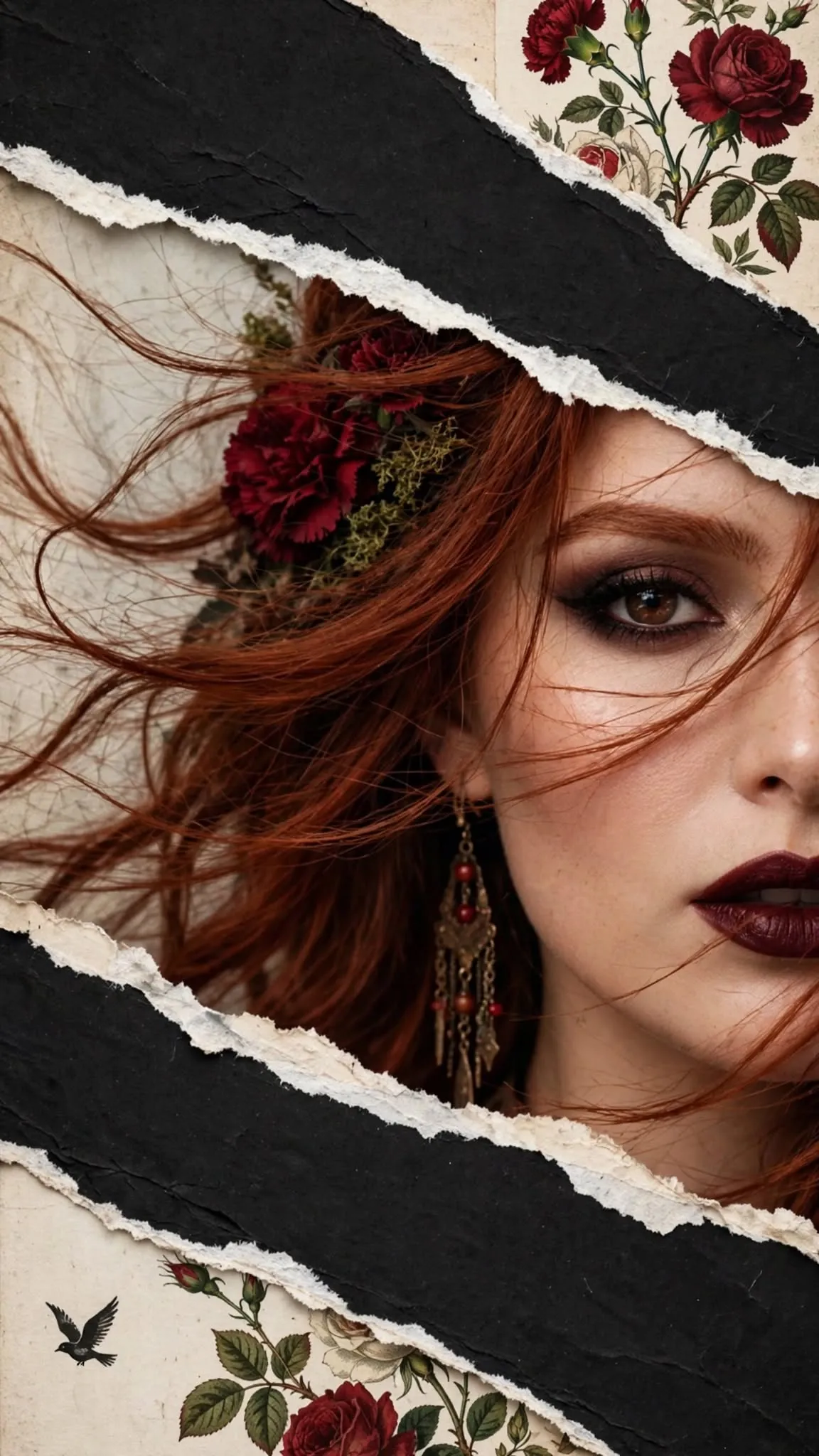
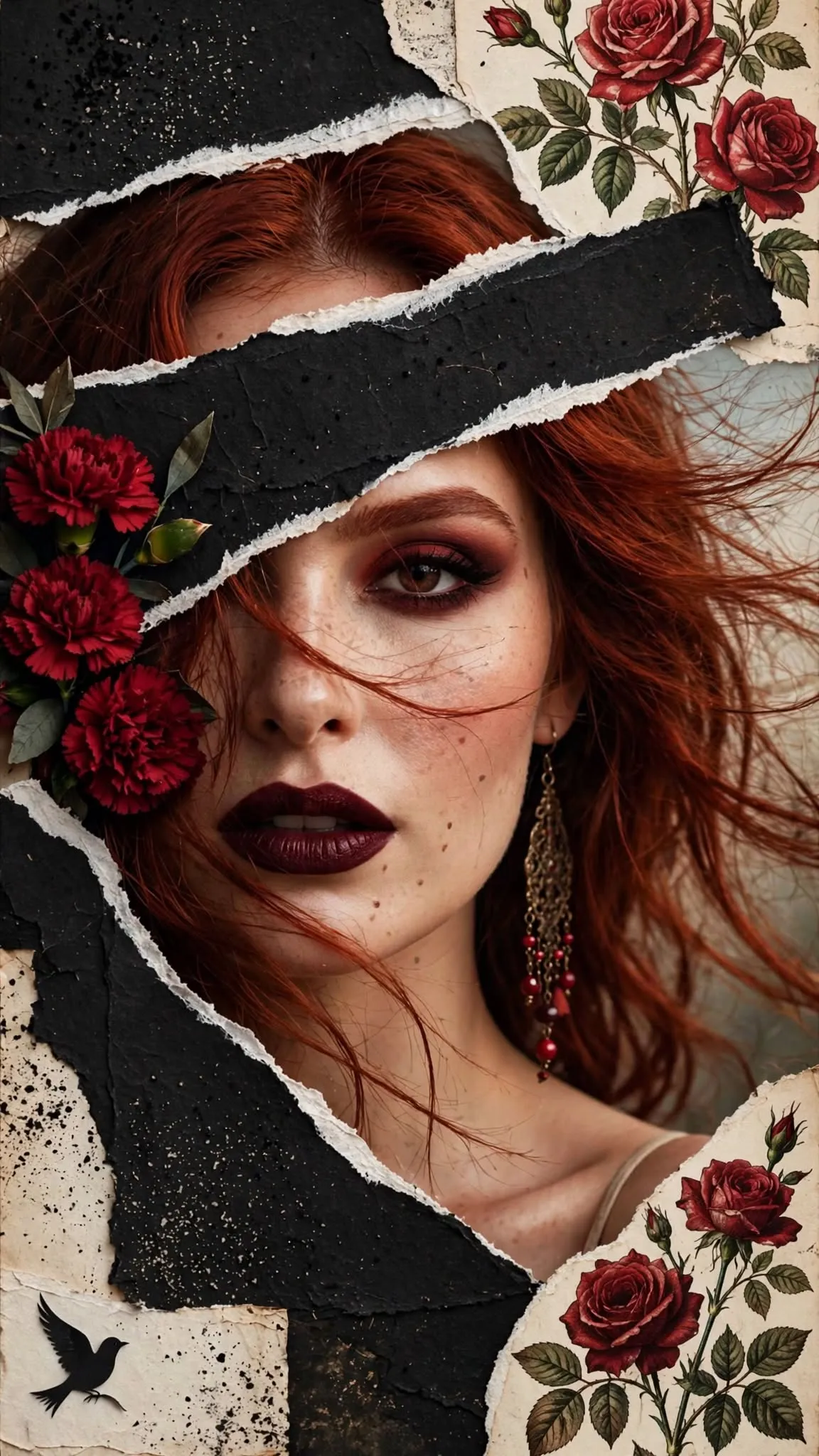
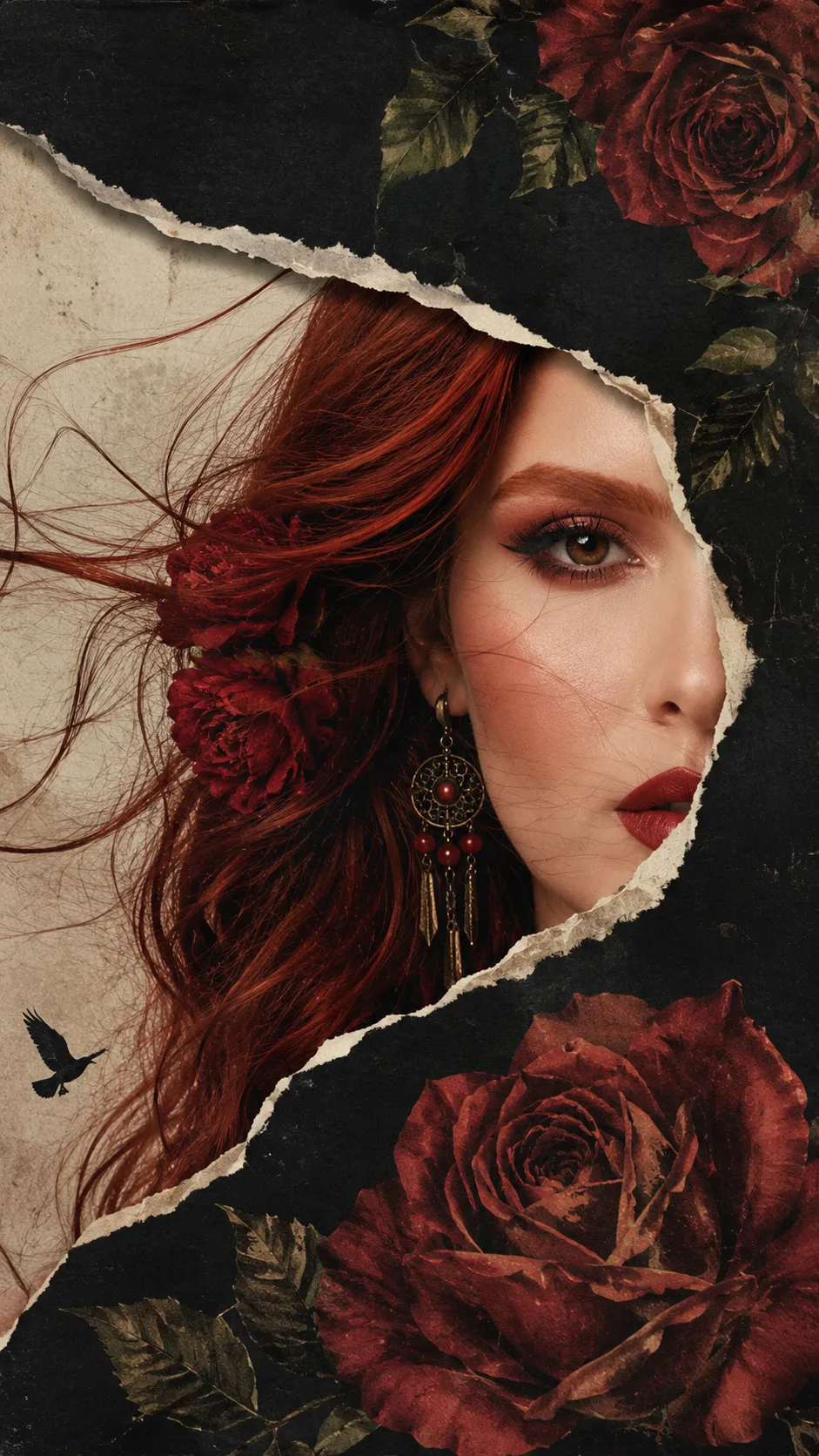
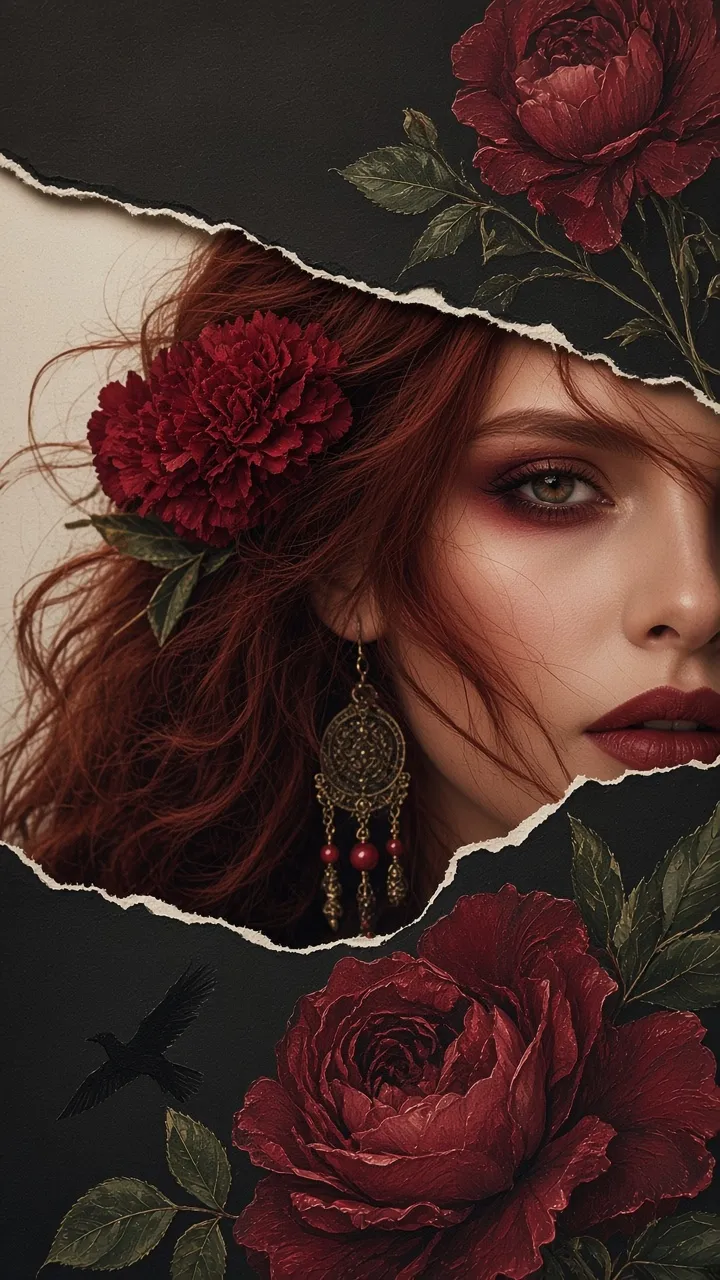
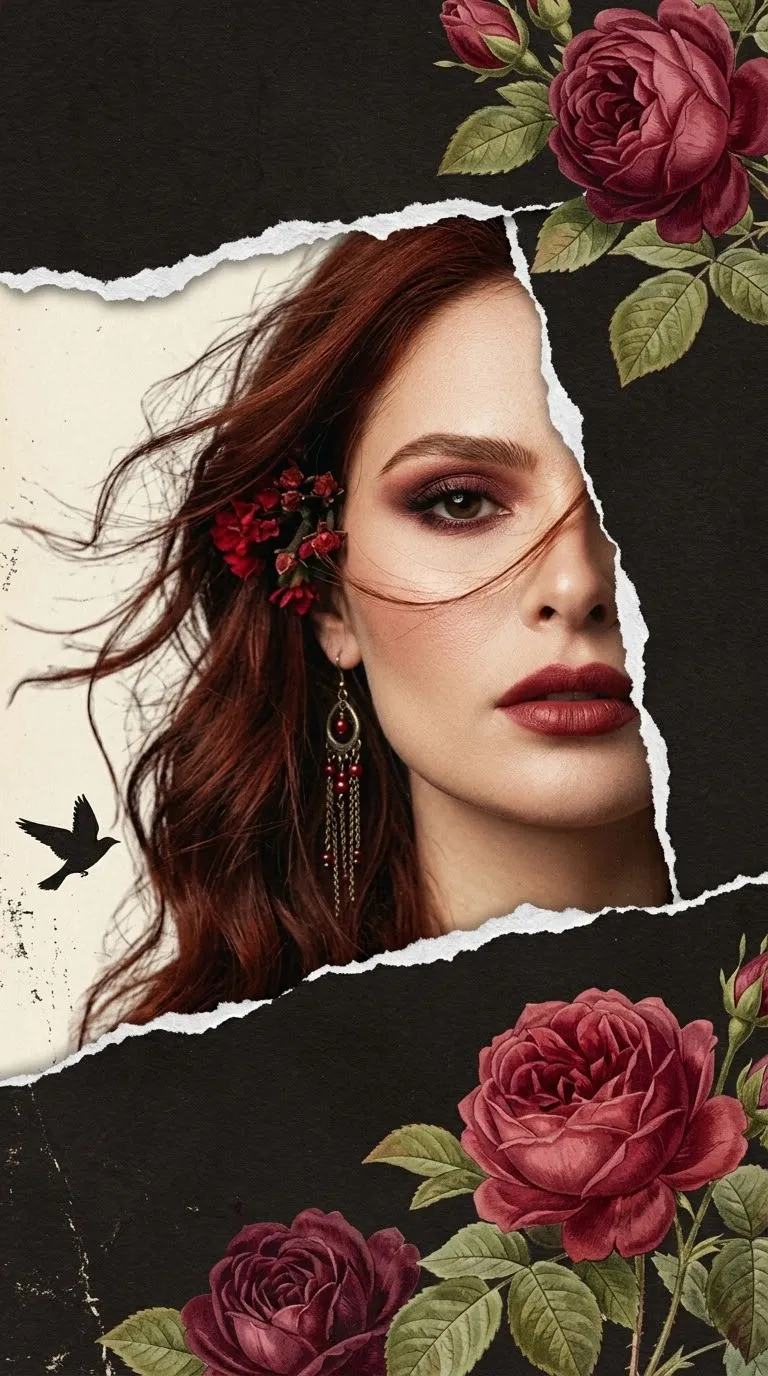
Create a vertical dark-romantic editorial collage portrait that preserves the identity and facial features of the person in the supplied reference photo.
By Threads — Published on
Example images


Prompt template
- Format
- Text
- Inputs
- Reference_photo (image) · Required
- Outputs
- Generated_image (image)
Using the uploaded photo as the visual identity reference, faithfully preserve the person’s facial features and individual characteristics: face shape, eyes, nose, mouth, hair color, and overall likeness. Do not alter their identity or facial structure, or make them look like someone else.

Create ONE vertical image in a 9:16 aspect ratio, inspired by an artistic editorial-photography collage with a dark romantic, vintage, poetic aesthetic. The result should look like a sophisticated handmade composition combining an extremely realistic female portrait, torn paper, illustrated red roses, and small graphic details evocative of an alternative art-magazine page.

COMPOSITION AND FRAMING
Use a narrow vertical composition with a close-up female portrait in the center. Partially conceal the face behind two large strips of torn paper, leaving an irregular window through which only part of the face is visible. Make the framing asymmetrical, artistic, and intentionally fragmented, as if the photograph were found inside a handmade collage.

Position the adult woman’s face predominantly on the right side of the photograph. Through the irregular opening, show only part of her forehead, one eye and eyebrow, cheek, partially visible nose, and lips. Make the visible eye the main focal point, immediately drawing the viewer’s attention. Place the hair, flowers, and loose strands on the left side of the photograph to create movement and visual balance. Add a small black silhouette of a bird in flight at the lower left. Give the woman a contemplative, mysterious, slightly melancholic expression, as if lost in thought.

EYE, EXPRESSION, AND GAZE
Render the visible eye with exceptional photographic realism and an iris in the reference person’s natural eye color. Include delicate color variations, natural radial iris fibers, a well-defined pupil, and subtle light reflections. Define individual eyelashes naturally. Give the upper lash line dark, softly smudged eyeliner.

Use eyeshadow in burnt wine, earthy red, reddish brown, and soft plum tones. Add diffuse reddish shadow below the eye for dramatic editorial makeup inspired by gothic romance and alternative fashion photography. Make the gaze direct, intense, and quietly expressive, conveying vulnerability, elegance, and mystery.

SKIN AND PHOTOGRAPHIC FINISH
Render realistic human skin with subtle pores, natural microtexture, slight variations in tone, and soft illumination on the cheekbones. Avoid plastic-looking skin, artificial texture, or excessive retouching. Let the lighting gently reveal facial contours through soft transitions between light and shadow.

Show the lips partially through the lower opening, wearing dark red, wine, or burnt-red lipstick with a satin finish, natural texture, and delicately defined edges. Keep the lips neutral and serene, without an exaggerated smile.

WIND-SWEPT HAIR
Give the hair natural texture, organic movement, and a slightly disheveled finish. Let wind carry numerous fine strands across the face and left side of the photograph. Some strands should cross the forehead, pass in front of the eyebrow, and curve around the eye without completely hiding the main focal point. Let other strands extend horizontally to the left in fine, curved, irregular lines that contrast with the paper’s geometric, rough edges. Render individual hairs, subtle highlights, natural volume, and convincing photographic movement. Avoid hair that looks overly neat, stiff, or artificial.

RED FLOWERS IN THE HAIR
Place a small arrangement of vivid red flowers behind the ear on the left side of the face. The flowers should resemble red carnations, with numerous delicately ruffled, overlapping petals. Vary their color from crimson and scarlet to burgundy, with deep shadows between the petals. Partially weave the arrangement into the dark hair for a striking contrast between vibrant red and black strands. Let some petals be hidden by hair for depth and naturalness. Keep the flowers delicate, romantic, and slightly dramatic without making them dominate the portrait.

HANDCRAFTED VINTAGE EARRING
Give the visible ear a long earring with a vintage, bohemian, handmade feel. Include a small upper metal fitting; a rounded, decoratively engraved ornament in aged metal; small shiny red beads; fine chains in aged bronze; and elongated drops, small metal elements, and dangling details. Give the metal an antique finish with subtle highlights and shadows in its recesses. Coordinate the red beads with the flowers and lips. Make the earring look like a real accessory, with weight, texture, and small handmade irregularities.

TORN-PAPER COLLAGE
Make this a major element of the image. Visually set the photographic portrait between large pieces of torn black and cream paper. In the upper section, black paper should cover approximately the top third of the composition. Its lower edge should be irregular, white, and fibrous, crossing the image in a wavy diagonal line. Make the edge look hand-torn, revealing the light paper underneath, with small fibers, irregularities, points, notches, and variations in thickness.

In the lower section, another piece of black paper should rise over part of the photograph, hiding the lower face and hair. Its upper edge should be white, rough, and irregular, forming a second opening that frames the portrait. Give the black paper a matte, grainy, slightly worn surface, like heavyweight art paper. Add small marks, fibers, and irregularities to reinforce the physical collage effect. Give the photographic paper an aged ivory tone, like an old analog print.

The torn edges must look three-dimensional and tangible, not like simple white lines drawn digitally. Add very subtle shadows cast by the edges onto the photograph to suggest overlapping physical paper layers.

RED ROSES
Place large red roses over the black-paper areas, especially in the upper right and lower part of the composition. They do not need to look like realistic photographs: use a vintage botanical illustration style with visible brushstrokes, organic shapes, and painterly shading. Give the roses full, overlapping, slightly irregular petals in dark red, burgundy, crimson, and wine tones. Add lighter reddish highlights in some areas and nearly black deep shadows in others.

Use olive, moss, and forest green for the leaves, with delicately drawn veins and natural tonal variations. At the top, show a rose partly cropped by the image edge, accompanied by green leaves against the black background. In the lower area, let a large, dramatic rose occupy much of the foreground, with overlapping petals extending beyond the edges of the composition. Make the roses look printed or painted directly on the paper, blending traditional illustration, analog collage, and contemporary photography.

COLOR PALETTE
Use a restrained, sophisticated palette: charcoal black for the background paper; aged white and ivory for the torn edges; crimson for the flowers in the hair; burgundy and wine red for the illustrated roses; olive and moss green for the leaves; natural skin tones in the photograph; black and deep brown for the hair; aged bronze for the earring; and reddish, earthy tones for the makeup. Make red the main accent color, distributing points of attention among the flowers, lips, roses, and small earring beads. Let black provide depth and drama, while cream paper adds contrast and light. Avoid neon colors, excessive saturation, or an overly digital appearance.

LIGHTING AND ATMOSPHERE
Use soft natural light in the central photograph, like the diffuse light of an overcast day. Add delicate side lighting to reveal the skin, cheek texture, eye area, and strands of hair. Keep shadows soft, with moderate contrast and cinematic depth. Give the photographic background a very light, slightly aged gray-beige tone that contrasts with the surrounding black paper.

The image should feel romantic, mysterious, nostalgic, and introspective. The combination of realistic photography and illustrated roses should evoke an independent fashion magazine page, an old visual diary, or a handmade editorial artwork.

Generate the image according to this description. Do not change my face or my identifying features.




Comments — 0