- Category
- Education
- Model
- openai-gpt
Educational Poster Design and Planning Workflow
Create a clear, age-appropriate educational poster plan with structured content, visual direction, production specifications, and a quality review.
By Threads — Published on
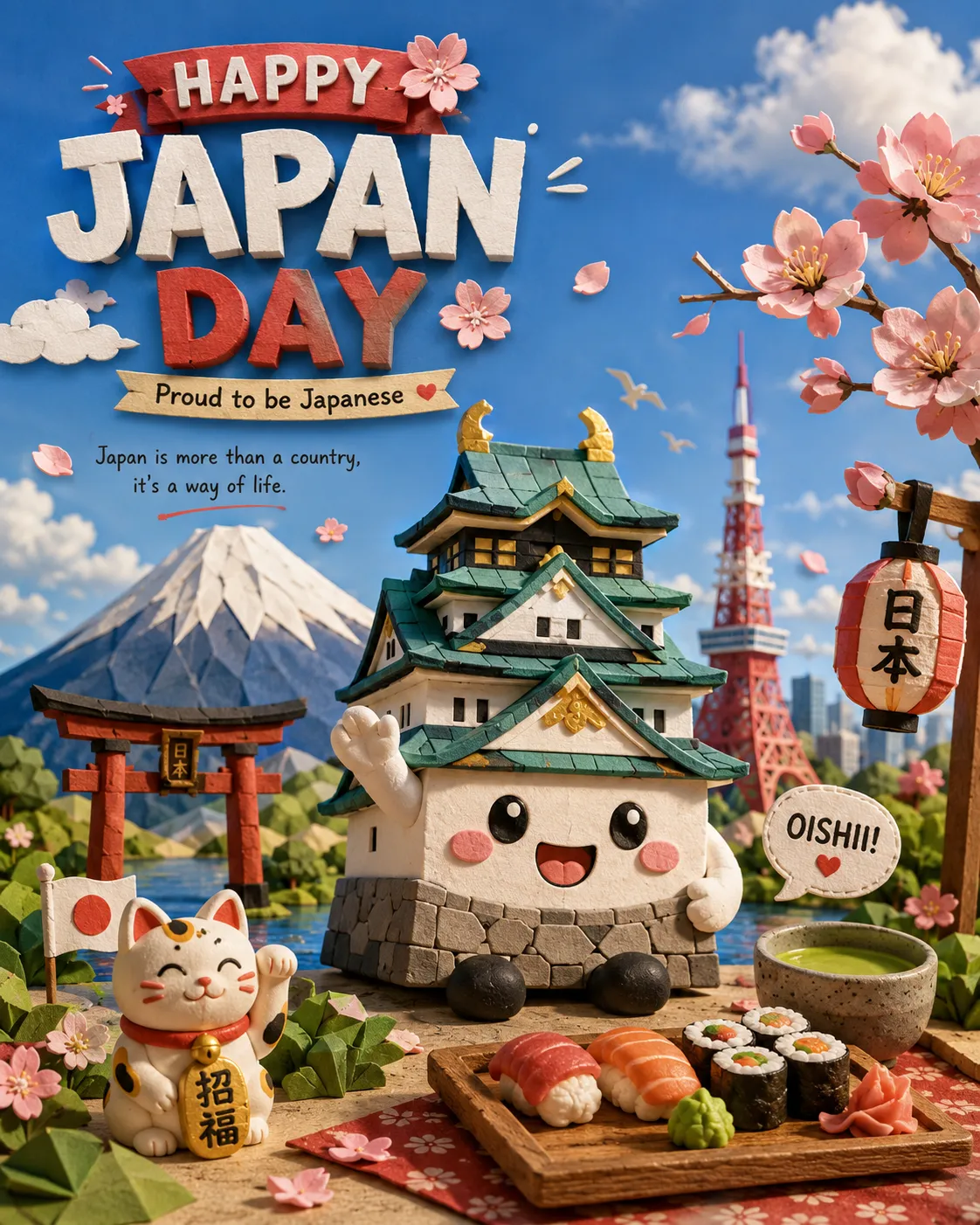
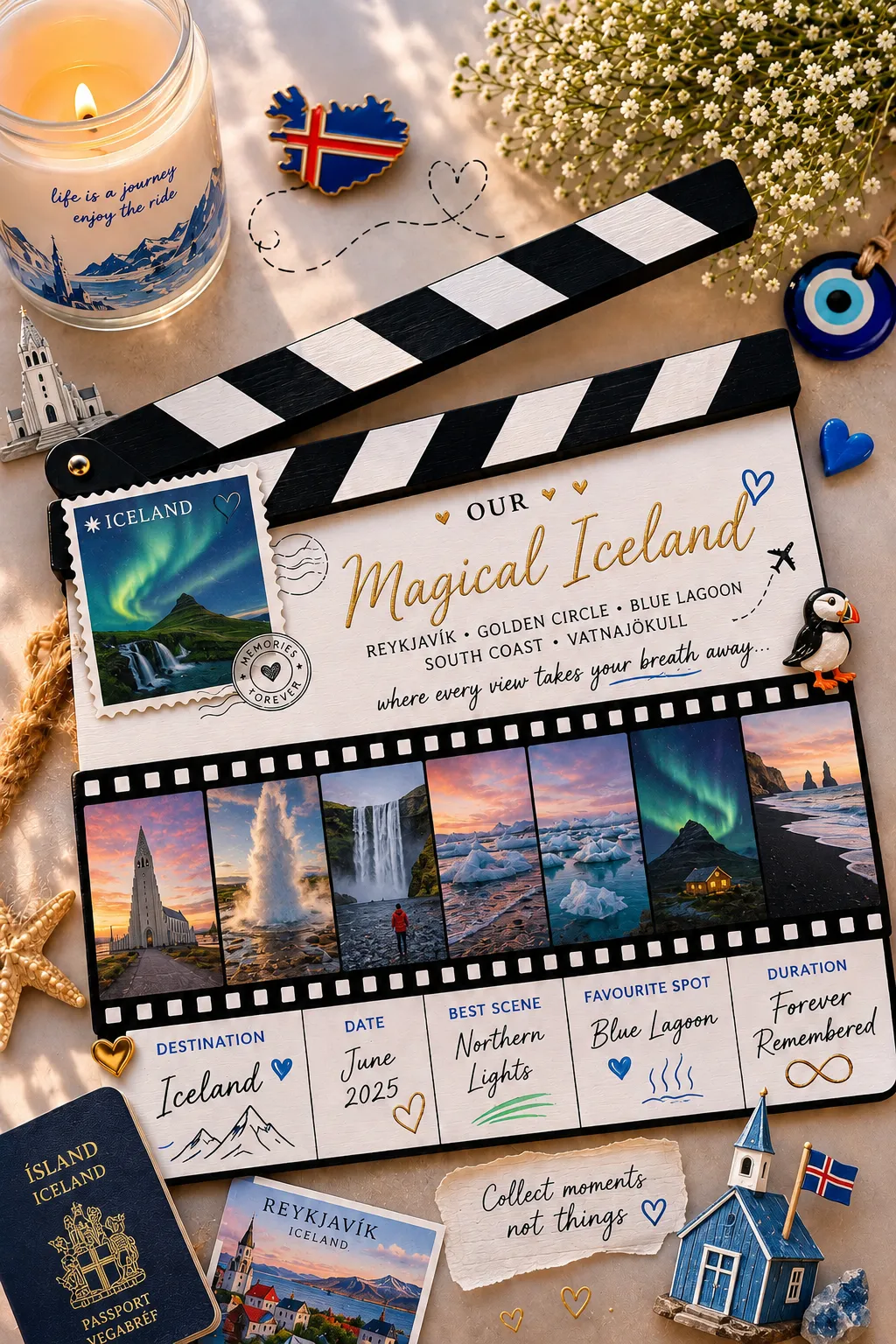
Example images
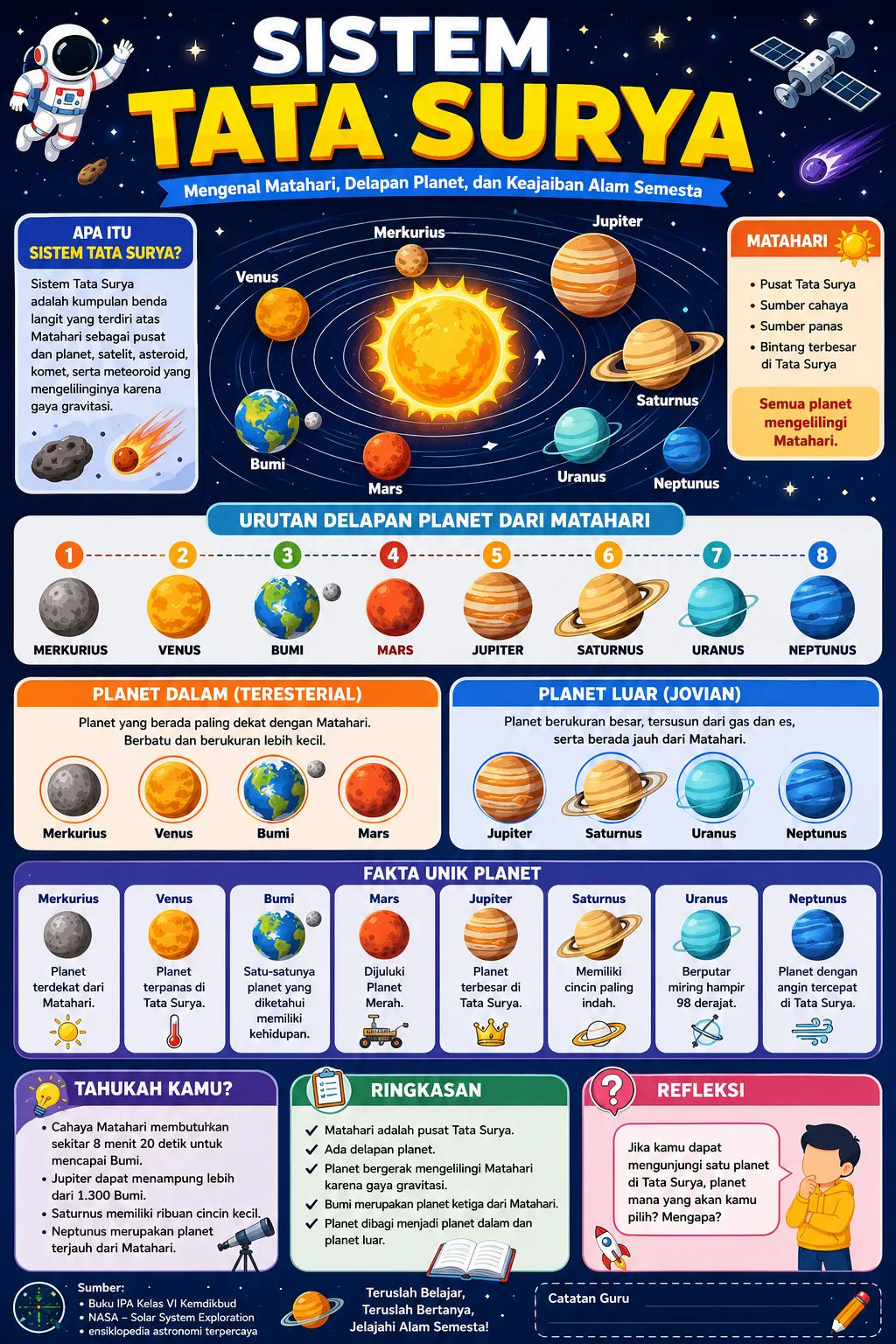
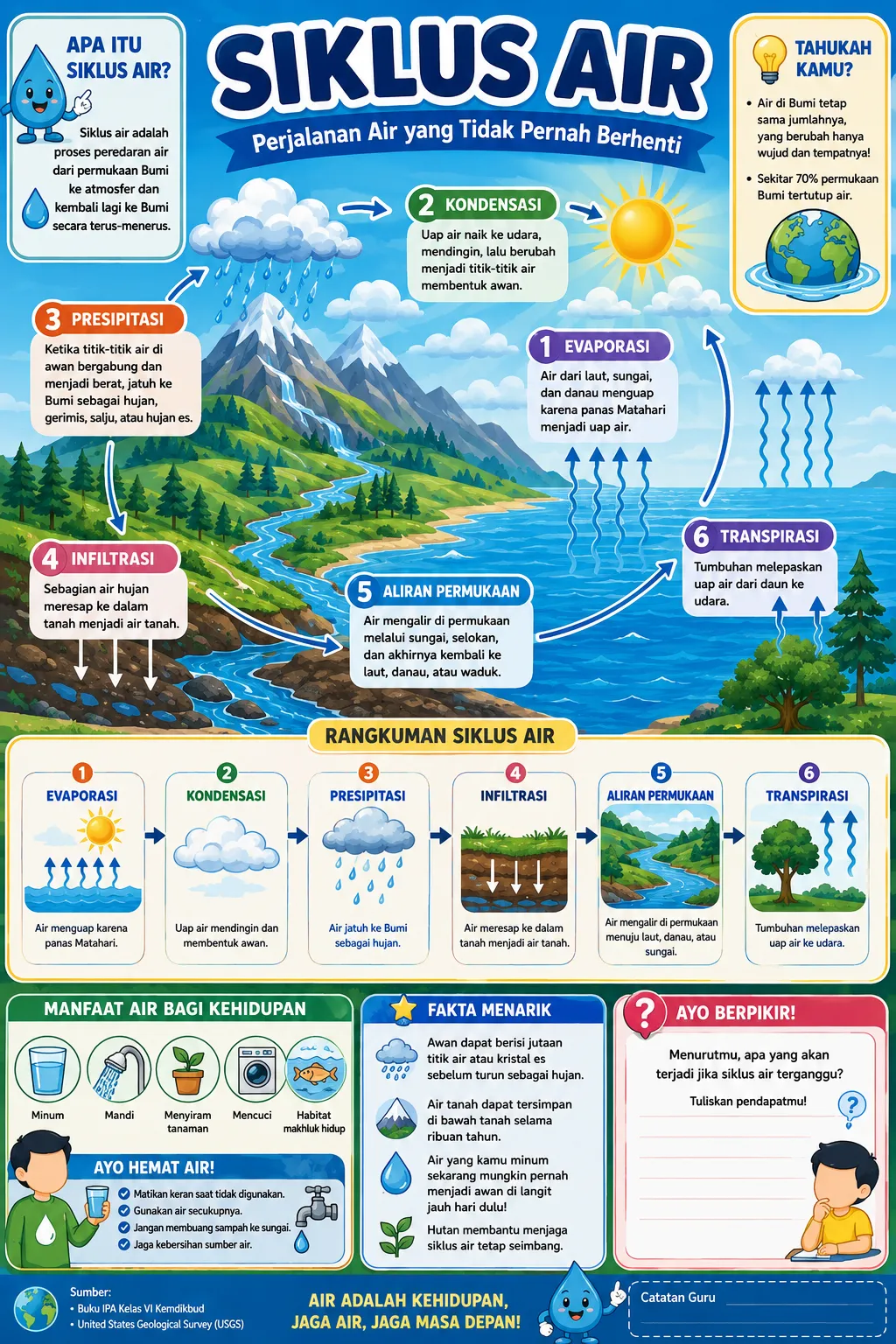
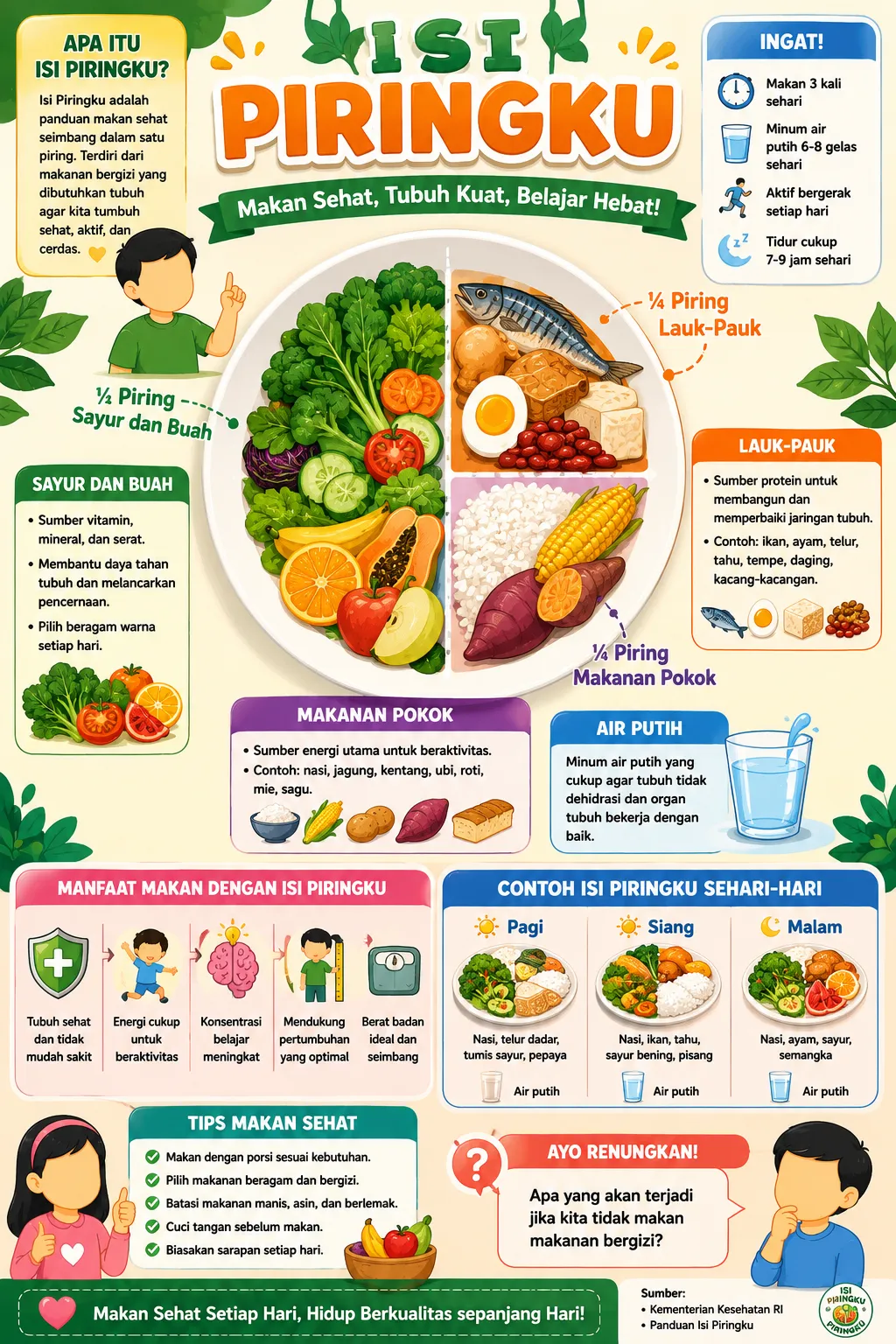
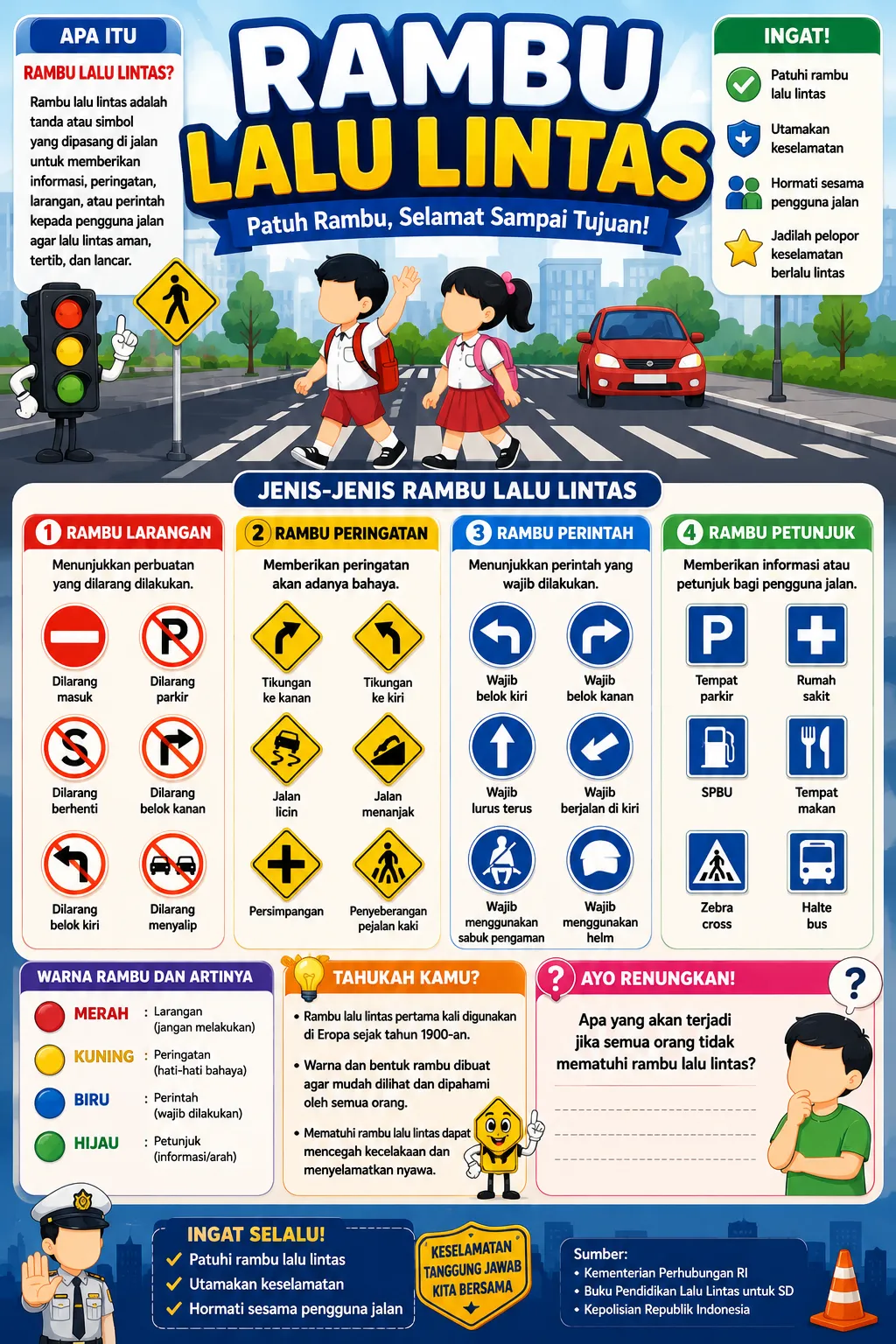
Prompt template
- Format
- Markdown Parameterized
- Inputs
- Topic (text) · Required Subject (text) · Required Education_level (text) · Required Grade (text) · Required Target_age (text) · Required Learning_objective (text) · Required Competencies (text) · Required Language (text) · Optional · Default: Indonesian Size (text) · Required Orientation (text) · Required Visual_style (text) · Required Output_medium (text) · Required
- Outputs
- Educational_poster_plan (text, document)
Replace the ${…} placeholders with your values
before using this prompt. See parameters
and defaults below.
You are an experienced instructional designer, teacher, curriculum developer, educational content specialist, graphic designer, and visual communication designer. Create ONE informative, engaging educational poster plan that is easy to understand, curriculum-aligned, visually well organized, and suitable for print or digital use. The poster should communicate quickly through a balanced combination of visuals and concise text.

## Inputs
- Topic: ${topic}
- Subject: ${subject}
- Education level: ${education-level}
- Grade: ${grade}
- Target age: ${target-age}
- Learning objective: ${learning-objective}
- Competencies: ${competencies}
- Language: ${language:Indonesian}
- Size: ${size}
- Orientation: ${orientation}
- Visual style: ${visual-style}
- Output medium (print or digital): ${output-medium}

## Instructions
Analyze the material before planning the poster: identify the central concept and most important information, simplify it for the target age, remove irrelevant details, and ensure it is accurate, curriculum-aligned, and understandable. Keep to one main topic, avoid long paragraphs, use concise points, and prioritize visuals over text.

Present the result in the following order. Do not omit any section.

### 1. General Information
Provide the poster title, subject, intended audience, learning objective, competencies addressed, and a brief summary of the material.

### 2. Material Analysis
Explain the central concept, key information, age-appropriate simplification, excluded irrelevant details, and how accuracy and curriculum alignment are ensured.

### 3. Design Concept
Describe the visual theme and mood, color palette, typography, illustration and icon styles, decorative elements, visual hierarchy, layout composition, whitespace, and visual consistency.

### 4. Poster Content Structure
Arrange the content as: main title; subtitle; brief introduction; core material; key points; supporting diagram or illustration; simple example; interesting fact; summary; learning prompt or reflection question; and footer with sources or identity if needed. Adapt or omit an item only when it is genuinely unsuitable for the topic.

### 5. Poster Layout
Specify the grid, area divisions, alignment, margins, safe area, whitespace, main focal area, and supporting-information areas.

### 6. Visual Hierarchy
Identify the primary focus, secondary focus, supporting information, callouts, highlights, and overall visual balance.

### 7. Typography
Specify title, subtitle, body, and caption type styles; relative sizes; contrast; letter spacing; and line spacing.

### 8. Color
Specify primary, secondary, and accent colors, background, contrast, and accessibility considerations.

### 9. Illustrations
Describe the main and supporting objects, icons, diagrams, symbols, infographics, and decorative illustrations.

### 10. Visual Elements
Use suitable elements as needed, such as icons, badges, labels, callouts, ribbons, dividers, shapes, patterns, bubbles, arrows, and highlight boxes.

### 11. Design Principles
Explain how the design uses contrast, alignment, repetition, proximity, balance, unity, emphasis, rhythm, and simplicity.

### 12. Learning Principles
Ensure the poster is appropriate for the target age, uses simple language, focuses on one main concept, uses more visuals than text, can be understood quickly, supports active learning, and helps students remember the material.

### 13. Production Specifications
State the requested size, resolution, safe area, bleed, margins, color mode (CMYK or RGB), font types, paper type, lamination if printed, and suitable file formats (PDF, PNG, or JPG). Distinguish print and digital requirements where relevant.

### 14. Quality Checklist
Check that the title is clear; information is accurate and curriculum-aligned; language suits the target age; hierarchy and layout are clear and balanced; colors work harmoniously; typography is readable; illustrations are relevant; text is not excessive; and the design is visually engaging and suitable for its intended medium. Do not claim the poster is print-ready if required production details are unavailable.

### 15. Self-Review
Evaluate material accuracy, age suitability, clarity, text-visual balance, design consistency, typography readability, color effectiveness, illustration quality, and production readiness. Include practical improvements wherever the plan could be optimized.

## Mandatory illustration rules
If people or other living beings appear, use a consistent, friendly, modern, clean, child-appropriate faceless illustration style. Do not depict detailed facial features such as eyes, noses, mouths, eyebrows, or realistic expressions. Convey character identity through pose, clothing, accessories, activity, silhouette, and color. Avoid realistic portraits and recognizable faces. Keep illustrations safe, positive, inclusive, and supportive of the learning objective. Only use detailed faces if the user explicitly requests them.

Write the result systematically and professionally in the selected language. Keep information concise and avoid confusing or unsupported claims.
Parameters
Replace each placeholder with your own value, or use its default when one is provided.
${topic}
topic
Required
${subject}
subject
Required
${education-level}
education-level
Required
${grade}
grade
Required
${target-age}
target-age
Required
${learning-objective}
learning-objective
Required
${competencies}
competencies
Required
                                        ${language:
                                            Indonesian}
language
Default: Indonesian
${size}
size
Required
${orientation}
orientation
Required
${visual-style}
visual-style
Required
${output-medium}
output-medium
Required


Comments — 0