- Category
- Art & Illustration
Expressive Flat-Tip Marker Portrait with a Handwritten Joke
Turn an uploaded photo into a recognizable, expressive portrait painted with opaque markers, with simplified color shapes and one short, photo-specific handwritten joke. Remove all existing text and logos.
By Threads — Published on — Modified on
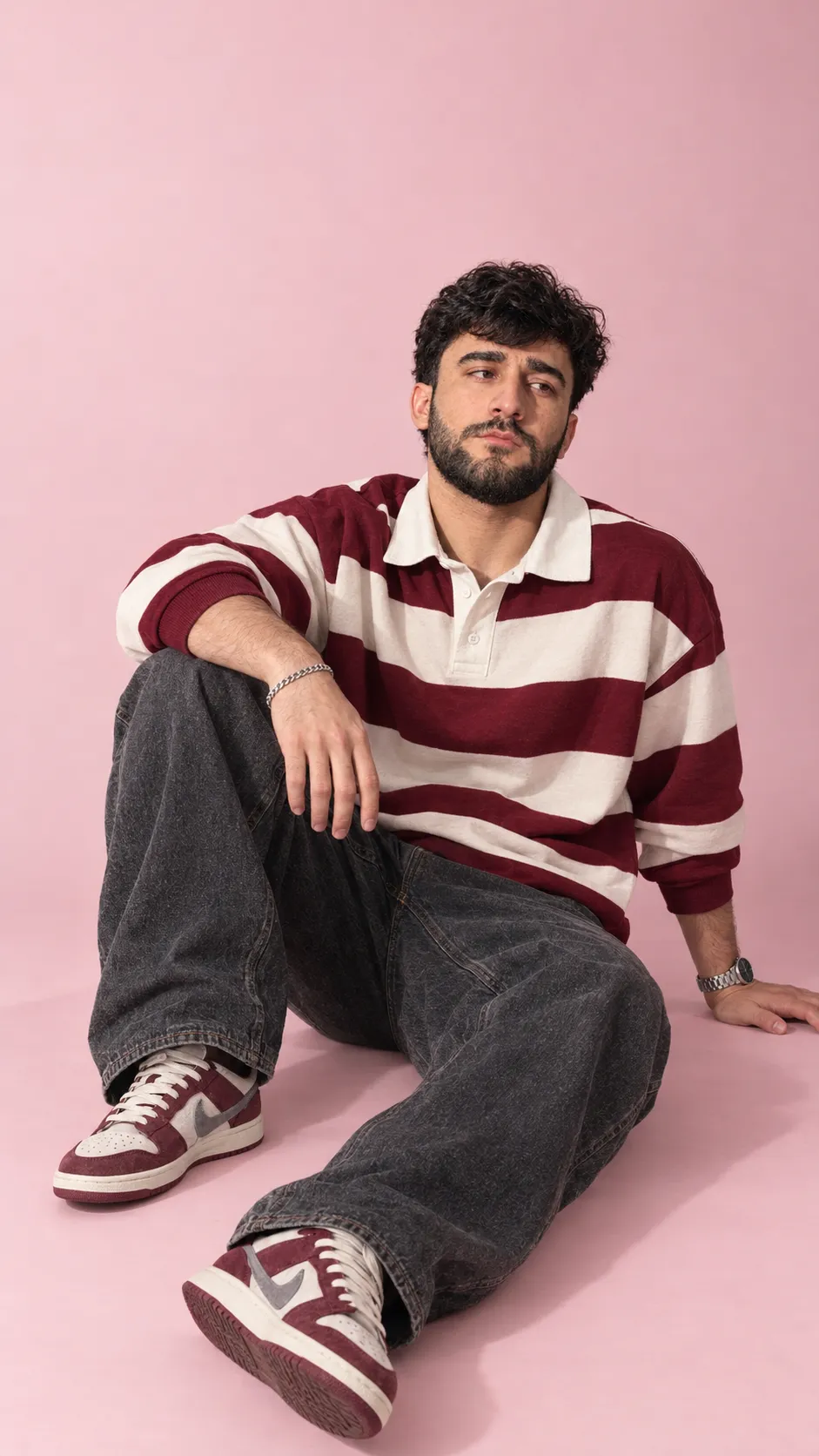
Example images


Prompt template
- Format
- Markdown
- Inputs
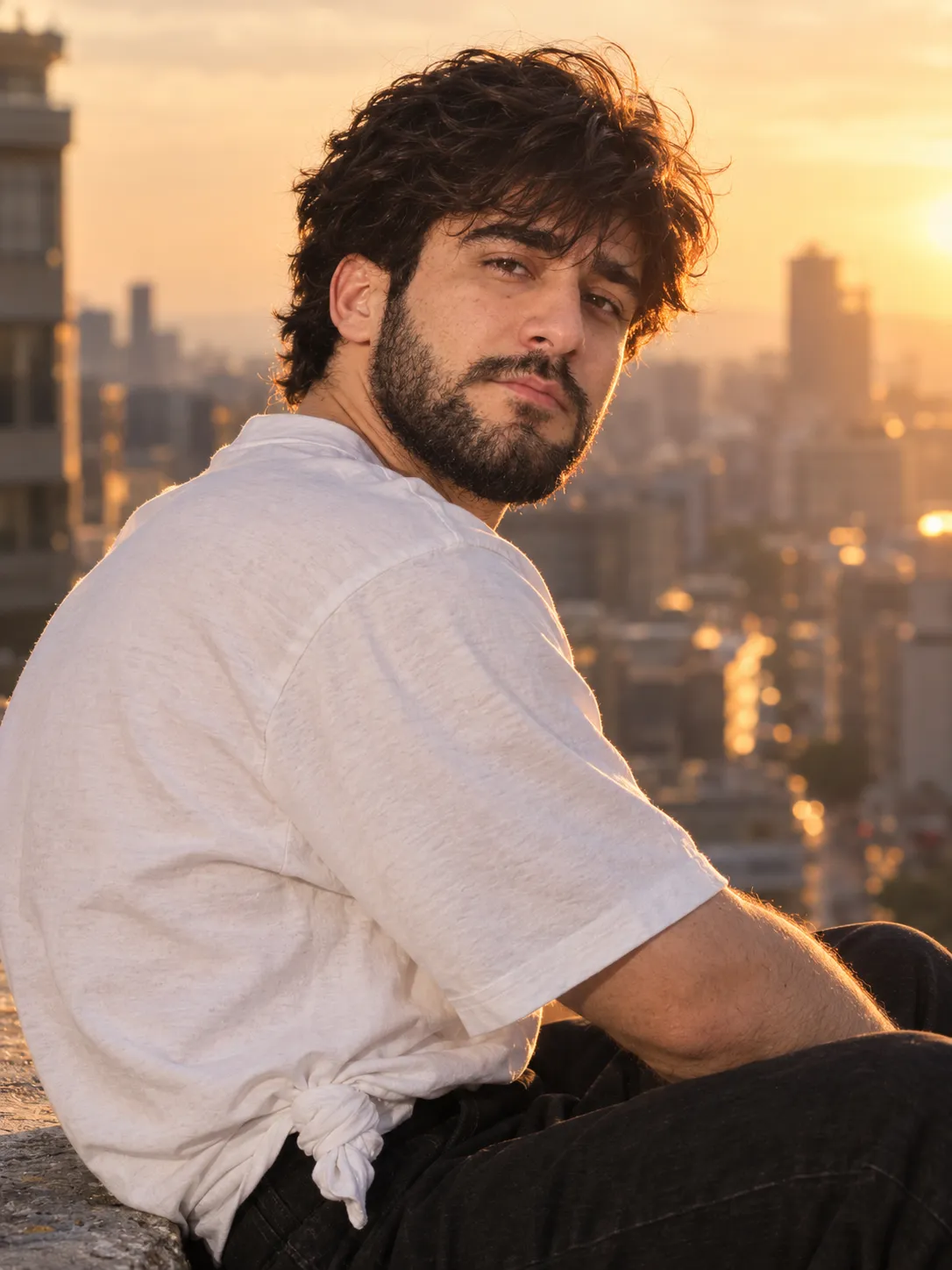
- reference_photo (image) · Required
- Outputs
- marker_portrait (image)
Avoid clothing or bags with large logos: paint them out cleanly, without replacing them with clumps of unreadable letters.

Using the uploaded photo as the only reference, paint one portrait of the person in a single vertical 3:4 image.

This is not a filter over the photo. It should look as though an observant painter with a sense of humor studied the person, then redrew the moment using a handful of strongly pigmented markers.

The image should read in this order: from across the room, the large blocks of color land first; up close, the person from the photo is still recognizable; finally, a short handwritten line beside them.

## Recognize the person, then simplify

Before painting, identify the features that make this person recognizable in the photo: the face outline, hair shape and hairline, relationship between the eyes, placement of the nose and mouth, head tilt, shoulder direction, posture, and memorable clothing or belongings. Build the picture around those features. Do not render every detail with equal emphasis.

Preserve the person’s original age, the light and dark relationship of their skin, gender presentation, body type, and identifying features such as moles, freckles, glasses, or facial hair.

Never change the expression or action. Closed eyes must remain closed; a shut mouth must stay shut; a profile must remain a profile; and a back view must remain a back view. Do not invent a face that is not visible in the photo. Preserve the direction the hair blows and the way the body leans.

Anatomical detail may be reduced, but do not slim the face, enlarge the eyes, or shrink the nose in a way that makes the person look different.

The humor comes from the writing. Do not try to be funny by painting someone in an unflattering way.

## Material: opaque pigment markers

Paint with opaque pigment markers, close to acrylic markers. Lay in color with the broad flat tip, build shapes with a medium tip, and use a fine tip only at the end for details and lettering that need it.

Fill large areas of color solidly. Show how the marker tip traveled across the paper: the band left by one broad sweep, the hard corner where a stroke changed direction, the seam where a second pass overlapped, the uneven edge where the tip lifted, and small skips across the paper grain.

Let these marks show in some places only; keep the rest of the color areas clean. Do not substitute noise sprayed over the whole picture for brushwork.

Lay down the color areas first and add only a little line work afterward. Do not outline everything in black and fill it in like a coloring book. A stroke may run over an edge, sit slightly out of register, or leave a border unclosed. Do not correct every stroke into perfection.

## Build the person from large color areas

Summarize the hair, face, neck, top, arms, and any necessary belongings into a few weighted masses. The relationship between masses matters more than small patterns.

Finish the face with one base skin area, two or three color areas that carry its structure, and a few strokes for the features. Remove pores, fine photographic texture, small reflections, and complicated tonal gradients.

Render the eyes with a few short strokes and a dark dot, while keeping the direction of the gaze exact. Do not standardize them into large round eyes or add exaggerated highlights or eyelashes. Paint the eyebrows as short strokes that vary in thickness, preserving their original direction and spacing. Suggest the nose with one warm color area and one or two dark strokes, without modeling it in the round.

Preserve the mouth opening, the direction of its corners, and the emotion. Paint teeth only if they are actually visible in the original, and reduce them to a simple shape.

For the hair, establish the overall silhouette first and add only a few strokes to convey its direction. Dark hair may use deep brown, ink blue, or near-black areas. Preserve light or greying hair as it is; do not turn all hair brown.

For clothing, preserve the shape, neckline, layering, and important color relationships. Keep only the few folds that explain the posture.

If a hand gesture is central to the photo, preserve it. If it is not, reduce its detail without moving it.

## Color: deep without muddiness, vivid without loudness

Consider the clothing, skin, and mood in the photo, then choose a limited but strong color combination. Usually four or five main colors are enough: one dominant color to set the mood, one contrasting color to create tension, and a little accent color to brighten the picture.

Choose only colors that suit this photo from cobalt blue, ultramarine, vermilion, tomato red, ochre, deep grass green, peacock green, aubergine purple, wine red, and warm ivory. Do not use all of them.

Make the large color areas genuinely participate in the composition. A richly painted background with a photographically realistic person left inside it is a failure.

Skin color may be translated artistically with ochre, terracotta, apricot, and warm browns; a cool color that answers the background may appear in places. Preserve the light and dark character of the original skin tone. Do not turn everyone pale or break the face into rainbow shards. Build volume from differences in temperature and value between neighboring color areas, rather than soft-focus gradients, airbrushed shadows, or cinematic lighting.

## Composition and background

Lift only the main subject out of the original photo. Remove unrelated passersby, clutter, and busy surroundings.

Follow the orientation and key action of the original. Cropping, scaling, and repositioning are allowed within reason, but do not crop a meaningful full-body action down to a head shot. Place the person slightly off center so space for the lettering appears naturally; do not center them mechanically.

Make the background one mass of a dominant color or two large color zones, and allow a little warm white paper to show through. Do not restore the environment from the photo.

Keep an object only when it directly contributes to the joke or the person’s character, such as a cup in their hand, an umbrella turned inside out by the wind, or a pet held in their arms. Paint any retained object with the same simple color areas.

Anything the person is holding or wearing must appear in the same quantity as in the original photo. One must stay one; never turn one into two.

Do not add plants, stars, hearts, stickers, or geometric shapes as decoration.

## One handwritten line

First understand the action, expression, clothing, and objects actually visible in the photo. Then write a short joke that fits them.

It must be a line you could think of only after seeing this photo. Do not describe what is in the picture, and do not use self-help slogans or catchphrases unrelated to what is shown. Aim for a slightly off-kilter contrast, a joke delivered with a straight face, a small complaint addressed to an object as if it were a person, or the minor absurdity of ordinary life.

The only lettering on the picture is the one handwritten line you write. Use English capitals or English handwriting only. Do not include Korean, Chinese, or Japanese characters.

Delete every piece of text that was in the photo. This includes brand names and logos printed on clothing, labels on bags and shoes, signs, tags, and wording on bottles or packaging. Repaint those places as clean color areas without lettering, while preserving the clothing’s color layout and pattern structure. Do not draw unreadable letter-like marks in their place. Leaving a real brand mark in the picture is a failure.

Keep the main line between three and eight English words. You may add one small aside of one or two words if you want. Use no more than two blocks of lettering.

The following lines only demonstrate how the humor works; do not use them as-is. If the photo offers no cue for one of them, do not use it, and never attach a prop to the person to fit a line:
- When the hair is visibly wrecked: “MY HAIR HAS OTHER PLANS.”
- When someone is holding a small cup very seriously: “SMALL CUP. BIG RESPONSIBILITIES.”
- When someone is staring into the distance: “CURRENTLY BETWEEN THOUGHTS.”

Direct the joke at the situation, never at someone’s appearance or identity. If the photo’s mood is serious, keep the writing lighter and more oblique.

Make the lettering look handwritten, with pressure in the strokes, slight variation in letter size, a wavering underline, and uneven spacing. The spelling must nevertheless be correct and clearly readable. Use a dark pen on light areas and a warm white pigment pen on dark areas, in the same hand as the painting, never like a computer font added afterward. One short hand-drawn underline or one small arrow pointing at something is fine. Do not cover the picture in doodles.

Do not put a date, year, serial number, or signature anywhere on the picture. Do not place numbers in the background color areas or margins. Letters and numbers originally on clothing or on an object being held follow the photo.

## Do not

Do not split the picture into upper and lower halves or left and right halves. Do not place the original photo inside the picture. One marker painting must fill the frame.

Avoid photographic texture, half-realistic AI oil painting, soft airbrushed gradients, transparent watercolor bleeds, pastel candy colors, plastic skin, anime-style large eyes, 3D cartoon styling, vector outlines, a black border around the whole image, and excessively fine hair or fabric texture.

Make it one marker portrait worth hanging in a small gallery: ordered colors that read clearly from across the room; visible evidence of the hand stopping and overlapping up close; the person from the photo still recognizable; and a short line beside them that gives the moment character.

Paint irrelevant details less, lay the color more heavily, and make the person look more like themselves.



Comments — 0