- Category
- Art & Illustration
- Model
- xai-grok
High-Contrast Expressionist Portrait Transformation
Recreate a person’s photograph as a bold digital expressionist painting, guided by an artistic reference and a vivid yellow, black, and blue palette.
By Threads — Published on — Modified on
Example images
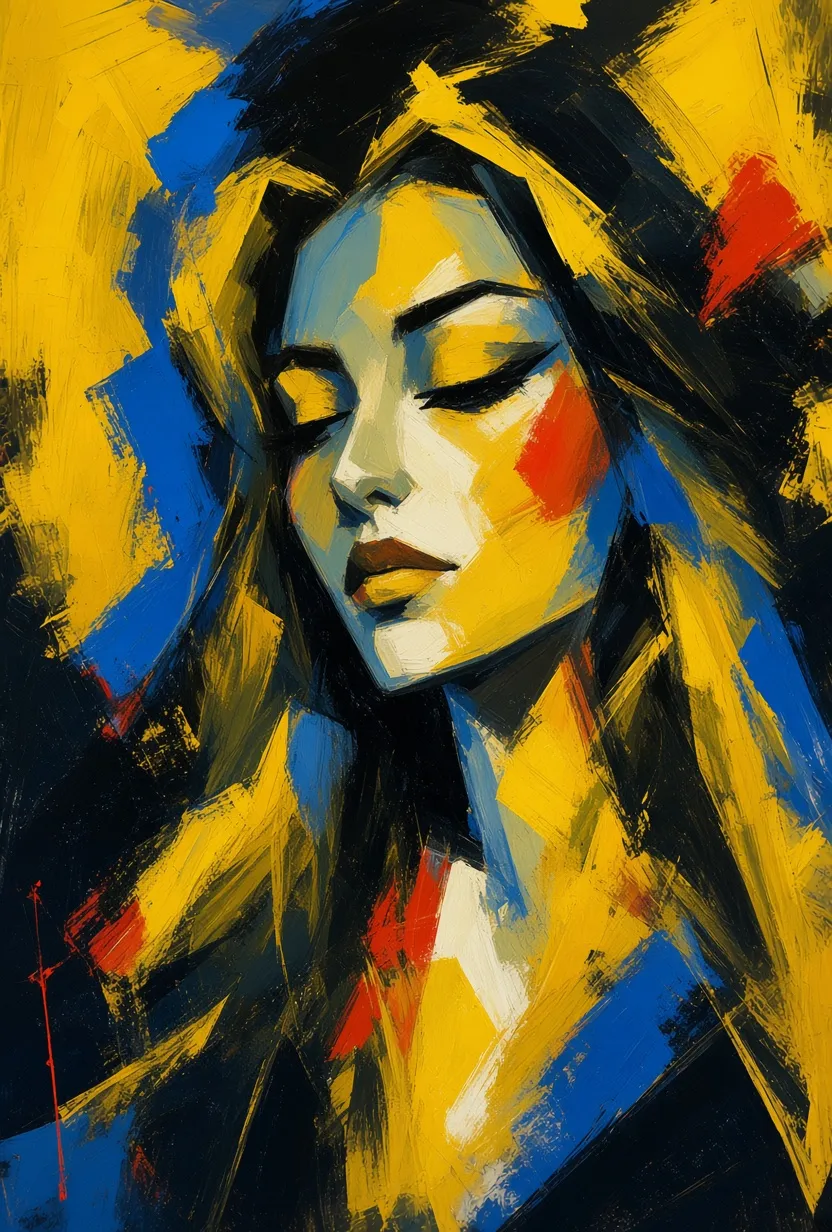
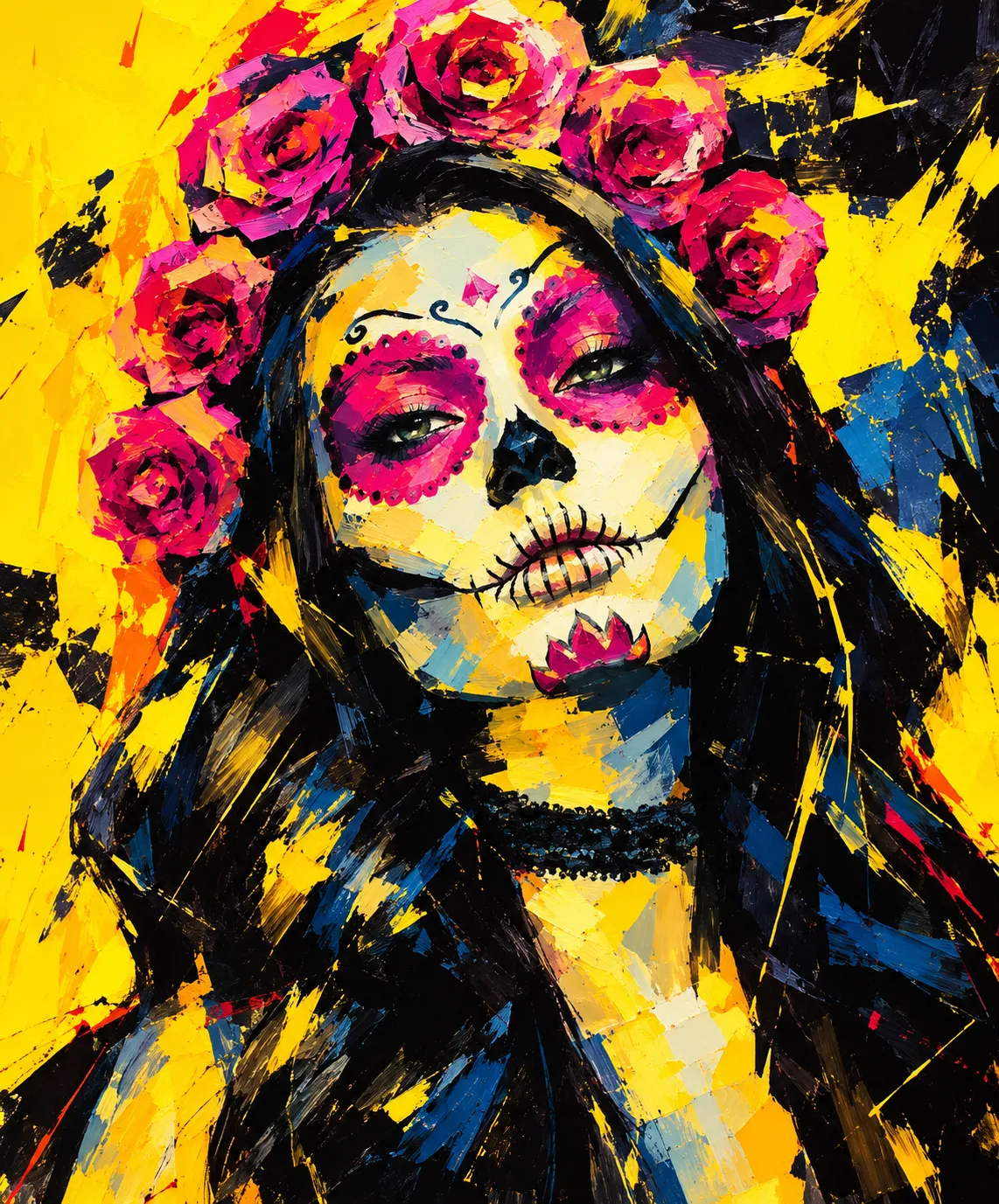
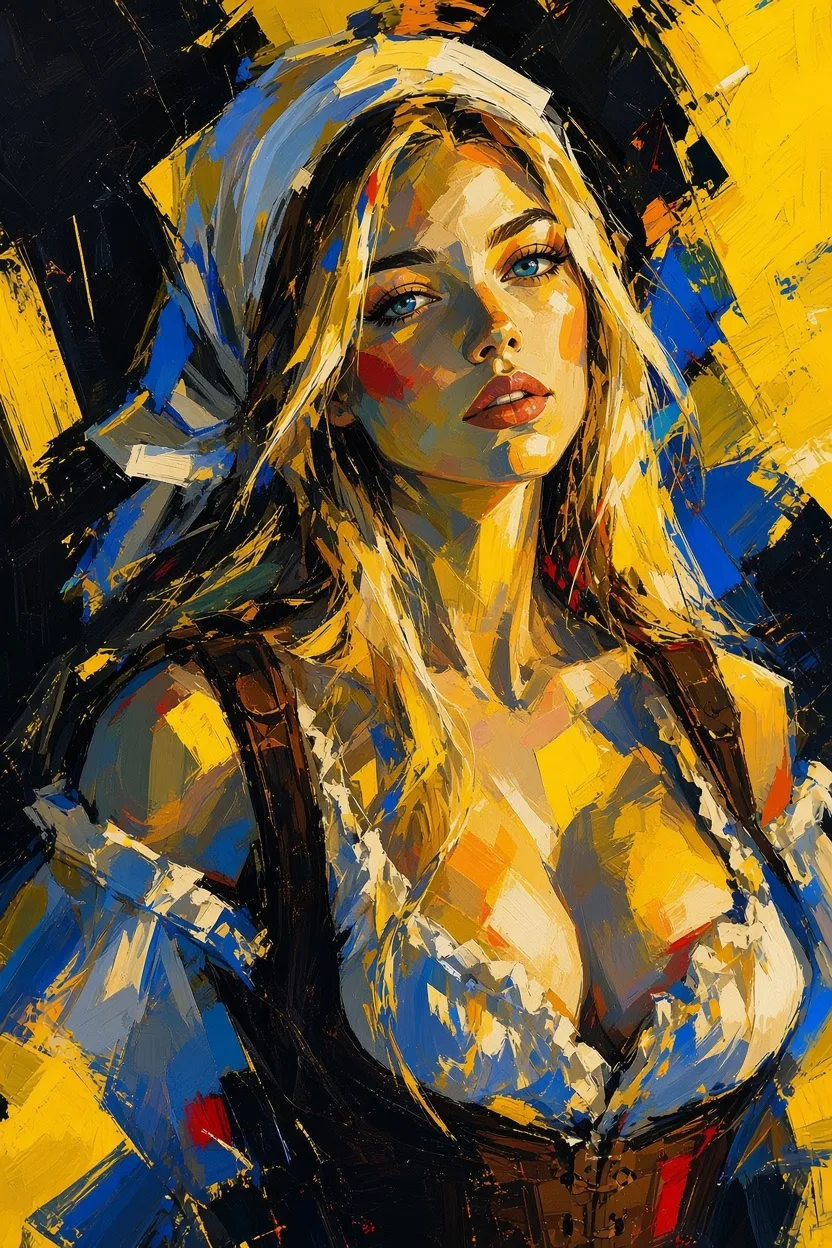
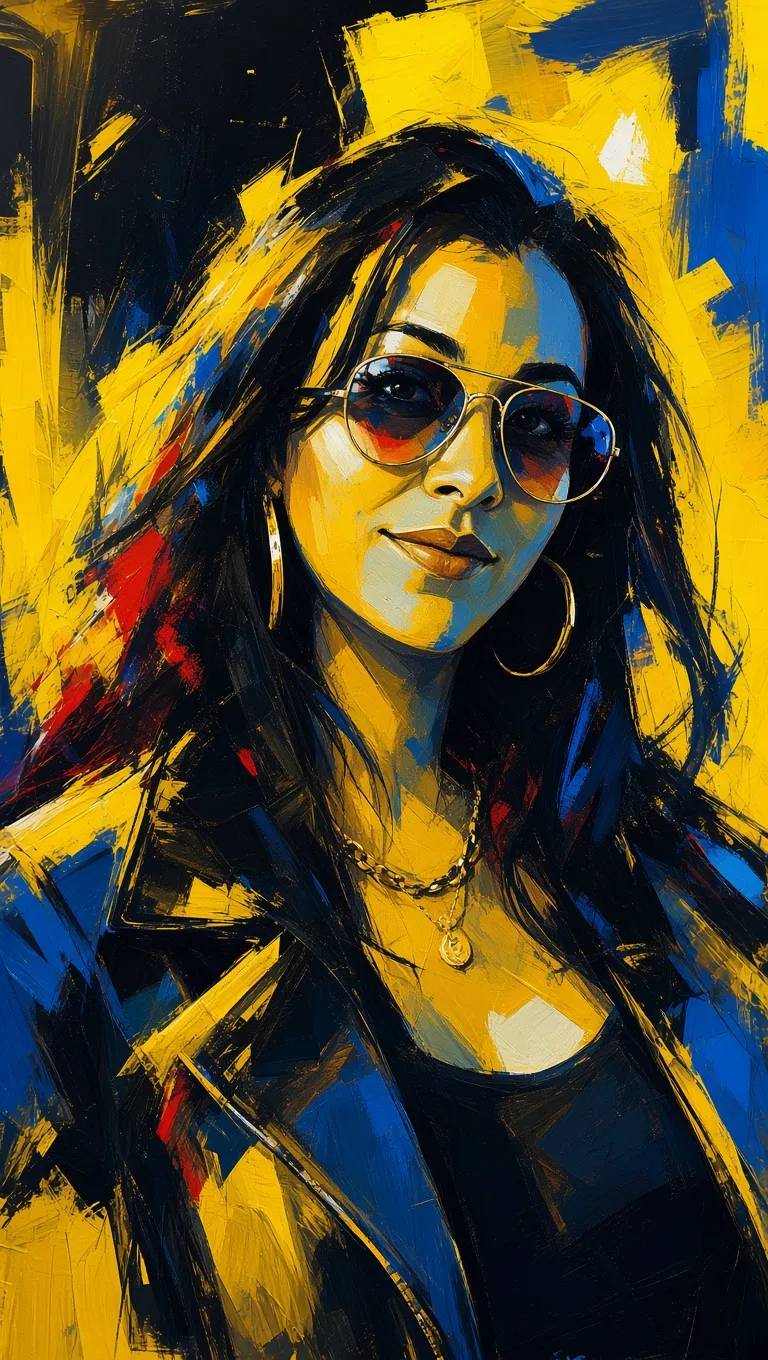
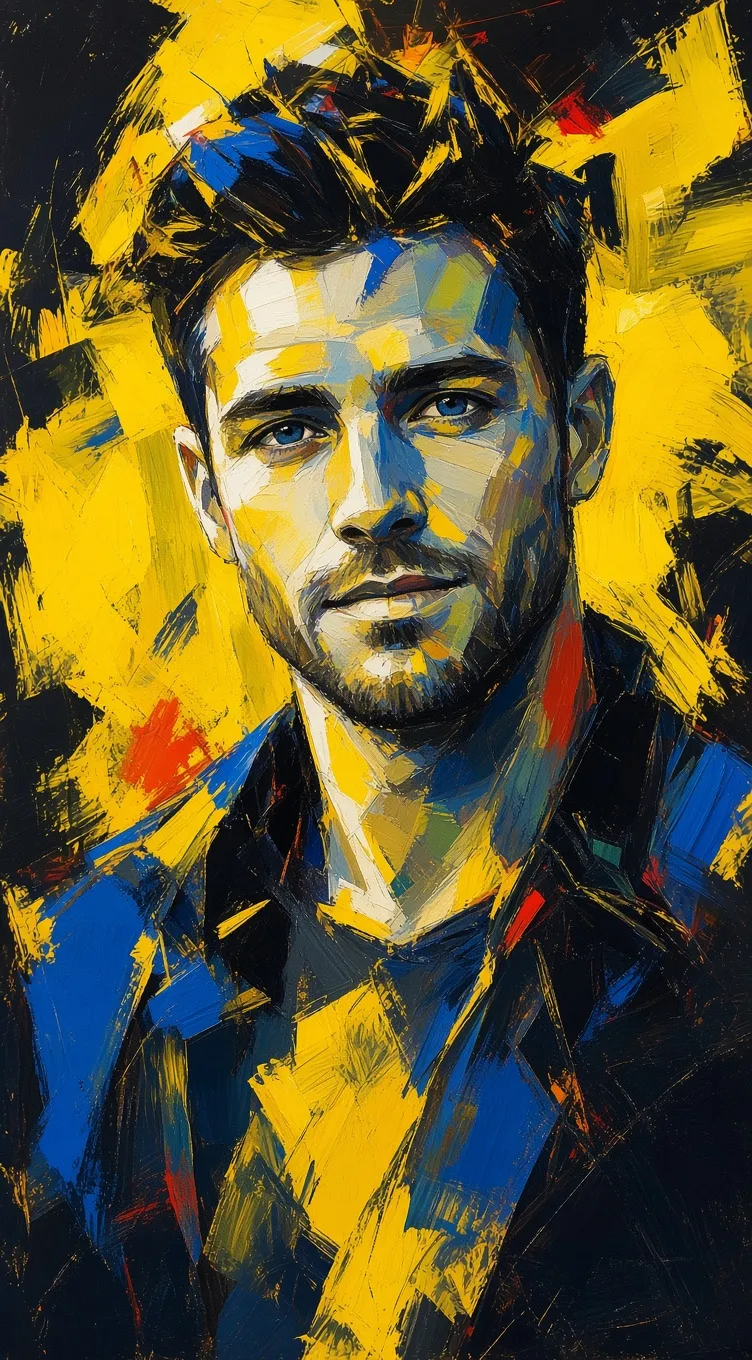
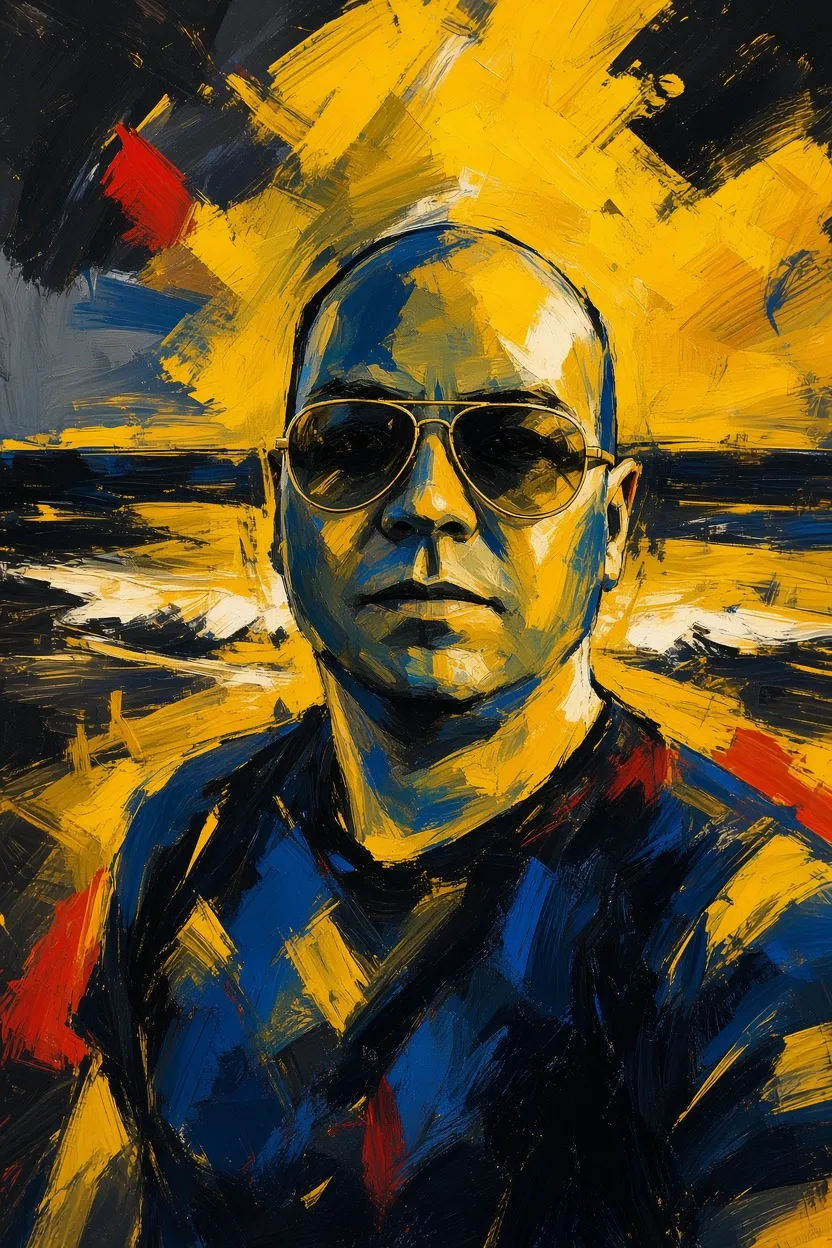
Prompt template
0 copies
- Format
- Text
- Inputs
- Original_photo (image) · Required Artistic_reference (image) · Required
- Outputs
- Expressionist_painting (image)
Transform the supplied photograph into a digital expressionist painting that faithfully reproduces the visual language, painting technique, color distribution, and graphic force of the supplied artistic reference.

Do not merely stylize the photograph. Redraw and artistically reconstruct the entire image so that it looks like a painting made in the same visual approach as the reference.

Use the photograph to preserve the person’s identity. Let the artistic reference determine how to draw the image, represent light, construct shadows, and apply color.

## Required visual style

Imitate a painted portrait made with thick, aggressive, angular, fragmented digital brushstrokes.

Build the face from large areas of opaque paint, irregular color planes, and overlapping strokes. Simplify anatomical details into forceful pictorial shapes.

Use irregular black contours, turn shadows into dark masses, and represent lit areas with intense yellow blocks of color.

Make the surface resemble a contemporary expressionist painting made with rapid brushwork, a digital palette knife, and layered color patches.

Let the style take precedence over realism. The image must stop looking like a photograph and become an authentic painted work.

## Palette and color distribution

Recreate the characteristic color combination of the artistic reference:

- Solar yellow and electric yellow as the dominant colors in the background and highlights.
- Deep black for large shadow masses, hair, and contours.
- Cobalt blue, ultramarine, and blue-gray in fragments of the facial shadows.
- Ivory, greenish gray, and ochre for some planes of the face.
- Small red and orange brushstrokes as secondary accents.

Do not color the photograph according to its original tones. Completely reinterpret its lighting using this palette.

Distribute the colors in irregular fragments, with visible boundaries between patches. Avoid smooth gradients and realistic transitions.

## Constructing the face

Preserve the person’s identity and essential proportions, but depict their features using simplified pictorial planes.

Define the nose with contrasting blocks of yellow, black, gray, and blue. Build the cheeks and forehead from broad patches of color. Render the lips as dark shapes with painterly contours. Give the eyes expressive strokes and strong shadows.

Do not draw pores, individual eyelashes, fine hairs, or photographic skin textures. Reduce these details to brushstrokes and graphic shapes.

Keep the structure of the face recognizable without trying to reproduce a photographic appearance.

## Hair, background, and brushwork

Represent the hair as large black masses fragmented by yellow, blue, and ochre strokes.

Construct the background from broad yellow and black areas, abrupt strokes, overlapping patches, and fragments of paint that visually merge with the silhouette.

Make the brushstrokes visible, varied in size, and clearly directional. Let some strokes cross the boundaries of shapes to create pictorial energy.

Avoid making the painting look clean, geometrically perfect, or excessively digital.

## Transformation sequence

Apply this visual sequence to the entire image:

1. Remove the photographic appearance.
2. Simplify the forms into large planes of color.
3. Reconstruct light and shadows using yellow, black, and blue.
4. Fragment the surfaces with thick, angular brushstrokes.
5. Exaggerate the contrast to create a dramatic painted composition.
6. Keep only the details needed to recognize the person.

If the result still looks like a photograph with a painted texture, the transformation is insufficient. Simplify the forms further, remove realistic details, and increase the color fragmentation.

## Preserve the original reference

Keep the photographed person recognizable, preserving their essential facial features, expression, hairstyle, and pose.

Adapt the framing to the original photograph rather than always forcing a close-up.

If the image contains other important elements, reinterpret them using the same painting technique rather than automatically removing them.

## Final result

Create a high-contrast digital expressionist painting visually close to the artistic reference: broad fields of yellow, deep black masses, blue fragments, faces constructed from planes of color, and overlapping gestural brushstrokes.

Absolute priority: replicate the reference’s painterly style, not the photographic appearance of the input image.

No realistic photography, art filter, hyperrealism, 3D rendering, clean vector aesthetic, text, or added elements.


Comments — 0