- Category
- Art & Illustration
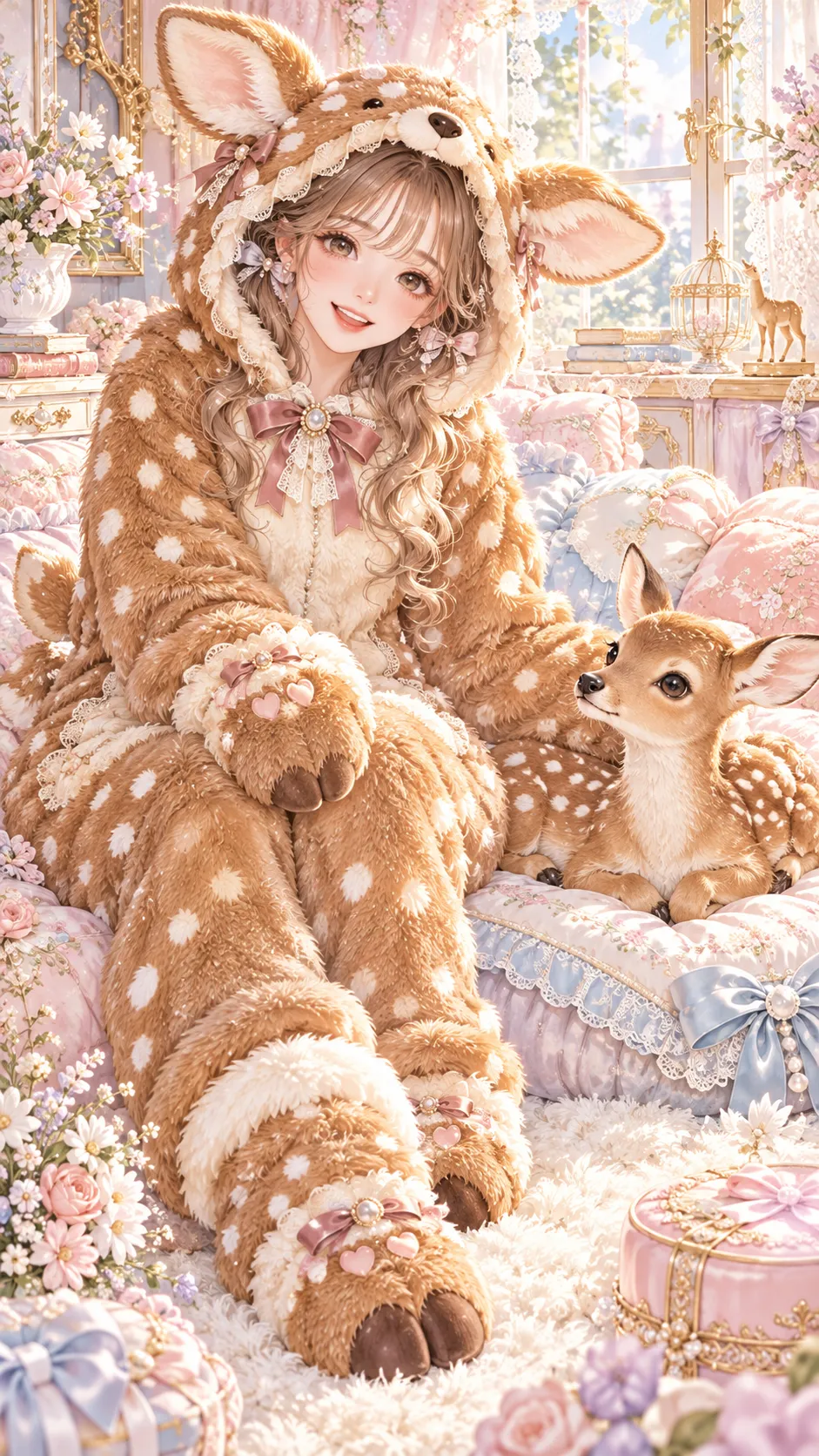
Little Bambi Kigurumi: Sweet Dolly and Fawn
Create a vertical 2D manga-style illustration of an adult woman in a luxurious caramel-brown fawn kigurumi, relaxing beside a real young Japanese sika deer in a bright pastel fancy room.
By Threads — Published on — Modified on
Example images
Prompt template
0 copies
- Format
- Text
- Outputs
- Illustration (image)
Create a beautiful, high-end 2D illustration in a delicate, ornate shoujo-manga style, blended with restrained Art Nouveau ornament. The scene shows a beautiful adult woman wearing a luxurious, full-body fawn kigurumi, relaxing beside a real, adorable young Japanese sika deer in a bright, dreamy fancy room. Make the woman the prominent subject while keeping both her and the fawn large enough for their expressions and fine fur details to be clearly visible. Use a vertical 9:16 composition.

Overall concept and mood

Depict a soft, endearing fawn like a little forest fairy, with a warm caramel-brown coat and small white spots. Beside it, show a sweet, dreamlike adult woman wearing a matching fawn-themed outfit. Convey their gentle, happy moment together, the fawn’s innocent curiosity, the soft fur, and a warm feeling of contentment. Preserve the deer’s natural beauty as a wild animal.

The woman

Give the woman an elegant, approachable sweet-dolly face reminiscent of a shoujo-manga heroine: large, clear, jewel-like eyes; softly rounded, full cheeks; a small, naturally rounded chin; a refined nose; a charming mouth; and a bright, happy smile. Balance adult beauty with cuteness. Keep her facial features human and natural, with soft contours and a hint of natural color in her cheeks. Do not make her chin excessively pointed or transform her face into a deer’s face. The animal features belong to the costume, not to the woman herself.

Her hairstyle and hair color may vary from one image to another. Choose a style that suits the illustration, such as a short cut, short or medium bob, semi-long hair, long straight hair, loose waves, or soft curls. Choose a harmonious hair color, such as natural black, dark brown, ash brown, honey brown, or milk-tea beige. Let some hair or bangs naturally show around the hood opening; do not lock the design to one particular hairstyle or color.

The fawn kigurumi

Dress the woman fully in a loose, one-piece, hooded fawn kigurumi that connects naturally from the neck to the feet. It is warm, modest loungewear with no exposed body. Give it a plump, rounded, marshmallow-soft silhouette. Render it with an exceptionally dense combination of long pile, fine microfur, and soft sherpa fleece. Show countless delicate, airy fibers layered together, with fine, softly spreading tips and carefully rendered strands and shadows. The hood, ears, cheeks, chest, cuffs, and feet should have especially abundant long pile. Avoid the look of smooth, flat fabric.

Use a rich, warm fawn palette: caramel brown, honey brown, milk-tea beige, cinnamon brown, cream white, and soft ivory. Keep the back and shoulders predominantly caramel brown, with soft cream-white sherpa on the chest and belly. Add delicate highlights to the fibers for warmth and depth.

White fawn spots are essential. Place small, softly irregular white spots naturally across the costume’s back, shoulders, sleeves, hips, and outer legs. Vary their size and spacing; do not arrange them as regular polka dots. Make the spots look like differences in the fur fibers themselves, with brown and white strands blending softly at their edges, rather than flat printed markings. Do not crowd the spots or obscure the caramel-brown fur. Avoid leopard spots, cow markings, and uniform dot patterns.

The hood has a pair of large, soft fawn ears. Make them gently wide, horizontal ovals with narrower bases and naturally rounded tips. The outer fur is caramel brown; the inner fur is pale pink-beige and cream white, with fine, soft fibers along the edges. Include exactly two ears. Do not use long drooping rabbit ears, triangular cat ears, or drooping dog ears. A small cloth black nose, soft cream muzzle, or subtle white spots may decorate the hood, but keep all such decoration away from the woman’s face. Her eyes, nose, and mouth must remain visible; do not add extra facial features around her face. Do not add antlers.

The costume has one sleeve on each side and one leg on each side, naturally connected from shoulders through torso and hips. Use soft cream-white sherpa at the chest and belly. Add one tasteful ribbon at the chest and, if suitable, delicate lace or small pearls at the cuffs or hood edge. Keep embellishments from distracting from the fawn fur and spots.

Attach exactly one small, soft tail to the back of the costume at the woman’s waist. It should be short, gently rounded, and covered in caramel-brown long pile, with cream-white fur on its underside. It is a costume decoration, structurally separate from the woman’s limbs; it must not grow from a shoulder or arm, branch, become a third arm, or have a hand or mitten at its tip. Keep it distinct from the real fawn’s tail.

Put one plush, rounded, caramel-brown fur mitten on each hand, naturally connected to its corresponding sleeve. There must be exactly two mittens, one at the end of each sleeve. Add restrained white spots to their backs. A small heart-shaped paw-pad embroidery on the palm is optional; these are whimsical costume mittens, not real deer hooves. Keep the woman’s fingers inside the mittens, with no visible fingers or extra hands.

Give her one soft, rounded, caramel-brown fur room slipper on each foot, naturally connected to the corresponding leg. A subtle stitched detail suggesting a split hoof is optional; small ribbons or pearls may be added tastefully. Include exactly two slippers, with no extra feet or shoes.

The real fawn

Beside the woman, show one lively, real young Japanese sika deer with a small, endearing body, a softly rounded torso, and four slender legs. It has a youthful head, large clear dark eyes, two large ears that spread gently to the sides, a natural elongated muzzle, a small black nose, a cream-colored chest and belly, small hooves, a caramel-brown coat with white spots across its back, and exactly one short tail. Give it an innocent, gentle, curious expression and a relaxed mouth. Preserve its natural deer face, anatomy, and proportions; do not make it a stuffed toy, give it human hands or arms, exaggerate its head, or make its legs unnaturally short. Do not add antlers.

Render the real fawn’s natural short fur distinctly from the costume’s artificial, dense long pile. Slightly longer, fluffy fur may appear around its cheeks, neck, and chest. Preserve a natural deer skeleton: one head, two eyes, two ears, two front legs, two hind legs, and one tail. Do not force hidden legs to be visible when they would naturally be obscured by its seated pose.

Pose and composition

The woman sits naturally on a large, fluffy cushion in a bright fancy room. The fawn rests on a separate cushion immediately to her left, settled comfortably with its front legs folded naturally and its hind legs tucked into a stable position. Turn its face slightly toward the woman, who smiles warmly at it.

Bend the woman’s right arm naturally at her right side and place the right mitten on her right knee. Extend her left arm naturally forward and place the left mitten on the cushion in front of the fawn. Keep the left mitten separate from the fawn’s front legs. Make the connections from each shoulder through sleeve to mitten clear and natural.

Let the woman’s small costume tail peek out naturally from behind her waist, slightly visible on the outside of her right side. Keep it clear of her face, arms, and mittens. Clearly distinguish it from the fawn’s own short tail, which extends naturally from the back of its body.

Make the woman the main subject and show her face, hood, plush caramel-brown fur, and white spots clearly. Fit the woman’s full figure and the small fawn naturally into the vertical composition. Keep the woman and fawn’s outlines distinct and their expressions easy to see.

Room and color

Set the scene in a bright, dreamy pastel fancy room, not an outdoor forest. Include soft cushions, a fluffy rug, delicate lace, ribbons, and pale flowers. Let soft natural light fill the room. Choose pastel accents freely—such as lavender, mint green, baby blue, milky pink, peach, butter yellow, pale lilac, ice blue, champagne beige, or pearl white—and vary the combinations rather than relying only on pink. Decorative ribbons, lace, pearls, cushions, and background details can use harmonious pastel colors. Add restrained Art Nouveau curves, small floral motifs, graceful furniture, or similar elegant details. Keep the background simple and bright, with enough contrast for the fawn’s fur to remain distinct. Avoid dark lighting and overly elaborate decoration.

Anatomy and clarity

Maintain natural, accurate human anatomy beneath the voluminous costume: exactly two arms and two legs, with one sleeve and one mitten for each arm. Keep shoulders, elbows, waist, knees, and feet in plausible positions. The costume tail is one separate decoration attached at the back of the waist, not a limb. Maintain the fawn’s natural four-legged anatomy and single tail. Do not let the woman’s mitten overlap the fawn’s front legs, and do not confuse the costume tail with the fawn’s tail. Avoid extra or duplicated limbs, mittens, joints, or tails, or inconsistent left-right anatomy. Prioritize clear, natural anatomy for both human and animal.

Art direction and finish

Use a refined, fully 2D, hand-drawn illustration aesthetic: delicate shoujo-manga linework, transparent-looking eyes, fine hair strokes, soft outlines, and elegant, vivid colors. Blend in graceful Art Nouveau ornament without overwhelming the subjects. Render the costume’s dense long pile with fine strokes and soft layered shading, especially the individual caramel-brown fibers and the natural flow of the white spots. Render the real fawn with subtle, natural short-fur texture, distinct from the costume. Use delicate 2D techniques to create rich fur volume. Do not make the result photographic, photorealistic, 3D CGI, or figure-like. Avoid a dark or horror mood and unnatural anatomy.

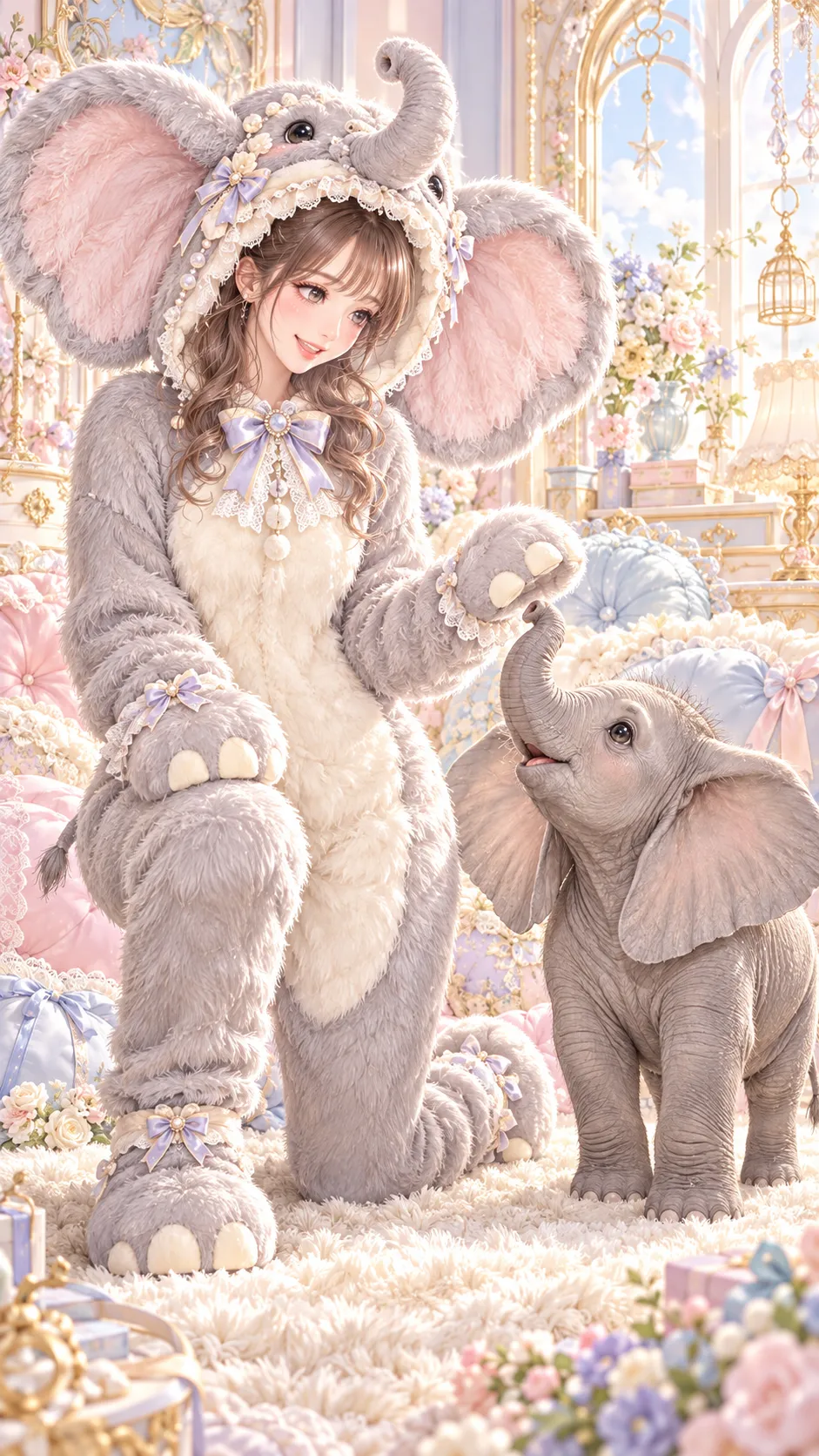
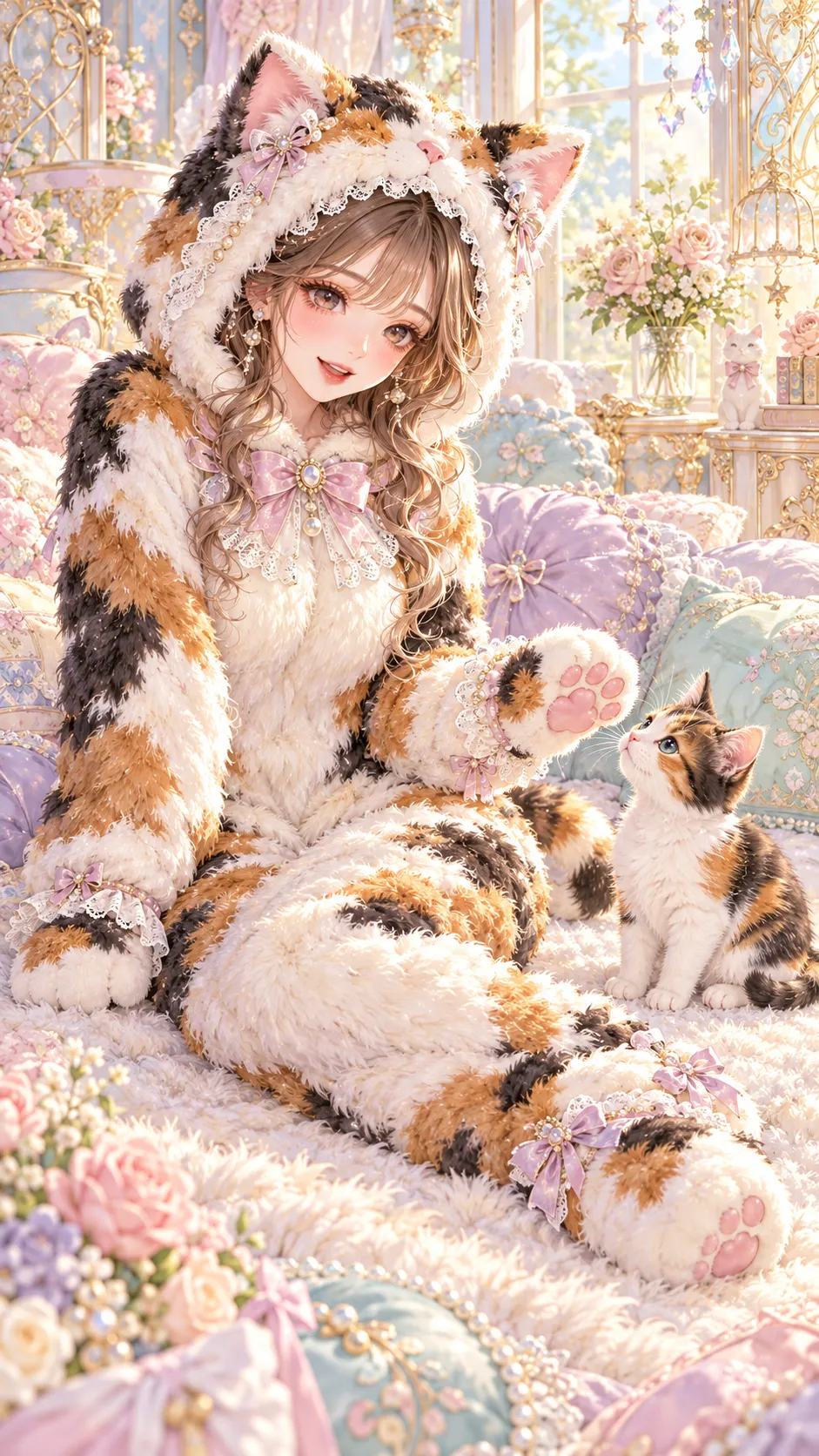
Final image: an exceptionally charming, fully 2D shoujo-manga-style illustration of a smiling adult woman in a complete, plush caramel-brown fawn kigurumi, with natural white spots and large soft ears, enjoying a warm moment beside one real, adorable fawn in a bright pastel fancy room. Preserve the specified 9:16 vertical format, natural anatomy, clear separation of the woman and animal, airy fur texture, and gentle, joyful mood.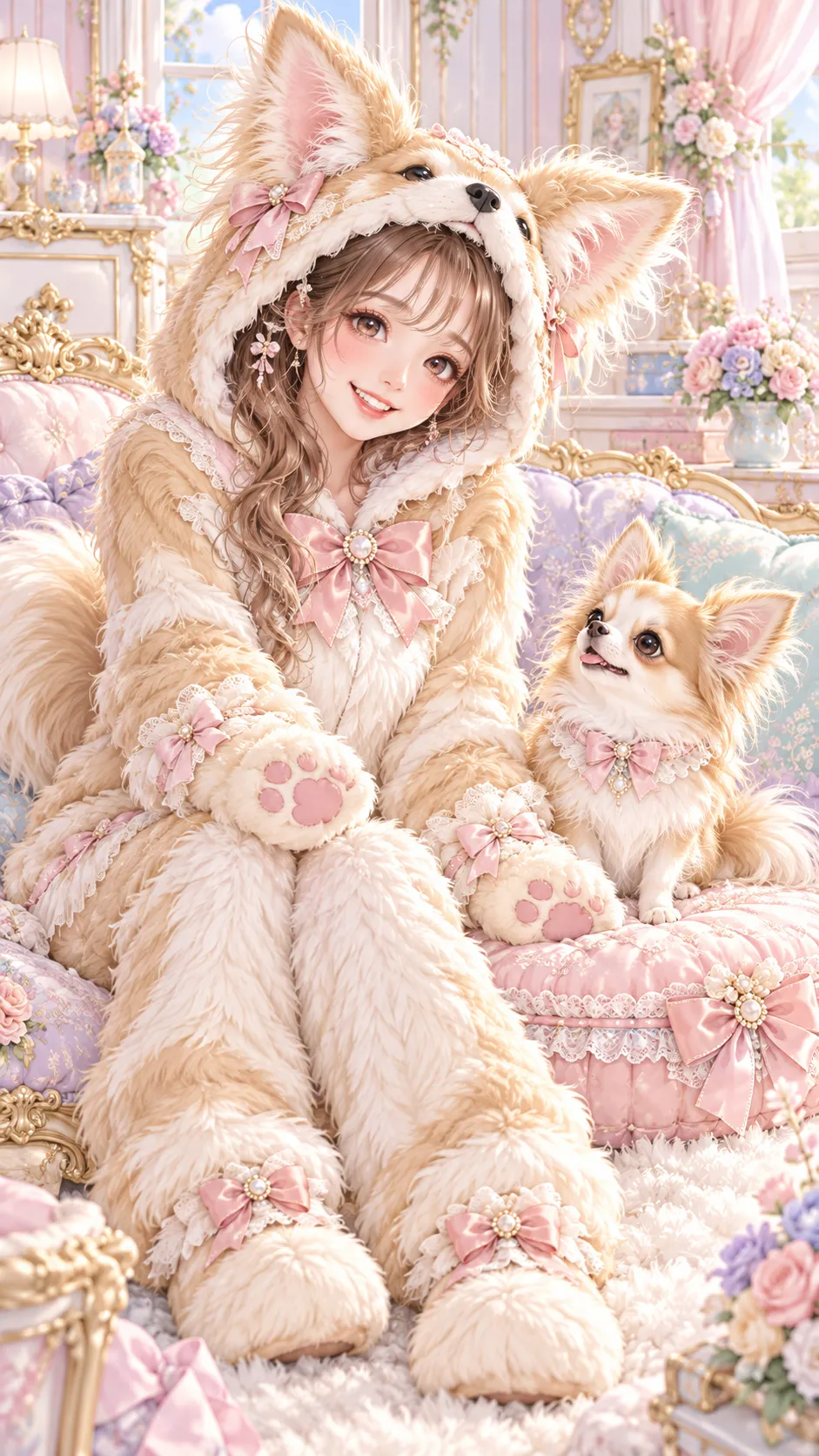



Comments — 0