- Category
- Photography
Low-Angle Green Fluorescent Underground Portrait
Create a photorealistic, dark cinematic portrait of a young adult man in a fluorescent-lit underground corridor, with identity preservation, brutalist architecture, and a raw 35mm film aesthetic.
By Threads — Published on — Modified on
Example images


Prompt template
0 copies
- Format
- Text
- Inputs
- Identity_reference_image (image) · Required Style_reference_image (image) · Optional
- Outputs
- Cinematic_portrait (image)
Create an ultra-photorealistic cinematic fashion portrait of a young adult man standing alone in a dark underground corridor, passageway, station-like interior, or brutalist architectural tunnel. The image should feel like an authentic frame from an atmospheric European crime drama, psychological thriller, or experimental fashion film: cold, minimal, slightly unsettling, and entirely photographic. Combine raw 35mm film photography, brutalist architecture, a dramatic low-angle perspective, green fluorescent lighting, and deep cinematic shadows. Make the result look like a photograph taken with a professional full-frame camera—not CGI, a 3D render, or an AI-generated illustration.

IDENTITY AND REFERENCES
Use the uploaded personal reference image as the ONLY identity reference for the main subject. Preserve the person's exact recognizable identity and natural facial anatomy, including face and head shape, forehead proportions, natural hairline, eyebrow shape and placement, eye shape, spacing and position, nose bridge, tip and nostrils, lip and mouth proportions, cheekbones, jawline, chin, ears, neck proportions, natural skin tone, facial structure, realistic age, natural asymmetry, and recognizable individual appearance. The subject must clearly remain the same real person. Do not make him a generic fashion model, redesign or beautify his face, make it more symmetrical, or change his ethnicity, age, or natural proportions. Lighting and camera angle may dramatically change the scene, but the person's identity must remain unmistakable.

If two reference images are provided, use REFERENCE 1 only to preserve the person's face, anatomy, and identity. Use REFERENCE 2 only as a visual reference for composition, camera angle, body position, clothing concept, lighting, architecture, color palette, atmosphere, perspective, and photographic style. Do not copy the second image's person's identity or facial features. The final subject must be the person from the identity reference.

SUBJECT AND POSE
Place the man alone in a long, narrow underground corridor. Orient his body approximately toward the camera, with his head slightly lowered and his gaze directed directly or slightly downward toward the camera. Give him a calm, serious, introspective, slightly tired, confident, and mysterious expression, with relaxed lips and no smile, exaggerated anger, or theatrical expression. His pose should feel relaxed and spontaneous, as if the camera caught him standing beneath the fluorescent lights. Keep his shoulders slightly lowered and his body language quietly confident, emotionally restrained, serious, controlled, and subtly intimidating without aggression. One or both hands may rest naturally in his coat pockets; let the arms hang naturally and do not prominently expose the hands. Any visible fingers must have correct anatomy, natural proportions and joints, realistic skin texture, and the correct number of fingers. Avoid exaggerated hand gestures.

CAMERA AND COMPOSITION
Use a dramatic low angle, with the camera significantly below the subject's chest level, approximately 60–90 cm above the ground or around waist-to-lower-thigh height relative to the subject. Point the camera upward by approximately 15–25 degrees. Make the man appear taller and more imposing while maintaining realistic human proportions and a naturally proportioned face. Avoid distorted wide-angle perspective.

Use a professional full-frame camera and an approximately 35mm lens or 40mm cinematic prime lens. Use a moderately wide, immersive, physically believable perspective with realistic optical characteristics; subtle lens imperfections are welcome. Avoid extreme wide-angle distortion.

Use a vertical portrait composition, preferably 4:5 or 2:3. The subject should occupy approximately 65–75% of the vertical frame and sit slightly off-center in a deliberately asymmetrical composition. Place him slightly below the camera's vertical center, dominating the lower and middle portions of the frame. Leave substantial architectural ceiling in the upper frame and let the dark coat and lower body occupy the bottom. Use ceiling lights, ceiling panels, and wall edges as strong diagonal and perspective-leading lines that converge naturally toward the background and direct the viewer's eye toward the subject. The architecture should frame the subject and create a convincing sense of depth, as if the viewer were physically inside the tunnel.

ARCHITECTURE AND ENVIRONMENT
Show a long industrial ceiling with repeating rectangular panels and multiple elongated fluorescent tube fixtures arranged in perspective, diminishing into the distance. The ceiling should feel old, utilitarian, institutional, underground, industrial, and slightly neglected. The setting may resemble an anonymous subway passage, underground pedestrian tunnel, brutalist corridor, or service passage; include no recognizable landmarks.

Extend the environment deep behind the subject. Keep the walls dark and slightly rough, with restrained details such as concrete, painted metal, aged panels, industrial seams, subtle stains, worn surfaces, distant structural columns, and dark corners. Keep the architecture understated and realistic rather than designed. Maintain accurate architectural perspective and strong depth cues.

LIGHTING AND COLOR
Let the entire scene be dominated by a sickly green fluorescent cast. The ceiling fixtures should emit pale green-yellow light and look like old practical fluorescent tubes, not futuristic neon. Give them realistic uneven brightness, subtle flicker, slight bloom, aged tubes, imperfect illumination, soft green halos, and mild exposure variation.

Use a palette of deep forest green, dark olive, muted emerald, dirty yellow-green, black, charcoal, and subtly desaturated skin tones. Create a strong green monochromatic atmosphere while preserving believable natural skin color beneath the environmental lighting. The skin must not look artificially green; the green cast must come from the scene's lighting.

Use dramatic directional illumination across the face: soft green light on the forehead and upper facial planes, with the lower face gradually falling into shadow. Create realistic shadows beneath the eyebrows, cheekbones, nose, jaw, and chin. Keep the eyes visible but slightly shadowed. The face must not be evenly illuminated; allow substantial areas to disappear into darkness for a moody psychological-thriller effect.

Use extremely deep shadows, with the frame's corners approaching black while retaining subtle information in the shadows. Let the subject emerge gradually from darkness; the coat may become almost indistinguishable from the background in its darkest areas. Fluorescent tubes may have slight exposure clipping, as in an actual film photograph. Use restrained, physically plausible bloom: bright areas may softly bleed into the surrounding green darkness, but avoid huge artificial halos. A very subtle haze may soften distant lights. Add extremely subtle dust and atmospheric particles visible only where fluorescent light catches them. Do not add obvious fog. The space should feel slightly humid and enclosed.

CLOTHING AND HAIR
Dress the subject in a long, oversized dark charcoal or black textured wool or fleece overcoat as the dominant clothing element. Give it heavy, tactile material, a thick woven texture, soft wool or fleece surface, subtle fibers, realistic gravity-driven folds, heavy fabric weight, broad shoulders, an oversized silhouette, a long body extending well below the waist and almost toward the knees or lower frame, and a structured collar. The fluorescent light should reveal texture along the shoulders and sleeves, with some areas nearly black and others showing soft green highlights. Make the coat's folds physically accurate to the subject's posture. Avoid logos, visible branding, and futuristic clothing. The look should suggest high-end minimalist European fashion.

Under the coat, use an extremely dark minimalist shirt, sweater, or high-neck top in black or deep charcoal, mostly hidden in shadow, without logos or distracting patterns. Preserve the subject's natural hairstyle and identity from the personal reference, including the recognizable hairline. Adapt the hair naturally to the scene; retain realistic texture, visible individual strands, and natural volume under the green fluorescent light. Avoid overly perfect styling.

FOCUS AND FILM CHARACTER
Use moderately shallow cinematic depth of field. Keep the subject's face as the primary focus. The closest ceiling lights may have subtle optical softness, while distant lights and architecture gradually soften. Do not blur the whole environment; retain enough architectural detail to establish depth.

Create authentic 35mm analog film characteristics: fine natural film grain, subtle film noise, slight halation around fluorescent lights, gentle highlight bloom, soft highlight roll-off, slightly lifted blacks, subtle chromatic aberration, mild optical imperfections, realistic exposure variation, and organic tonal transitions. Give the image the tactile feeling of scanned analog film without excessive grain, fake vintage filters, or artificial Instagram aesthetics.

Keep the image highly detailed but not digitally sterile. Show realistic pores, fine skin texture, subtle imperfections, facial hair, and natural tonal variation. Preserve visible coat texture and realistic light diffusion through the fluorescent tubes. Maintain natural optical softness around highlights and avoid excessive sharpening. Use deep blacks and soft highlight transitions; keep saturation moderate and the final grade restrained, slightly aged, and analog, with forest-green, olive, and emerald shadows and pale yellow-green fluorescent highlights.

MOOD AND REALISM
The atmosphere should be dark, mysterious, lonely, intimidating, introspective, minimalist, nocturnal, and cinematic, like a still frame from a psychological thriller. Include no obvious action. Let the tension come from the low camera angle, oppressive architecture, green fluorescent lighting, deep shadows, and the subject's expression.

Everything must obey real-world physics. Fluorescent lights must illuminate surfaces naturally; shadows must correspond to the light sources; fabric must behave according to its physical weight; skin must retain realistic texture; architectural perspective must remain accurate; and the body must maintain natural anatomy. The result must look like a real photograph taken inside an actual underground corridor, not a CGI image, 3D-rendered surface, or overly perfect digital image.

NEGATIVE PROMPT
No generic model, face swap, identity change, redesigned face, altered facial structure, beauty filter, plastic skin, excessive skin smoothing, artificial symmetry, de-aging, aging, ethnicity change, distorted anatomy, oversized head, unrealistic body proportions, malformed hands, extra fingers, missing fingers, CGI, 3D render, illustration, cartoon, digital painting, futuristic architecture, cyberpunk neon, colorful neon signs, excessive fog, artificial green skin, excessive HDR, oversharpening, excessive clarity, fake film scratches, excessive grain, artificial glow, unrealistic fluorescent lights, extreme wide-angle distortion, fisheye effect, or loss of facial identity.

FINAL GOAL
Create an ultra-photorealistic low-angle cinematic portrait of the same person from the identity reference, standing in a dark underground corridor beneath repeating fluorescent ceiling fixtures. Combine the dramatic low angle, oversized dark coat, green fluorescent light, brutalist architecture, deep shadows, strong perspective lines, realistic skin texture, 35mm analog grain, and subtle atmospheric haze. The result should resemble an authentic photograph on real 35mm film: a raw, minimal, mysterious, oppressive, and completely believable frame from a dark European psychological thriller or high-fashion editorial film.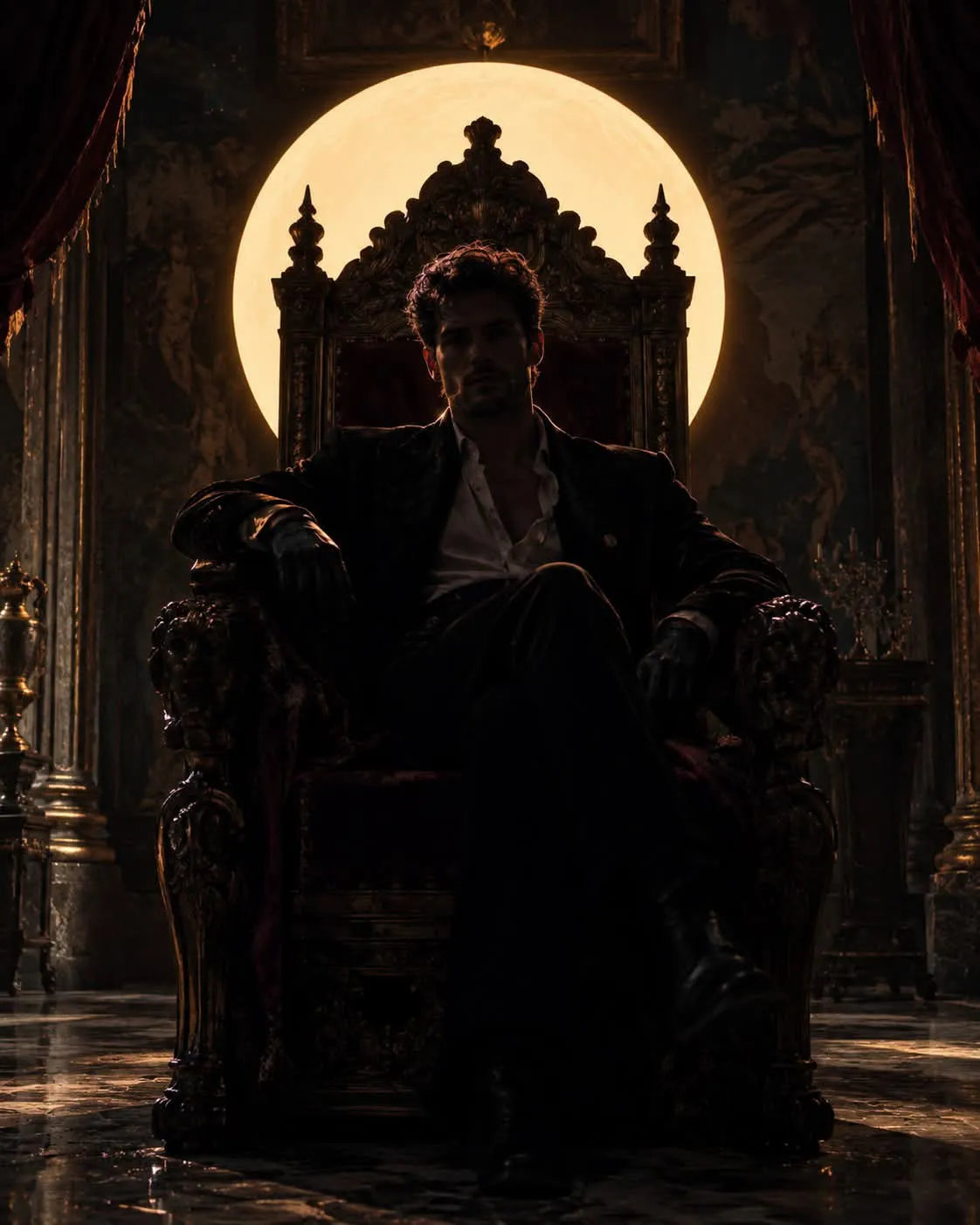


Comments — 0
Tried this prompt? Share what you made, compare results, or ask a question.