- Category
- Design & Image
- Tags
- woman chibi-3d cardboard-box
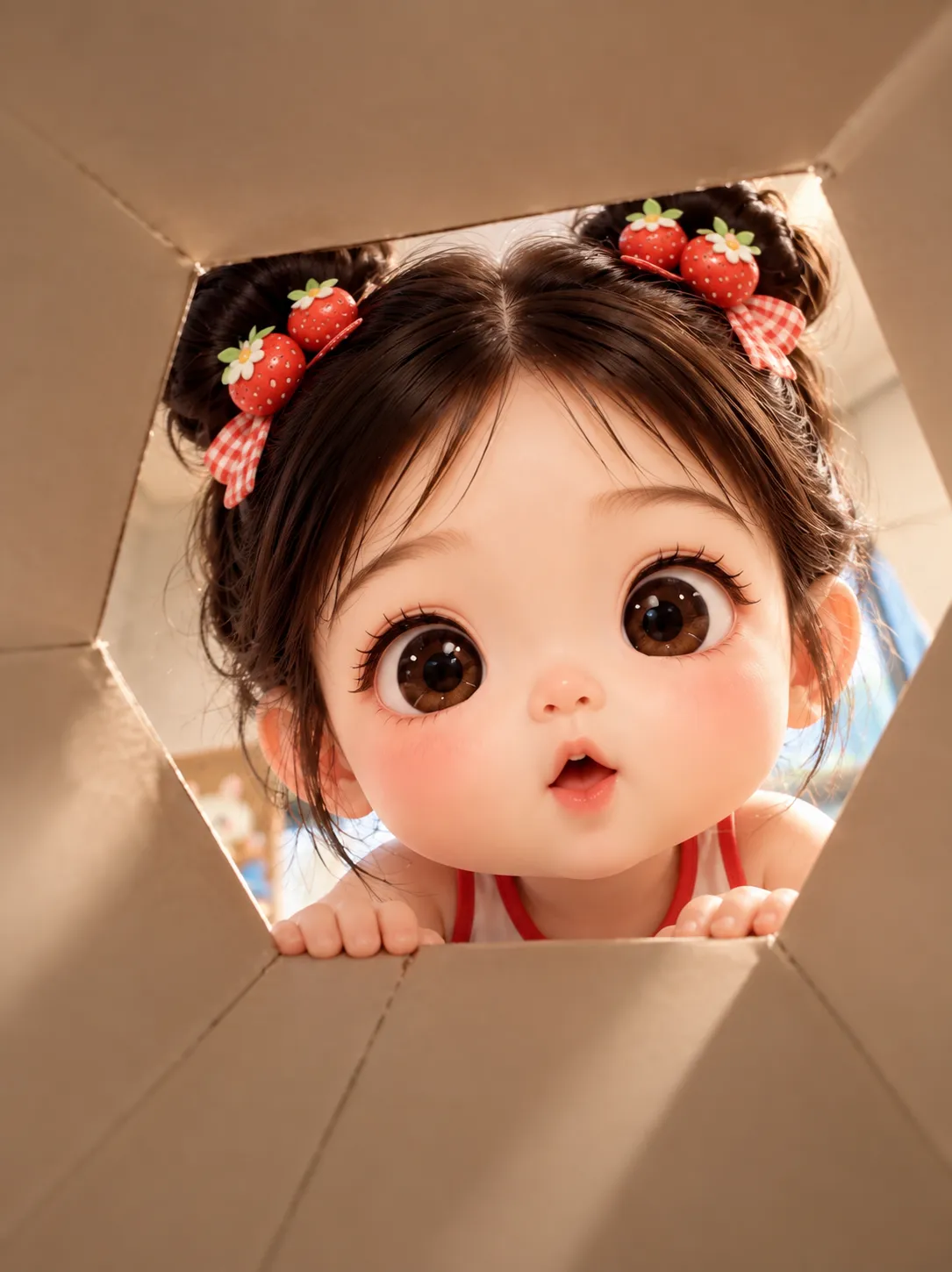
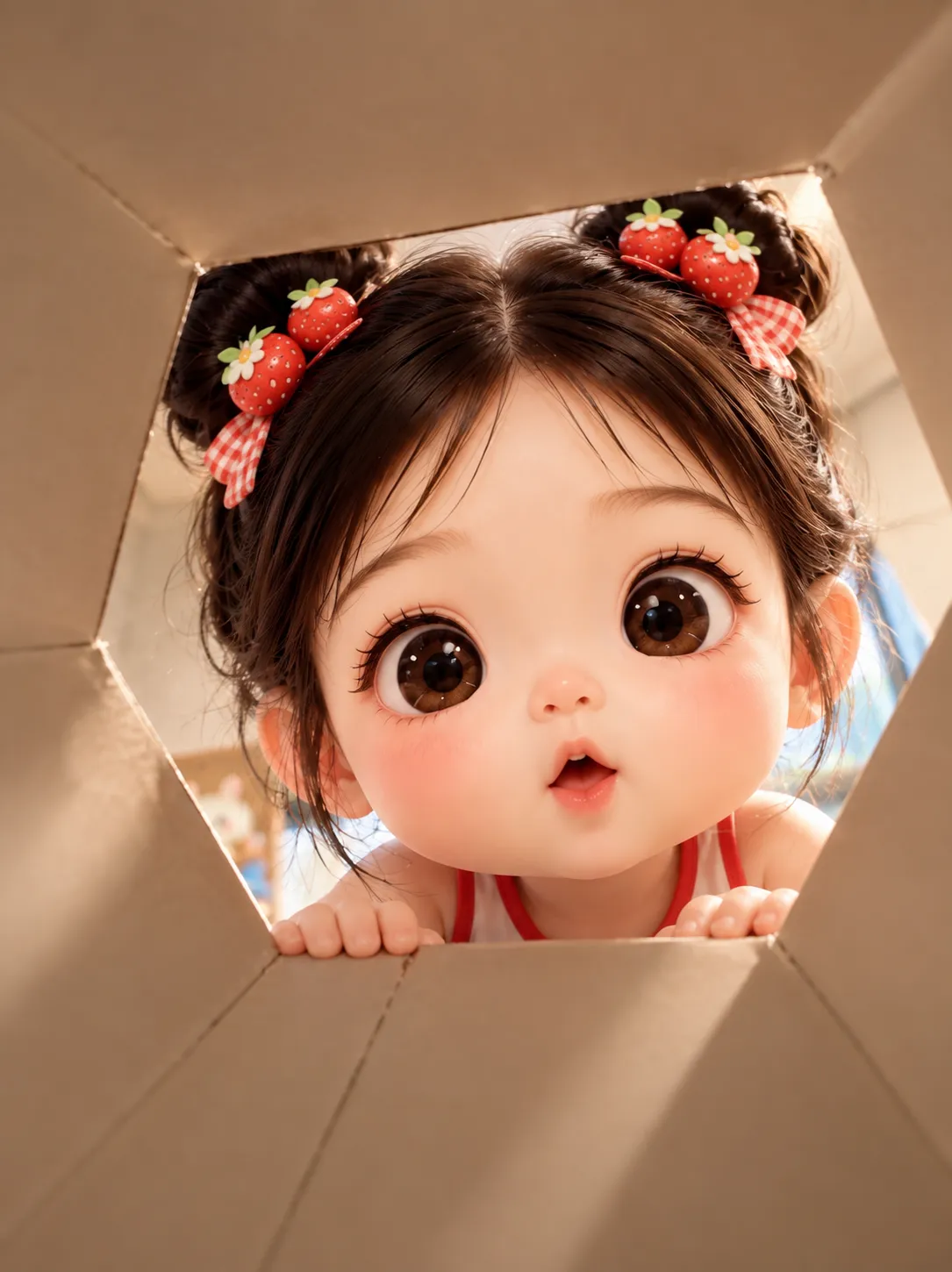
Oversized Chibi Character Peeking Into a Deep Cardboard Box
Create a high-quality 3D chibi character scene viewed upward from the bottom of a deep cardboard box, preserving the character’s appearance and the specified box composition.
By Threads — Published on — Modified on
Example results
Example images
Prompt template
0 copies
- Format
- Markdown Parameterized
- Inputs
- character_reference (image) · Required cardboard_reference (image) · Required
- Outputs
- generated_image (image)
Replace the ${…} placeholders with your values
before using this prompt. See parameters
and defaults below.
Create a high-quality vertical 3:4 image of a cute, finely detailed 3D chibi figure. Use ${character-reference} as the sole reference for the character’s appearance, and use ${cardboard-reference} as the reference for the cardboard box’s opening shape. When the character reference changes, change only the character’s appearance; keep the box structure, camera position, perspective, pose, and overall composition fixed.

## Character identity and proportions

Preserve the reference character’s face shape, facial features, eye color, hairstyle, hair color, bangs, braids, glasses, bows, hair accessories, clothing, colors, materials, and other distinguishing features. Do not redesign the character or scene.

Give the character an extremely oversized head and a small body, with an approximately 2.5-head-tall chibi proportion. Enlarge the head to about 1.3–1.5 times its original visual proportion. Make the face full and rounded, with rounded cheeks and a short chin; the head should be clearly wider than the shoulders. Keep the original eye color and distinctive eye features, with bright, clear, dimensional eyes and natural highlights. Preserve the original hair direction, hairstyle silhouette, bangs, and all important hair accessories. If present in the reference, retain the glasses, braids, bows, and special headwear with their original shape, color, and placement.

Use small shoulders, short arms, and hands proportionate to the chibi body. Join the head and body naturally, without an excessively long neck or implausible joints. Show only the head, shoulders, hands, and a small portion of the upper body; the rest of the body is hidden behind the box walls. Keep the entire head, crown, bangs, ears, hairstyle silhouette, and important accessories in frame. The enlarged head must remain the main visual focus without turning the image into an ordinary close-up portrait.

## Camera and fixed viewpoint

Place the camera at the exact bottom center inside a large, deep cardboard box, aimed almost vertically upward toward the opening. Use an extreme low-angle, wide-angle worm’s-eye view, as if the viewer were at the bottom of a deep well looking up at the character. Simulate the strong spatial perspective of an 18–20 mm lens while avoiding implausible barrel distortion.

The camera must remain inside the box at its bottom. Do not move it to the rim or outside the box. Do not shoot down into the box, photograph the box from outside, or use an ordinary eye-level portrait angle. The image must make it immediately clear that the viewer is inside the bottom of the box and the character is looking down from above.

## Box structure and perspective

Use a large, deep, unprinted, dark-brown corrugated cardboard box with a slightly warm tone. All four top flaps are folded outward, forming a clearly open, irregular quadrilateral aperture. Match the opening’s shape to the cardboard reference photo. The flaps must be genuine parts of the box, not floating panels, a transparent frame, or decorative borders. Their angles, thickness, folds, and perspective should look physically plausible; the flaps may have naturally different angles rather than being perfectly symmetrical.

- **Upper flap:** A thick flap extends diagonally from the upper left toward the upper right, creating a partial obstruction along the top of the image. Show its inner corrugation, cut edge, folds, and natural shadows. It must remain visible and must not become a flat, regular rectangular border.
- **Left flap:** Fold the left flap outward toward the upper left and beyond the frame. Let it extend down along the left side as a thick, diagonal frame, with a clearly visible edge and natural perspective scaling.
- **Right flap:** Fold the right flap outward toward the upper right and beyond the frame. Let it form another thick, diagonal border along the right side; its angle need not exactly mirror the left flap.
- **Front wall:** The front rim crosses the lower-middle area of the image. The character grips its left and right sides. The front wall extends down to the bottom edge, forming a broad, deep interior wall with clearly visible thickness. Do not make it too low or let it disappear; it is essential to the well-like perspective.

The four flaps must frame a clear central opening through which the character leans. The box’s irregular geometric edges should make it unmistakable that the camera is inside the box. Show strong near-to-far perspective: the front wall nearest the camera appears broad, the side walls rise toward the opening, and the opening and character appear farther away. The box interior must convey clear front-to-back, left-to-right, and vertical depth. The cardboard interior occupies approximately 55–65% of the lower image. Do not make the box shallow, flat, or like a simple rectangular frame or low paper tray.

## Character pose and framing

The character stands outside the box, bends over the opening, and leans their head naturally toward its center, looking directly down into the camera. The face points toward the lens; the character makes direct eye contact and has a natural, curious, cute expression with a gentle smile.

Both hands grip the left and right sides of the front rim. The fingers curl naturally over the cardboard edge, with convincing contact between the hands and the board. Make both hands clearly distinguishable, with plausible palm placement and the correct number of fingers. Avoid extra fingers, fused hands, or hands passing through the cardboard. The shoulders and a small part of the upper body show above the rim; the rest of the body remains hidden behind the walls. The character must look as if they are peering into the box from outside—not standing or sitting inside it, and not merely looking down from somewhere outside the scene.

Keep the head with its complete hairstyle approximately 35–45% of the full image height, adjusting naturally for the hairstyle and accessories. Position the face near the upper center of the opening, leaving suitable space on both sides. Keep the complete crown, bangs, ears, and important accessories visible. The composition must simultaneously show the oversized head, recognizable shoulders and a small part of the upper body, both hands gripping the rim, the outward-folded flaps, and the deep interior walls.

## Cardboard material

Render realistic, dark-brown corrugated cardboard with a slightly warm tone. Show fine surface fibers, the wavy corrugated structure at cut edges, flap thickness, fold marks, seams, natural dents, and subtle irregular surface texture. Make the paper material details discernible at close range. The box must not look like plastic, metal, or glass. Keep it clean and intact, with no text, shipping labels, printed designs, barcodes, or brand marks.

## Setting, lighting, and visual style

Outside the opening, show a warm, bright, cinematic library. The softly blurred background may contain wooden bookshelves, books, warm pendant lights, and golden ambient light. Keep it subordinate to the character and box, with shallow depth of field and gentle bokeh. Warm yellow light from above illuminates the character’s face, hair, accessories, and hands. Give the face delicate, natural light-to-shadow transitions and attractive eye reflections. Light should gradually diminish deeper inside the box: the area near the opening is brighter, while the bottom is darker. Create a cinematic effect of a bright opening, clearly lit character, and deep box interior.

Use a high-end 3D CGI chibi-figure style, with refined character modeling, detailed skin, clear hair strands, attractive eye highlights, and soft facial scattering. Keep the box realistically textured. Make the lighting consistent between character and surroundings, with natural contact shadows so the figure does not appear pasted onto the background. Use cinematic global illumination, natural ambient occlusion, soft shadows, and moderate depth of field. Favor warm browns, golden yellows, and natural skin tones. The overall image should feel cute, polished, three-dimensional, and spatially convincing.

## Required final composition

Vertical 3:4 composition. High-quality 3D CGI chibi figure with an approximately 2.5-head-tall proportion and a head enlarged to about 1.3–1.5 times the reference character’s original visual proportion. Camera fixed at the bottom center inside the box, looking upward. The character stands outside the box and leans over the opening, holding the front rim with both hands and looking down at the camera. All four top flaps fold outward to form an irregular geometric opening. The front wall fills much of the lower image; the character’s head, hands, outward flaps, and softly blurred warm library appear above. No text, watermark, or logo.

## Negative constraints

Avoid: a head that is too small; normal or realistic adult body proportions; an oversized body; realistic head-to-body proportions; a deformed or stretched head or face; asymmetrical eyes or misplaced features; changed hairstyle or hair color; missing bangs, glasses, braids, bows, or hair accessories; changed clothing or character identity; a cropped crown or hairstyle; a face or head extending beyond the frame; malformed fingers, extra fingers, fused hands, extra arms, hands passing through the cardboard, or hands failing to grip the rim; the character standing inside the box; a full-body view; a close-up showing only a large head; eye-level, overhead, downward-looking, or side-profile camera angles; a camera at the box opening or outside the box; a box without depth, a shallow box, missing interior walls, a front wall that is too low, missing flaps, removed flaps, flaps folded inward to close the opening, a regular rectangular frame, floating cardboard, a transparent glass frame, a metal box, or a plastic box; printing on the box; an overly sharp or distracting background; an overexposed face; plastic-looking skin or excessive smoothing; low resolution or blurred facial features; incorrect perspective or barrel distortion; text, watermark, or logo.
Parameters
Replace each placeholder with your own value, or use its default when one is provided.
${character-reference}
character-reference
Required
${cardboard-reference}
cardboard-reference
Required







Comments — 0