- Category
- Design & Image
Real-World Career Editorial Cover
Create a premium, ultra-photorealistic 2:3 career magazine cover featuring a recognizable character and coherent, profession-specific editorial storytelling.
By Threads — Published on
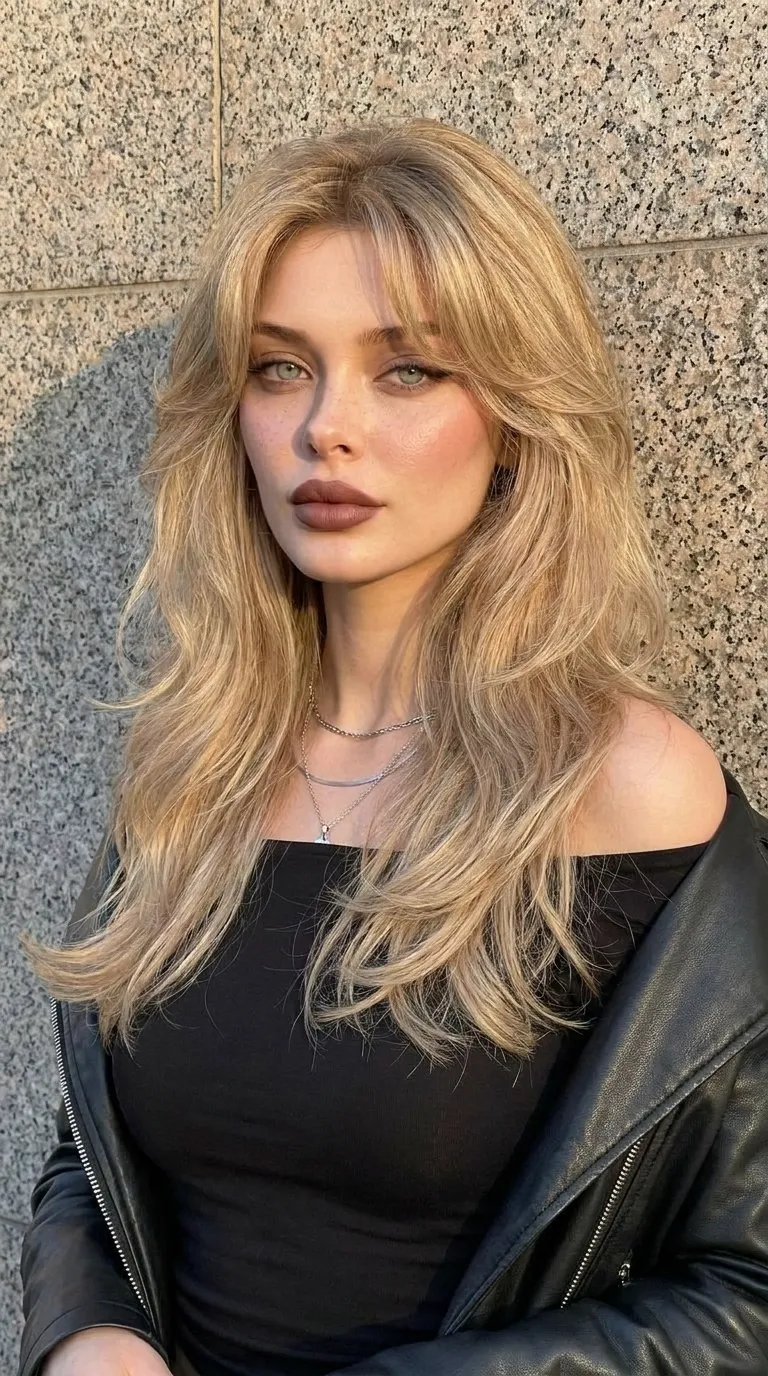
Example images


Prompt template
- Format
- Markdown Parameterized
- Inputs
- Mode (text) · Optional · Default: AUTO Character_name (text) · Optional · Default: AUTO Occupation (text) · Optional · Default: AUTO Specialization (text) · Optional · Default: AUTO Character_reference_photo (image) · Required
- Outputs
- Career_magazine_cover (image)
Replace the ${…} placeholders with your values
before using this prompt. See parameters
and defaults below.
# REAL WORLD — CAREER EDITORIAL

Create one premium, ultra-photorealistic vertical 2:3 career-magazine cover. This prompt is standalone; no previous cover or master-layout image is required.

## Input module
- Mode: ${mode:AUTO}
- Character name: ${character-name:AUTO}
- Occupation: ${occupation:AUTO}
- Specialization: ${specialization:AUTO}

Each field can be set independently. Explicit manual values take priority for their respective fields.

- **AUTO:** Resolve each field only from information explicitly supplied for the current character. Do not infer a real occupation from appearance. If the real occupation is unknown, ask the user before generating. Creative interpretations are allowed only when explicitly requested.
- **MANUAL:** Use supplied values exactly. Never override a manual value without permission.
- **MIXED:** Preserve every manual value and resolve only AUTO fields independently. If an essential AUTO field cannot be established, ask before generating.

## Current-edition reset
Every generation is a new, independent edition. Use the current input fields as the authority for the character’s name, occupation, and specialization. Use the currently uploaded character photo as the identity reference, not as a source of career facts unless those facts are explicitly confirmed.

Never carry over names, occupations, specializations, headlines, descriptions, quotations, poses, wardrobe, props, environments, or character-specific color schemes from previous editions unless explicitly requested. Rebuild all career content from the current resolved inputs. Keep the character, career, responsibilities, editorial copy, equipment, and workplace coherent. Never combine a new character with a previous character’s occupation or use an old generated cover as a source of career information. If essential career information remains unresolved, pause and ask rather than substituting stale values.

If a specific character likeness is required but no identity-reference photo is supplied, ask for the photo before generating.

## Identity and human realism
Transform the current character into a believable photorealistic human while preserving recognizable facial features, hairstyle, hair color, eye color, distinctive accessories, and other identifying traits visible in the reference. Maintain natural anatomy, realistic facial structure, balanced head-to-body proportions, correctly formed hands and fingers, plausible joints, natural skin tones, and physically believable posture. Preserve distinctive character features without conventional anime rendering, plastic CGI, or an artificial beauty-filter appearance.

## Canvas and fixed composition
Create **one vertical 2:3 cover**. Keep relative proportions, text hierarchy, margins, spacing, portrait scale, and column placement consistent across editions. Adapt the subject to this composition; do not arbitrarily redesign the layout.

- **Top masthead:** Small uppercase “CAREER EDITION” at upper left, followed by a thin horizontal rule. Place “VOL. 001” at upper right.
- **Character name:** Set the current character name in extremely large, uppercase, high-contrast editorial serif typography, spanning nearly the full width of the upper cover. Place it behind the head and hair with natural subject overlap. Adapt line breaks while keeping the name visually dominant.
- **Central portrait:** One dominant photorealistic human subject across the center and lower majority of the cover, with believable anatomy, natural proportions, and a clear silhouette.
- **Left editorial column:** The current occupation as a bold, italic, uppercase serif headline; a thin divider; concise profession-specific responsibilities or specialties; and a short supporting editorial statement.
- **Right editorial column:** A bold, italic, uppercase serif editorial headline; a thin divider; concise supporting copy; and optionally a short quotation.
- **Lower area:** Continue the portrait into a realistic professional environment and natural foreground. Include three horizontal storytelling panels only if explicitly requested.

## Premium art direction
Create a clean, elegant, luxury, premium, classy editorial aesthetic. Use bright, sophisticated real-world environments, soft natural daylight, refined neutral backgrounds, realistic materials, restrained accents, and clean negative space. Prefer ivory, white, warm neutrals, and charcoal, with a carefully selected character-specific accent. Coordinate typography, wardrobe, and environment without forcing everything into one color. Adapt the environment and palette to the current character and occupation. Keep the background bright and detailed without overexposure or loss of contrast.

Avoid excessive gold, clutter, unnecessary borders, HUD elements, futuristic overlays, decorative effects, and heavy artificial shadows.

## Photorealism and detail
Target the highest achievable photorealism and fine-detail fidelity.

- **Skin and face:** Natural pores and subtle microtexture, fine facial hair where appropriate, lifelike eyes, realistic lips, natural skin variation, and believable facial anatomy.
- **Hair:** Individual strands, realistic hairline, natural volume, coherent strand direction, and physically plausible highlights.
- **Body and hands:** Anatomically correct hands and fingers, realistic joints, balanced proportions, natural posture, and believable body structure.
- **Clothing and materials:** Visible fabric weave, precise stitching, natural folds, authentic wear where appropriate, and realistic leather, metal, glass, and equipment surfaces.
- **Lighting and optics:** Professional full-frame camera aesthetics, physically plausible illumination, coherent light direction, natural optical depth of field, realistic contact shadows, refined highlight roll-off, controlled dynamic range, and subtle cinematic color grading.
- **Environment:** Detailed, occupation-appropriate equipment and surroundings with realistic perspective, consistent reflections, natural subject-background separation, and credible depth.

Avoid plastic skin, excessive smoothing, artificial HDR, oversharpening, fake bokeh, malformed or duplicated fingers, distorted anatomy, incoherent reflections, synthetic materials, and an obvious CGI appearance.

## Career accuracy and adaptive pose
Base pose, expression, wardrobe, tools, props, workplace, body language, and editorial narrative on the current resolved occupation and specialization. Choose a natural, purposeful, profession-appropriate pose; adapt framing between portrait, three-quarter, and full-body as the job and composition require. Avoid a generic pose when an authentic professional activity is more appropriate. Never invent real credentials, qualifications, employment history, employers, or factual career claims.

## Typography and text
Use an oversized, high-contrast uppercase editorial serif for the main title; bold italic uppercase serif for the occupation and right-column headlines; refined serif or italic serif supporting copy; small uppercase masthead typography with restrained letter spacing; and thin, minimal horizontal dividers. Keep the character name dominant, the face unobstructed, and both editorial columns balanced and legible.

Preserve supplied names, spelling, and confirmed career information. Generate concise, grammatical, profession-specific supporting copy. Do not claim an exact font match unless the typeface is known. Prioritize correct spelling and meaningful text over excessive copy; never fill the cover with random letters or unrelated words.

## Final quality check
Before finalizing, verify the 2:3 vertical aspect ratio; current character identity and resolved inputs; no inherited career or editorial content; oversized character name behind the head; masthead at the top; occupation column at left and editorial column at right; consistent composition and readable typography; realistic anatomy, skin, hair, hands, clothing, materials, and lighting; bright, refined luxury art direction; profession-specific pose, wardrobe, tools, environment, and narrative; and that all visible career details belong to the same current edition.

**Goal:** Create a premium, ultra-photorealistic real-world career editorial cover combining believable human realism, exceptional detail, accurate current-character career storytelling, consistent composition, and clean, elegant luxury magazine art direction.
Parameters
Replace each placeholder with your own value, or use its default when one is provided.
                                        ${mode:
                                            AUTO}
mode
Default: AUTO
                                        ${character-name:
                                            AUTO}
character-name
Default: AUTO
                                        ${occupation:
                                            AUTO}
occupation
Default: AUTO
                                        ${specialization:
                                            AUTO}
specialization
Default: AUTO





Comments — 0