- Category
- Photography
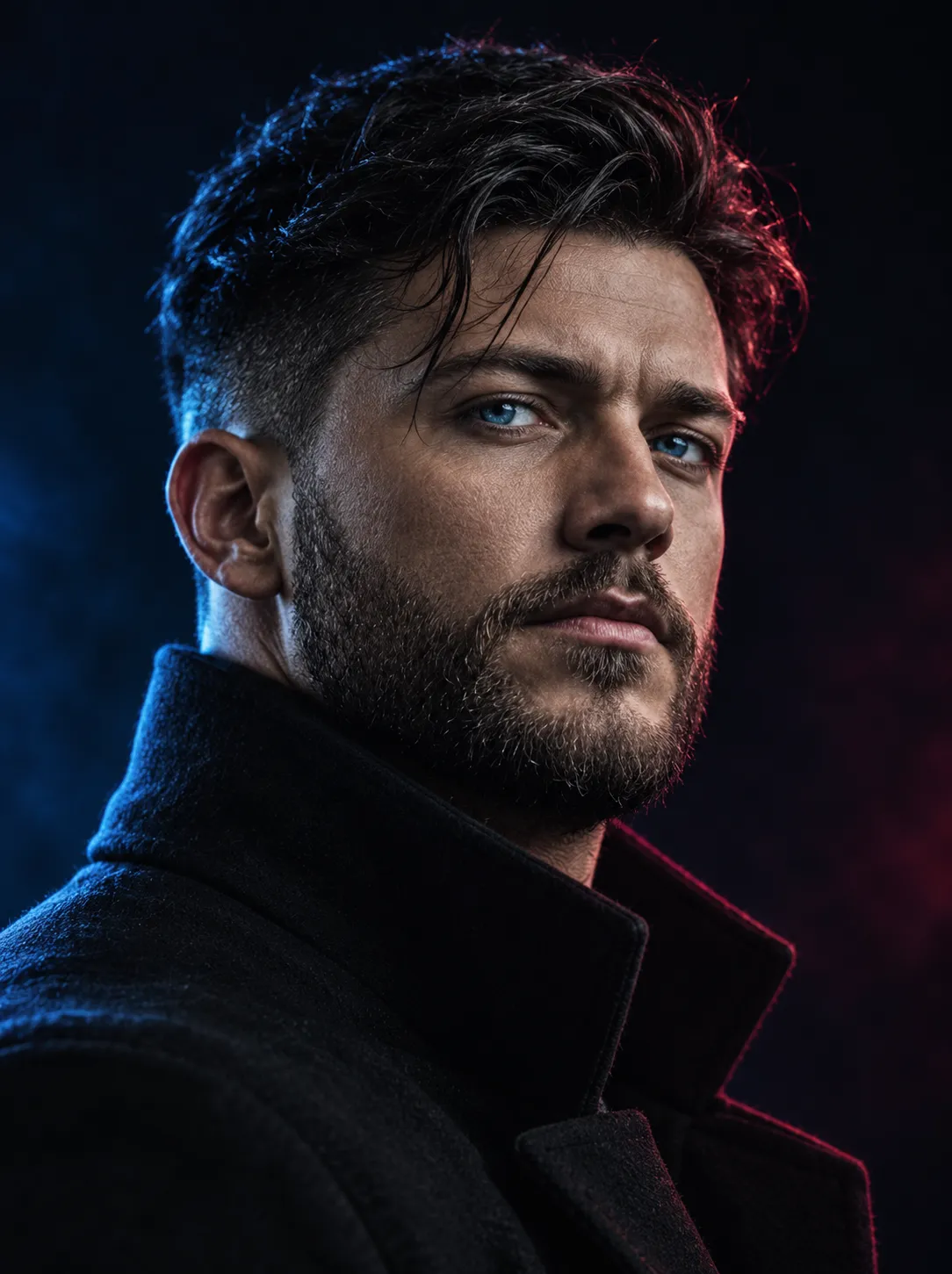
Red-and-Blue Neo-Noir Portrait of a Young Man
Create a photorealistic, low-angle cinematic editorial portrait that preserves the identity in a reference photo, with dramatic crimson and electric-blue lighting.
By Threads — Published on — Modified on
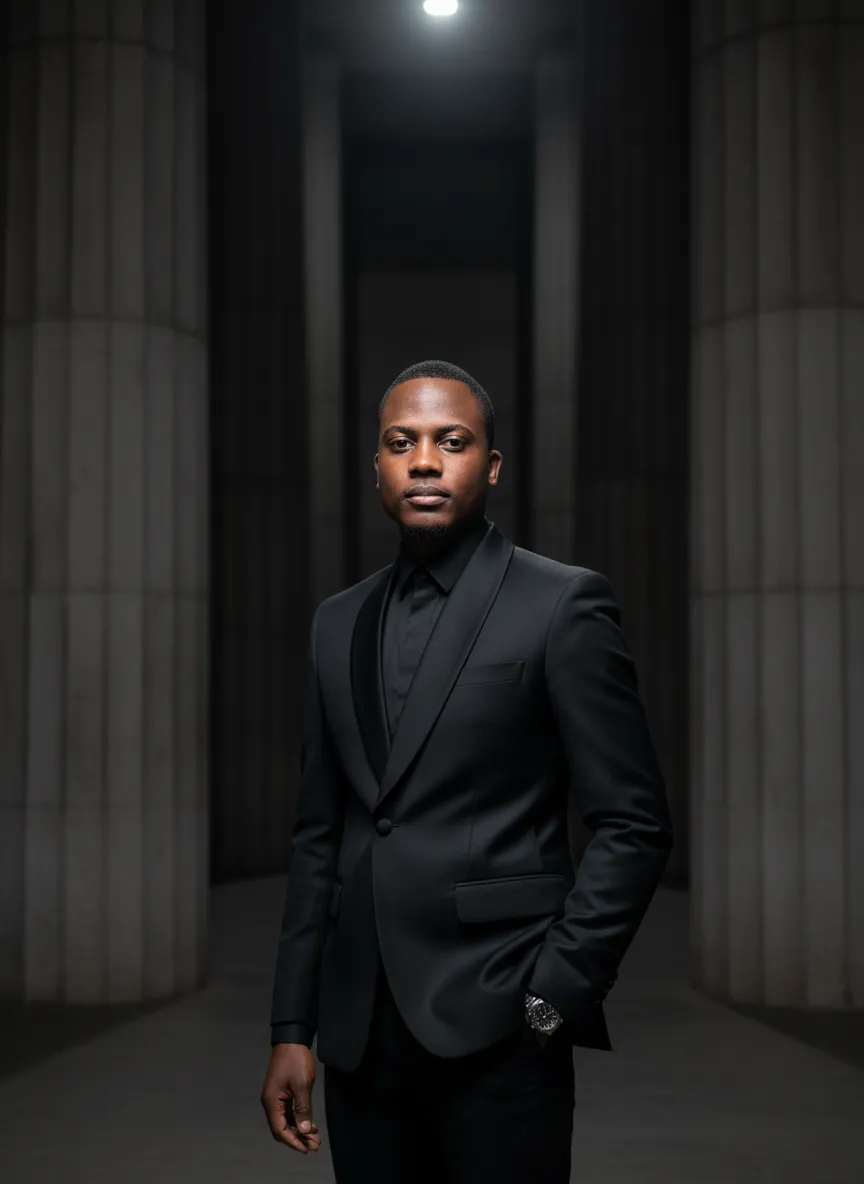
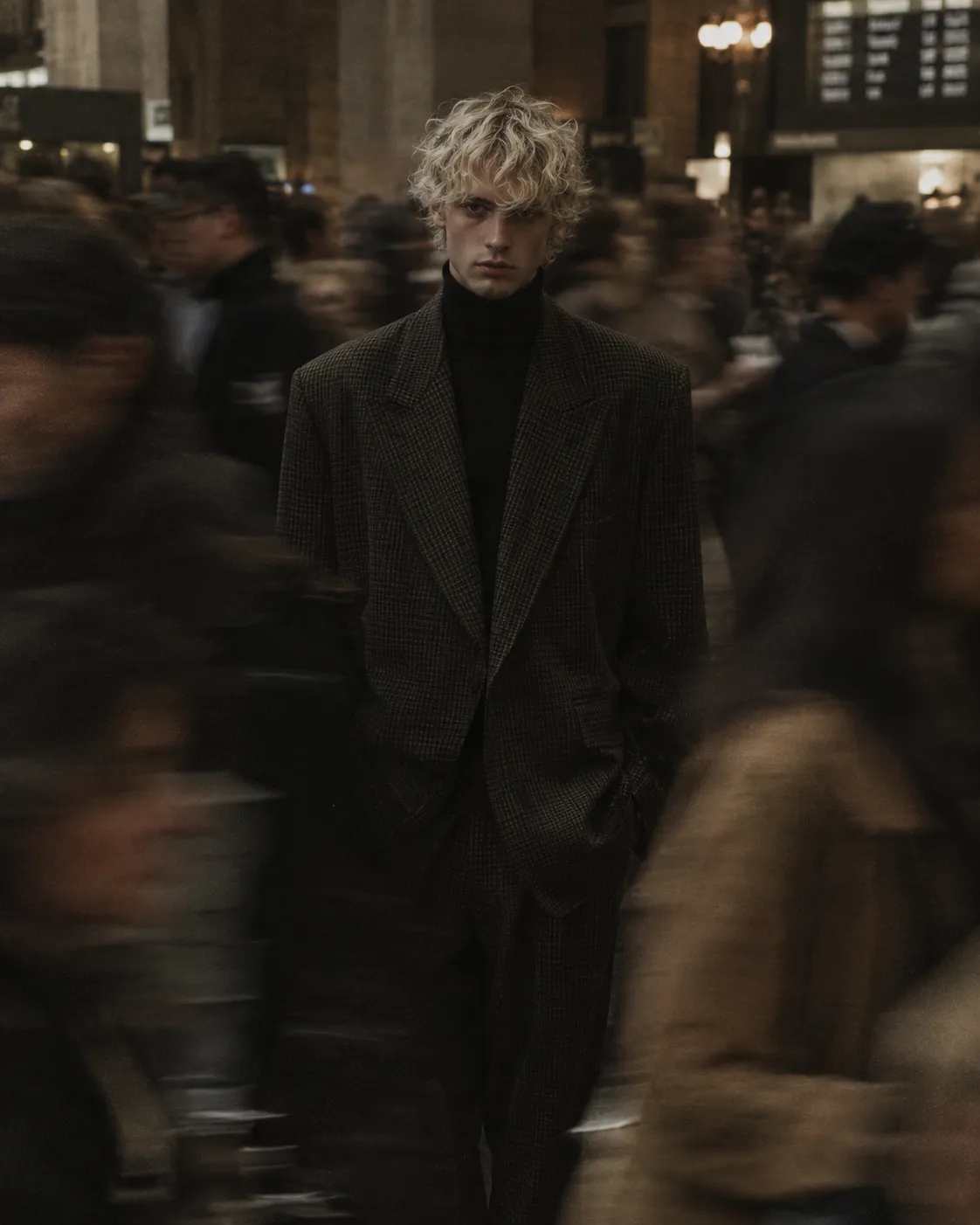
Example images

Prompt template
0 copies
- Format
- Text
- Inputs
- Reference_photo (image) · Required
- Outputs
- Portrait_image (image)
Create an ultra-photorealistic cinematic editorial portrait of a young adult man, photographed from a dramatic, slightly low camera angle, with intense atmospheric red-and-blue lighting.

IDENTITY — ABSOLUTE PRIORITY
Use the uploaded reference photo as the ONLY identity reference for the main subject. Preserve the exact recognizable identity and natural facial anatomy of the person in the reference. Maintain the face shape and proportions; forehead and hairline; eyebrow shape and density; eye shape, size, and placement; nose bridge, width, and tip; lips and mouth shape; cheekbones; jawline; chin; ears; natural skin tone; natural facial asymmetry; age and facial proportions; and natural facial-hair pattern. The subject must remain unmistakably the same real person from the reference image.

Do NOT replace the face with a generic male model, perform a face swap, redesign or reshape the face, change ethnicity, age, or facial anatomy, feminize or masculinize the facial structure, artificially enlarge the eyes, create artificial symmetry, excessively smooth or beautify the skin, or make the face look like CGI. Limit changes to camera angle, lighting, styling, environment, and photographic treatment.

COMPOSITION AND EXPRESSION
Create a vertical 4:5 cinematic portrait. The subject fills most of the frame, framed from approximately the upper chest to slightly above the head. Position the camera noticeably below eye level and point it upward. Use a subtle low-angle perspective that makes the subject appear powerful, confident, and imposing. The head is slightly tilted backward and the chin subtly raised. The subject looks directly toward the camera with a calm, serious, confident, slightly mysterious, and intense expression. No smile; lips naturally relaxed and slightly closed. The eyes are focused directly toward the camera. Convey quiet confidence and controlled intensity rather than aggression. Keep the shoulders relaxed, preserve natural facial asymmetry and realistic micro-expression, and position the face slightly above the optical center. Leave a small amount of negative space above the hair. Make the composition intimate and cinematic rather than a conventional studio headshot.

HAIR AND FACIAL HAIR
Give the subject natural medium-short textured hair with realistic volume, slightly tousled and pushed upward and backward, with visible individual strands. The hair catches colored rim lighting, with blue-violet highlights on the left and deep red highlights along the right. Maintain realistic hair density and natural texture; avoid overly perfect or artificially sculpted hair.

Maintain realistic short beard or stubble according to the identity reference. Keep individual beard hairs visible, following the jawline, chin, and cheeks naturally. Use the colored lighting to reveal subtle texture without making the beard look painted or artificially darkened.

CLOTHING
The subject wears a dark black or extremely deep charcoal leather jacket with a slightly oversized contemporary silhouette. Include realistic leather texture, subtle wrinkles, natural folds, a slightly reflective surface, metal buttons or hardware, a structured collar, and realistic stitching. Under the jacket, use a simple black crew-neck shirt. Keep the clothing mostly in shadow, with only selected areas of the jacket catching red and blue rim lighting. The styling should feel like a premium cinematic fashion editorial: understated and masculine.

LIGHTING — KEY ELEMENT
Use dramatic two-color cinematic lighting.

LEFT SIDE — COOL BLUE: Place a strong cool-blue or electric-blue light source on the subject’s left side. Create cool highlights along the left cheek, blue illumination around the left eye socket, blue highlights on the temple, a blue edge light around the ear, blue highlights through the hair, cool illumination along the left jawline, and subtle blue reflections on the jacket. The blue light should be directional and relatively hard.

RIGHT SIDE — DEEP RED: Place a powerful red or crimson light behind and to the subject’s right. Create an intense crimson rim light around the right side of the hair, red illumination along the right cheek, red highlights around the ear, red edge light along the jaw, deep red reflections on the jacket, and a glowing red atmospheric source in the background. The red source should feel like a practical cinematic light positioned behind the subject.

FACIAL LIGHTING AND SHADOWS
Do not illuminate the entire face evenly. Keep the face partially submerged in deep shadow and create strong directional contrast: one side predominantly cool blue, the opposite side predominantly red, with the central facial planes transitioning naturally between shadow and colored illumination. Keep the eyes, nose bridge, lips, and cheekbones readable. Preserve realistic skin tones beneath the colored lighting; do not turn the skin completely blue or red.

Use strong low-key exposure. Large portions of the face and clothing remain in deep shadow, but black areas should contain subtle detail rather than becoming completely flat. Create rich shadow gradients beneath the eyebrows, cheekbones, nose, lower lip, jawline, neck, and collar. The shadows should create sculptural facial definition.

BACKGROUND AND ATMOSPHERE
Create a dark, minimalist cinematic background, predominantly deep burgundy, black, and dark crimson. Keep the background almost completely black around the edges. Add a soft red glow behind the subject’s right shoulder and head, gradually fading into deep black. Show no visible location, furniture, architecture, or distracting objects. The background should feel like a dark cinematic studio environment.

Introduce extremely subtle atmospheric haze through which the red background light softly diffuses. Very fine particles may be barely visible within the red light. Keep the atmosphere restrained: no excessive smoke, fantasy effects, or obvious CGI. Make it resemble a real professional studio photographed with controlled haze.

CAMERA ANGLE AND LENS
Use low-angle portrait photography. Position the camera approximately at upper-chest level and point it slightly upward. Use natural perspective distortion from the low camera position so the jawline and neck become slightly more prominent, while the face remains realistic and anatomically correct. Do not exaggerate the perspective; the result should feel like a powerful cinematic close-up rather than an extreme wide-angle photograph.

Use a professional full-frame cinema camera and an approximately 50mm–85mm lens, with a preferred 65mm portrait/cinema-lens aesthetic. Use an aperture of approximately f/1.8–f/2.2, preferably f/2.0. Use shallow depth of field, with the face and eyes as the primary focus and the background falling smoothly into soft darkness. Keep natural optical compression and do not use artificial blur.

SKIN TEXTURE
Preserve highly realistic skin, including natural pores, subtle fine lines, tiny imperfections, realistic beard texture, natural skin variation, subtle highlights on the forehead and nose, and realistic moisture on the lips. Do not apply beauty-filter smoothing, create plastic skin, or over-sharpen pores. The skin must look like real human skin photographed under cinematic lighting.

CINEMATIC COLOR GRADING
Use a sophisticated red-and-blue cinematic color grade with deep black, crimson red, burgundy, electric blue, subtle violet, and natural muted skin tones. Create strong color separation between the two sides of the subject, deep blacks, controlled highlights, soft cinematic contrast, slightly desaturated midtones, and rich shadow detail. The final color grade should resemble a frame from a high-end modern thriller or neo-noir film.

FILM CHARACTER
Add subtle analog photographic texture: fine 35mm film grain, subtle halation around the red light, very mild chromatic aberration, natural lens bloom, soft highlight roll-off, slight optical imperfections, and organic photographic noise. Do not make the grain excessive or the image look vintage or low-resolution. Retain modern high-end image quality with a subtle analog character.

MOOD AND REALISM
The emotional atmosphere should be dark, powerful, mysterious, intimate, cinematic, masculine, sophisticated, and slightly dangerous. The portrait should feel like a still frame from an expensive neo-noir film: cinematic thriller, luxury fashion campaign, underground editorial photography, and dramatic studio portrait. Keep it minimalist but visually intense.

Prioritize photographic realism above all stylistic effects. The final image must look as though it was captured by a professional photographer using a real full-frame camera and practical red-and-blue studio lights. Keep the facial anatomy, skin texture, hair, beard, eyes, clothing, leather texture, shadows, reflections, light falloff, atmospheric depth, and optical depth of field realistic. Avoid a CGI appearance, plastic skin, an artificial face, excessive retouching, beauty filters, exaggerated muscles, unrealistic eyes, artificial symmetry, fantasy lighting, excessive glow, cartoon aesthetics, illustration style, and overprocessed HDR.

FINAL IMAGE
Create an ultra-photorealistic cinematic low-angle portrait of the exact same person from the uploaded reference, in a vertical 4:5 composition, with an intense direct gaze, slightly raised chin, dark leather jacket, deep black background, dramatic crimson red rim light from the right, electric blue light from the left, deep sculptural shadows, realistic skin pores and facial hair, natural facial anatomy, shallow depth of field, a professional full-frame camera, a 65mm cinema lens, f/2.0, subtle 35mm film grain, and delicate halation.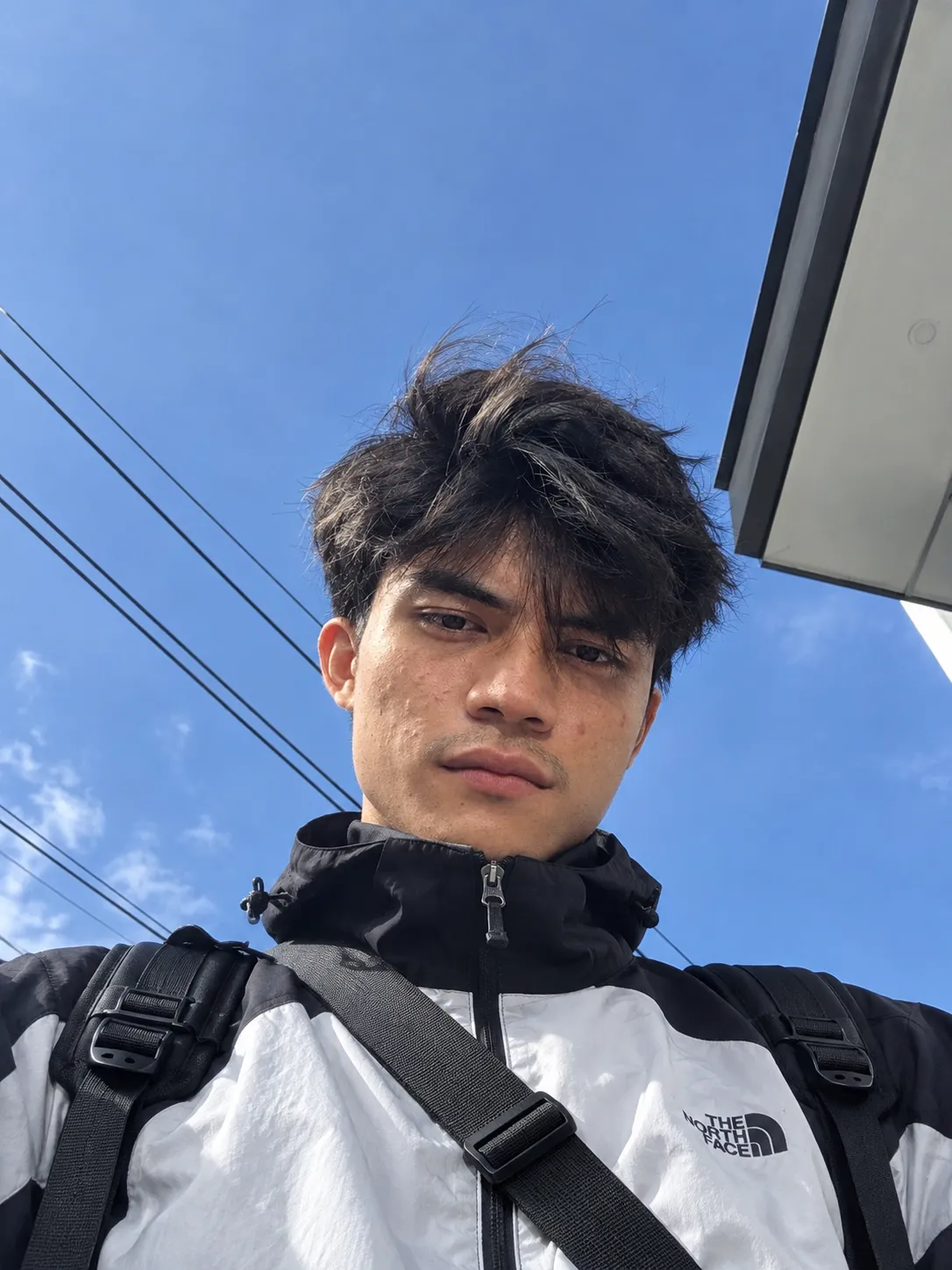


Comments — 0