- Category
- Design & Image
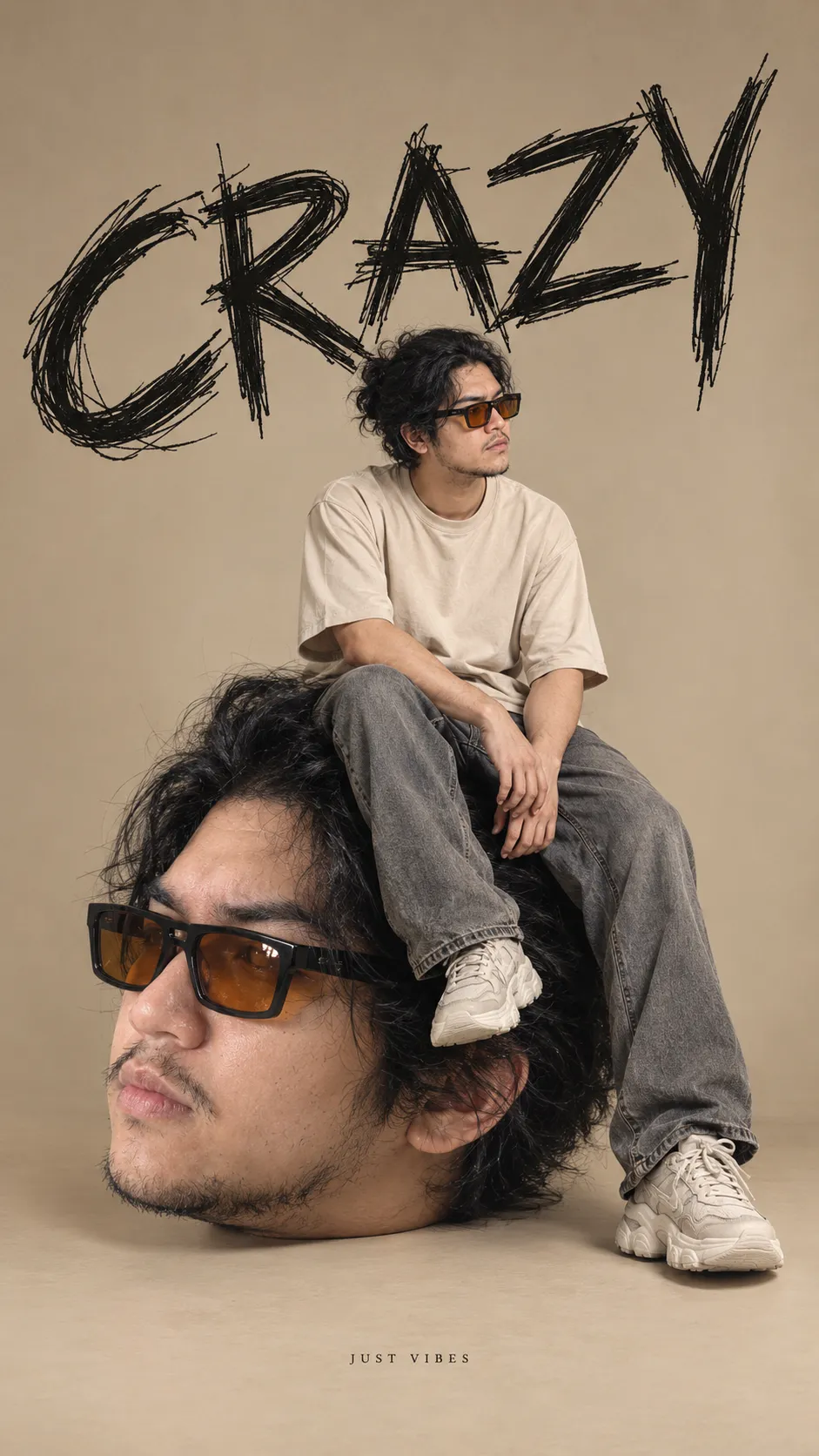
Surreal CRAZY Fashion Editorial Poster
Create a photorealistic vertical luxury-fashion poster featuring one person represented at two scales, matching amber sunglasses, and expressive editorial typography.
By Threads — Published on
Example images
Prompt template
- Format
- Text
- Inputs
- Person_reference_image (image) · Optional
- Outputs
- Fashion_editorial_poster (image)
Create ONE ultra-premium, ultra-photorealistic vertical 9:16 conceptual fashion editorial photograph: an original surreal luxury streetwear campaign about scale, identity, absurdity, and contemporary fashion art. Make it feel like an authentic high-end campaign photographed for this concept, with sophisticated art direction, natural human presence, and premium photographic realism.

SETTING AND COMPOSITION
Set the image in a minimalist warm-beige studio. Use generous negative space and balanced proportions to make the surreal scale relationship the central artistic statement. The scene features a realistic oversized human head resting horizontally on the studio floor in the lower-left/central foreground, with the same person seated naturally on top of it. Both representations must clearly be ONE IDENTICAL REAL PERSON at two different scales. The result should feel unexpected, slightly absurd, stylish, memorable, and editorial—not like a conventional fashion portrait.

IDENTITY
If a person reference image is provided, use it as the primary identity and physique reference. Keep the person clearly recognizable and naturally preserve facial structure, eyes, eyebrows, nose, lips, jawline, skin tone and texture, hairstyle, age, body proportions, physique, and silhouette. Do not make the person generic, or unnecessarily beautify, de-age, reshape, slim, enlarge, or otherwise alter their natural appearance.

The oversized head must represent the exact same person as the seated subject. Keep their facial identity, proportions, skin tone, hairstyle and hair texture, natural asymmetry, distinctive features, and overall recognizable appearance consistent. The head faces left in a natural side-profile or three-quarter-profile orientation. It must look like an actual enlarged human being photographed with a real camera—not a statue, mannequin, sculpture, doll, CGI object, 3D render, cartoon, or artificial prop. Show authentic skin pores, natural asymmetry, realistic hair and anatomy, convincing contact with the floor, realistic lighting and shadows, and realistic sunglass reflections.

SEATED SUBJECT AND POSE
Place the full-body seated person around the central/right portion of the composition, casually sitting on top of the enormous head. Use a relaxed, spontaneous editorial pose: slightly rotated torso, naturally lowered shoulders, arms resting casually toward the knees, legs extending downward toward the right, feet firmly contacting the studio floor, believable body weight, relaxed hands, and effortless attitude. Avoid stiffness or excessive choreography. Keep the complete figure visible from head to shoes; do not crop the head, feet, or shoes.

MATCHING SUNGLASSES — CRITICAL
Both representations wear the EXACT SAME amber/orange-tinted rectangular sunglasses with dark frames. Match frame shape, frame thickness, lens geometry and tint, frame color, and overall design exactly. Fit the glasses realistically to each face, with physically believable scale and perspective, and keep them recognizable at both scales. The identical glasses are an intentional identity cue that must make it immediately clear the head and seated subject are the same person. Do not generate different eyewear designs.

FASHION AND HAIR
Style the seated subject in contemporary minimalist streetwear: an oversized beige or warm off-white short-sleeve T-shirt, loose straight or wide-leg faded gray denim, and chunky cream/off-white sneakers with thick sculpted soles. Use premium natural fabric textures, subtle wrinkles and folds, and no visible commercial branding. The subject has natural, slightly messy dark hair gathered into a loose messy bun, with individual strands, subtle flyaways, realistic volume, naturally imperfect texture, and believable strand separation. Avoid salon-perfect styling. Keep hairstyle and hair characteristics consistent between the seated subject and oversized head.

Both the seated person and giant head have calm, confident, understated expressions. The seated person looks detached and slightly cool; do not use an exaggerated smile or theatrical expression.

TYPOGRAPHY
Place one large hand-drawn word, “CRAZY,” across the upper-middle of the composition. Use rough black marker strokes, imperfect edges, overlapping sketch lines, irregular geometry, and spontaneous fashion-art energy. The lettering should feel slightly chaotic but intentionally designed and physically integrated into the studio environment. Do not include any other large typography.

Add ONE short phrase near the bottom-center. Choose exactly one phrase randomly for each generation from this pool:
NO RULES; STAY WEIRD; BE BOLD; OFF SCRIPT; JUST VIBES; WILD MIND; NO LIMITS; OWN IT; FEEL FREE; BREAK FREE; STAY CRAZY; PURE CHAOS; BE YOURSELF; UNFILTERED; UNTAMED; FEARLESS.
Keep the selected phrase small, refined, minimalist, centered, and surrounded by generous negative space. It should read as subtle luxury-editorial typography, not a logo, watermark, advertisement slogan, or dominant headline. Reserve clean space at the bottom for it.

Strict text limit: include only “CRAZY” as the primary headline and the one selected short phrase at bottom-center. Include no additional captions, slogans, brand names, logos, watermarks, decorative text, small-print advertising copy, or text above “CRAZY.”

CAMERA, LIGHTING, AND COLOR
Use a strict vertical 9:16 composition designed as a premium fashion poster. Choose a slightly low editorial camera perspective, approximately waist-to-chest height relative to the seated person. Composition hierarchy: (1) large “CRAZY” lettering in the upper-middle background; (2) seated full-body person as the primary human figure; (3) enormous matching-identity head in the lower-left/central foreground; (4) small phrase at bottom-center.

Use sophisticated luxury-studio lighting in a warm beige environment: large diffused key light, soft directional fill, subtle atmospheric tonal gradients, realistic contact and floor shadows, soft highlights on skin, and realistic reflections in both pairs of sunglasses. The oversized head and seated person must share the same light direction, color temperature, shadow behavior, and photographic environment. The lighting should resemble an expensive medium-format fashion campaign photographed in a controlled professional studio.

Use an elegant muted palette of warm beige, cream, off-white, faded gray, warm amber, natural skin tones, and expressive black typography. Keep the image sophisticated, restrained, modern, and premium.

PHOTOGRAPHIC REALISM AND NEGATIVE DIRECTION
Prioritize authentic photographic detail: realistic skin pores and fine facial texture, natural hair strands, denim fibers, cotton texture, sneaker materials, realistic sunglass reflections, subtle imperfections, physically believable shadows, natural depth of field, realistic perspective, and accurate human anatomy. Make the oversized head and seated body share identical identity characteristics and feel like one real photographic session involving a surreal physical scale phenomenon—not a composite of unrelated characters.

Strictly avoid different identities or different sunglasses between head and body; mismatched eyewear; generic AI faces; altered facial identity; plastic skin; mannequin, statue, prop, CGI, or 3D-render appearance; artificial anatomy; distorted limbs; extra or missing fingers; malformed hands; duplicated body parts; warped facial features; unrealistic scale transitions; floating objects; impossible shadows; excessive beauty retouching; over-stylized fashion posing; and excessive visual clutter.


Comments — 0