- Category
- Photography
Unisex Blue Noir 1986 Cyanotype Portrait
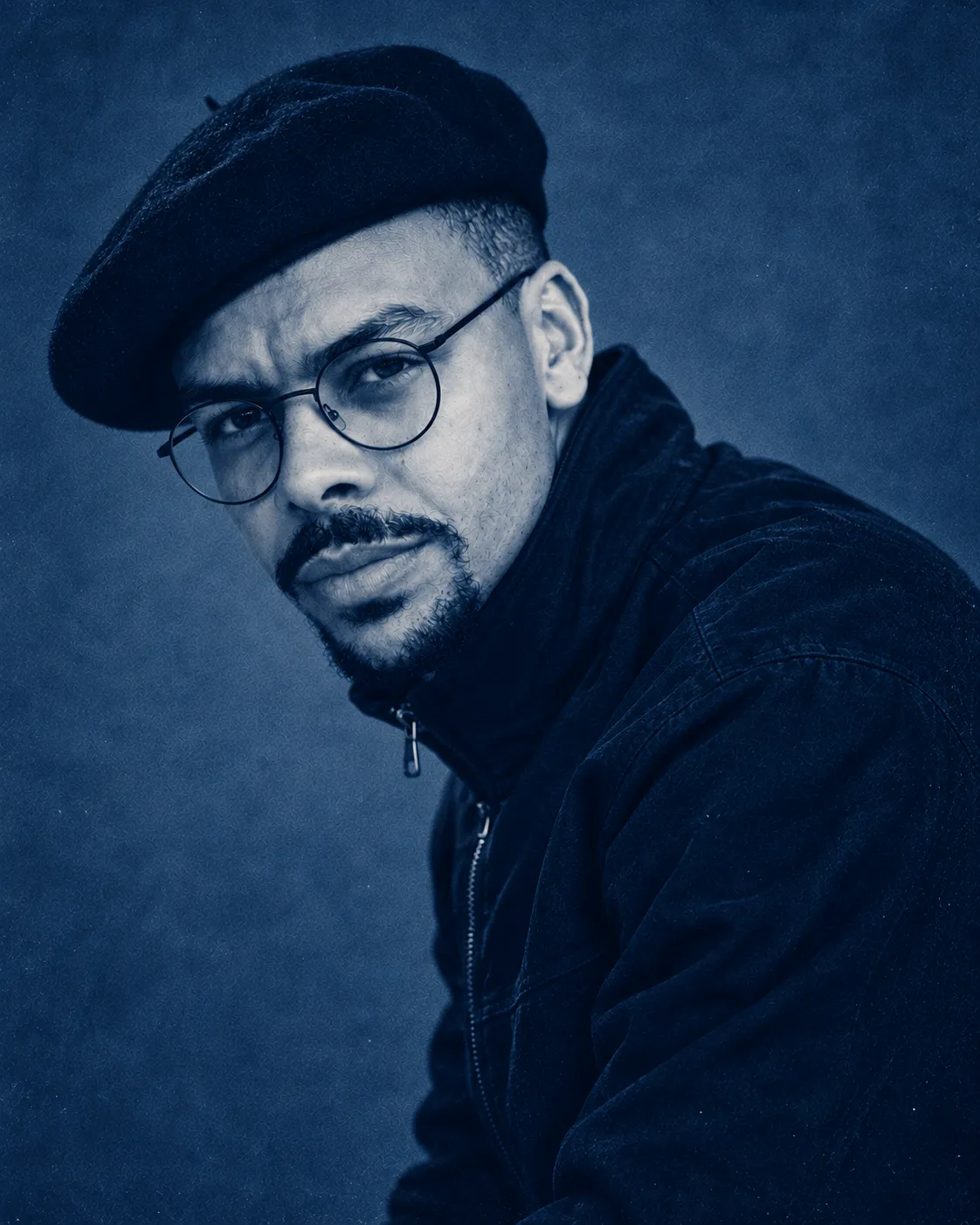
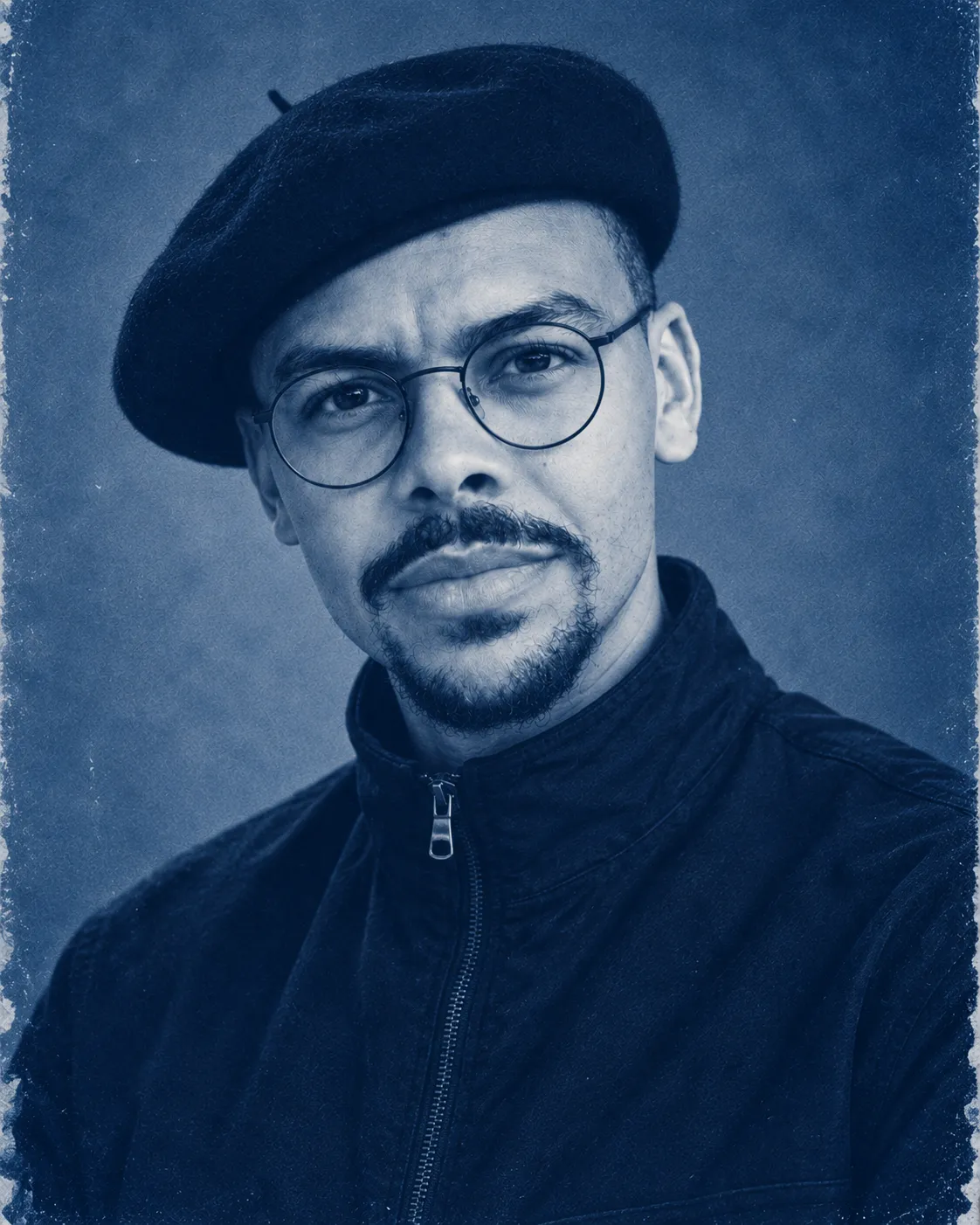
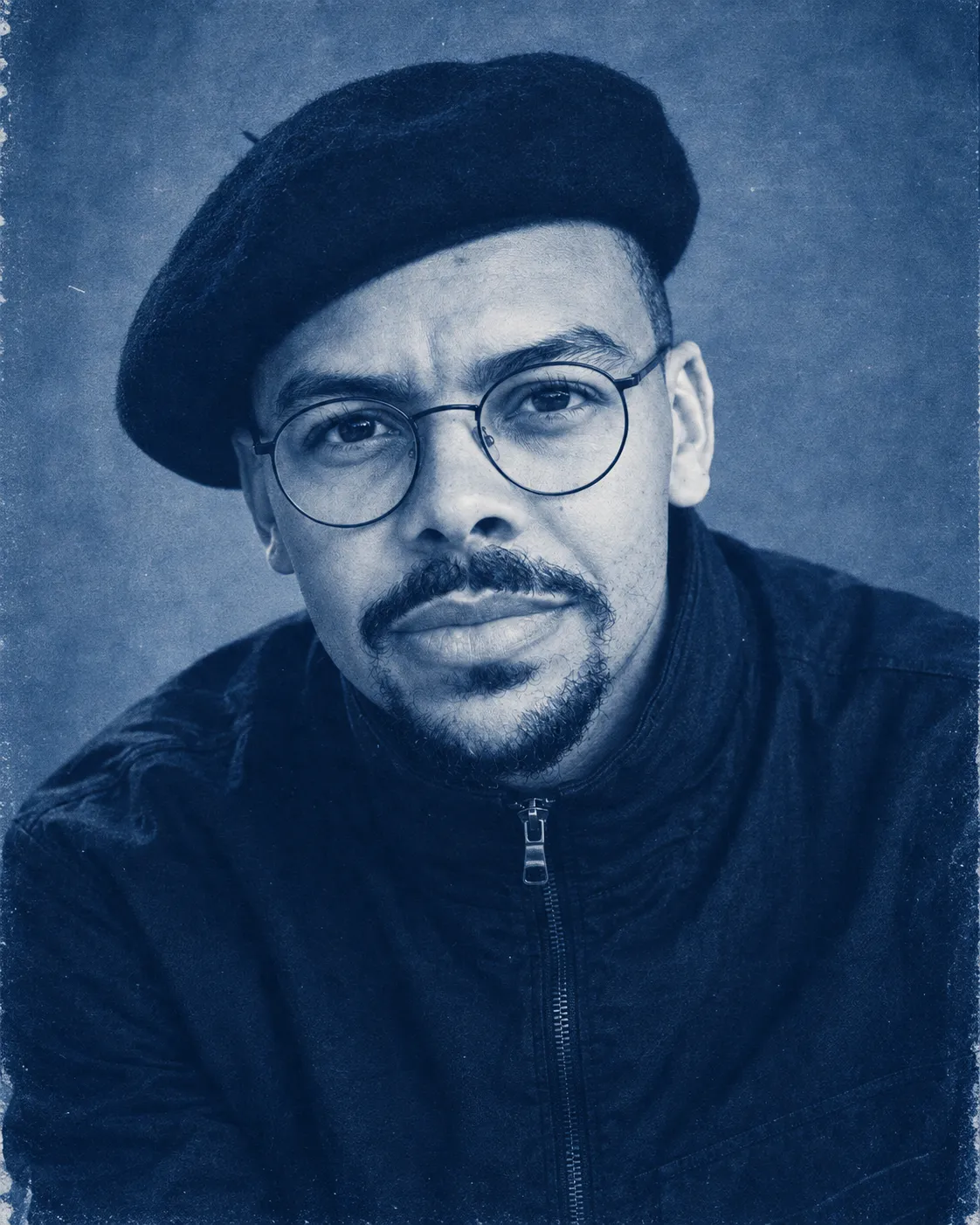
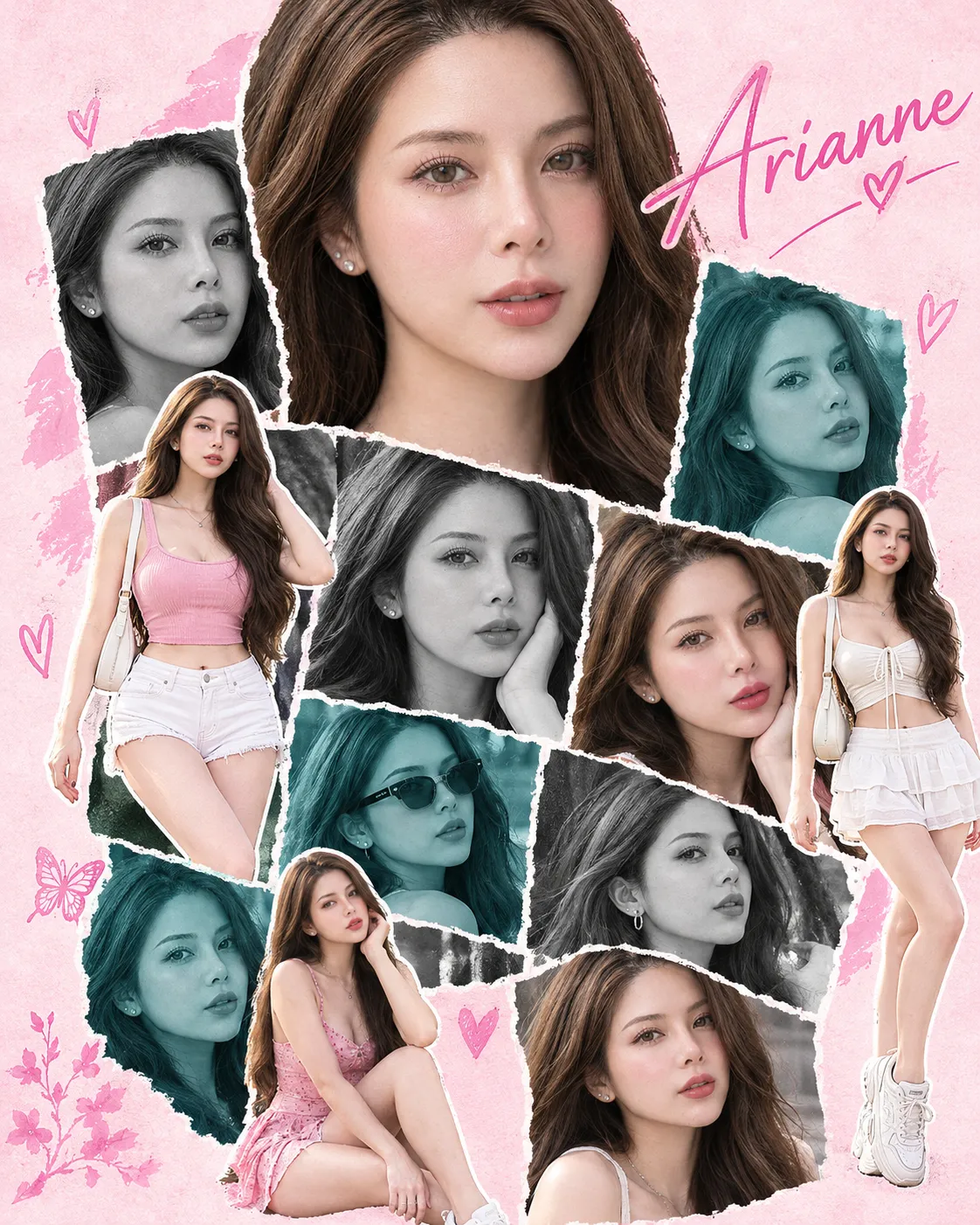
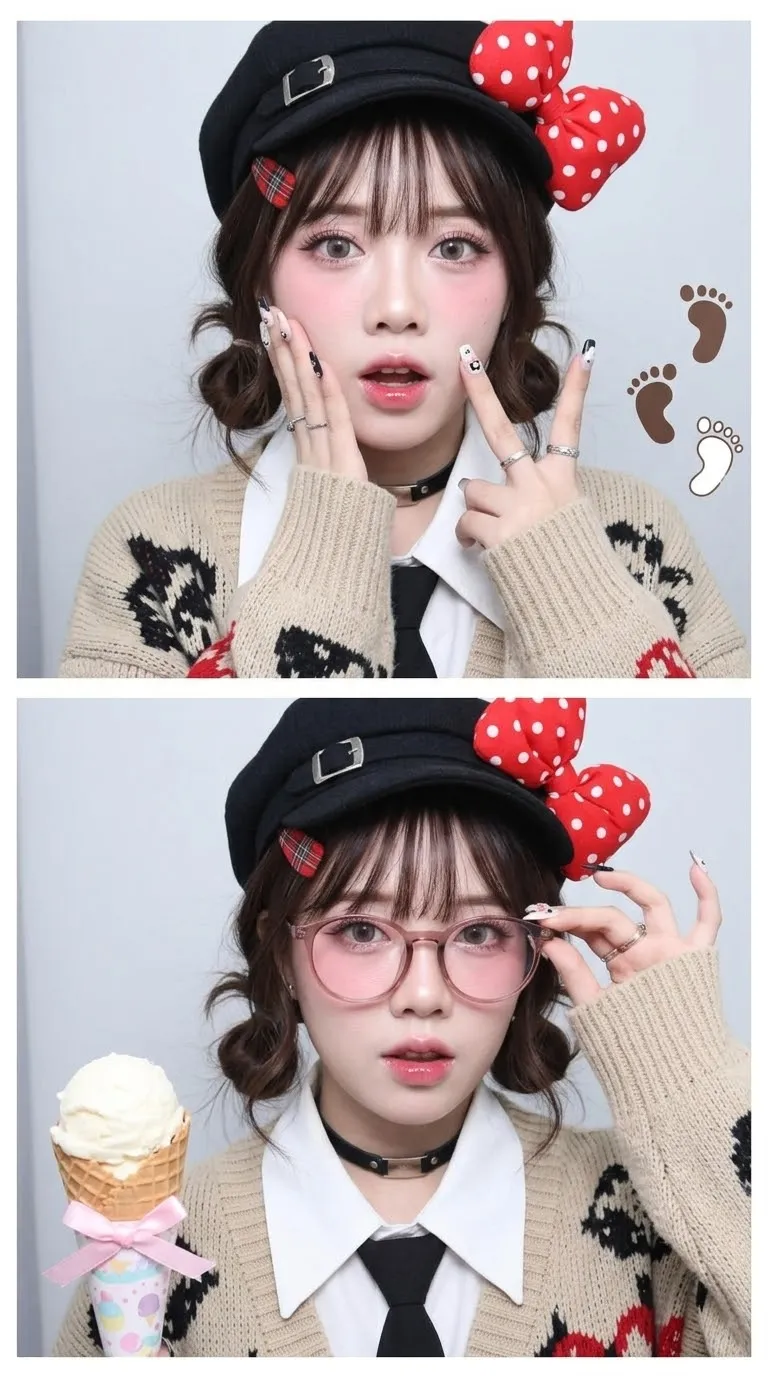
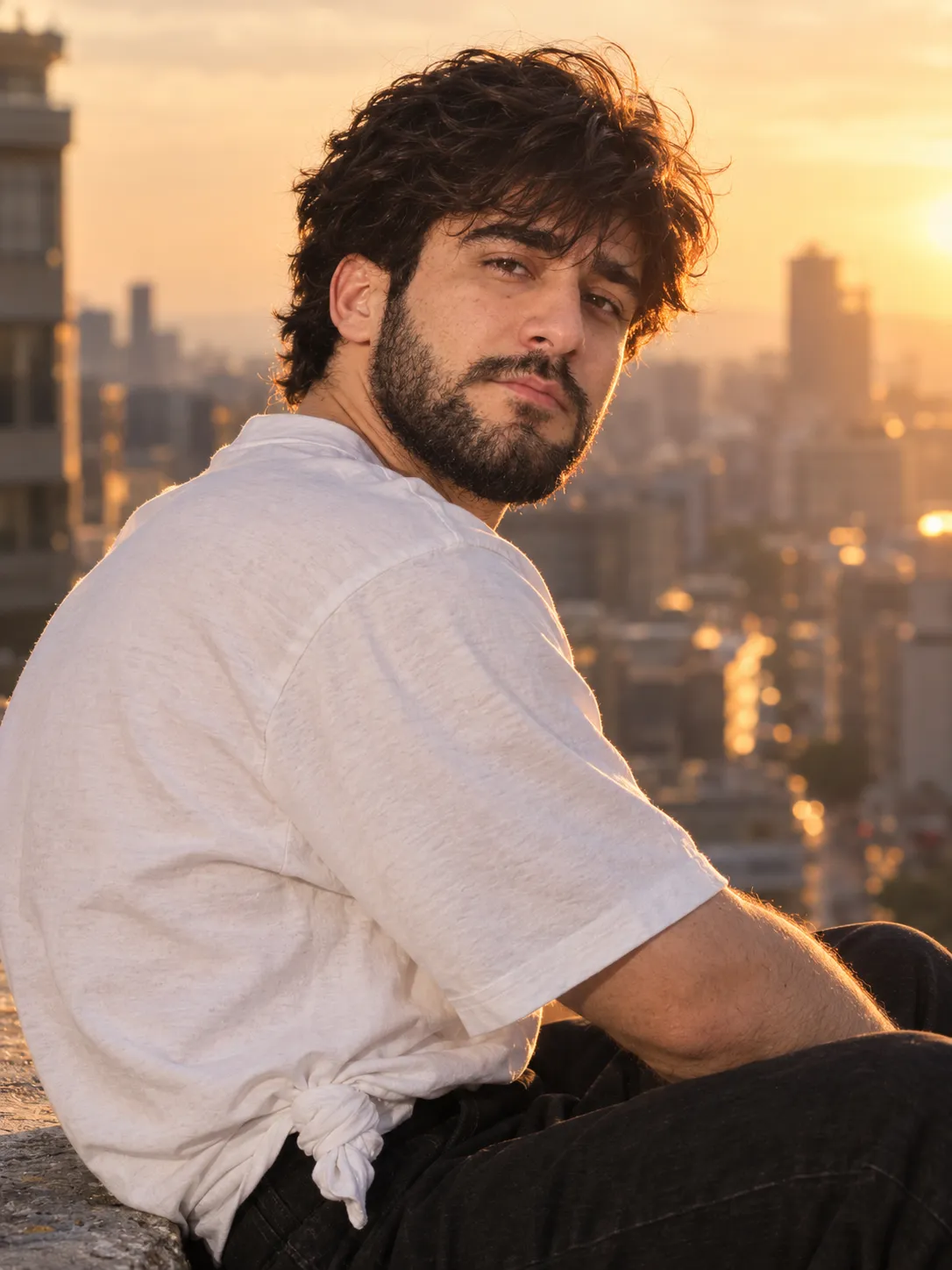
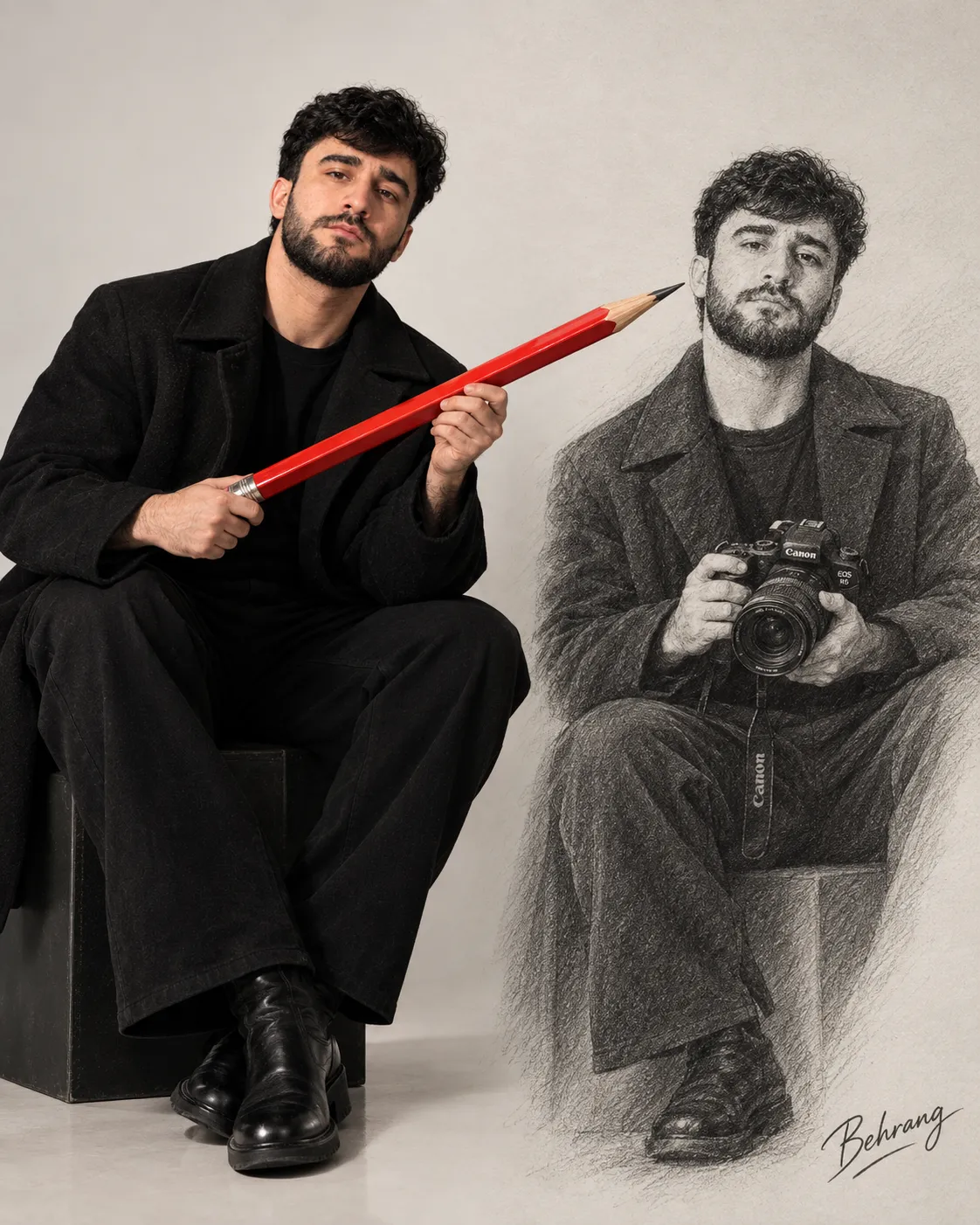
Create a documentary-realistic, 1980s-inspired editorial portrait with a deep-blue analog cyanotype look, preserving the identity in the supplied reference photo.
By Threads — Published on — Modified on
Example images
Prompt template
- Format
- Markdown
- Inputs
- Identity_reference_photo (image) · Required
- Outputs
- Cyanotype_editorial_portrait (image)
Create ONE vertical 4:5 editorial photograph, extremely photorealistic, of an adult person of any gender, with a cinematic aesthetic inspired by 1980s analog photography.

The person is dressed entirely in black: a high-collar jacket, a black wool beret, and thin-framed round glasses.

The composition’s defining feature is the pose: the body is strongly turned sideways and slightly bent forward, while the head turns gently toward the camera.

Use a monochromatic blue visual language inspired by cyanotype and experimental 1980s portrait photography, with deep tones, organic grain, and an introspective atmosphere.

The result must look like a real photograph shot on film and later treated with a handmade photographic process—not an illustration, CGI, or digital filter.

## Facial identity: preserve exactly
Use the supplied personal photograph exclusively as an identity reference. Strictly preserve the original face shape and bone structure; eyes, eyebrows, nose, mouth, and jaw; hair, haircut, texture, and hairline; facial hair or its absence as shown in the reference; apparent age, skin tone, and individual features; and the natural proportions of the neck, shoulders, and body.

Do not alter the person’s facial identity to suit the photographic aesthetic. This prompt is entirely unisex: do not artificially masculinize or feminize the person. Retain pores, minor asymmetries, skin texture, and real individual features.

## Body pose: side profile and turned gaze
This is the composition’s highest priority.

Position the person’s body almost completely sideways to the camera, approximately 75–90 degrees. Keep the torso slightly projected forward, creating a gentle, natural curve in the upper back. The spine must not be perfectly straight. The shoulders should follow the torso’s lean and the neck’s position organically, forming a continuous body line.

Bring the shoulder nearest the camera into the foreground, where it occupies a significant portion of the lower side of the composition. Keep the neck slightly flexed and the head slightly lowered. Turn the head over the shoulder approximately 45–65 degrees, until the person makes direct eye contact with the camera.

Show the face at a three-quarter angle, with both eyes, the nose, the mouth, and the facial structure recognizable. The movement should look natural, as if the person were walking in another direction and had just looked back.

Do not position the torso facing forward. Do not align the shoulders parallel to the camera. Do not create an upright, rigid pose. The forward lean, curve of the neck, and over-the-shoulder gaze must work together as one coherent pose.

## Facial expression
The person looks directly into the lens through the round glasses. Give them a serious, introspective, slightly enigmatic expression. Keep the eyebrows naturally expressive without an exaggerated furrow. The mouth is closed and the lips relaxed. The gaze conveys quiet confidence, mystery, and personality. Do not make the person smile, show teeth, or overdramatize the expression.

## Wardrobe: total black

### Jacket
A black jacket made of substantial fabric, with a matte finish and natural texture. The front zipper is fully closed. The structured high collar wraps around the neck and ends immediately below the jaw. Show realistic stitching, folds, slight signs of wear, and natural fabric behavior. The jacket follows the curve of the torso and shoulders without looking rigid or artificial. Do not show a T-shirt or shirt underneath.

### Beret
A classic black wool beret, tilted slightly to one side. Give it modest volume, a natural drape, and visible fiber texture. The beret follows the head’s tilt. Do not replace it with a cap, hat, or other accessory.

### Glasses
Round glasses with a thin black metal frame, proportional to the face. The lenses are transparent, so the eyes remain clearly recognizable. Add small, natural optical reflections without obscuring the pupils. Do not use aviator or Wayfarer glasses, dark lenses, or mirrored lenses.

## Composition and framing
Use a vertical 4:5 photograph. Frame it as a tight editorial portrait showing the head, shoulders, and upper torso. Position the camera approximately at the person’s eye level, with natural perspective.

Let the body cross part of the composition diagonally, reinforcing its sideways position and forward curve. Keep the face visually dominant, with the eyes near the upper central area of the frame. The foreground shoulder adds depth and perspective. Leave blue negative space around the head, especially on the side toward which the gaze is directed. Do not crop the beret or chin, and do not distort the shoulder silhouette.

## Blue cyanotype: Blue Noir
Apply a fully monochromatic blue photographic treatment.

Palette:
- Deep Prussian blue in the shadows.
- Nearly black navy blue in the beret and jacket.
- Desaturated cobalt blue in the midtones.
- Blue-gray in the illuminated areas of the skin.
- Soft bluish reflections in the eyes and lenses.

Absolute restriction: do not use white stains, white halos, or white-paper areas around the person. The entire photograph must remain filled with shades of blue. The skin may have pale-blue highlights, but must never look cut out or surrounded by white ink. Transitions between face, clothing, and background must be soft and photographic.

The treatment should resemble a high-quality analog blue print while preserving the natural readability of forms.

## Background: continuous blue
Use a simple, entirely blue studio background, with subtle variations between navy, petrol blue, and Prussian blue. Add only very subtle organic texture, like the grain of an old analog photograph. Do not add objects, architecture, smoke, or decorative elements. The background should have natural tonal depth, with no artificial light patches.

No white borders, frames, white vignettes, white light leaks, or torn-paper effects. Blue image must fill the frame edge to edge.

## Lighting: cinematic soft light
Use soft, directional light coming from the front side of the camera. The broad key light is positioned slightly above eye level. Make the shadows moderately deep while preserving the face’s three-dimensionality.

Add discreet light along the shoulder’s side to separate the jacket from the background, without creating a white outline. Include small, natural reflections on the glasses. The light should reveal skin pores, the beret’s wool texture, and the jacket fabric’s fibers. Avoid flat frontal lighting, excessive shine, and aggressive digital contrast.

## Capture: 1980s analog and BBC documentary realism
Simulate a photograph originally shot on 35 mm analog film in the 1980s and later converted into a monochromatic blue print.

Technical references:
- Camera: analog Nikon F2.
- Lens: Nikkor 85 mm f/2.
- Aperture: f/4.
- ISO: 400.
- Shutter speed: 1/125 s.
- Prioritize focus on the eyes.
- Moderate depth of field.
- Fine-to-moderate analog grain.
- Controlled cinematic contrast.
- Natural optical sharpness, without excessive sharpening.

Apply documentary realism inspired by the BBC: authentic human texture, coherent anatomy, physically convincing materials, and lighting integrated with the environment. Grain must appear uniformly and organically on the skin, beret, jacket, and background. Avoid an excessively clean or artificially digital appearance.

## Negative prompt
Avoid: altered face, generic identity, front-facing body, perfectly straight spine, shoulders turned toward the camera, excessively twisted neck, head disconnected from the body pose, rigid pose, exaggerated smile, dark glasses, mirrored lenses, replaced beret, open jacket, low collar, colorful clothing, intense white lighting, white stains around the person, halos, white borders, light vignettes, white background, torn-paper effect, flat blue filter without depth, plastic-looking skin, CGI, 3D rendering, illustration, collage, HDR, artificial sharpness, coarse grain, text, logos, and watermarks.

## Final result
ONE unisex vertical 4:5 editorial photograph of an adult person whose body is strongly turned sideways, torso slightly bent forward, shoulders continuous with the neck, and head lowered and turned to look directly at the camera.

The person wears a tilted black beret, transparent round glasses, and a fully closed black high-collar jacket. The image has the look of 1980s analog cyanotype, with deep blues, organic photographic grain, and BBC documentary realism.

Absolute priorities: preserve identity; keep the body sideways; maintain continuity between shoulders and neck; show the over-the-shoulder gaze; retain the black beret and round glasses; fill the entire image with deep blue; and include no white stains.



Comments — 0