- Category
- Photography
- Model
- openai-chatgpt
Western Ranch Portrait from a Reference Photo
Transform a reference photograph into a cinematic, photorealistic Western ranch portrait while preserving the subject’s identity.
By Threads — Published on — Modified on
Example images
Prompt template
0 copies
- Format
- Text
- Inputs
- Reference_photo (image) · Required
- Outputs
- Portrait_image (image)
Create an image using the uploaded reference photograph.

Transform the uploaded person’s photograph into an ultra-photorealistic, cinematic Western ranch portrait. Use the reference image’s camera angle, composition, lighting, visual atmosphere, and photographic realism. The person in the uploaded photograph must remain instantly recognizable, with their original facial identity, bone structure, eye shape, nose, lips, jawline, skin tone, natural hair characteristics, facial hair where applicable, and apparent age faithfully preserved. Do not replace, beautify, artificially age, or reshape their face.

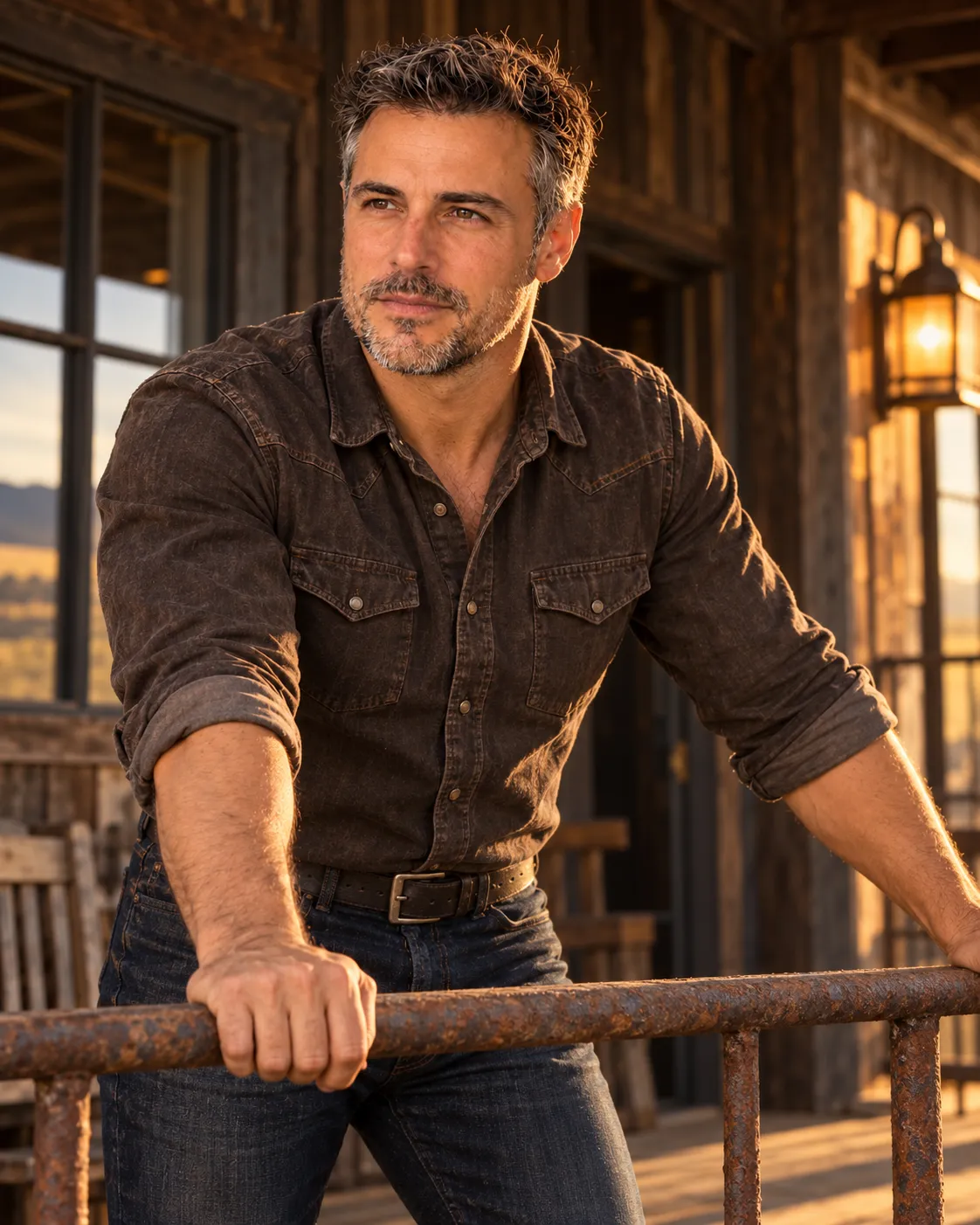
SUBJECT AND POSE: Portray the person as a confident, rugged individual standing on a rustic ranch porch, leaning slightly forward over a weathered, rusted iron railing. One arm extends diagonally downward toward the foreground, with a strong, natural hand gripping the horizontal railing. The opposite arm extends toward the right side of the composition, supporting the person’s weight. The shoulders lean forward, the torso is subtly angled, and the head is turned toward camera-left, with the eyes looking thoughtfully into the distance. The expression is serious, composed, contemplative, and quietly powerful. Maintain believable anatomy, realistic hands, and naturally proportioned arms.

HAIR AND FACIAL DETAILS: Preserve the person’s recognizable hairstyle, hair color, hairline, facial hair, and natural age characteristics. Reproduce individual hair strands, natural flyaways, realistic hair density, fine facial lines, pores, subtle skin imperfections, and authentic facial texture. Do not artificially smooth the skin or exaggerate muscular features.

WARDROBE: Dress the subject in a fitted, weathered charcoal-brown Western work shirt with a soft, brushed cotton texture, two buttoned chest flap pockets, visible seams, naturally worn edges, and sleeves rolled to the forearms. Include dark indigo denim jeans, a simple black leather belt, and a subdued metal buckle. Make the clothing follow the person’s actual body shape, with physically accurate folds, stitching, fabric tension, and natural wear.

CAMERA AND FRAMING: Use a vertical 4:5 portrait composition: a medium-to-medium-long environmental portrait, framed from approximately waist-to-upper-thigh level upward, emphasizing the face, upper body, arm positioning, and foreground railing. Position the camera at approximately chest height, with a subtly low, natural three-quarter perspective. The subject fills most of the frame and is positioned slightly right of center. Place the head in the upper portion with comfortable breathing room above the hair. Keep the entire head and any headwear completely visible; do not crop them. Show one foreground hand prominently gripping the railing near the lower center-left. The horizontal metal railing crosses the lower portion of the image. Use full-frame height emphasis and a cinematic poster layout.

PHOTOGRAPHIC SETTINGS: Use a full-frame professional camera aesthetic, a 50mm prime lens, approximately f/2.8 aperture, ISO 400, and a 1/250-second shutter speed. Maintain natural perspective, realistic optical compression, accurate facial proportions, crisp focus on the eyes and facial features, subtle falloff toward the hands and clothing, and beautifully soft background separation. These settings establish the intended photographic appearance.

LIGHTING: Use cinematic late-afternoon golden-hour illumination, with warm directional sunlight entering from camera-right and softly illuminating the face, silver or naturally colored hair, shoulders, and forearms. Add gentle highlights along individual hair strands, realistic shadow transitions around the cheekbones and jawline, soft reflected fill light on the darker side of the face, and rich but detailed shadows throughout the clothing. Include a small, glowing amber porch lamp in the right background. Keep exposure natural, highlights controlled, contrast deep and dimensional, and avoid artificial glow.

BACKGROUND AND ENVIRONMENT: Show an authentic rustic wooden ranch exterior with aged vertical timber siding, dark wooden beams, a shadowed doorway, large dark-framed windows toward the left, and weathered metal porch railings across the foreground. Show soft exterior daylight through the windows. Keep the background gently blurred while retaining recognizable architectural texture, warm amber practical lighting, and subdued earthy tones.

COLOR GRADING AND ATMOSPHERE: Use a rich cinematic earth-tone palette featuring deep espresso brown, weathered charcoal, warm copper, muted gold, dark denim blue, and natural skin tones. Apply subtle filmic contrast, warm highlights, deep soft shadows, organic tonal transitions, understated saturation, and a timeless contemporary Western editorial aesthetic. The visual styling should feel masculine, rugged, dramatic, grounded, intimate, and authentic, while respecting the uploaded subject’s identity and presentation.

REALISM AND FINISH: Create ultra-photorealistic professional editorial photography with extraordinary skin microtexture, lifelike eyes with accurate reflections, individually defined hair strands, realistic facial hair where present, visible forearm skin detail, fine cotton fibers, precise stitching, naturally weathered wood grain, textured rusty metal, and physically accurate lighting. Avoid illustration, a CGI appearance, plastic skin, excessive sharpening, HDR halos, distorted hands, extra fingers, facial identity drift, unnatural body proportions, text, watermarks, and logos.


Comments — 0