- Category
- Photography
- Model
- midjourney-v7
Will You Return When the Rain Stops? — Double-Exposure Portrait
Create a cinematic analog double-exposure photograph of the uploaded subject waiting at a rainy, deserted bus stop, with a departing bus from the past blended into the subject’s silhouette.
By Threads — Published on — Modified on
Example images


Prompt template
- Format
- Text
- Inputs
- Uploaded_subject_reference (image) · Required
- Outputs
- Double_exposure_photograph (image)
Create DOUBLE EXPOSURE REALITY STORY COLLECTION 20 — “Will You Return When the Rain Stops?”: a fine-art double-exposure photograph about a rainy farewell, last-bus memories, quiet emotional longing, and authentic analog medium-format cinematic realism. Apply to the subject in the uploaded reference image, including people, girl characters, Blythe and BJD dolls, cats, dogs, and anthropomorphic animals.

ABSOLUTE IDENTITY PRIORITY: Use the uploaded reference image as the primary identity reference. Preserve the subject's exact recognizable facial structure, original eye shape, iris color, eye spacing, nose, lips, hairstyle, hair color, skin tone, body proportions, age appearance, and distinctive features. For cats, dogs, and anthropomorphic animals, preserve original species, fur color, markings, ears, muzzle, paws, tail, and natural anatomy; do not humanize them. For Blythe and BJD dolls, preserve original sculpted faces, glass eyes, and articulated joints. Do not beautify, enlarge eyes, de-age, change species, or alter the subject's identity.

STORY: The rain has finally stopped, yet the subject remains at an old bus stop, silently hoping someone might return. In the subject's memories, the last bus is still disappearing into a rain-soaked night. Express a delicate balance of heartbreak, patience, and fragile hope without tears or exaggerated drama.

FIRST EXPOSURE — PRESENT REALITY: Show a quiet roadside bus stop on the outskirts of an old city at blue-hour twilight, immediately after rainfall. The subject stands alone beside a small glass bus shelter covered in raindrops. Include damp pavement, shallow puddles, an empty road, distant residential buildings, and a faint amber streetlamp. There is no falling rain in the present-day environment.

WARDROBE: The subject wears a long charcoal-gray wool coat, an ivory knitted sweater, a deep navy scarf, black trousers or anatomically appropriate clothing, and worn brown leather boots. The subject loosely holds a single folded black umbrella in one hand when suitable. For animals, place the umbrella naturally beside the subject and maintain anatomically correct paws. Adapt garments and posture to doll articulation and animal anatomy. Preserve the original hairstyle.

SECOND EXPOSURE — THE DEPARTURE: Show a heavy nighttime rainstorm on the same deserted road in the past. One old city bus travels away into distant mist, its two small red taillights glowing through the downpour. Long red reflections stretch across the wet asphalt. Include an empty bus-stop bench, a rain-soaked timetable, soft amber streetlights, and fading road markings to evoke the memory of someone who has left.

OPTICAL DOUBLE-EXPOSURE COMPOSITION: Place the remembered rainy road exclusively inside the outer hair contours, shoulders, coat, and torso silhouette. Position the small departing bus in the lower chest or upper torso, with red taillight reflections extending downward through the body. Keep the central face, eyes, nose, mouth, and animal muzzle completely opaque, sharply recognizable, and unobstructed. Blend the images with natural optical film density, restrained transparency, and seamless tonal transitions. Avoid visible digital masking edges and floating cutout elements.

EXPRESSION AND POSE: Give the subject a restrained expression of quiet longing mixed with faint hope, without tears. Turn the body approximately 30 degrees away from the camera, with the gaze directed toward the road where the bus disappeared. Use a natural three-quarter standing pose, with relaxed hands or anatomically correct paws. Frame the portrait from the head to above the knees, at eye level, with elegant negative space and natural body proportions.

LIGHTING AND COLOR: Use cool blue-gray twilight in the present, warm amber streetlamp illumination, muted charcoal shadows, restrained crimson taillight reflections within the remembered scene, realistic wet-road highlights, natural skin tones, and delicate cinematic contrast.

CAMERA AND FILM: Hasselblad 500CM, Carl Zeiss Planar 80mm f/2.8, and a Kodak Portra 400 color-negative-film aesthetic. Use authentic medium-format tonal gradation, fine organic film grain, subtle halation, gentle highlight roll-off, soft atmospheric depth, and realistic analog photographic texture.

Create ONE SINGLE ULTRA-PHOTOREALISTIC CINEMATIC DOUBLE-EXPOSURE PHOTOGRAPH. No collage, duplicate faces, extra eyes, additional limbs, ghost figures, excessive neon, fantasy glow, text, or watermark. --ar 9:16 --v 7 --raw --s 100 --no collage, duplicate faces, extra eyes, extra limbs, ghost figures, plastic skin, neon glow, text, watermark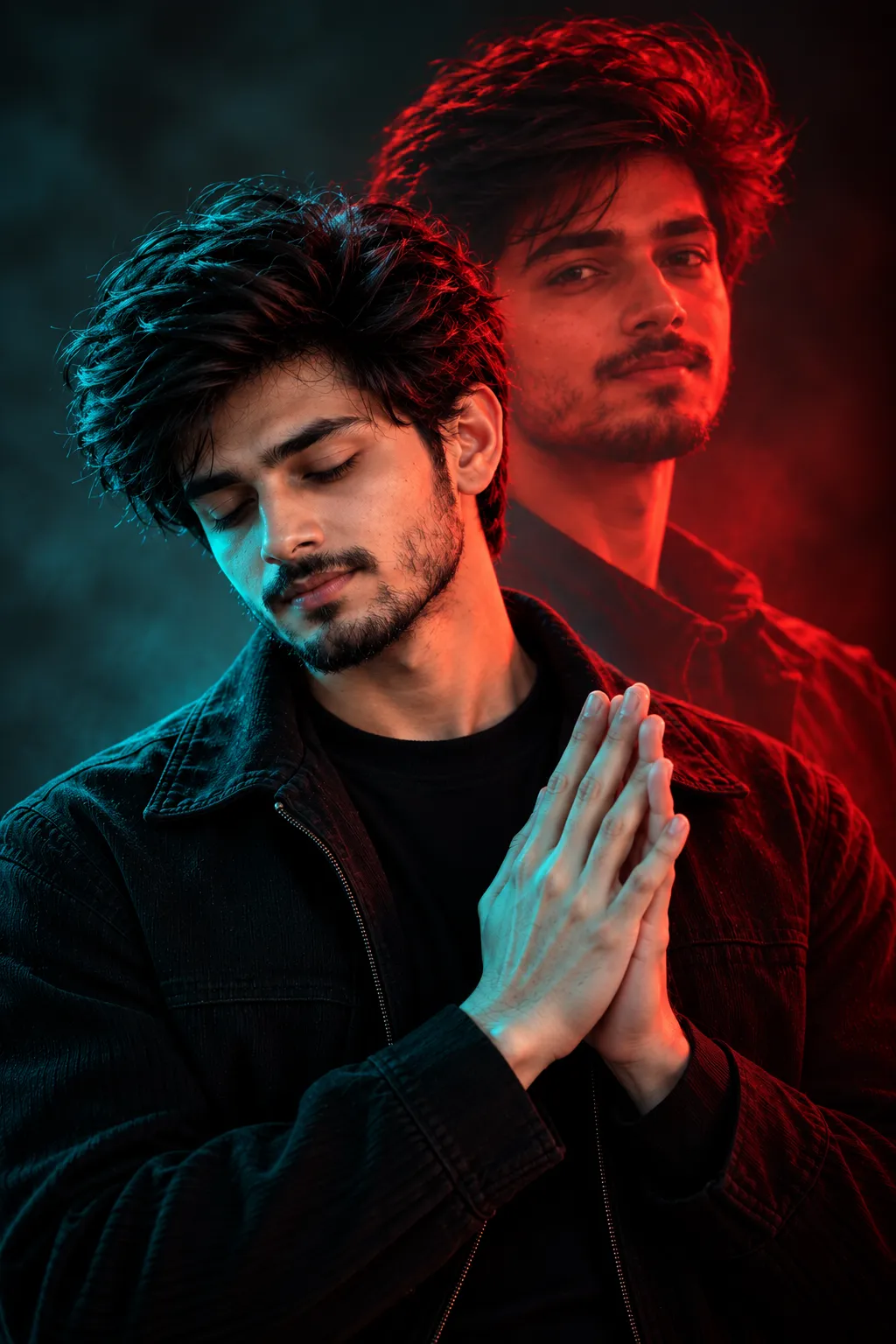



Comments — 0