- Category
- Photography
Young Man Facing His Cracked-Mirror Reflection
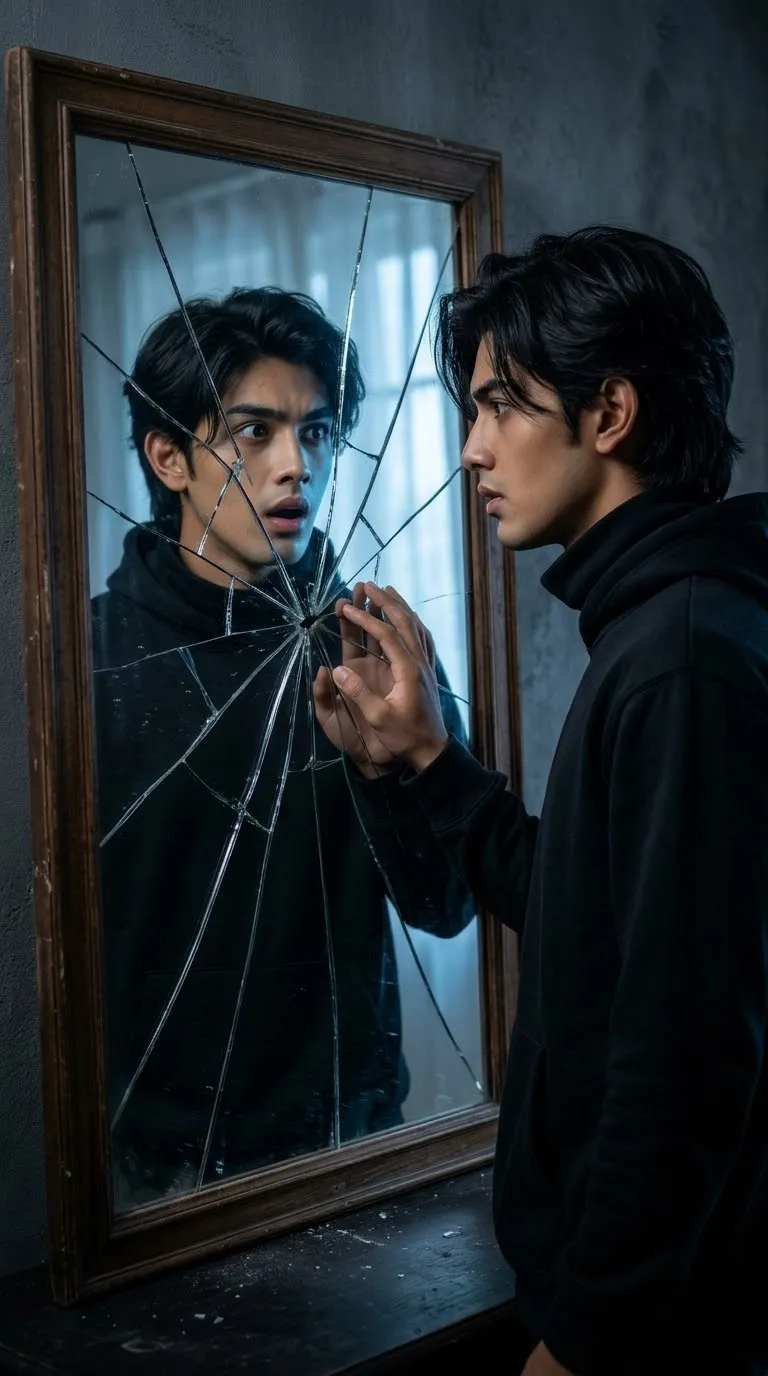
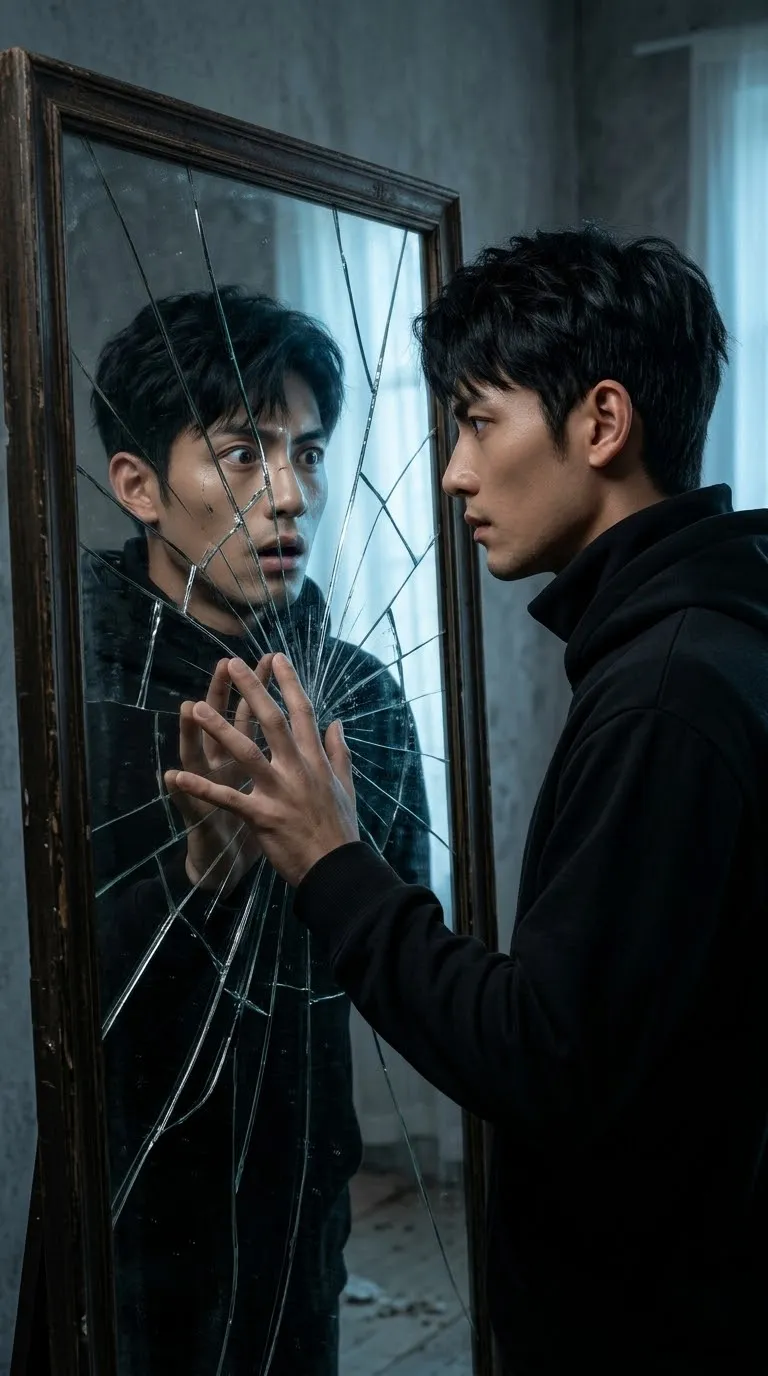
Create an 8K photorealistic, vertical image of a young man confronting his startled reflection in an old, shattered mirror. Match his face to the supplied reference photo.
By Threads — Published on — Modified on
Example images
Prompt template
0 copies
- Format
- Text
- Inputs
- Reference_photo (image) · Required
- Outputs
- Generated_image (image)
Create an 8K-resolution photorealistic image featuring a real human. It must not look like anime, a painting, an illustration, or a game graphic. Use a natural yet dark, dramatic, striking color palette. Make the image hyper-realistic and vivid, capturing a genuine psychological moment. The young man's face must exactly match the attached reference photo.

A young man stands before an old, severely cracked mirror, gazing at his reflection with a serious expression, uncertainty, and a hint of shock. His right hand is slowly raised toward the shattered glass, with his fingers touching the surface directly opposite the reflection of his own hand, as if reaching out to a version of himself separated by the cracks. In the reflection, his counterpart looks startled, mouth slightly agape and eyes wide, staring back at the man in the real world. Sharp, jagged cracks divide the two figures, suggesting fragmentation, loss, or an encounter with a different side of oneself.

The real figure is a young man with long black hair in a Two-Block cut, with a messy, layered fringe that looks naturally tousled, simple, and effortless. He wears a deep-black hoodie with a high collar; its soft fabric drapes naturally and forms folds across his shoulders and arms. Show him in profile, with a calm yet heavy expression filled with deep contemplation and confusion. His hands look strong yet gentle, with fingers splayed against the glass and healthy, natural-toned skin. Backlighting creates a soft silhouette along his hairline and shoulders.

The reflection shows the same young man with a more open, startled expression: eyes wide and mouth slightly parted, as if pleading or shocked by the figure before him. Cracks slice across the reflection's face and body, suggesting fragmentation and fragility. The light within the reflection is brighter and higher in contrast, with a cool, bluish hue distinct from the subdued atmosphere around the real figure.

The mirror has an old, dark-brown wooden frame that is faded, dusty, and visibly aged. Its glass is fractured, with cracks radiating outward from the center. Make the sharp fissures clearly visible, with broken edges catching the light in a subtle shimmer. Some areas of glass are chipped or faintly clouded, suggesting neglect and antiquity. The surface is imperfectly polished, with subtle smudges and natural marks of time.

Set the scene in a dimly lit room with dark, cool-toned gray walls of rough, uneven texture. In the distance, faint pale-blue light filters in, perhaps through a gap in a window or door, casting a soft glow that adds to the mysterious atmosphere. The dark floor reflects the light very slightly, is covered in a fine layer of dust, and appears unkempt. Include no distracting objects; keep the focus entirely on the young man and the cracked mirror.

Use a natural color palette: deep black and dark gray clothing; natural black hair with a faint blue sheen; warm, natural skin tones that appear slightly pale under cool-toned light; clear glass with sharp, brilliant glints along the cracks and dark-gray reflected areas; a faded dark-brown frame; and a dark-gray background with soft cool blue and a faint pale-blue glow.

A soft, cool-blue primary light source comes from behind and to the side, creating a subtle silhouette along the edges of the hair and shoulders. Keep the front of the body in shadow while ensuring the face and hands remain clearly visible. Let the cracks catch the light as sharp, bright lines dividing the two figures. Make the mirror reflection brighter and higher in contrast than the actual figure to create a meaningful difference in atmosphere. Soft shadows fall across the walls and floor, adding depth and a sense of expansive space.

Use a vertical 9:16 aspect ratio. Frame the scene from the bottom of the mirror frame to the top of the young man's head. Create an atmosphere that is mysterious and profound, evoking fracture, a search for identity, loneliness, self-doubt, and an encounter with oneself.

Do not use cartoon or anime styling, exaggerated eyes, garish neon colors, excessive contrast, text, or logos. Make all textures realistic and vivid: the sharp, fractured glass; brilliant glints along the shard edges; aged wood grain; naturally folded hoodie fabric; messy, lifelike strands of hair; and the rough, dark, textured wall.





Comments — 0