Turn a Photo into a Crocheted Yarn Doll
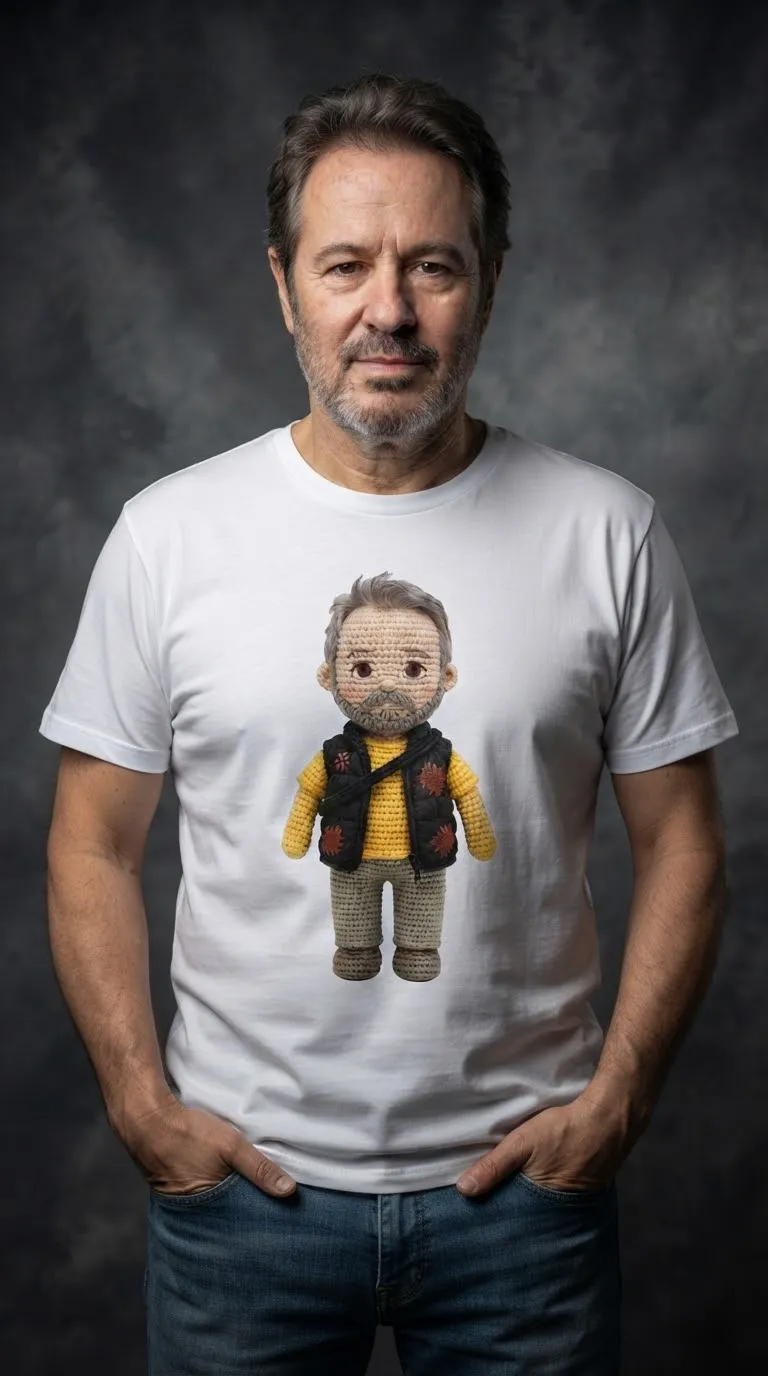
Transform the subject of an uploaded photo into a full-body, hand-crocheted yarn doll, photographed alone as a finished object.
Example outputs
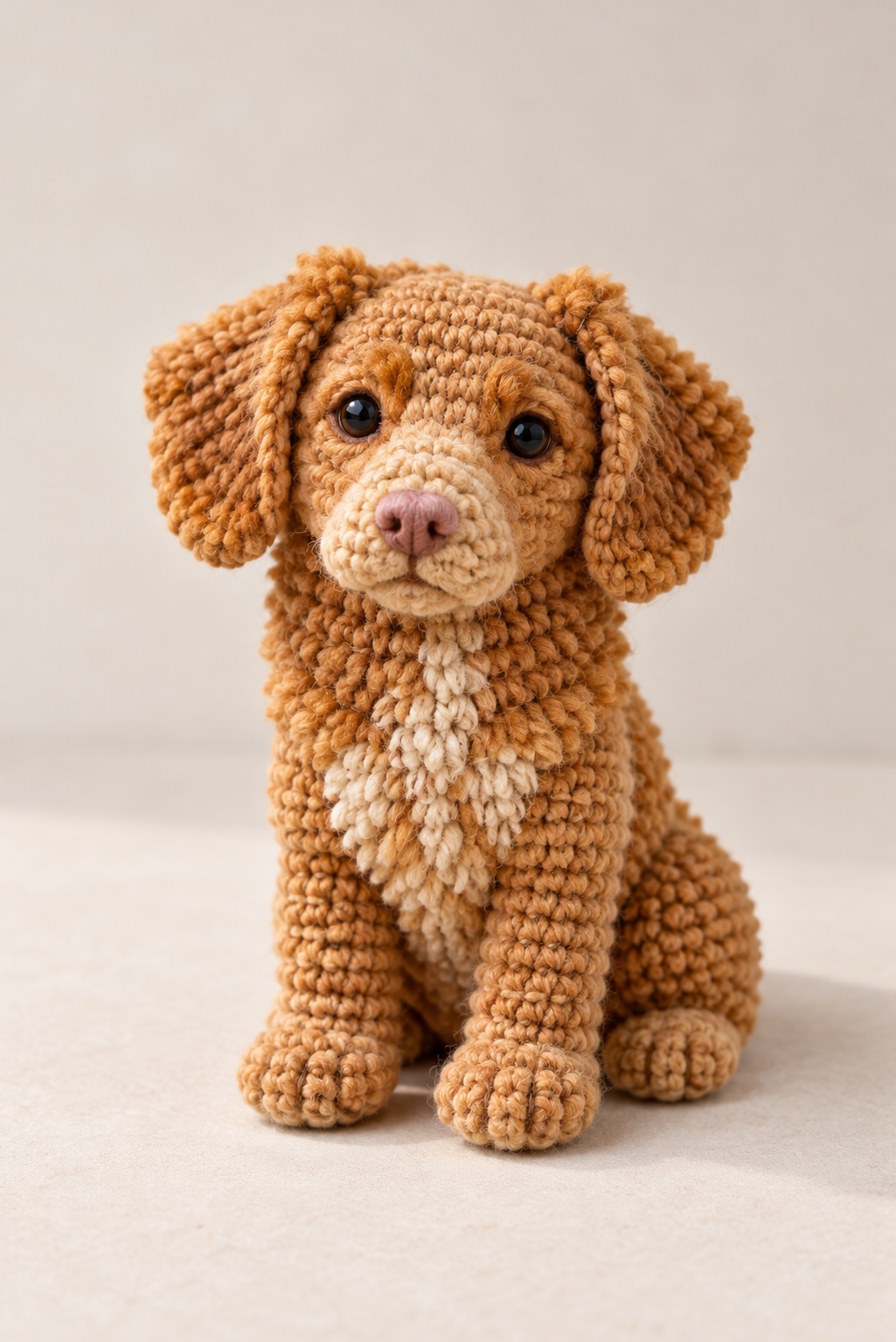
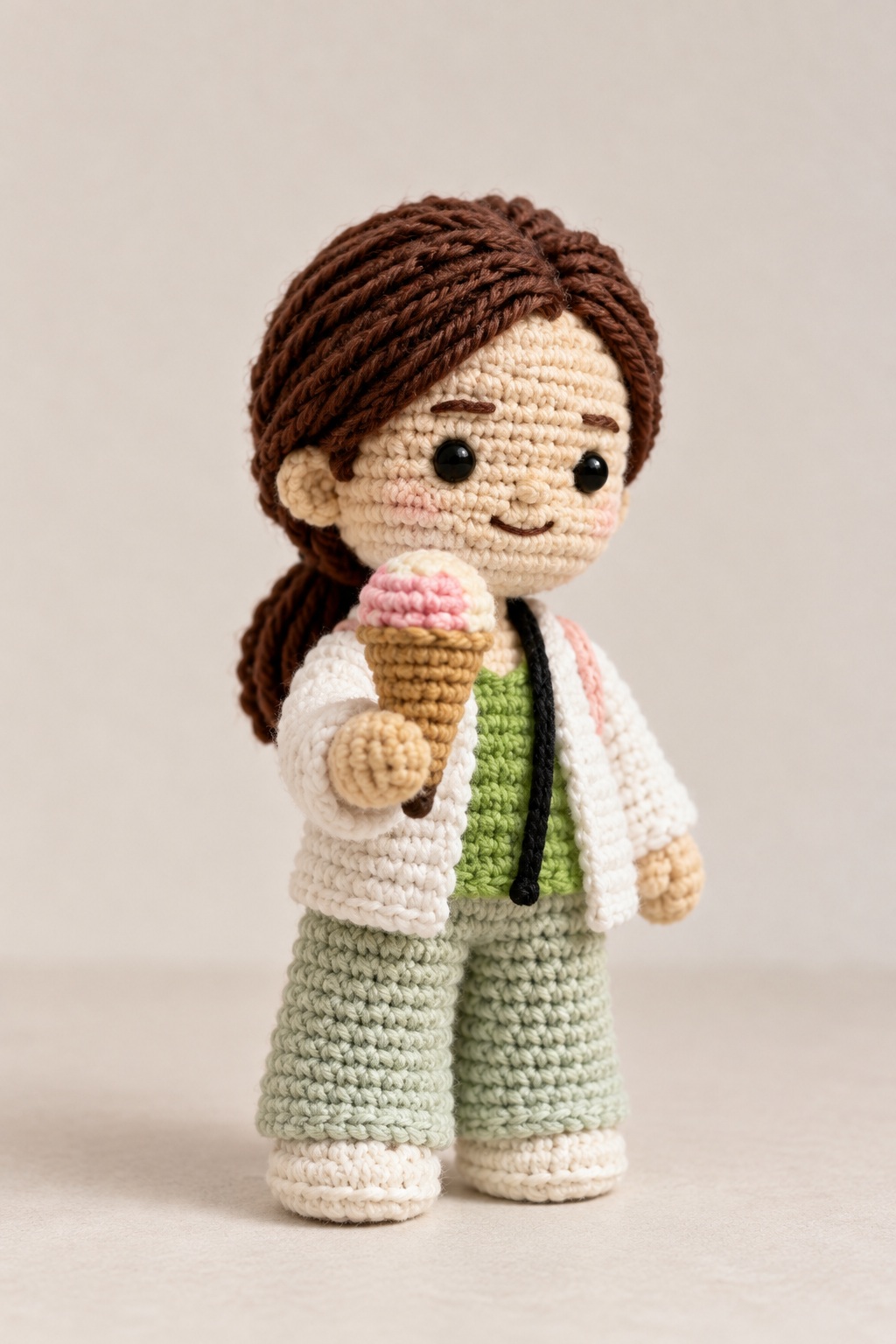
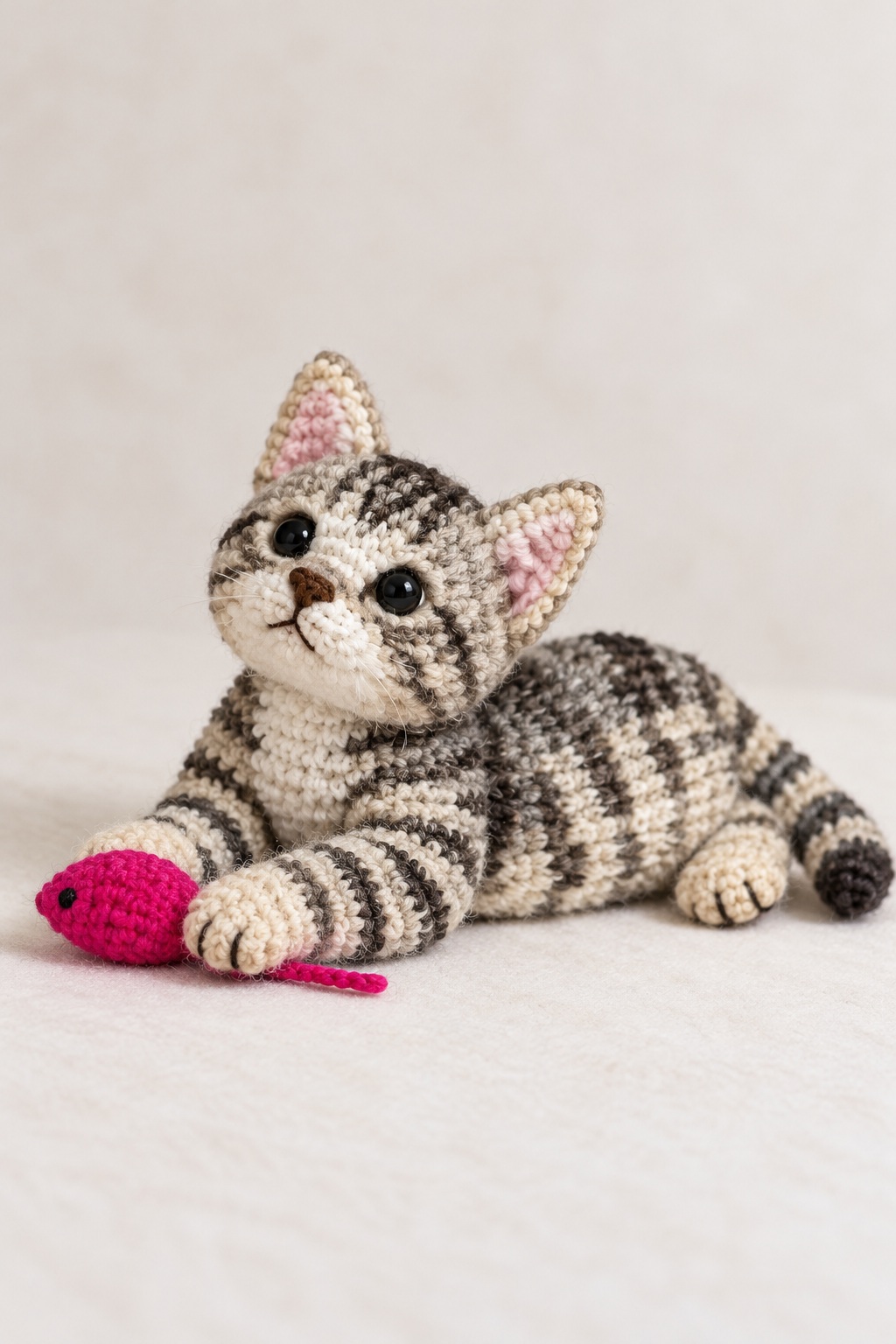
Prompt template
- Format
- Text
- Inputs
- Uploaded_photo (image) · Required
- Outputs
- Finished_doll_photo (image)
Transform the uploaded photo into a single hand-crocheted yarn doll, photographed like a finished product. Output one vertical image.

Doll
Make the doll palm-sized, stuffed with filling so it looks plump. The filling may be uneven, leaving one side slightly fuller. Place it alone on a pale, plain surface in soft natural light. Show its entire body in the frame, standing or sitting on the surface, with a short, soft shadow beside it.

Yarn and stitches
Cover the entire surface with crochet stitches. Each stitch should be visible as a V-shaped loop, with the loops running in rounded rows. Crochet the torso, head, legs, and ears as separate pieces and join them, leaving visible sewn seams where they meet. Short yarn fibers may create a slightly uneven outline. Change colors abruptly at row boundaries; do not blend them into gradients. On close inspection, the yarn should appear to consist of several twisted strands.

Face
Use either two black safety eyes or embroidered dots for the eyes. Sew the nose and mouth with a few stitches. If the subject is a person, embroider the face in the same manner and make the hair from several strands of yarn tied together and attached to the head.

Preserve the photo
Preserve the number of subjects, their pose, the direction they are looking, and their body proportions. If the photo contains one animal, make one doll. Translate the placement and distribution of colors into the yarn colors. Preserve prominent color boundaries as yarn-color boundaries—for example, a white chest, black back, or brown ears. Also crochet anything the subject is wearing, carrying, or holding, and keep it with the doll. Do not add anything that was not in the photo.

Avoid these failures
- Do not show any text, numbers, brand names, signatures, logos, or watermarks anywhere in the image.
- Do not leave any smooth area on the doll without visible stitches. Do not make any surface look like plastic, porcelain, or vinyl. Small separate attachments such as the eyes and nose are exceptions.
- Do not leave photo-like individual hairs or realistic animal fur. Replace all fur with yarn.
- Match the number of dolls to the number of subjects in the photo.
- Do not crop the doll: keep its head, torso, all four or two legs, and tail or ears within the frame, as applicable.
- Do not introduce objects that were not in the photo. Do not show hands, a crochet hook, or balls of yarn. Objects already in the photo may be crocheted and placed beside the doll or held by it.
- Do not show pattern paper with grids, numbers, or symbols. This should be a photograph of a finished doll, not a crochet pattern.
- Do not render a human face with realistic skin or real-looking eyes. Use only safety eyes or embroidered dots.
- Do not make the doll float or hang in the air.
- Do not split the image into panels or include the original photo alongside the doll. Show only the doll photograph.

If you cannot satisfy every constraint, prioritize visible stitches and matching the number of subjects. If an object the subject was holding cannot be made from yarn, omit that object.
What you'll create
A plump yarn doll sits or stands alone on a pale surface in soft natural light. Visible V-shaped stitches, sewn joins and short fibers translate the source subject into a handmade object.
Frequently asked questions
Should the yarn colors blend smoothly?
No, colors change at row boundaries, preserving prominent color divisions from the source.



Comments
Tried this prompt? Share what you made, compare results, or ask a question