Cobalt-Blue Scene on a Porcelain Jar
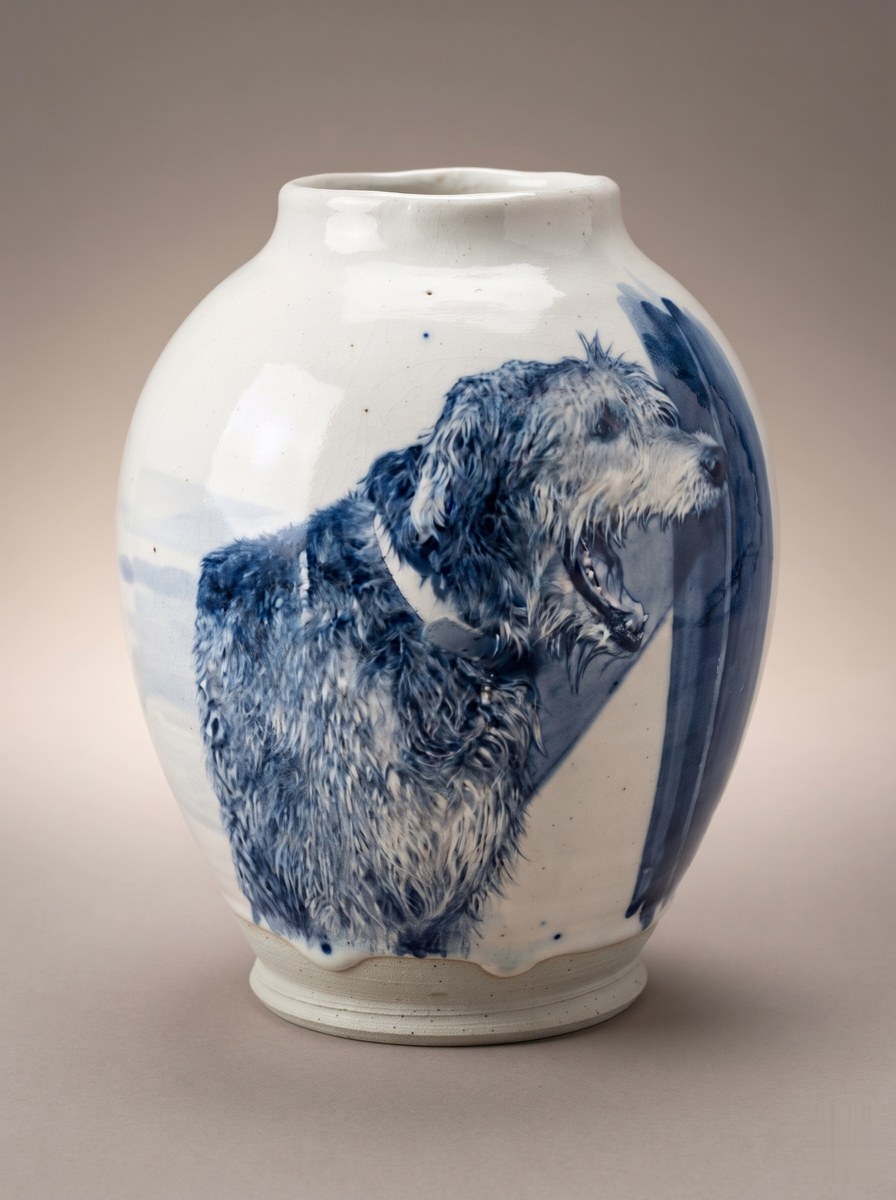
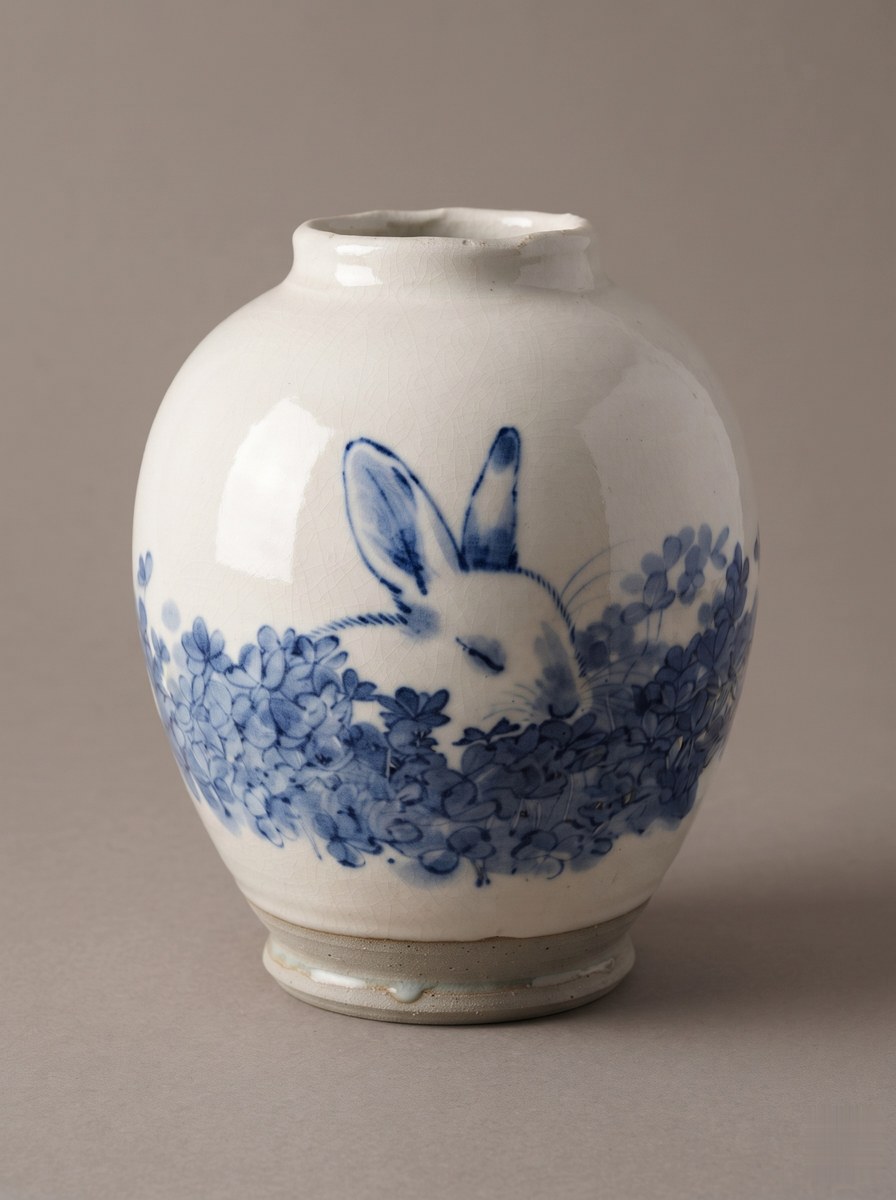
Transform a landscape reference photo into cobalt-blue underglaze brushwork on a single hand-thrown porcelain jar, presented as a studio product photograph.
Example outputs
Prompt template
- Format
- Markdown
- Inputs
- Reference_photo (image) · Required
- Outputs
- Studio_product_image (image)
Turn the attached photo into a single hand-thrown porcelain jar, painted with the scene of that photo in cobalt blue under a clear glaze, and photograph it as one studio product shot. Use a landscape-oriented photo as the reference.

THE JAR
A single wheel-thrown jar, wide round belly, short neck, no lid, standing upright on a plain warm-grey surface. It fills most of the frame. The glaze is a soft warm white, slightly uneven, pooling a little thicker near the foot. Fine crackle lines run through the glaze in places. A few tiny dark kiln specks sit under the surface. The foot ring at the bottom is bare unglazed clay, pale sandy grey, with the throwing rings still visible. The rim is a touch irregular, the way a thrown piece is.

THE PAINTING ON IT
Paint the photo's subject and setting onto the belly of the jar in cobalt blue only, as underglaze brushwork. Keep the subject's count, pose and outlines from the photo. Hold the arrangement of the photo: what is in front stays in front.
The painting bends with the jar. Near the silhouette edges it compresses and runs slightly out of sight around the curve, and the part of the scene facing the camera is the widest.
Build tone with washes, not with lines: pale thin blue for sky, water and distance, mid blue for the ground, dense near-black blue for the darkest part of the subject. Let the brush show. Edges of strokes are visible, some strokes end dry and streaky, some pool and bleed a hair into the glaze. One or two places where the blue bled too far are good.
Leave the top shoulder and the neck of the jar bare white. Leave generous white around the painting rather than wrapping the whole surface.

THE PHOTOGRAPH
Vertical 3:4. Soft daylight from the upper left, one light source. A gentle gradient backdrop in a neutral warm grey. The glaze carries a long soft specular highlight down one side. A soft contact shadow sits under the jar.

FAILURE CONDITIONS
If any letter, number, logo, signature, seal or stamp appears anywhere in the image, it is a failure. The jar carries a painting and nothing else.
If more than one jar, or any second object, cup, plate, flower, book or hand appears, it is a failure.
If any hue other than the cobalt blue of the painting, the warm white glaze, the bare clay foot and the grey backdrop appears, it is a failure.
If the number of people or animals differs from the photo, it is a failure.
If the painting reads as the photograph printed or decal-pasted onto the jar, with photographic gradients and no visible brush edges, it is a failure.
If the painting sits flat on the jar, the same width at the edges as at the centre and ignoring the curve, it is a failure.
If the jar is cut off at the top or the bottom of the frame, it is a failure.
What you'll create
A single rounded jar stands on warm gray, its blue brush-painted scene curving with the belly. Warm-white glaze, fine crackle and a bare clay foot add handmade product-photo detail.
Usage instructions
Provide a landscape-oriented reference photo; its subject, count, pose, and arrangement are carried onto the jar as cobalt-blue underglaze brushwork. A clear subject and foreground arrangement help preserve the silhouettes and overlaps, while the finished product shot is specified as vertical 3:4.
Frequently asked questions
Does the jar have a lid?
No. The short-necked jar is explicitly lidless.
Should the scene look like a pasted photograph?
No. It must read as cobalt brushwork following the curved surface.
Can people or animals be added to the painted scene?
No. Their count must match the source photo.



Comments
Tried this prompt? Share what you made, compare results, or ask a question