Photo Recreated as a Finger-Drawing on a Fogged Window
Transform a reference photo into a fingertip-width outline wiped into condensation on a window, then show the window straight on as a photograph.
Example outputs
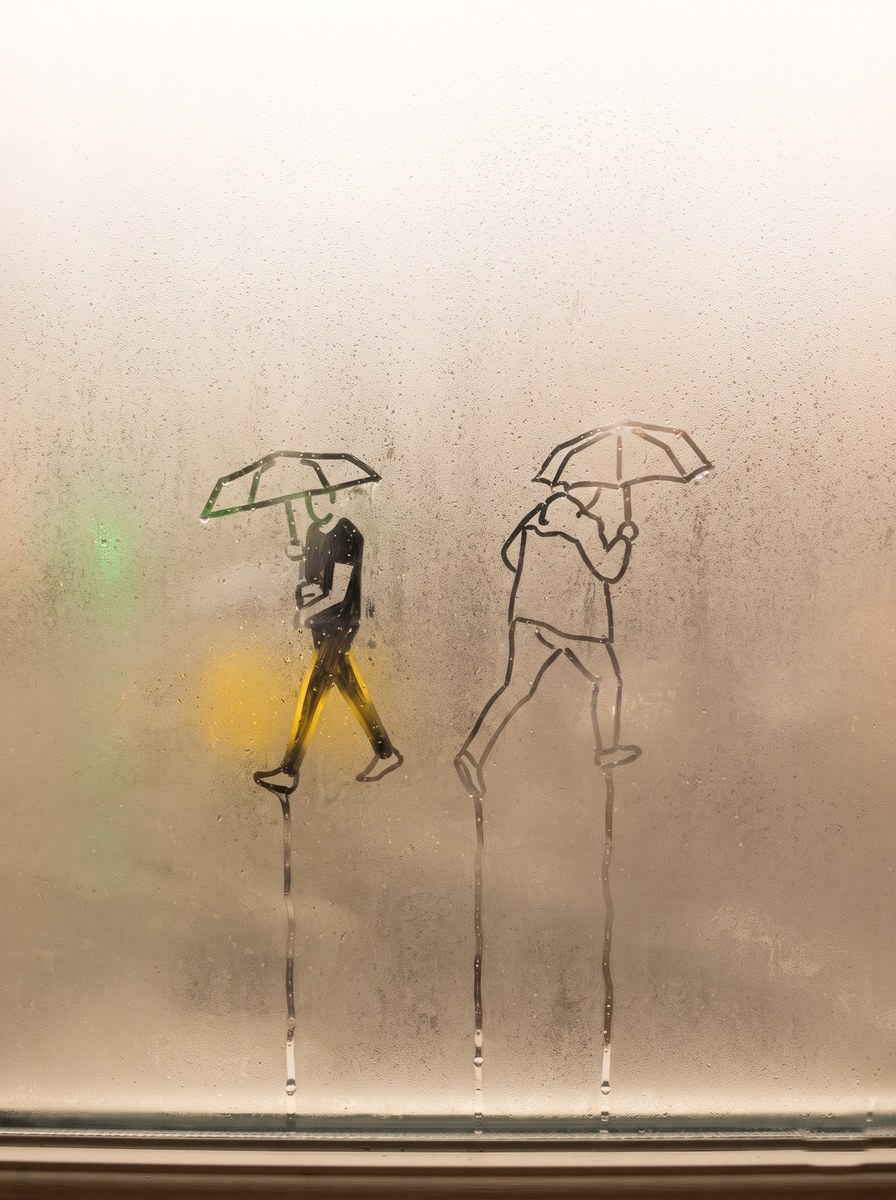
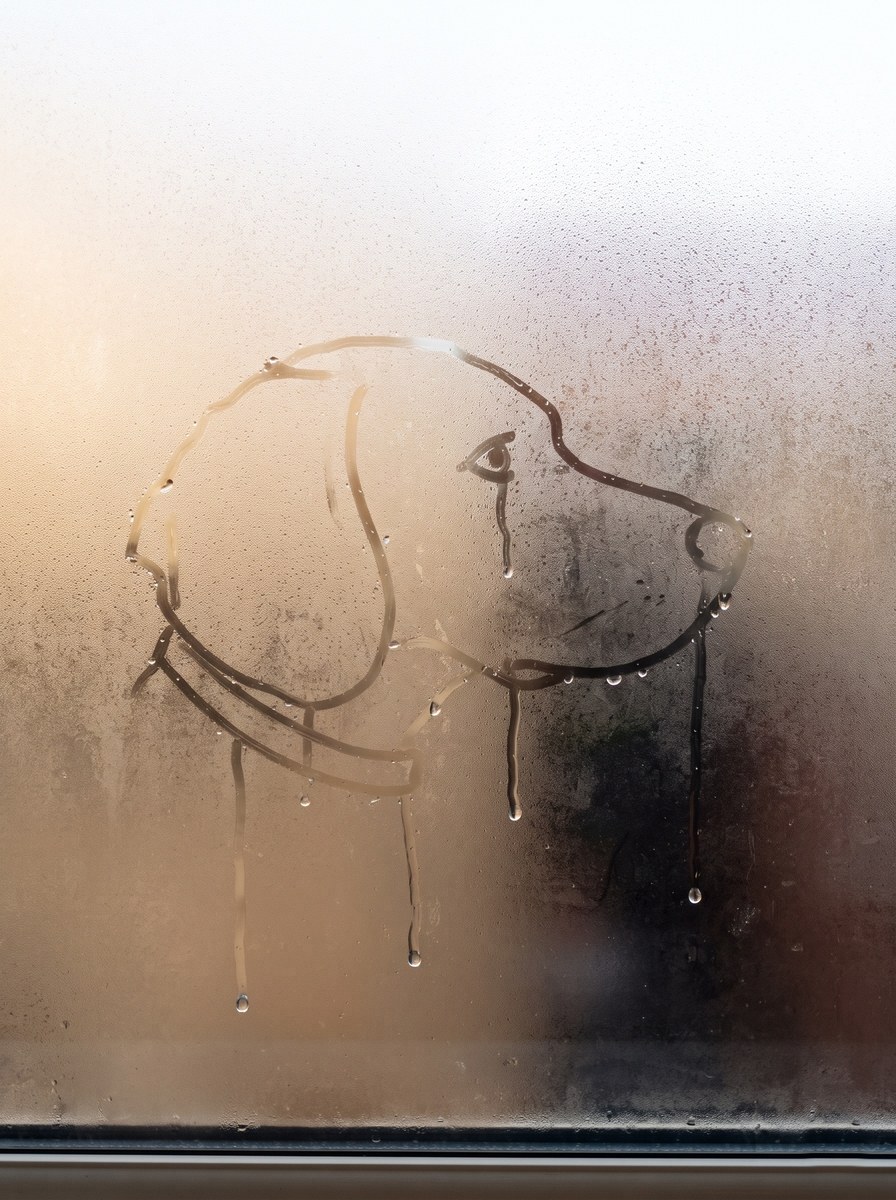
Prompt template
- Format
- Text
- Inputs
- Reference_photo (image) · Required
- Outputs
- Window_photo (image)
Turn the attached photo into a drawing someone made with a fingertip on a fogged window, and photograph that window straight on. Vertical 3:4 frame. Output one single vertical image, no grid and no before and after pair.

THE WINDOW
One pane of glass fills the frame, seen square on from inside a warm room on a cold day. The whole pane is covered in condensation, a fine even mist of tiny droplets that turns the glass pale and opaque. A little of the frame or the sill shows at one edge, nothing else.

HOW THE DRAWING IS MADE
Someone has wiped the subject of the photo onto the misted glass with one fingertip. Only the outline is wiped. There is no shading, no filling in, no hatching.
Every stroke is as wide as a fingertip, about a centimetre and a half on the glass, so nothing in the drawing can be finer than that. Detail smaller than one stroke is left out rather than drawn.
A wiped stroke is not clean. The middle of it is clear glass, the sides are a smeared halo of half wiped mist, and small beads of water sit along both edges where the finger pushed them. A stroke made in one pass is clear at the start and streaky where the finger ran out of pressure.
Where two strokes cross, the second one drags the water of the first a short way with it and that drag stays visible.
Water runs. Three or four of the strokes have a thin trail of water running straight down from them to the bottom of the pane, each trail with a droplet hanging at its end.
The drawing is the size of a hand and a half and sits a little off centre, the way a person reaches.
Lines are not accurate. One side of the subject is longer than the other, a curve closes slightly past where it started, and a stroke stops short of the line it was going to meet.

WHAT YOU SEE THROUGH IT
Through the wiped strokes the outside is visible, badly out of focus: soft wide bands of the colours of the photo and nothing readable. The brightest of those colours is what makes the drawing legible at all.
Where the mist is untouched the outside is only a pale glow coming through.
Light comes from outside, so the glass is brighter than the room and the drawn lines read bright against the pale mist.

WHAT CARRIES OVER FROM THE PHOTO
Keep the subjects of the photo, their number, their pose and the direction they face. Nothing new appears and nothing is taken out.
A marking, a patch of colour or a pattern on the subject cannot be drawn with a fingertip. It is left out, or it becomes one extra short stroke inside the outline.
If a person is in the photo keep the hair length and the stance. Faces are not drawn. An eye is one short stroke or one small wiped dot, and that is all of it.
Anything the subject is holding or standing on in the photo is drawn with the same fingertip strokes and keeps its place.
The background of the photo is not rebuilt. It survives only as the out of focus colour behind the glass.

FAILURE CONDITIONS
A letter, a number, a signature, a logo, a stamp or a watermark anywhere in the frame is a failure. The count has to be zero.
A stroke narrower than a fingertip anywhere in the drawing is a failure. That is a pen, not a finger.
Pencil style shading or hatching anywhere in the drawing is a failure. One or two shapes wiped clear all the way through, so that the colour behind the glass shows as a solid patch, is fine.
A stroke with a clean hard edge on both sides and no smear is a failure.
Fewer than two trails of water running down the pane is a failure.
A recognisable object outside the window, a tree, a car, a building with its windows, is a failure. The outside stays unreadable.
A hand, a finger, an arm or a cloth anywhere in the frame is a failure.
A number of people, animals or vehicles different from the photo is a failure.
A frosted pattern of ice crystals instead of droplet mist is a failure.
A horizontal or square frame is a failure.

IF YOU CANNOT DO ALL OF IT
Keep the fingertip width and the smeared edges first. If the subject is too complicated for an outline, drop the inner strokes and keep the silhouette rather than drawing finer lines.

Output one single vertical image.
What you'll create
A single glass pane is photographed square-on from a warm room, its condensation broken by coarse recognizable outlines. Droplets, wide finger marks and smeared edges replace fine drawn detail.
Usage instructions
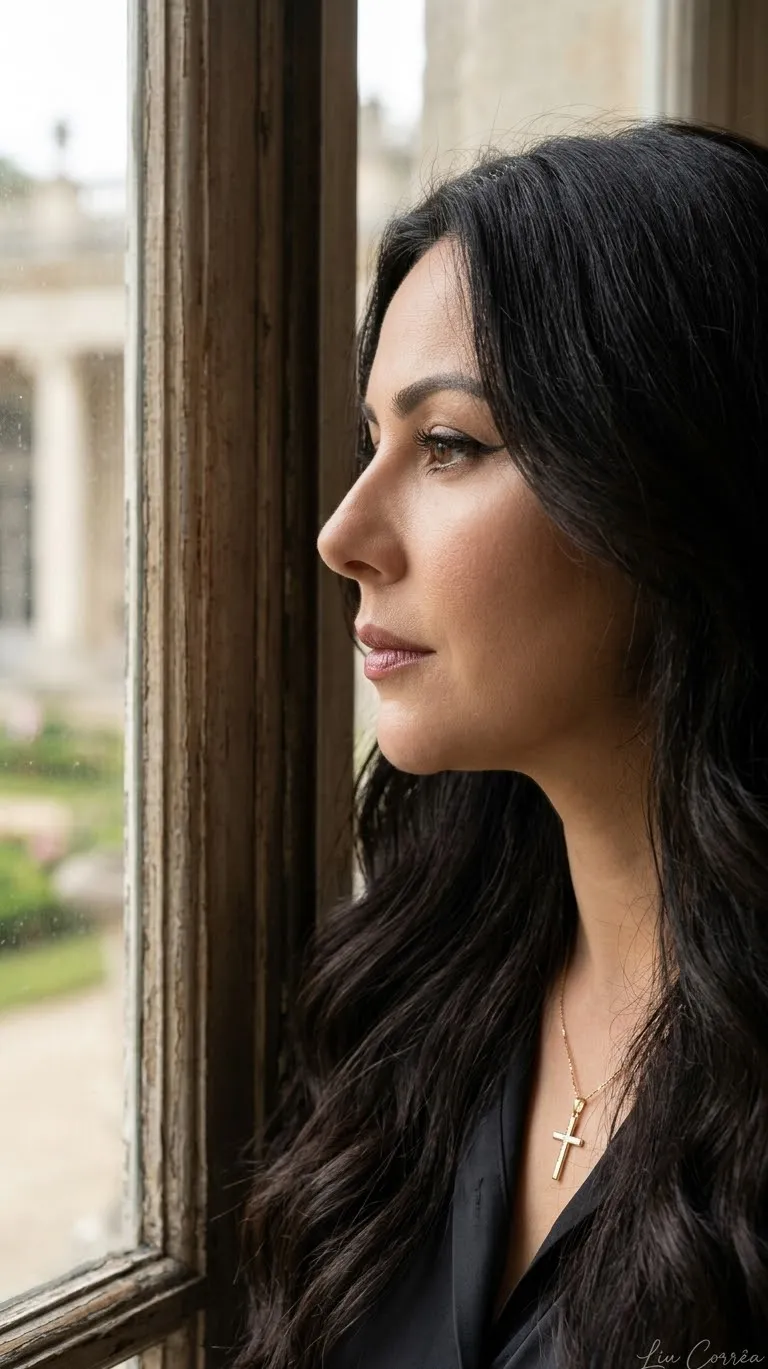
Provide the photo whose subjects should be redrawn; the prompt carries over their number, pose, and direction while reducing them to a coarse fingertip outline. The most useful adjustment is to let complicated subjects lose inner details and retain only their silhouette, as specified in the prompt.
Frequently asked questions
May the outlines become thin pen-like strokes?
No. Fingertip width and smeared edges take priority.
Is a before-and-after pair required?
No. Only the fogged-window image is output.



Comments
Tried this prompt? Share what you made, compare results, or ask a question