Chinese Shadow-Puppet Comic: Let Light Leave the Silhouette
Create a 3:4 split-panel composition with the original photograph above and a Chinese shadow-puppet-style comic rendition of the same moment below.
Example outputs
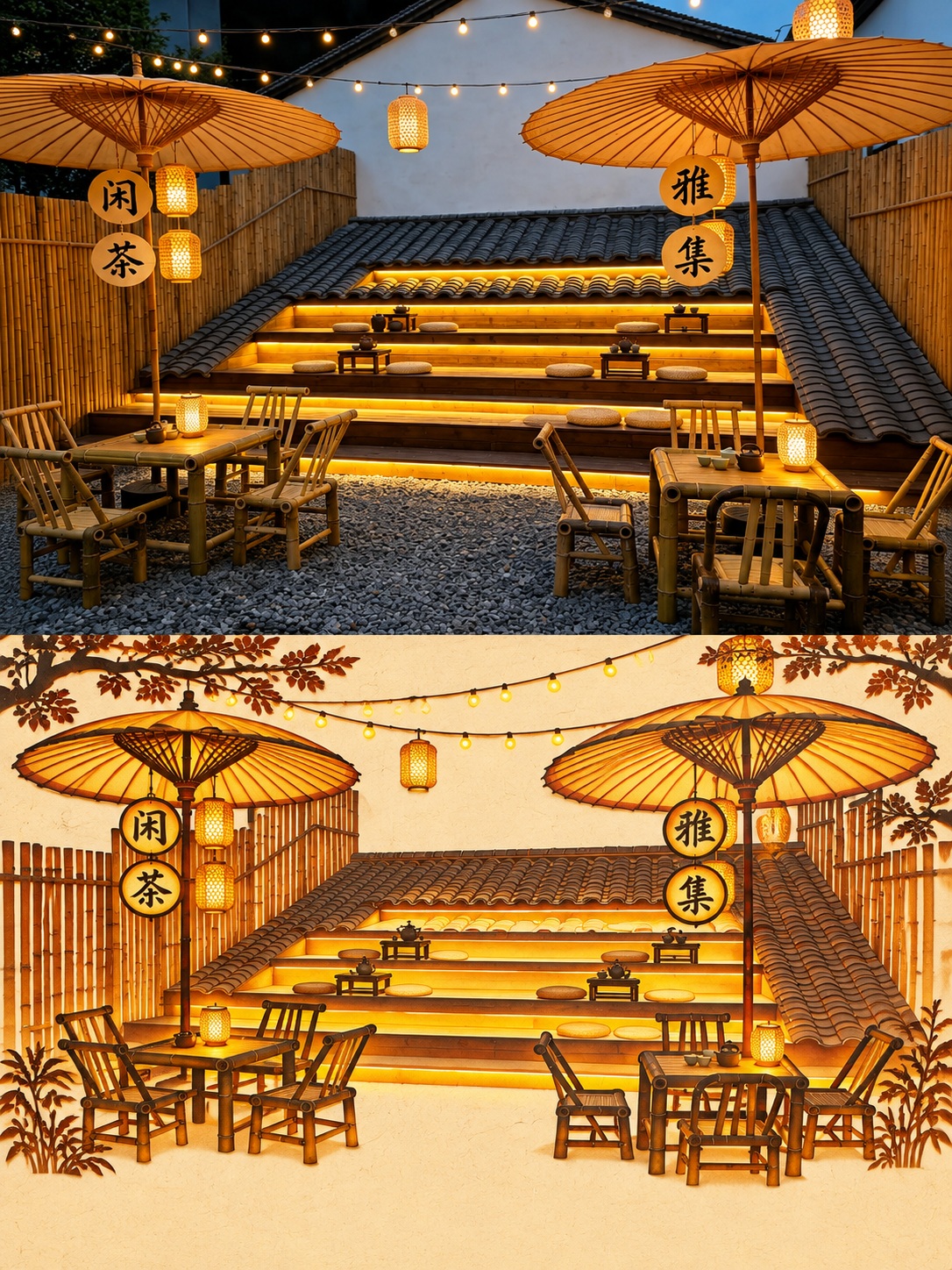
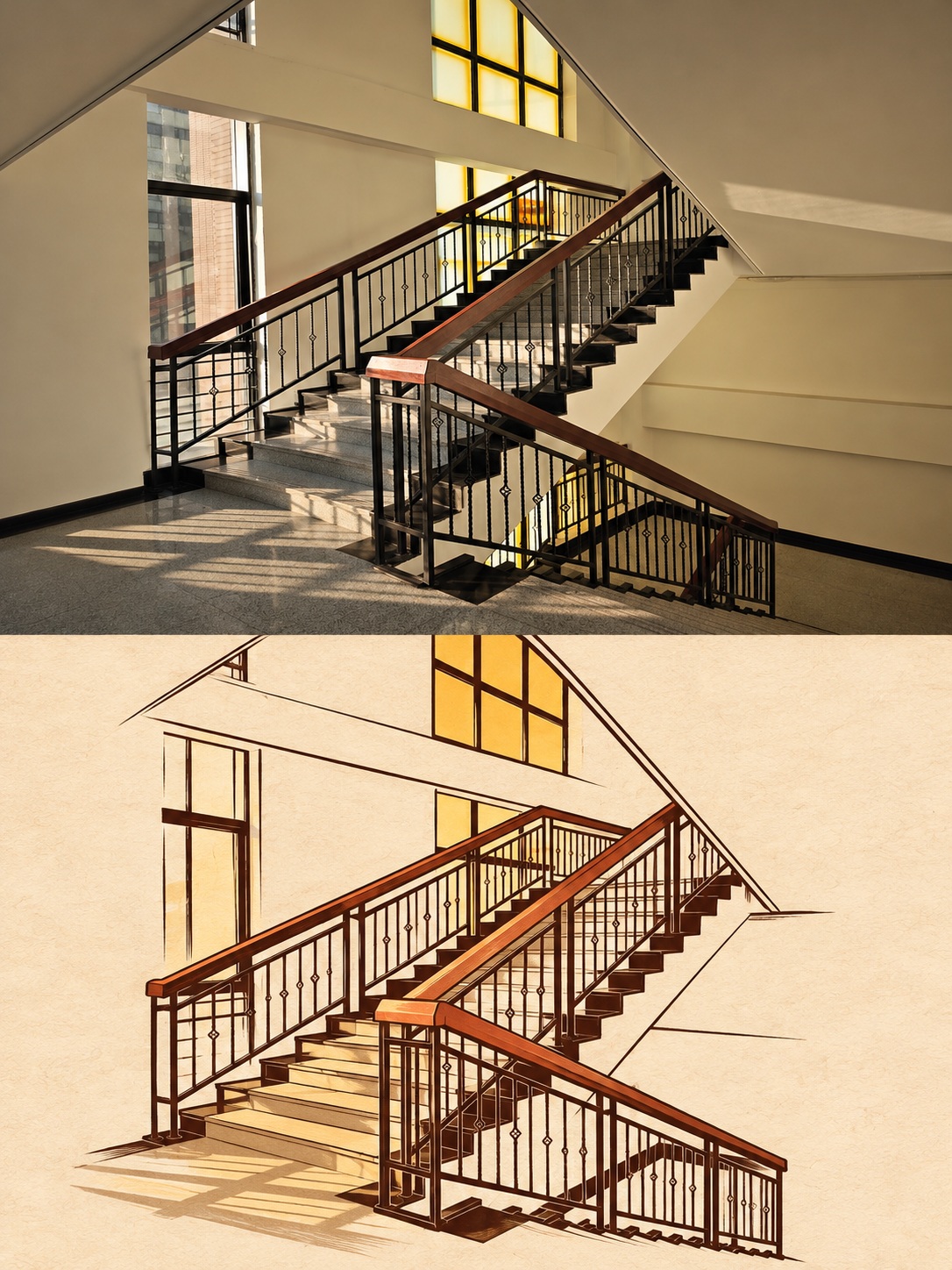
Prompt template
- Format
- Text Parameterized
- Inputs
- reference_photo (image) · Required
- Outputs
- split_panel_artwork (image)
Create one 3:4 portrait-format photographic reinterpretation using only this single uploaded photograph: ${reference-photo}. Output one artwork per photograph; do not combine multiple images.

Divide the canvas into two equal-height, full-width sections, each occupying 50% of the total height. Join them directly at the center with no gap, frame, or dividing line. Do not overlap the sections or let content cross the center line.

In the upper section, use the original photograph. Preserve the subject’s identity, number, pose, expression, spatial relationships, structure, natural light direction, tonal range, and original colors. Do not redraw, retouch faces, recolor, desaturate, mirror, stretch, distort, add, or remove subjects. Allow only necessary proportional scaling and cropping of nonessential outer areas. If cropping would remove important content, use neutral padding; do not paint or extend the photograph.

In the lower section, redraw the same moment from the photograph as a two-dimensional Chinese shadow-puppet-style comic. Find a recognizable segment of the subject’s outline and one environmental clue that explains the lighting or position, such as a window frame, doorway edge, step, or ground shadow. Preserve the original viewpoint, number of subjects, facing direction, action, and foreground-background relationships. Do not change a frontal face into a profile. For people, preserve face shape, hairstyle, clothing, expression, action, and natural head-neck-shoulder proportions. For animals, preserve recognizable species characteristics and pose. For architecture and landscapes, preserve the key outlines and spatial relationships.

Use thick dark-brown lines to summarize the shadow-side edges, with only a few fine lines for facial features, joints, or other recognizable details. Lines may break locally on the lit side. Follow the photograph’s light direction: use dark-brown shadow areas, a single translucent accent color—amber or warm red—and exposed ivory paper for the brightest areas. Concentrate color on genuinely lit areas. Do not render the subject entirely black, or invent backlit edges, halos, or new light sources.

Use lightly textured ivory art paper as the background. Keep the comic at a moderate size, balancing its placement according to the original light direction and gaze. Let the paper show naturally around it; leave approximately one-third of the lower section as whitespace.

The lower section must show only a flat comic illustration: no physical shadow-puppet figures, control rods, stage, or framing. Do not change people or clothing, invent a story, mechanically trace the photo, or apply a filter. Do not use gouache, dense grain, dirt, or aging effects. Add no title, dialogue, logo, watermark, or decorative text.
Replace the ${…} placeholders with your values
before using this prompt. See parameters
and defaults below
Parameters
Replace each placeholder with your own value, or use its default when one is provided
${reference-photo}
reference-photo
Required
What you'll create
The original photograph fills the upper half while a flat comic reinterpretation occupies the lower half. Light and silhouettes connect the panels without a gap, divider or overlapping content.
Usage instructions
Provide one photograph containing the subject and setting to be transformed; the layout and both depictions are derived from that same photo. The prompt preserves the original in the upper panel and interprets its light and silhouettes in the lower panel. Choose amber or warm red for the lower panel’s translucent color to complement the light in the source photo.
Frequently asked questions
Should physical puppets or control rods appear?
No. The lower half is a flat illustration without puppet figures or a stage.
Can the lower panel invent a new story?
No. It retains the source people, clothing and scene relationships.


Comments
Tried this prompt? Share what you made, compare results, or ask a question