Chinese Vermilion-and-Ink Lacquer Comic Split Image
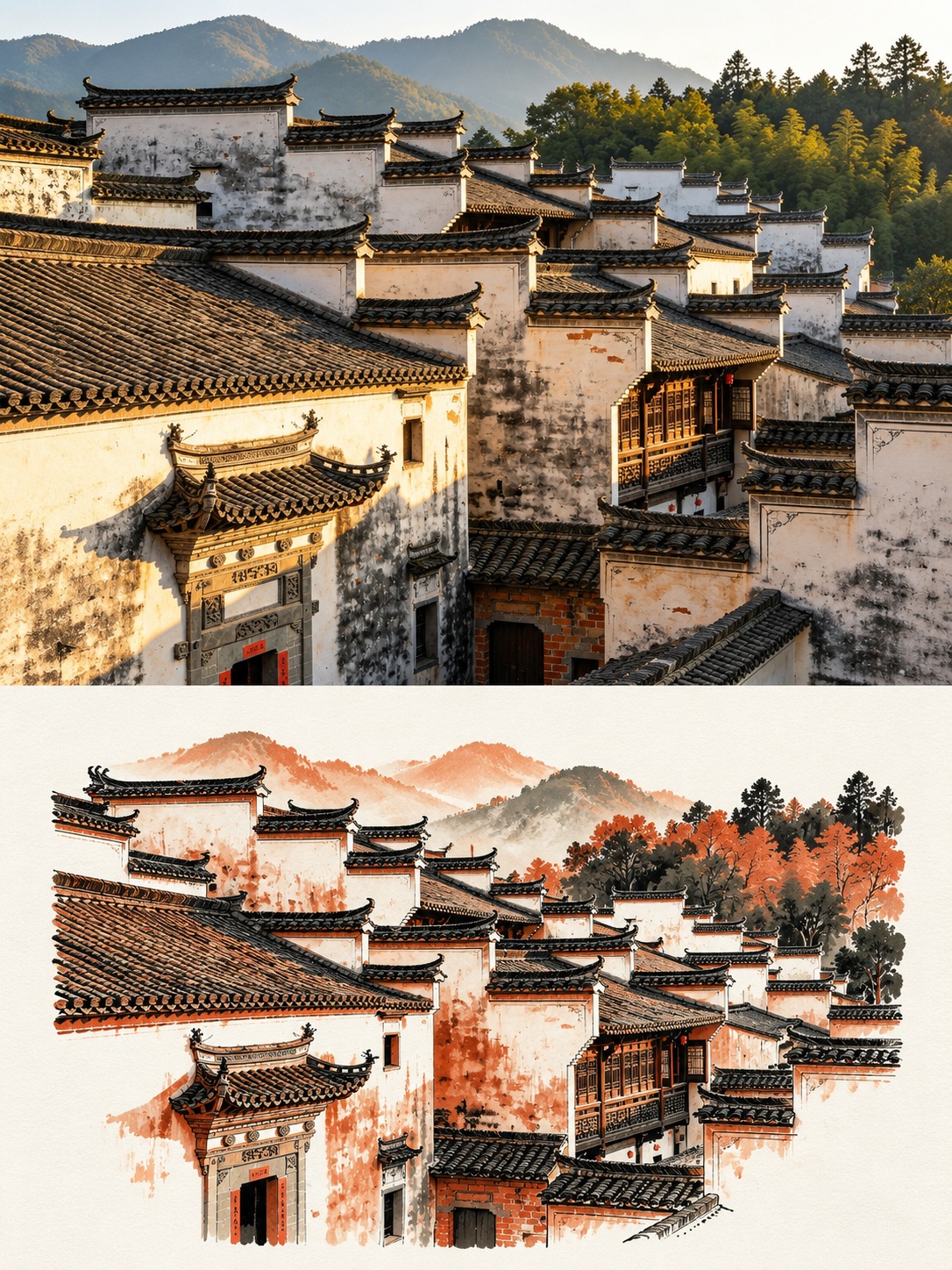
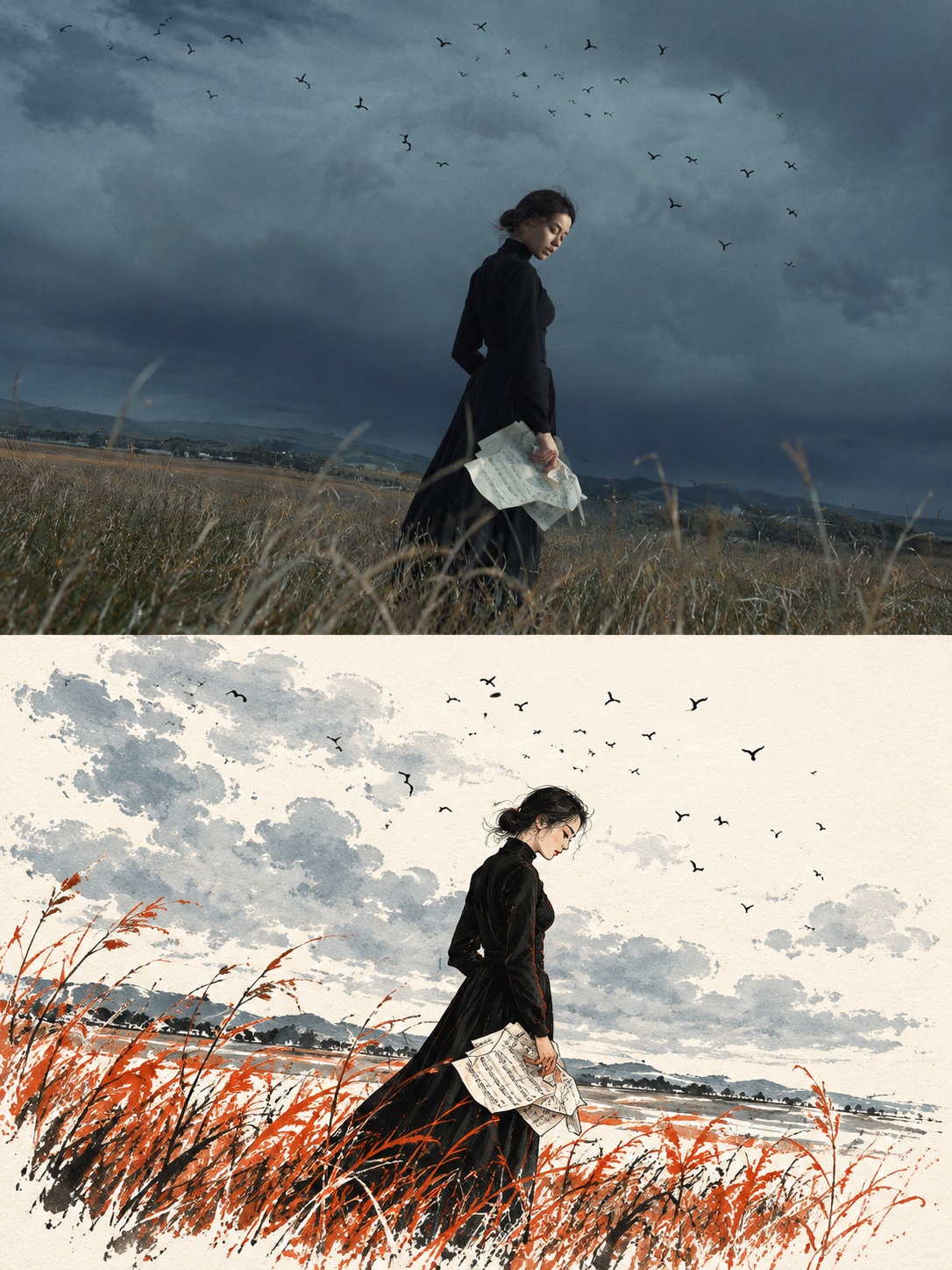
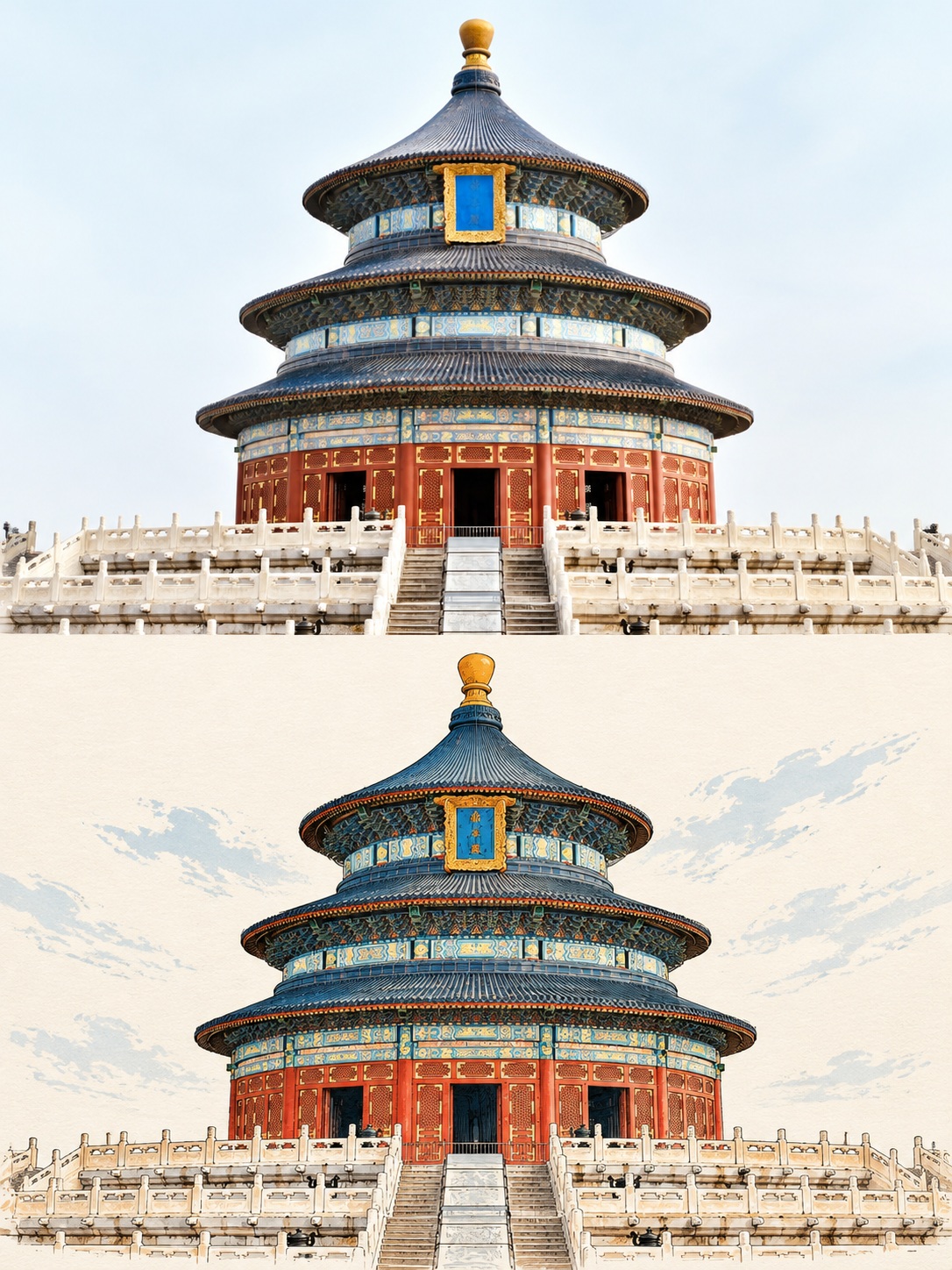
Turn one reference photo into a vertical 3:4 composition that pairs the unchanged original photo with a Chinese lacquer-color comic interpretation of the same scene.
Example outputs
Prompt template
- Format
- Text
- Inputs
- Reference_photo (image) · Required
- Outputs
- Split_photo_and_illustration (image)
Using the single uploaded photo as your only reference, create one vertical 3:4 image pairing the original photo with a Chinese vermilion-and-ink lacquer-color comic illustration of the same scene. Do not combine multiple images or make a collage from different sources.

Layout: Divide the image into two equal-height halves, each spanning the full width. Join them seamlessly, with no border or divider line. Nothing may cross the midpoint.

Upper half: Preserve the original photo faithfully, including its subject, composition, structure, perspective, lighting, and colors. Do not redraw or distort it, or add or remove elements. Only use necessary proportional scaling and cropping of nonessential background areas.

Lower half: Reinterpret the same scene as a refined Chinese vermilion-and-ink lacquer-color comic illustration. Preserve the subject's recognizability, original contours, proportions, pose, and key details. Use flowing dark lines, simplified forms, rich vermilion red, ink black, and a small amount of ochre to organize the image. Base the palette on the reference photo; do not force the entire image to be red. Keep color areas clean and lines crisp, with an Eastern decorative-art sensibility and a modern flat-comic quality. Avoid a plastic appearance, 3D effects, and excessive noise.

Set the lower half on clean, bright, warm-white, finely textured art paper. Let the illustrated subject occupy about two-thirds of the lower half, with the remaining whitespace distributed naturally around it. Keep the subject complete, appropriately sized, and clearly detailed. Retain essential environmental context while simplifying secondary details. Do not add unrelated traditional motifs.

The style should use calm, deep colors to emphasize the subject's defining silhouette, with natural-looking features, carefully rendered faces when present, and decorative rhythms in the color areas. A photo with clear contours and lighting, such as a portrait, dark-colored animal, tree silhouette, roofline, or vividly colored building, is suitable.

Strictly avoid changing the original subject or building structure; adding people or props; using ink-wash or watercolor styles; depicting a three-dimensional lacquer object or craftwork; or adding any title, seal, signature, watermark, or border.
What you'll create
The unchanged photo fills the upper half, while the same composition becomes a Chinese lacquer-color comic below. Equal panels join directly, preserving scene structure without added subjects.
Frequently asked questions
Can elements cross the middle boundary?
No. Nothing may cross the midpoint.
Is the lower image a physical lacquer object?
No. The source explicitly excludes a three-dimensional lacquer craftwork treatment.


Comments
Tried this prompt? Share what you made, compare results, or ask a question