Crystalline Armor Futuristic Fashion Portrait
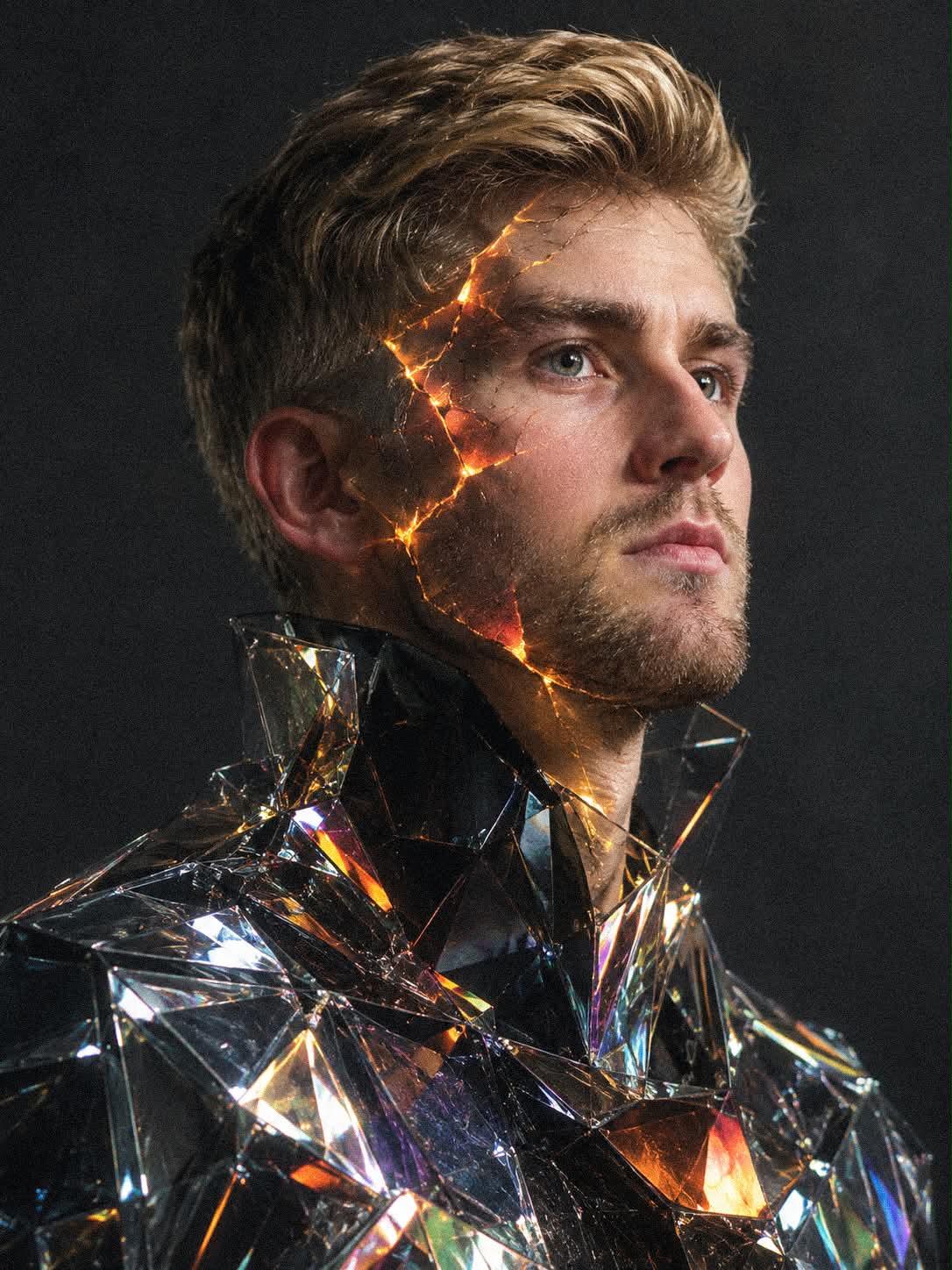
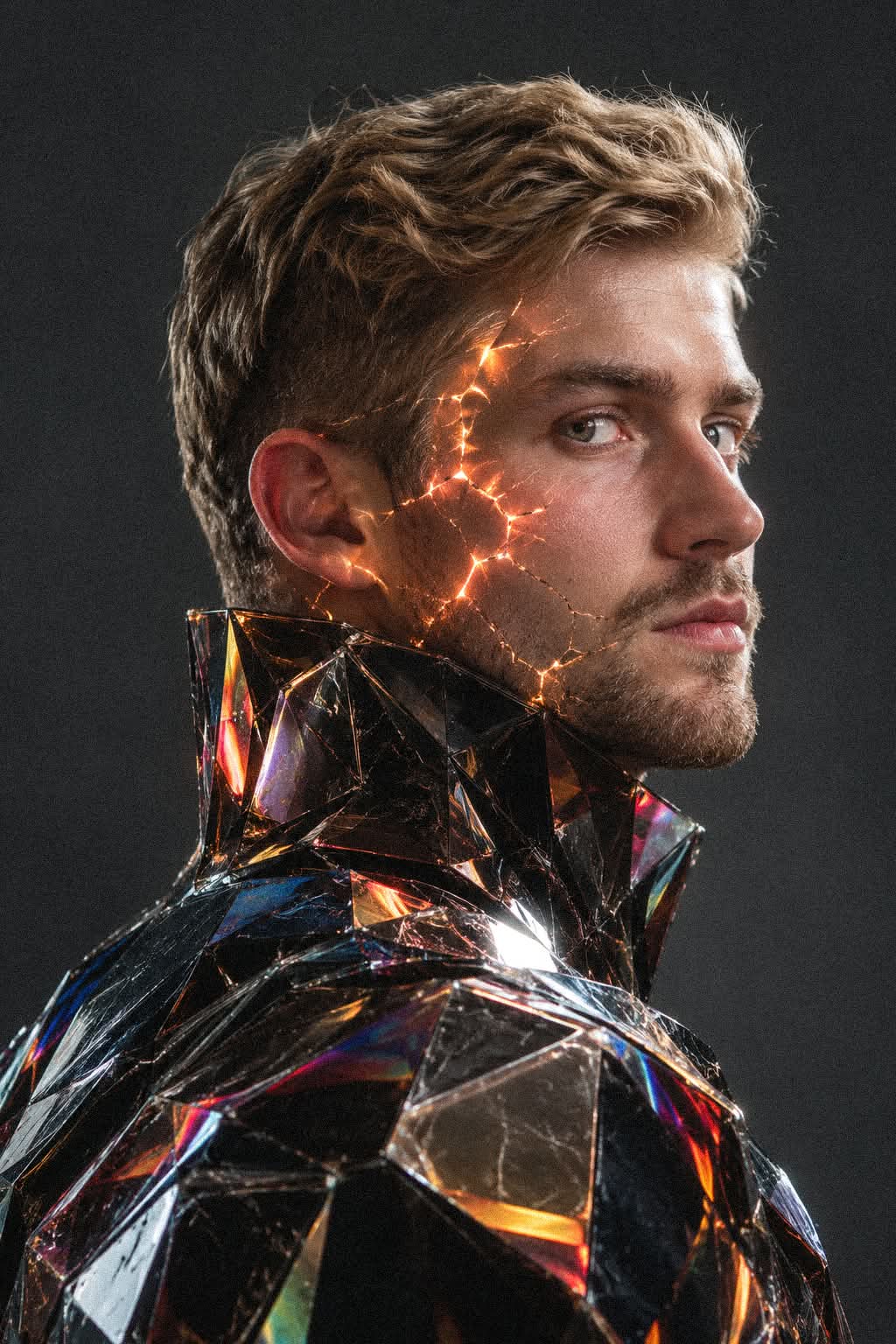
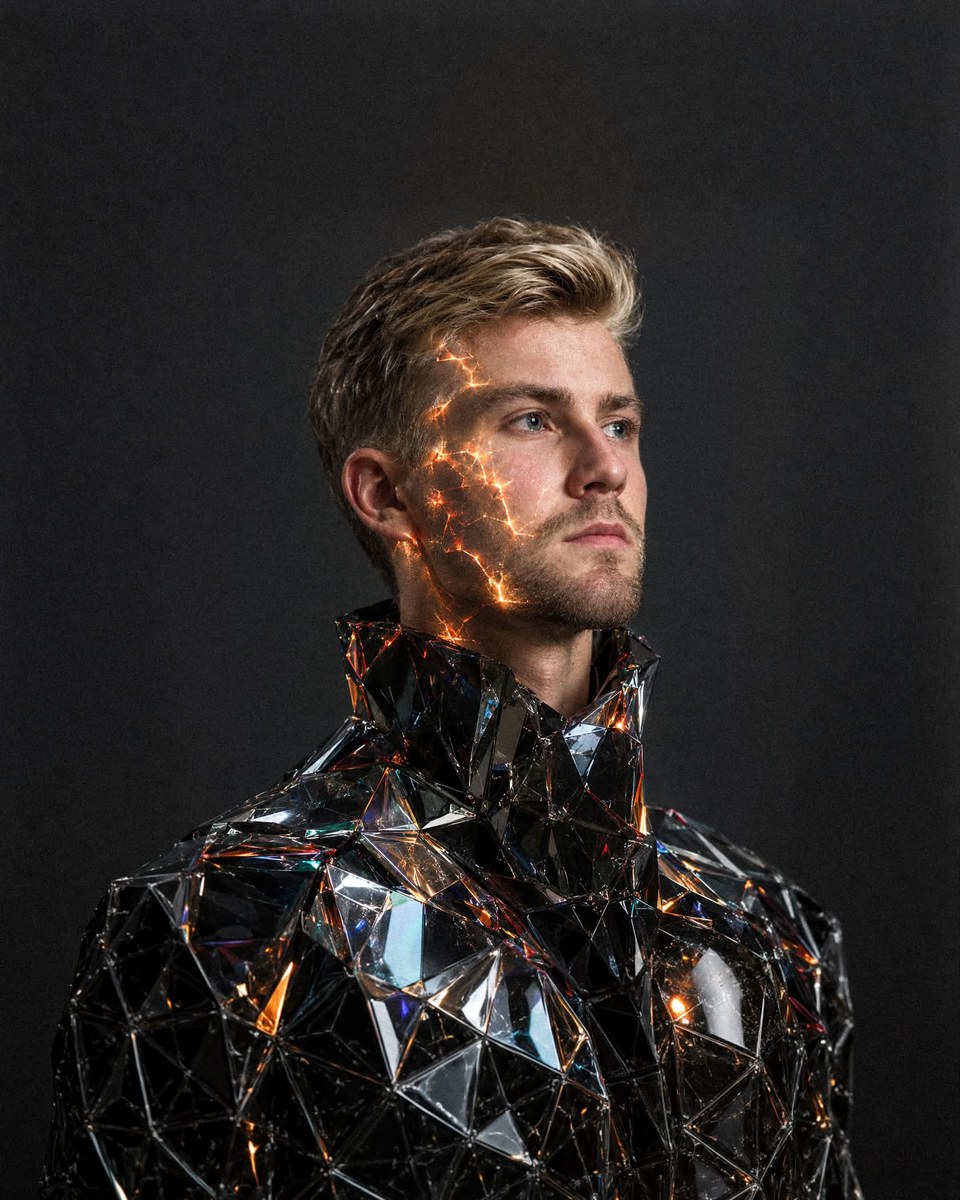
Create a photorealistic luxury fashion editorial portrait of the same person shown in a supplied identity reference, styled in sculptural black-glass armor with subtle amber-lit skin fractures.
Example outputs
Prompt template
- Format
- Markdown
- Inputs
- Identity_reference (image) · Required
- Outputs
- Fashion_portrait (image)
Create an ultra-photorealistic, high-end futuristic fashion portrait of the young adult man in the provided identity reference.

The identity reference must be the only source of his real facial identity. Preserve the exact, recognizable identity of the person while transforming the styling, wardrobe, materials, lighting, and environment into a futuristic avant-garde fashion concept. The final image must clearly look like the same real person photographed in a different futuristic fashion environment.

## Subject and identity
Show the man from approximately the upper torso and chest upward. Preserve his exact real facial anatomy and recognizable identity, including face shape and proportions; forehead structure; natural hairline; eyebrow shape and placement; eye shape, spacing, eyelids, and iris characteristics; nose bridge, width, nostrils, and natural profile; cheekbones; jawline; chin shape; lips and mouth proportions; ears and their natural structure; neck proportions; natural skin tone; realistic pores and skin texture; subtle natural asymmetry; natural age and facial characteristics; and any visible facial hair as appropriate to the reference.

Do not redesign or beautify his face, idealize his facial structure, or turn him into a generic fashion model.

## Pose and camera angle
Use a dramatic three-quarter side-profile portrait, closely matching the reference composition. The subject’s torso faces slightly away from the camera while his head is turned toward the right side of the frame. His chin is subtly raised to create a powerful, sculptural silhouette. Position the camera slightly below eye level for a subtle low-angle perspective.

Let the face dominate the upper half of the composition, with the visible side sharply defined against the darker background. Keep the visual weight elegant and balanced, but do not make the face or pose perfectly symmetrical. Frame from approximately the upper chest to slightly above the head. Use a vertical fashion-editorial composition, approximately 4:5 or 2:3.

## Hair
Give him natural dark brown hair with realistic individual strands, soft volume, and slightly tousled natural movement. Preserve the person’s original hairstyle characteristics where possible, while allowing the futuristic styling to integrate naturally with the wardrobe. Include detailed individual hairs, subtle highlights, and realistic strand separation. Avoid plastic-looking hair.

## Futuristic crystalline armor
Dress the subject in extraordinary avant-garde sculptural crystalline armor extending from the base of the neck across the shoulders, upper chest, and torso. The garment combines fractured black glass, transparent crystal, polished obsidian, faceted metallic surfaces, translucent gemstone-like structures, futuristic architectural armor, and haute-couture sculpture.

Give the garment an extremely high, sculptural collar rising around the neck and partially framing the lower face. Build the armor from numerous irregular geometric facets, each with a distinct angle and surface orientation. Make the surfaces behave physically like real glass, crystal, and highly polished metal. Include transparent, semi-transparent, dark smoked-glass, mirror-like, black-chrome, silver-metallic, and translucent-crystal sections. The geometric edges should be sharp but believable. The armor must look physically constructed and wearable, not like a CGI overlay.

Include extreme micro-detail throughout the garment: microscopic scratches, tiny imperfections, realistic reflections, subtle fingerprints and surface dust, fine glass-like abrasions, realistic refraction, internal reflections, sharp facet boundaries, layered transparent surfaces, and subtle chromatic dispersion. Let the crystal reflect deep black, silver, white, amber, orange, red, purple, cyan, blue, and subtle green from the environment. These colors must appear as naturally reflected light, not painted colors. Make the armor feel exceptionally expensive and experimental, like a museum-quality haute-couture fashion sculpture.

## Luminous cracks in the skin
The key surreal element is a network of thin, glowing crystalline cracks integrated into the subject’s skin. Begin the cracks around the temple and cheek, continuing down the side of the face toward the jaw and chin. They should look like extremely fine fractures beneath the skin, revealing warm luminous energy. Make them thin, irregular, branching, organic, naturally integrated with the facial anatomy, partially embedded beneath the skin, and highly detailed.

Place a subtle warm amber or golden-orange light inside the cracks, with some areas transitioning to yellow, orange, warm red, and subtle white-hot highlights. The light must seem to originate inside the skin rather than from a painted surface, and should illuminate nearby skin very subtly. Create realistic subsurface scattering around the illuminated areas while keeping the surrounding skin completely natural and photorealistic. Avoid a cartoon effect, fantasy makeup, or an obvious digital tattoo. The phenomenon should feel believable and futuristic, as if captured by a professional photographer.

## Facial lighting
Use strong directional cinematic lighting from the upper-right/front-right. Sculpt the forehead, nose, cheekbone, lips, and jaw with light, placing bright highlights on the highest facial planes. Let the opposite side of the head fall gradually into deep shadow. The luminous cracks should create secondary warm reflections on the cheek and jaw. Contrast cool, neutral studio illumination with warm internal amber energy. Maintain realistic skin exposure, avoid overexposed highlights, and preserve pores, fine facial texture, and natural skin imperfections.

## Background
Use a minimalist dark-gray studio background: a smooth, slightly textured, neutral charcoal-gray backdrop with no objects, visible environment, distracting patterns, text, logos, or additional people. Keep it significantly darker than the illuminated face and crystalline armor, with subtle atmospheric depth and very gentle tonal falloff.

## Photographic style and color
The final image must look like a genuine photograph from a luxury futuristic fashion editorial, not CGI. Use ultra-photorealistic professional full-frame photography, high dynamic range, extremely realistic skin rendering, physically accurate reflections and refractions, natural optical behavior, and subtle depth of field. Keep the visible eye, facial contours, and crystalline surfaces in sharp focus while the background falls softly out of focus.

Use a professional portrait lens around 85mm–105mm, moderate compression, realistic perspective, natural lens rendering, subtle cinematic highlight roll-off, very fine photographic grain, and extremely subtle analog-film texture. Avoid artificial oversharpening, plastic skin, excessive HDR, video-game rendering, a 3D-render appearance, illustration, and painterly effects.

Use a sophisticated cinematic palette: charcoal-gray background, natural warm skin tones, black and gunmetal armor, silver reflections, amber-orange internal glow, subtle red highlights, controlled cyan and blue reflections, and occasional purple and green spectral reflections. Keep contrast high but preserve shadow detail, with warm highlights against cooler neutral shadows and premium luxury-editorial color grading.

## Composition and realism
Keep the face at the visual center of attention. Let the crystalline armor create a strong geometric frame around the neck and shoulders, contrasting its sharp geometry with the organic human face. The glowing facial fractures should create a visual path from temple to cheek to jaw to chin. The overall silhouette should feel elegant, mysterious, futuristic, and powerful, communicating human presence, crystal, technology, biological transformation, and haute couture.

Every element must obey realistic photographic physics. Crystal and glass must have believable reflections, refractions, transparency, caustics, highlights, chromatic dispersion, and surface imperfections. Skin must retain realistic pores, fine lines, tiny imperfections, natural texture, subtle color variation, and realistic subsurface scattering. The glowing cracks must interact naturally with the surrounding skin and armor. Nothing should look artificially pasted onto the photograph.

## Identity preservation — absolute priority
The person’s identity must remain unchanged: the same real person, facial anatomy, and recognizable face. Do not redesign the face; reshape the jaw; alter the nose; enlarge the eyes; change eye spacing, lip proportions, or facial proportions; change ethnicity or age; create artificial facial symmetry; apply beauty-filter skin; smooth away natural pores; replace or face-swap the face; generate a generic male model; or introduce a celebrity resemblance.

Apply the futuristic transformation to styling, wardrobe, materials, lighting, and environment—never to the person’s fundamental identity.

## Negative prompt
Generic male model, different person, altered identity, face swap, redesigned face, distorted facial anatomy, changed nose, changed jawline, changed eyes, changed lips, artificial symmetry, beauty filter, plastic skin, wax skin, excessive retouching, CGI face, 3D render, video game character, illustration, painting, cartoon, anime, fake skin texture, excessive smoothness, low detail, blurry face, deformed face, malformed ears, extra facial features, duplicated features, unrealistic eyes, fake crystal, cheap costume, low-quality armor, flat materials, matte plastic, obvious CGI reflections, random glowing tattoos, painted cracks, excessive neon, oversaturated colors, excessive HDR, overexposure, blown highlights, cluttered background, text, logo, watermark, additional people.
What you'll create
A reference-based man appears from the upper chest upward in an avant-garde future-fashion environment. Realistic crystal-like materials and photographic light transform styling without replacing the underlying person.
Frequently asked questions
Can the face become a generic sci-fi character?
No. It must remain the same recognizable person.
Are neon tattoos part of the look?
Random glowing tattoos and excessive neon are excluded.


Comments
Tried this prompt? Share what you made, compare results, or ask a question