Photorealistic Cinematic Vampire Rage Portrait
Create a psychologically intense, high-fashion vampire portrait that looks like a real photograph while preserving the identity in the reference image.
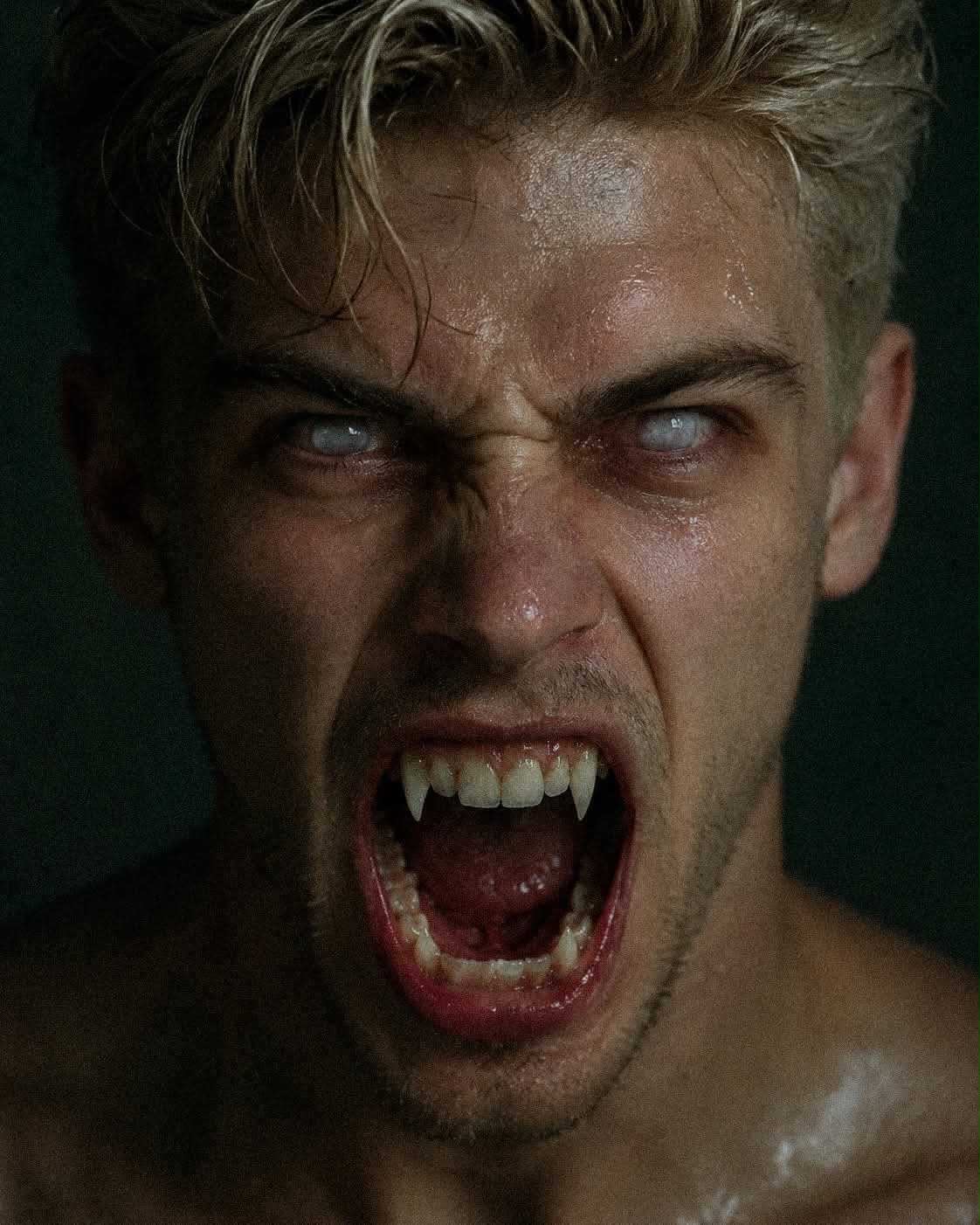
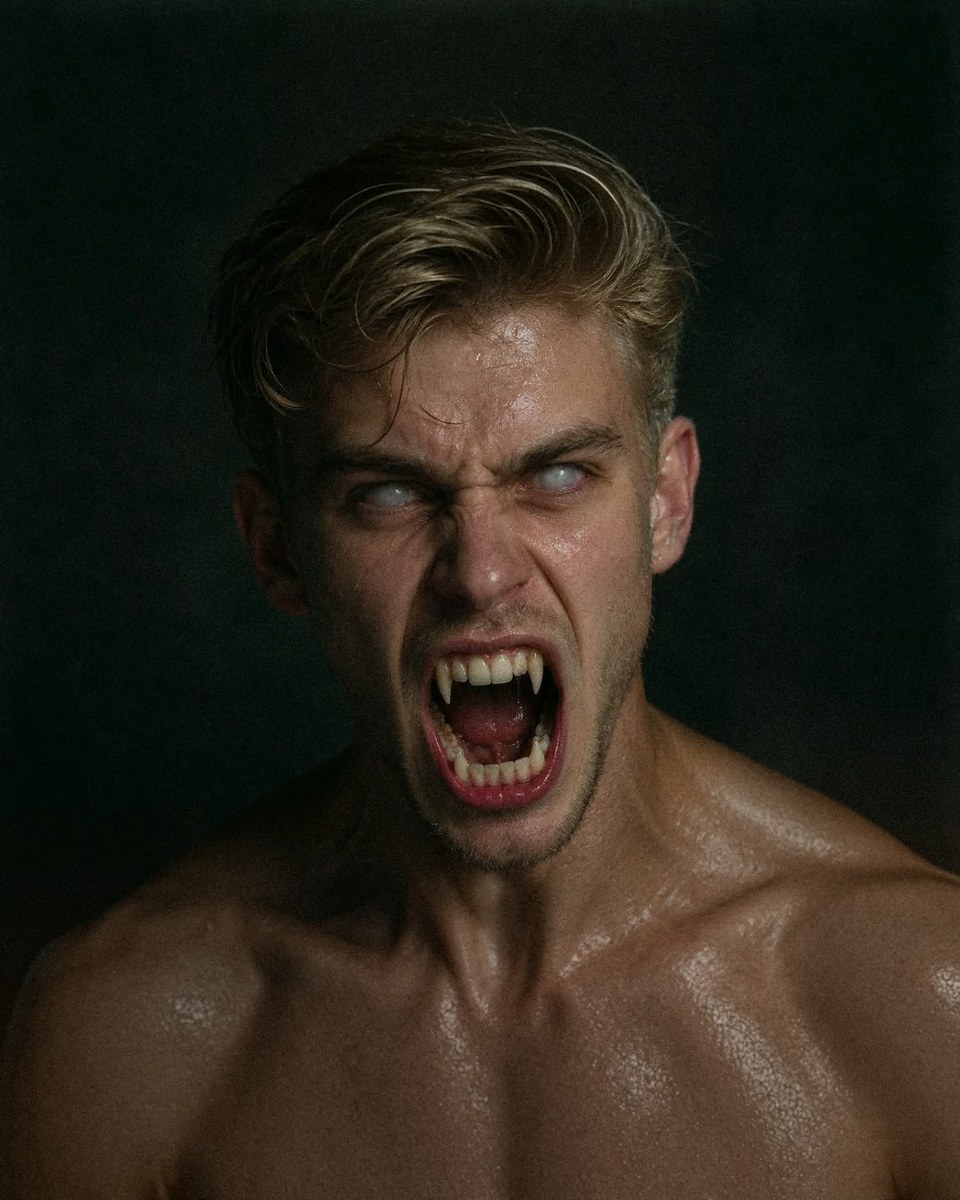
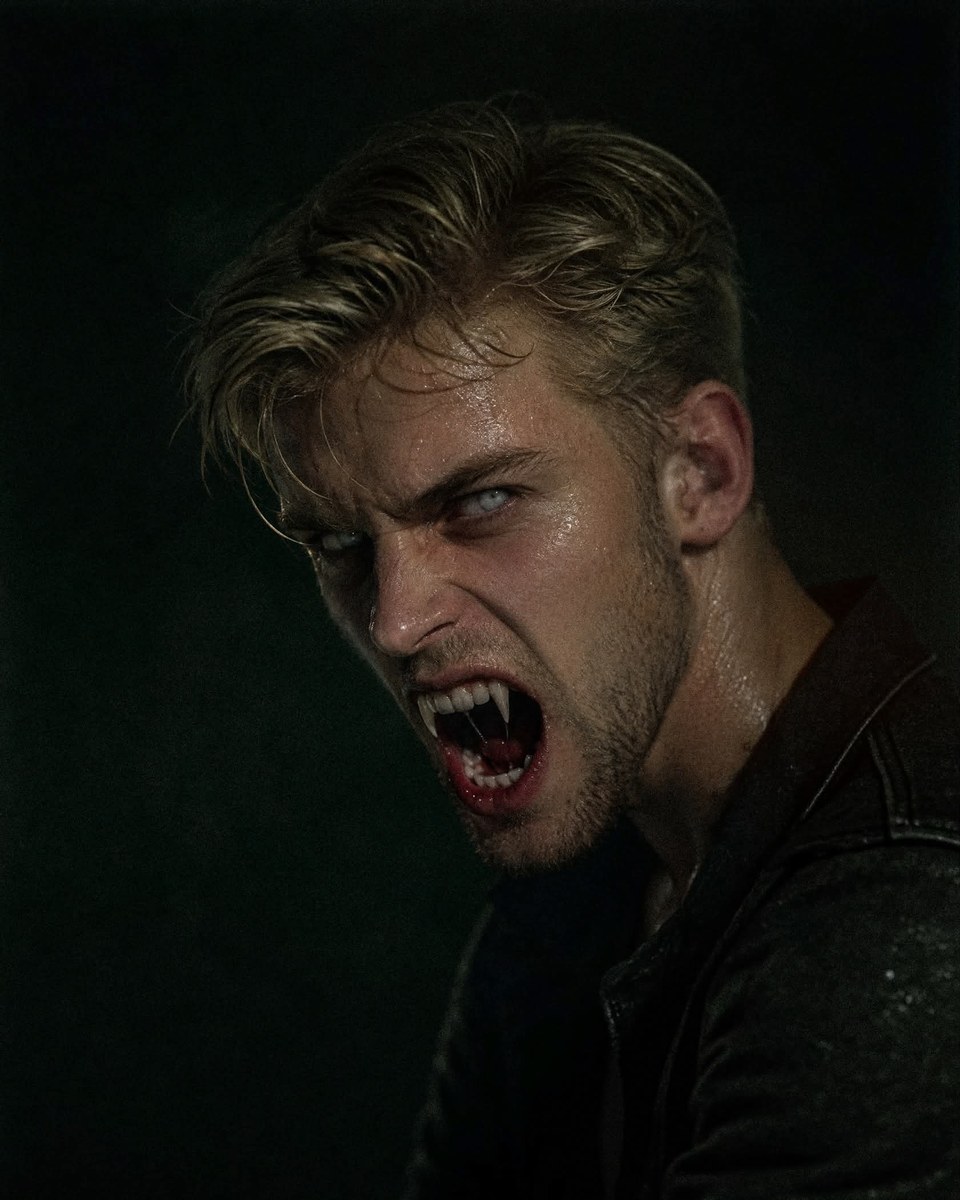
Example outputs
Prompt template
- Format
- Text
- Inputs
- identity_reference (image) · Required
- Outputs
- cinematic_vampire_portrait (image)
Create an ultra-photorealistic cinematic horror-fashion portrait of the young adult man in the uploaded identity reference. Use that reference as the ONLY source for his facial identity. The result must look like a genuine, professionally photographed high-end horror campaign or a frame from an expensive psychological horror film—not CGI, a 3D render, an illustration, a digital painting, a videogame character, or plastic-looking AI skin.

IDENTITY — ABSOLUTE PRIORITY

Keep the subject unmistakably the same real person. Preserve his recognizable facial anatomy and natural asymmetry: face shape and head proportions; forehead and hairline; eyebrows; eye shape, size, spacing, placement, and iris characteristics; nose bridge, width, tip, and nostrils; cheekbones; mouth width and lip proportions; jawline and chin; ears and neck proportions; natural skin tone, pores, imperfections, and facial-hair pattern if present; and authentic age and anatomy.

Do not change his identity, reshape his face, enlarge or reduce his eyes, alter his nose or jaw, beautify or symmetrize his face, make him look like a generic model, introduce a celebrity resemblance, change his age or ethnicity, apply beauty-filter retouching, remove natural pores, or create artificial skin. The supernatural transformation must come from expression, teeth, lighting, atmosphere, and subtle predatory details—not from changing his underlying identity.

EXPRESSION AND EYES

Capture an intense primal scream and predatory snarl. His mouth is extremely wide open. Combine rage, aggression, predatory hunger, pain, and supernatural intensity. Pull the brows downward and inward; show realistic forehead expression lines and visibly engaged facial muscles around the eyes, nose, cheeks, and jaw. His eyes are intensely open and focused directly at the camera. The gaze should feel threatening, animalistic, and confrontational, as if captured at the most intense fraction of a second. Keep the expression anatomically believable and human, never cartoonish or theatrical like Halloween makeup.

Keep the eyes anatomically human and recognizable. Match the iris color to the identity reference unless a subtle supernatural enhancement is necessary. Give the eyes extremely sharp detail, wet corneal highlights, visible tear-film reflections, and slight redness around the inner eyelids. Slightly enlarged pupils are acceptable, but keep the eyes fundamentally realistic. No glowing CGI eyes, laser effects, fantasy-colored irises, or exaggerated supernatural effects.

TEETH, FANGS, AND MOUTH

Open the mouth wide enough to clearly reveal both upper and lower teeth. Add realistic elongated vampire-like canine teeth: the upper canines are noticeably longer and sharper than the surrounding teeth, and the lower canines may be slightly elongated. The fangs must emerge naturally from the gums and follow believable dental anatomy. Give the teeth realistic enamel, subtle imperfections, natural translucency, realistic reflections, detailed gum attachment, slight variations in shape, and physically believable proportions. They should look like biological teeth, not plastic costume props. Avoid absurdly large fangs and a cartoon Dracula appearance.

Render the mouth interior with deep natural darkness, a visible tongue, realistic gums, and moist oral surfaces. Add subtle saliva strands and tiny reflections between some teeth, a wet lower lip, and natural moisture at the mouth corners. A tiny amount of saliva may stretch between teeth during the scream; all fluid behavior must be realistic. No excessive gore, blood splatter, or mutilation. The horror should come from the expression and biological realism.

SKIN AND HAIR

Make the skin slightly sweaty and wet, consistent with the physical effort of the scream. Show individual pores, fine skin texture, subtle perspiration, tiny beads of sweat, realistic forehead shine, natural cheek texture, slight redness around the eyes, realistic skin folds, tiny imperfections, natural facial hair, and fine peach fuzz. Sweat should catch the cinematic light naturally. Do not make the skin plastic-glossy or wax-like; do not retouch or smooth it. The subject should look like a real person sweating under intense studio lighting.

Preserve the hairstyle and hair characteristics in the identity reference. Make the hair slightly messy and damp, with several natural strands falling across the forehead and a few subtly sticking to it from sweat. Show individual hairs with realistic strand-level detail. The hair should look disturbed by movement and the intensity of the scream, without an exaggerated fantasy style, artificial volume, or perfect grooming.

CAMERA AND COMPOSITION

Use an extreme close-up, straight-on portrait. The face should dominate almost the entire frame; crop approximately from the top of the hair to the lower chest or shoulders, with the head occupying about 80–90% of the frame height. Center the face and position the camera directly in front of the subject. Create an almost uncomfortably close perspective that makes the viewer feel physically close and trapped inside his gaze.

Use an approximately 85mm portrait lens or equivalent full-frame perspective while maintaining the extreme physical proximity of the crop. Avoid wide-angle facial distortion, fisheye effects, and exaggerated perspective; keep the nose anatomically natural. Use a vertical 4:5 composition. Center the face, place the eyes slightly above the vertical center and the mouth near the frame center, and use a symmetrical frontal composition while preserving natural facial asymmetry. Keep the shoulders barely visible at the bottom and leave extremely little negative space.

LIGHTING AND BACKGROUND

Use dramatic low-key cinematic lighting in an extremely dark environment. A large, soft, directional key light should primarily illuminate the center-right portion of the face, while the opposite side falls into deep shadow. Create strong chiaroscuro that reveals forehead texture, nose structure, cheekbones, eye sockets, lips, teeth, jawline, sweat, and pores while allowing parts of the face to disappear into darkness. Add only a very subtle cool-green or deep-teal ambient fill in the shadows; keep the primary illumination on the skin warm and natural. Maintain a restrained warm-skin and deep-green-black-shadow relationship. No neon cyberpunk lighting, colored laser beams, or excessive RGB effects.

Use a completely minimal dark studio background: deep black or extremely dark desaturated green, with no visible objects, architecture, furniture, scenery, text, logos, or distractions. The background should almost disappear; a very subtle atmospheric gradient may separate the silhouette from the darkness.

ATMOSPHERE AND COLOR

Make the image dark, claustrophobic, predatory, psychological, elegant, and cinematic. Aim for luxury horror editorial, psychological thriller, vampire mythology, and high-fashion photography—not a cheap horror movie, Halloween, cosplay, or fantasy illustration. The result should feel sophisticated and disturbing because of its realism.

Use a restrained palette of deep black, charcoal, dark desaturated green, warm natural skin, muted red around the lips and gums, ivory teeth, and subtle golden highlights. Use high contrast, deep blacks, controlled highlights, natural skin tones, a slightly desaturated overall image, and subtle cinematic color separation. Avoid excessive HDR, crushed facial detail, and artificial Instagram-style filters.

PHOTOGRAPHIC REALISM

Use the look of a professional full-frame cinema camera with an 85mm portrait lens at approximately f/2.8. Render facial details extremely precisely, with realistic depth of field, sharp focus on the eyes, nose, and mouth, and very subtle falloff toward the shoulders. Preserve natural optical rendering, realistic specular highlights on wet skin, realistic tooth reflections, physically accurate shadows, subtle high-quality film grain, very slight analog halation, natural micro-contrast, and authentic photographic dynamic range. Include tiny imperfections that distinguish a real photograph from CGI.

The supernatural element must feel biologically plausible. The horror should come from the subject’s real face, extreme primal expression, realistic elongated canine teeth, wet skin, intense eye contact, dramatic low-key lighting, and photographic detail. Keep the image terrifyingly realistic, predatory, dark, intense, physically believable, and faithful to authentic human anatomy.

AVOID

Generic male faces; a different identity; a face-swap appearance; beauty retouching; plastic, waxy, or perfect skin; CGI; 3D renders; digital illustration; anime; comic-book style; fantasy artwork; cartoon vampires; Halloween makeup; prosthetic-looking teeth; oversized cartoon fangs; fake glowing or neon eyes; excessive blood or gore; disfigured anatomy; extra, missing, or duplicated teeth; a deformed mouth or malformed tongue; asymmetrical eyes caused by generation errors; a warped nose or distorted jaw; extra facial features; artificial symmetry; excessive sharpening; HDR; overprocessed skin; plastic highlights; AI artifacts; unrealistic saliva; unrealistic lighting; and unrealistic shadows.
What you'll create
An adult man becomes the subject of a cinematic horror-fashion campaign, retaining natural facial structure and asymmetry. Detailed photographic skin and controlled effects keep the supernatural transformation grounded in realism.
Frequently asked questions
Does it use a video-game render style?
No. CGI, illustration and game-character appearances are excluded.
Can facial identity be redesigned?
No. The source prioritizes the exact recognizable reference identity.




Comments
Tried this prompt? Share what you made, compare results, or ask a question