Photo-Derived Abstract Identity Poster
Transform a reference photo into a restrained 3:4 poster combining an artistic photograph with a systematized abstract logo.
Example outputs
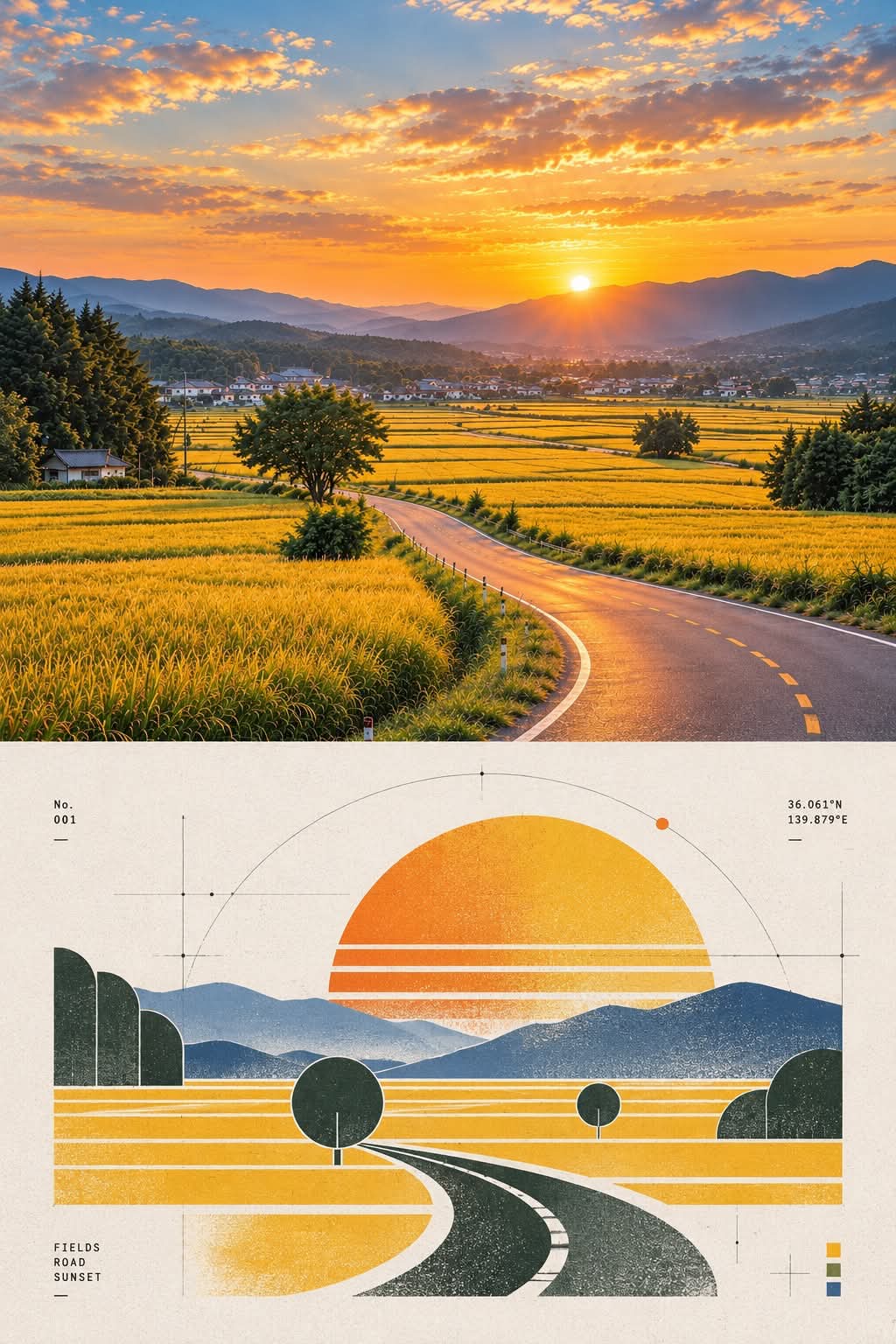
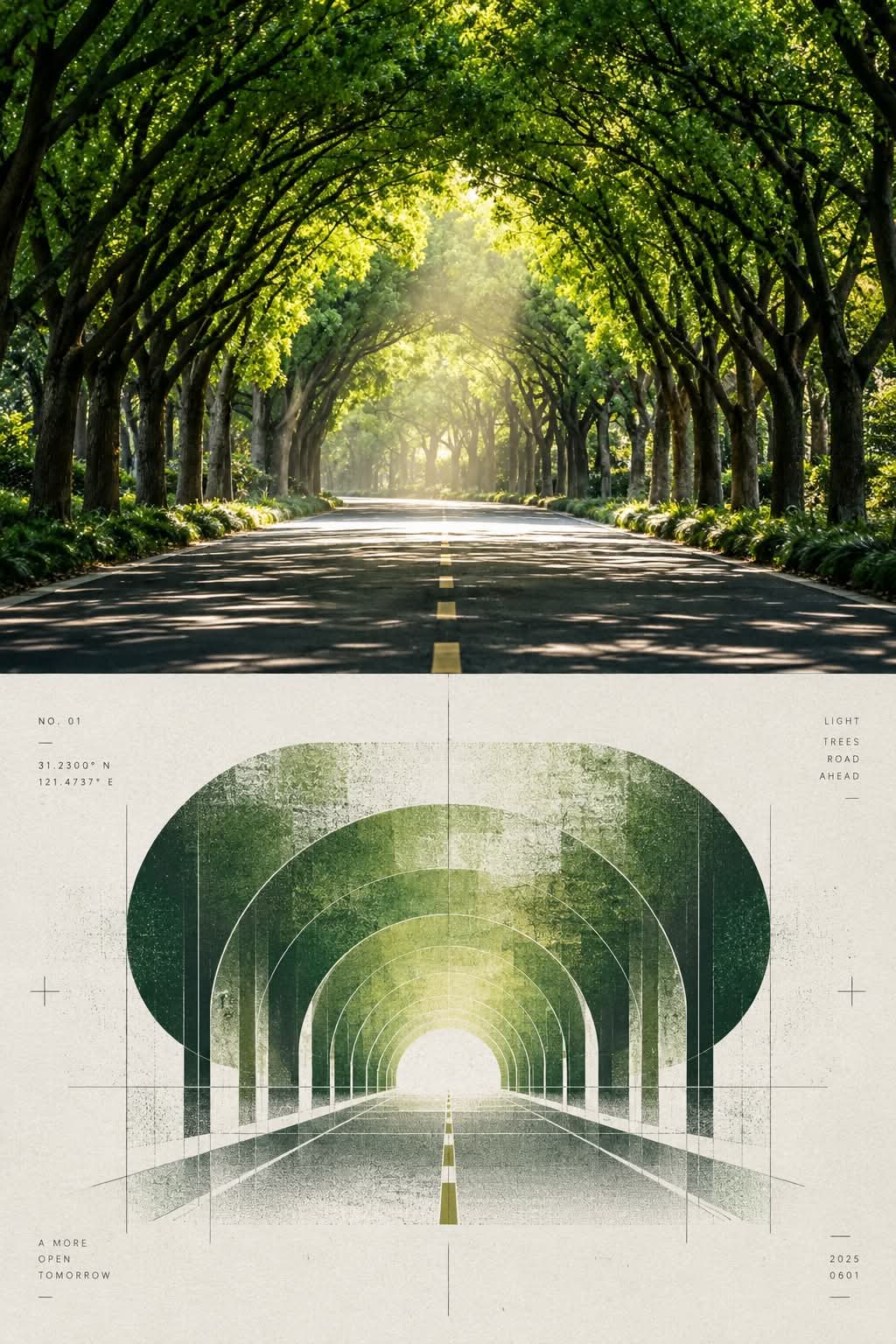
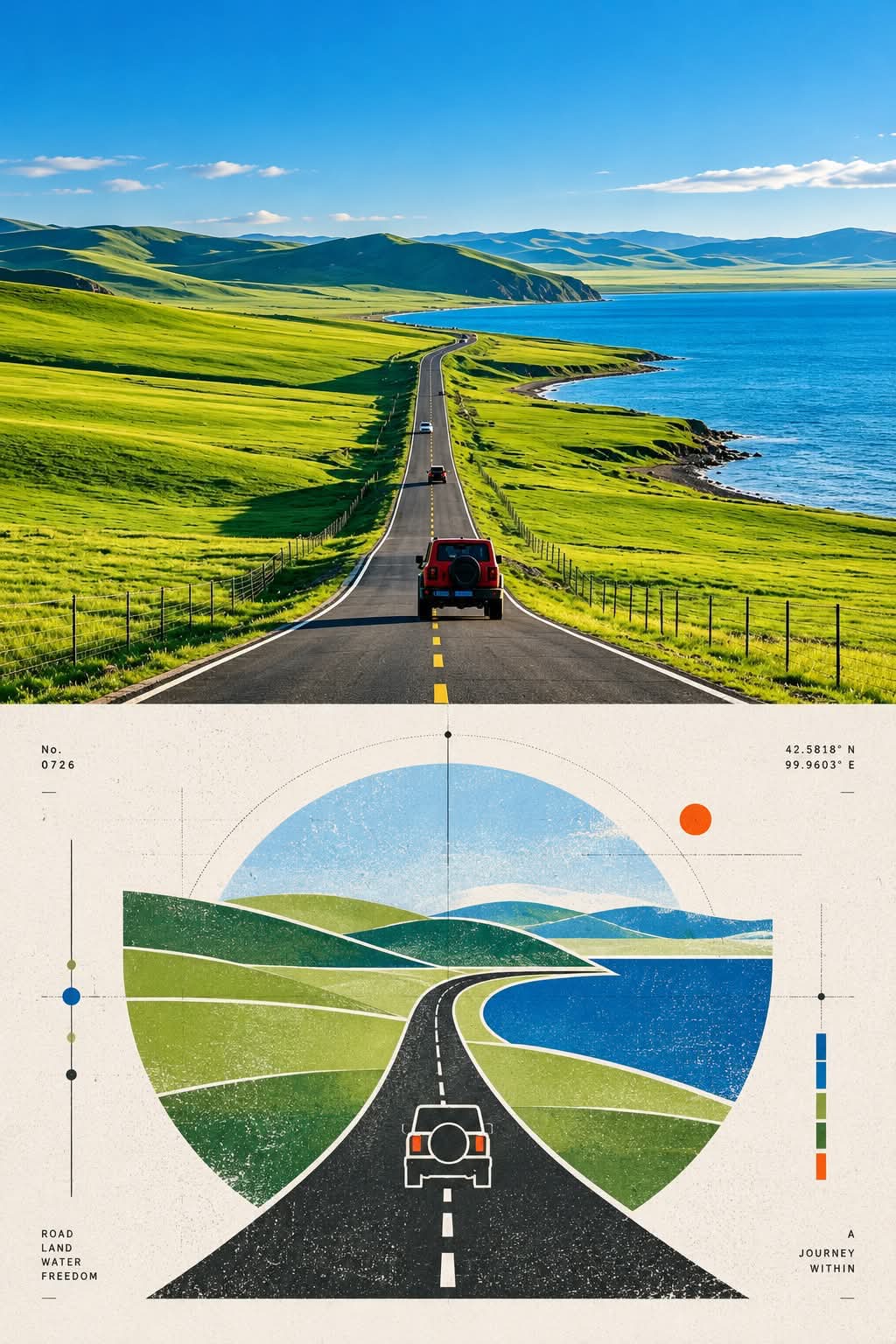
Prompt template
- Format
- Text
- Inputs
- Uploaded_photo (image) · Required
- Outputs
- Split_design_poster (image)
Turn the uploaded photo into a standalone, premium 3:4 vertical design poster. Divide the canvas strictly into two equal horizontal halves: the upper half is 50% of the canvas and uses realistic photography; the lower half is 50% and presents an abstract visual symbol distilled from the essence of the subject.

In the upper half, preserve the original image’s subject structure, realistic texture, natural light and shadow, and original color atmosphere. Apply only subtle, refined color grading to achieve the feel of art photography and an independent publication. Extend the background naturally to fit the canvas if needed. Do not stretch or distort the image, or alter the subject itself.

In the lower half, extract the photo’s core identifying information: the subject’s outline, structure, pose, and narrative relationships. Do not reproduce the complete object literally; compress these qualities into a recognizable abstract visual mark. Use geometric deconstruction, modular forms, line structures, negative space, and symbolic techniques to create a core symbol for a high-end brand identity or experimental design system. Capture the essential character rather than minor details, while ensuring the minimalist graphic remains associated with the original subject.

Visual direction: post-digital graphic design, deconstructed Swiss design, generative symbol system, and diagrammatic abstraction. Build a coherent symbol system from geometric modules, fine lines, arc trajectories, grids, micro-symbols, numbering logic, and abstract nodes. Seek contrasts between order and error, precision and handmade traces, digital and analog, and rationality and emotion. Use as few elements as possible for strong recognition; avoid complexity. Keep the composition highly restrained, with the central symbol as the sole visual focus, centered or slightly offset, and surrounded by generous, airy negative space. Do not pile up icons or turn the design into an infographic. Aim for the core visual identity of an art institution, architecture studio, experimental label, or high-end brand.

Treat text only as a component of the system, never as a main headline. You may include a tiny number, letter, or short phrase that indexes the symbol. Keep the typography precise and restrained, like annotations in an archival or experimental publication.

Derive the color palette from the upper image’s signature tones and reorganize them into a brand color system. Use a small amount of a distinctive color, such as teal-green, blue, magenta, or orange, as functional coding against a gray-white or warm-white background. Use color as a system marker, not decoration. Avoid chaotic palettes, cheap neon, and generic commercial gradients.

Combine xerox texture, risograph grain, print registration error, scanner noise, and subtle paper texture. Add slight misregistration, grain, scanner noise, and imperfect edges to give the digital symbol the material quality of print.

The final result should distill an independent, coherent visual identity from the photo: a concise, restrained abstract logo with cultural resonance and a strong sense of system aesthetics.

Avoid complex posters, complete illustrations, generic template logos, commercial UI, cyberpunk, excessive futuristic styling, chaotic piles of geometry, decorative patterns, and meaningless text.
What you'll create
A faithful source photo occupies the upper half. Below, a concise visual mark extracts its essence through print-like design and system-oriented simplicity.
Frequently asked questions
Is a complete detailed illustration required below?
No. The brief asks for a concise abstract symbol.
Can meaningless geometry fill the design?
No. Arbitrary piles of shapes are excluded.

Comments
Tried this prompt? Share what you made, compare results, or ask a question