Create a Consistent AI Character Identity Spec
Build a precise, locked identity and persona specification for an AI host using three reference images, so the character remains consistent across future generations.
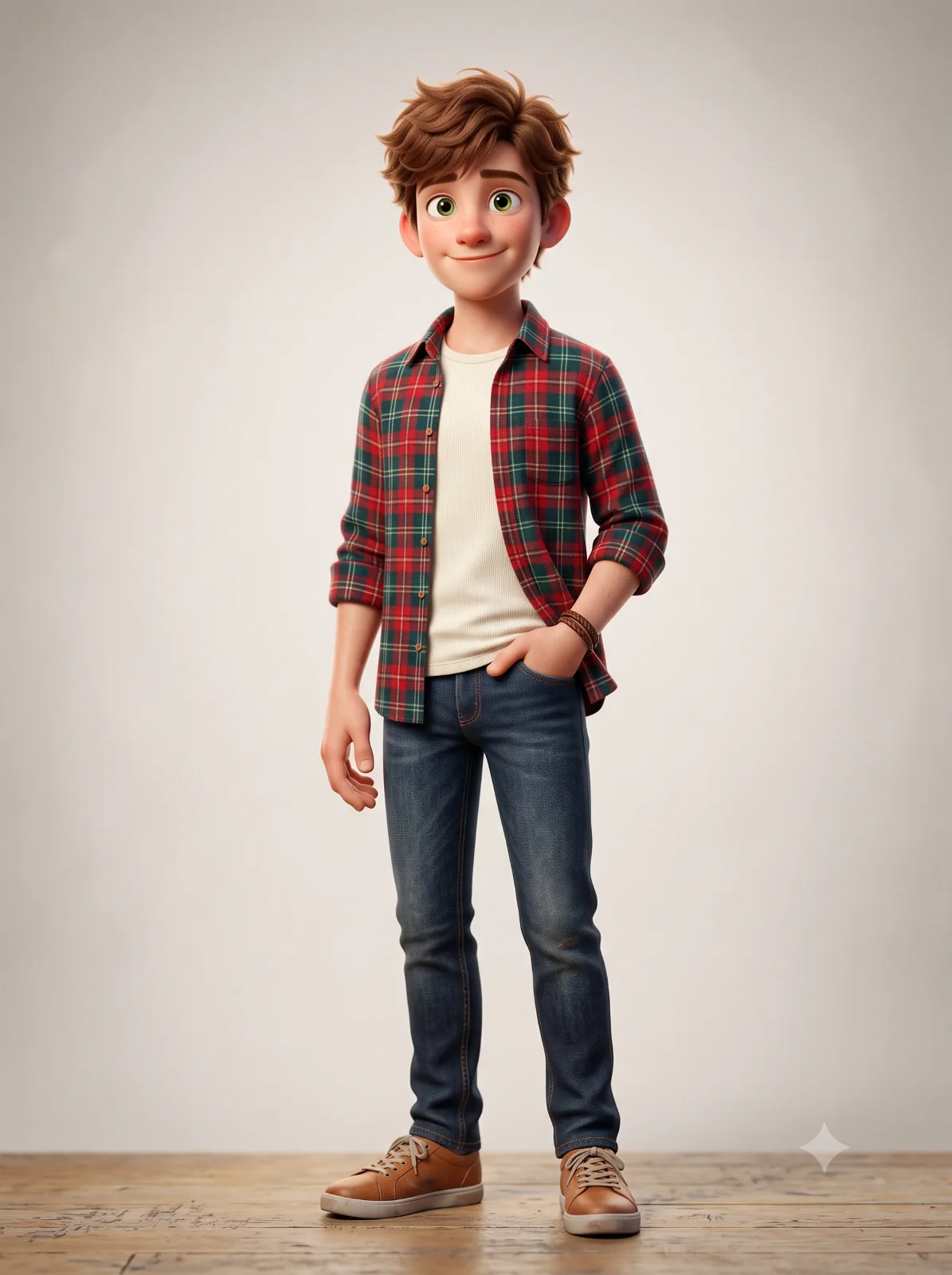
Example outputs
Prompt template
- Format
- Markdown Parameterized
- Inputs
- Reference_images (image) · Required character_role (text) · Optional · Default: AI host
- Outputs
- Character_identity_spec (text)
You're writing an identity spec for an AI-generated ${character-role:AI host} that has to look identical across hundreds of images.

Reference: [Use the three supplied images]

Write this as a locked spec, not a description. Be specific enough that two different people reading this would generate the same face. Use concrete details, measurements, shapes, and constraints rather than vague adjectives.

IDENTITY (CRITICAL — must stay consistent in every future generation)
- Age range, hair colour and texture, and skin tone
- Eye shape and colour, and brow shape
- Bone structure: cheekbones, jaw, and overall face shape
- Nose shape, lip shape, and lip fullness
- One distinguishing feature that anchors the face

PERSONA
Specify what the character believes and the qualities that make people want to keep watching. Make the persona specific and consistent with the character's role.

NEGATIVE PROMPT
Include these constraints: no CGI, no plastic skin, no over-smoothing, no doll finish, no glossy influencer lips, and no harsh studio lighting. Most importantly, no symmetric AI face; preserve natural facial asymmetry.
Replace the ${…} placeholders with your values
before using this prompt. See parameters
and defaults below
Parameters
Replace each placeholder with your own value, or use its default when one is provided
${character-role:AI host}
character-role
Default: AI host
What you'll create
An identity document records face structure, eyes, hair, skin and a distinguishing feature, alongside a consistent persona and negative visual constraints.
Frequently asked questions
Should the specification rely on vague adjectives?
No, the brief asks for concrete shapes, measurements and constraints that different readers can interpret consistently.



Comments
Tried this prompt? Share what you made, compare results, or ask a question