Gothic Stop-Motion Doll Portrait from a Reference Photo
Transform the person or people in a reference photo into recognizable handmade dolls in a gothic stop-motion fairy-tale scene, preserving the original composition and details.
Example outputs
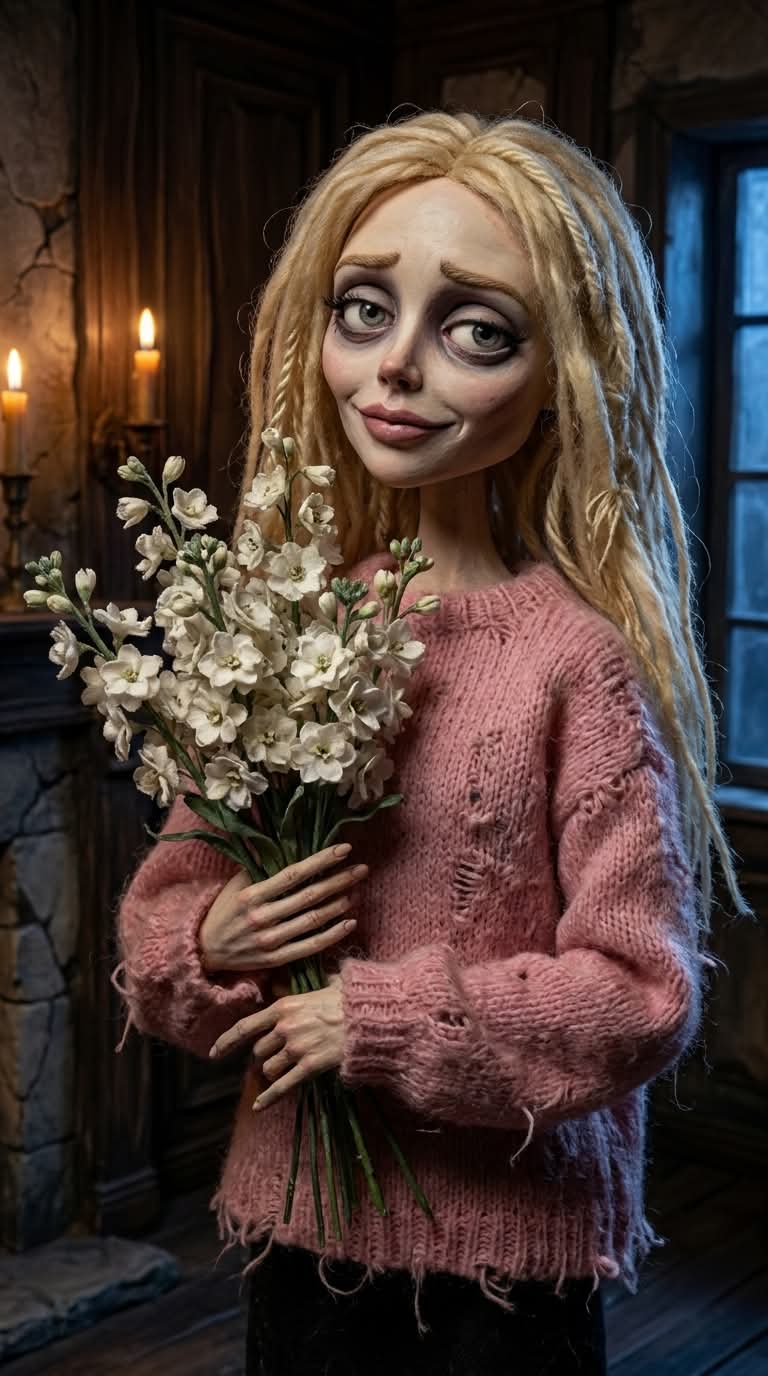
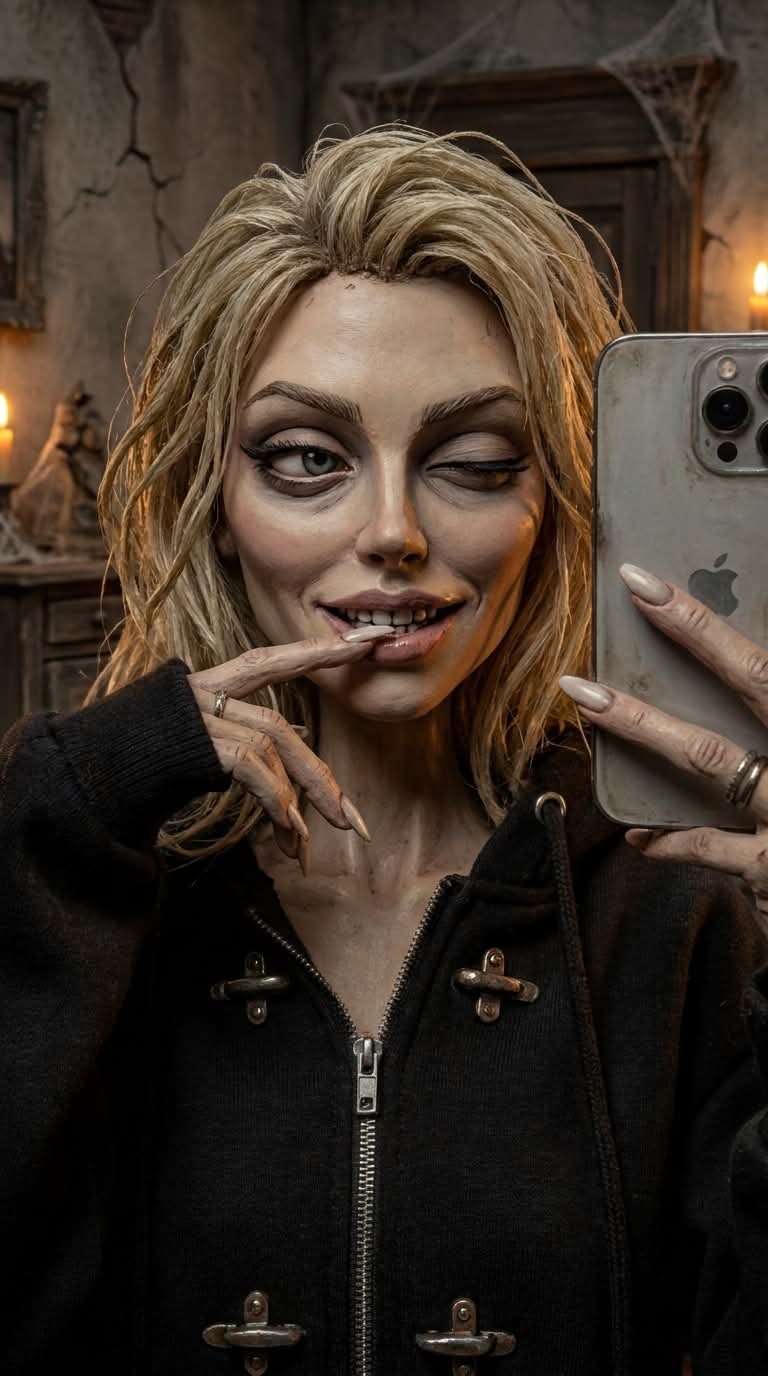
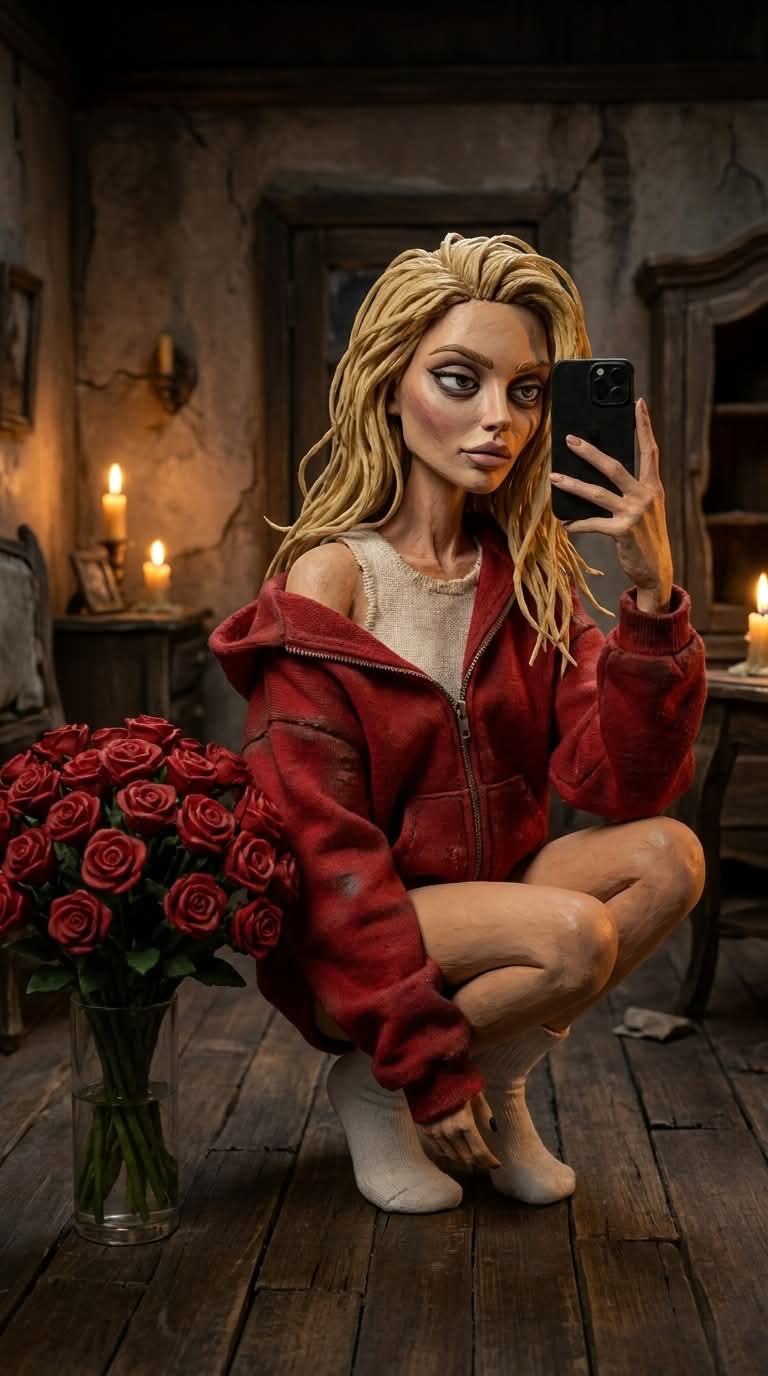
Prompt template
- Format
- Text
- Inputs
- Reference_photo (image) · Required
- Outputs
- Generated_frame (image)
Use the attached photo as a reference. Transform the person in it into a doll from a gothic doll stop-motion animation, while preserving their recognizable features: overall facial features, hairstyle and hair color, eye color, age, build, clothing, pose, facial expression, camera angle, frame composition, and number of people. Style all people in the photo consistently. Preserve the meaning of the background and setting, but rework them as miniature sets in the same style. If there is no background or it is neutral, create a suitable dark fairy-tale set.

Visual style: a frame from a gothic doll stop-motion animation. Everything should look like handmade physical puppets in meticulously crafted miniature sets. Create a dark fairy-tale atmosphere with melancholy, gentle grotesquerie, and a touch of irony.

Doll anatomy (apply subtly so the person remains recognizable): slightly elongated body proportions, narrow shoulders, a long, thin neck and limbs, a slightly oversized head, and long expressive fingers. Sculptural, angular facial features; large eyes with small pupils; heavy, half-lidded eyelids; dark circles around the eyes; and expressive eyebrows. Add slight asymmetry and lively, restrained expressions. Build the hair from separate voluminous, slightly tousled strands while preserving the original hairstyle.

Use tactile materials: matte sculpted faces with delicate irregularities, coarse fabric weave, worn clothing edges, visible seams, aged wood, rough stone, cracked plaster, and tarnished metal. Make every detail feel handmade.

Setting: an old gothic fairy tale, with slightly crooked forms, irregular geometry, expressive silhouettes, and signs of age on objects.

Use a muted palette of charcoal, gray-green, swamp green, earthy brown, faded blue, and ivory, with small accents of burgundy, terracotta, and amber. Adapt the clothing and hair colors to the reference, muting them to fit this palette.

Lighting: cinematic and directional, with deep but readable shadows. Use warm candlelight indoors and cool blue-turquoise light outdoors or at night. Emphasize volumetric forms and soft highlights, with moderate depth of field, a sharply defined main subject, and a slightly blurred background.

Format and composition: match the reference [or: use a vertical 9:16 frame]. Create one self-contained frame.

Do not add text, subtitles, letters, logos, watermarks, or interface elements. Avoid glossy plastic, overly smooth computer-generated textures, extra people, extra fingers, distorted hands, or loss of resemblance to the person in the original photo.
What you'll create
Recognizable people become slightly elongated puppets with sculpted features and expressive fingers. The original scene’s meaning remains while textures and surroundings shift into a dark fairy-tale miniature world.
Frequently asked questions
Does the number of people change?
No. All original people remain and receive consistent styling.
What if the background is empty?
A suitable dark fairy-tale set may be created.




Comments
Tried this prompt? Share what you made, compare results, or ask a question