Second World Photo-to-Collage Poster
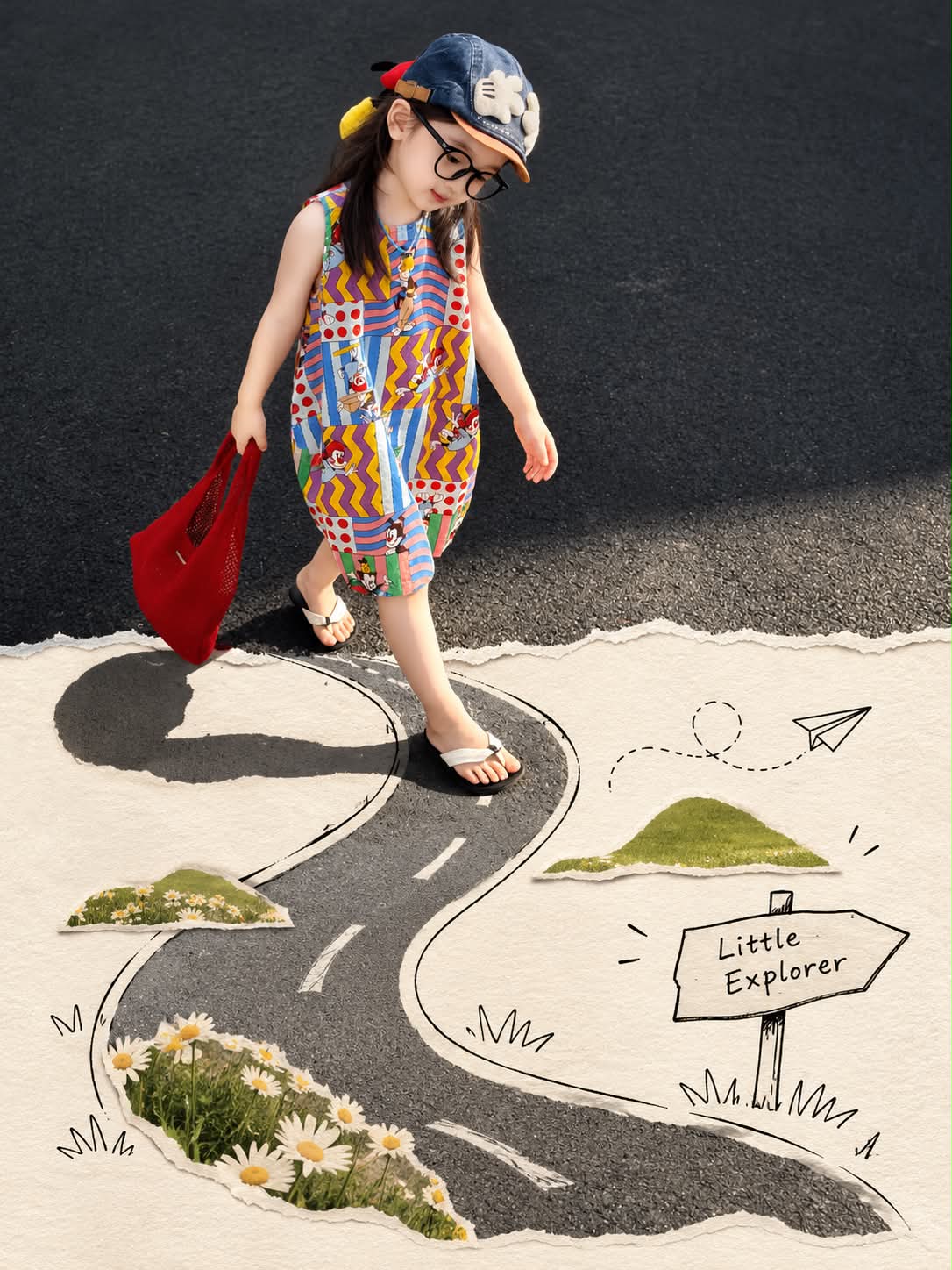
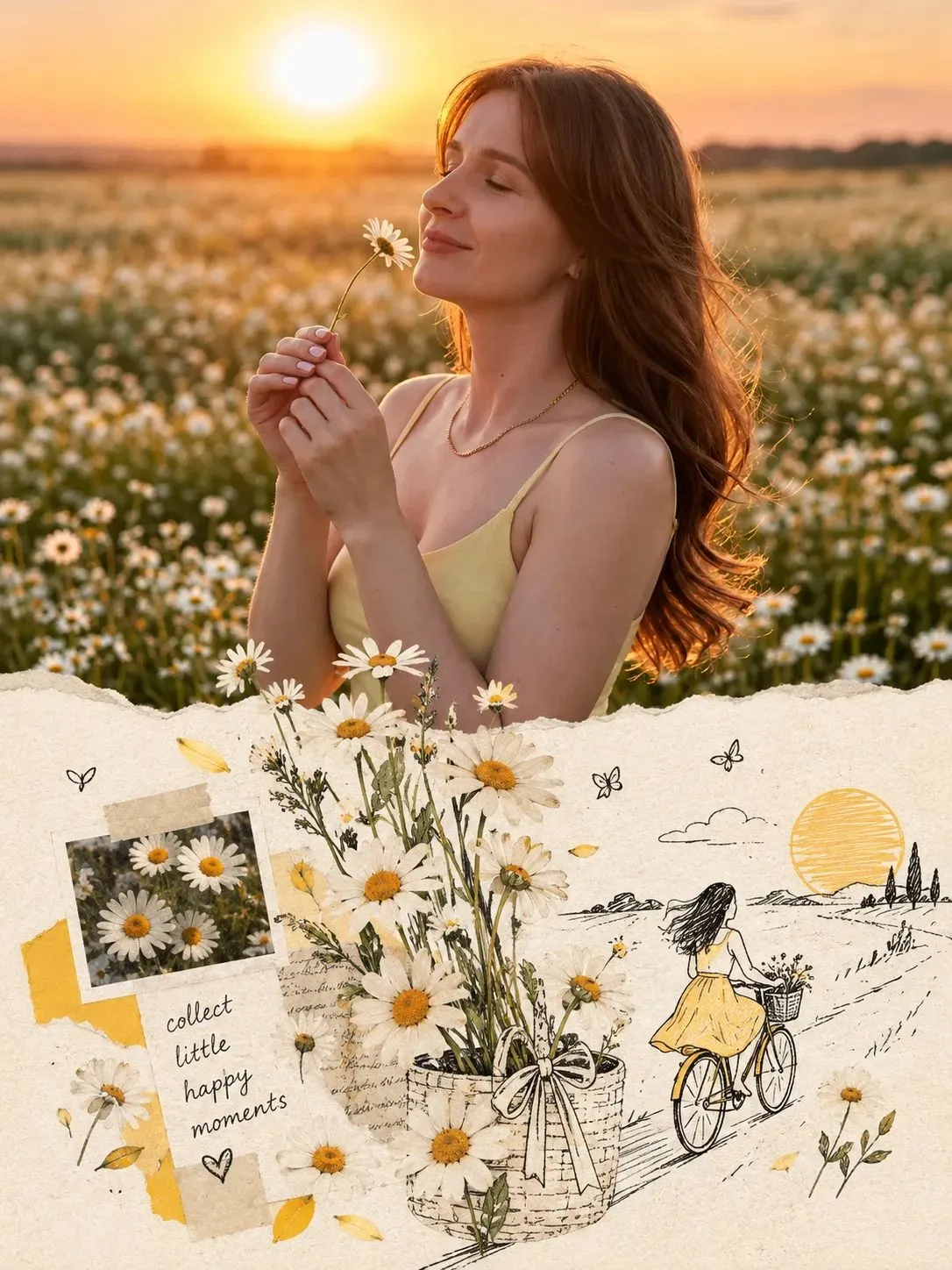
Transform a supplied photo into a vertically split poster where a feature of the real scene continues into an ivory-paper collage world below.
Example outputs
Prompt template
- Format
- Text
- Inputs
- Source_photo (image) · Required
- Outputs
- Second_World_poster (image)
Create a continuous “Second World” poster from the supplied photo.

**Canvas and composition**
Use a 3:4 vertical canvas, strictly split horizontally 50/50. The top half is reality; the bottom half is the extended “Second World.” The two halves must look like one complete scene.

**Top half**
Strictly preserve the original photo’s realism. Keep the subject, pose, spatial relationships, color atmosphere, and natural lighting exactly as they are. Do not redesign, redraw, replace, or rearrange anything. Only necessary proportional cropping is allowed.

**Continuity — highest priority**
Find a structure in the original image that naturally touches the center dividing line, such as a road, coastline, water flow, reflection, tree branch, beam of light, architectural detail, or body movement. This structure must cross the boundary and continue smoothly into the bottom half. The “Second World” starts directly from the photo itself: the same scene penetrates the seam, with only its physical laws changing.

**Transition edge**
An irregular torn-paper edge may be used at the center division, but it must follow the flow of the source structure rather than serve as mere decoration. Elements from the photo may touch, align with, break through, or extend beyond the torn edge. Do not apply the same torn-paper outline mechanically to every image.

**Bottom half**
Use ivory-white paper with a delicate fiber texture and generous white space. Extend downward precisely from where the structure touches the seam, then reinterpret it using restrained photo fragments, cutout shapes, and minimalist black hand-drawn lines. The elements in the bottom world must remain clearly connected to the top; do not isolate them into unrelated portals, windows, stages, bases, or floating illustrations unless they clearly originate from the photo above.

**Second World logic**
Consider how the structure might naturally evolve if it became tangible, usable, enterable, or deformable. Tailor a specific interaction to the image. For example, keep water connected as it is pulled, extend a road into a hand-drawn path, or turn a beam of light into a solid object that can be held. Do not mechanically repeat the same action.

**Character elements**
Add 0 to 3 minimalist tiny black line figures only when absolutely necessary. They must physically interact with the extended structure. If the original photo already contains strong human action, do not add any figures. Never use characters purely as decoration.

**Narrative caption**
Based on the action in the image, add a short handwritten English caption of 2–6 words. Keep it natural, relaxed, and slightly humorous. Spell it accurately. Do not use inspirational quotes or fixed “Same..., different...” sentence structures.
What you'll create
The upper half preserves a photograph while the lower half extends a connected structure into a different visual world. A natural seam transition and a short lightly humorous handwritten caption unify the vertical 50/50 composition.
Usage instructions
Provide the photo to transform; the source image must remain recognizable in the top half. Tailor the lower-world interaction to a feature that naturally reaches the center seam, such as a road, water flow, or beam of light. The prompt fixes the canvas at 3:4 with a 50/50 horizontal split, so adjust the chosen feature and its continuation rather than the layout.
Frequently asked questions
Should the caption use an inspirational quote?
No; the source excludes inspirational quotes and fixed formulaic phrasing.







Comments
Tried this prompt? Share what you made, compare results, or ask a question