Fallen Angel: Sovereign of the Apocalypse
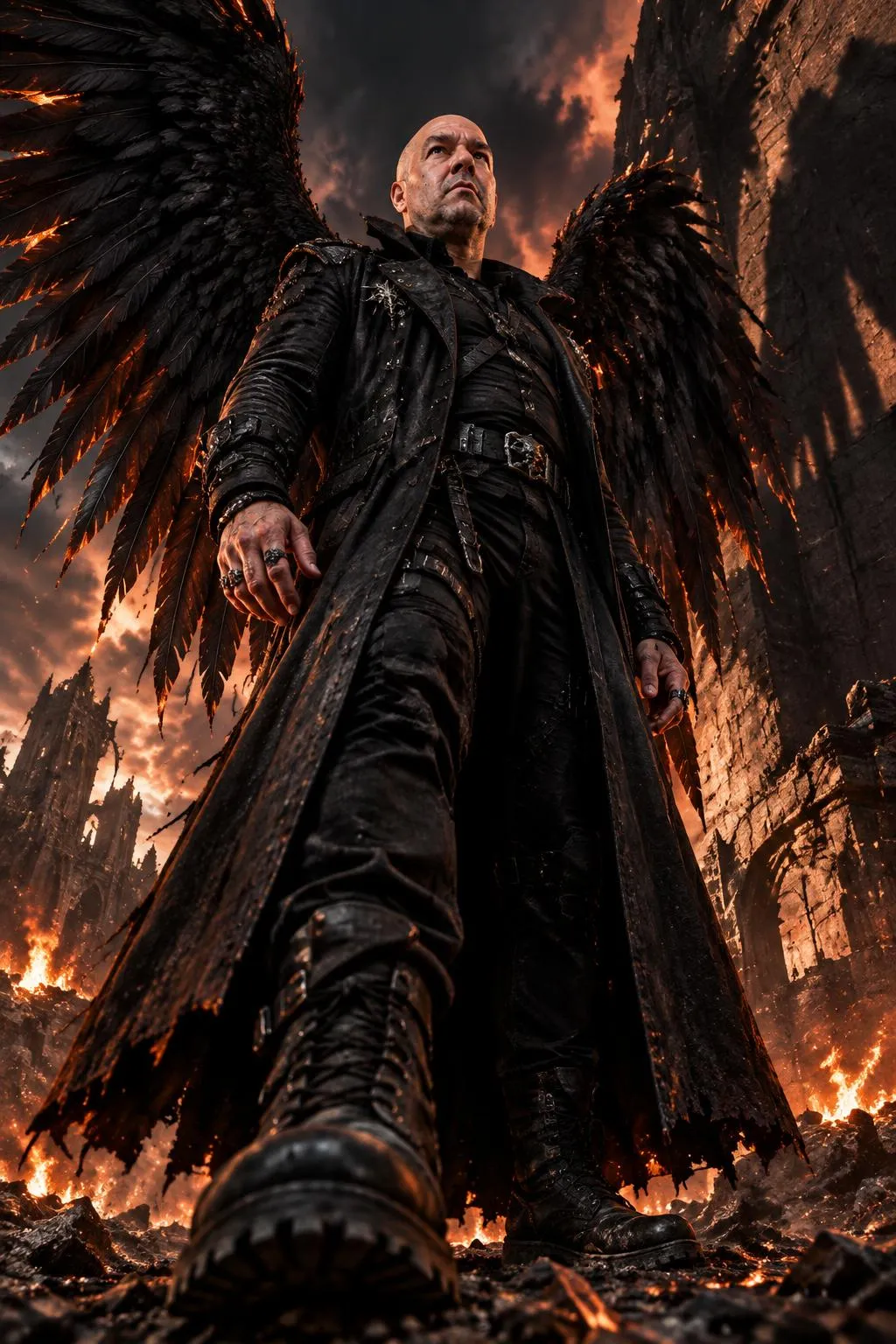
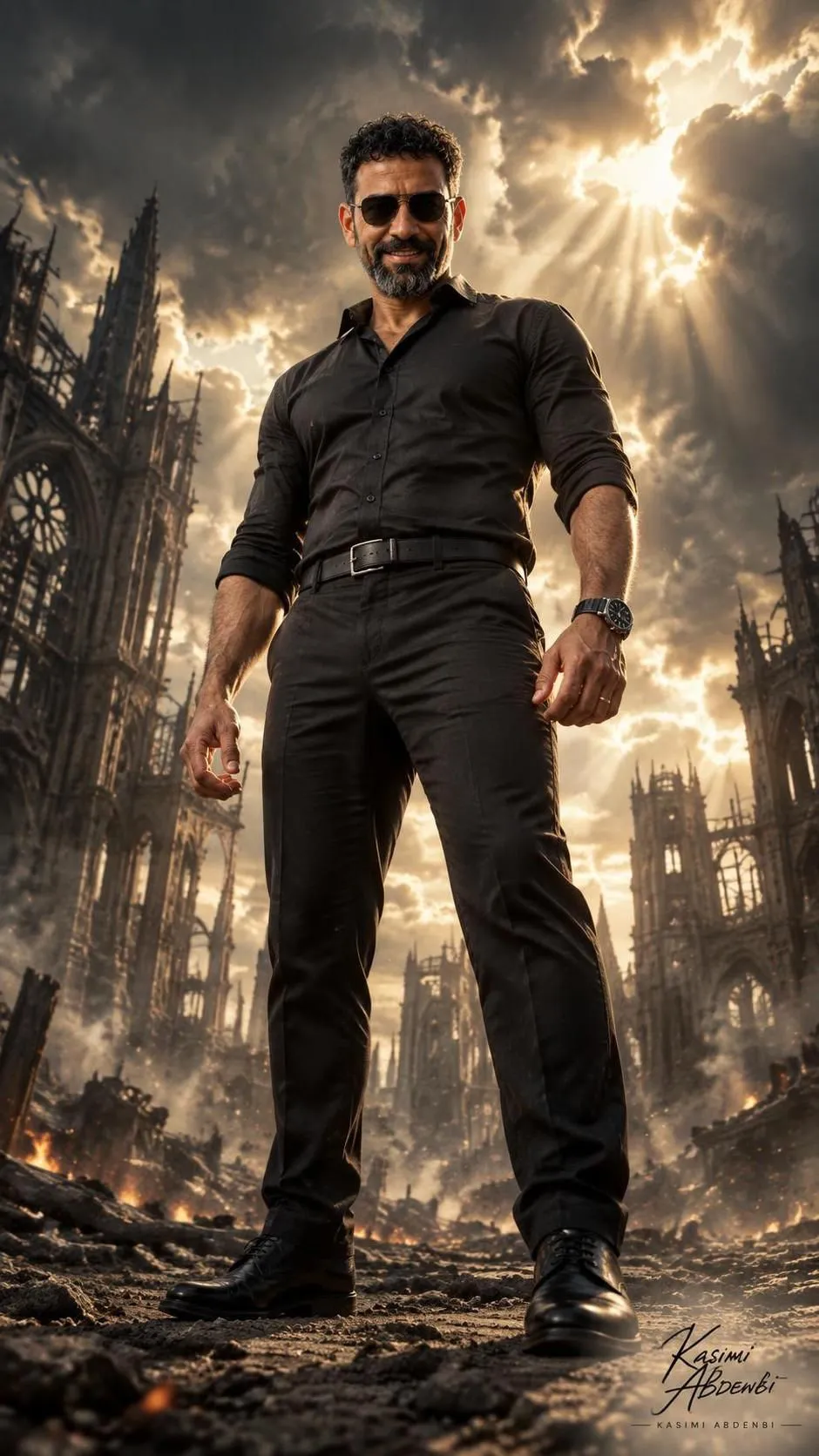
Create a cinematic, photorealistic portrait of an adult man as a fallen angel amid a burning post-apocalyptic city, preserving his identity from a required reference photo.
Example outputs
Prompt template
- Format
- Text
- Inputs
- Reference_photo (image) · Required
- Outputs
- Cinematic_apocalyptic_portrait (image)
FALLEN ANGEL — SOVEREIGN OF THE APOCALYPSE

CINEMATIC PROMPT | ULTRA-REALISM | 16K | 9:16

MAIN INSTRUCTION — ABSOLUTE PRESERVATION OF FACIAL IDENTITY

Use the attached reference photograph as the required and primary reference for the character’s face. Faithfully reproduce the photographed man’s facial identity, keeping his face completely intact, recognizable, and extremely faithful to the original image.

Do not alter, reinterpret, beautify, or stylize the face. Strictly preserve the shape of the head, bone structure, forehead, eyebrows, eyes, nose, lips, jaw, chin, beard, mustache, hair, natural skin tone, facial proportions, and individual features.

Keep the expression natural and consistent with the original identity. Adjust only the gaze direction and head tilt as needed to achieve the cinematic pose.

Facial identity takes absolute priority over every artistic effect, lighting choice, fantasy element, or stylization. The character must look exactly like the same man in the reference photograph, photographed in an apocalyptic cinematic universe.

1. CHARACTER AND COMPOSITION

Create a hyper-photorealistic, epic, cinematic image of an adult man portraying a powerful fallen angel: a supernatural entity walking among the ruins of a destroyed civilization.

Show the character in a vertical, full-body shot, centered in the composition.

Place the camera extremely close to the ground, using an extreme low angle (worm’s-eye view) pointed dramatically upward.

Use a cinematic wide-angle perspective of approximately 24 mm to create impressive depth and emphasize the character’s physical stature.

Show the feet in the foreground, slightly enlarged by the lens perspective, while keeping the face clearly visible and perfectly recognizable.

The character should convey strength, authority, mystery, resilience, superiority, and an intimidating supernatural presence.

2. FACE, EXPRESSION, AND HAIR

Reproduce the face directly from the reference photograph with maximum facial fidelity.

- Extremely realistic human skin texture.
- Natural pores and fine skin details.
- Beard with clearly defined individual hairs.
- Dark hair with natural texture and distinct strands.
- Extremely realistic eyes with natural reflections of the flames.
- A serious, determined, contemplative expression.
- Head tilted slightly upward.
- Gaze directed toward the upper horizon, as if observing the fate of a destroyed world.

Lighting must respect facial anatomy, with no distortions, excessive artificial shadows, or changes to the person’s identity.

3. GIANT FALLEN-ANGEL WINGS

Create two enormous, highly detailed black wings behind the character, resembling the wings of a fallen angel.

The wings should be partially spread, extending out to the sides and behind him, and occupying a significant portion of the composition.

Features:

- Deep black plumage.
- Thousands of individually defined feathers.
- Long, irregular, pointed feathers.
- Some torn and deteriorated feathers.
- Realistic texture with microscopic details.
- Subtle reddish and orange reflections from the fire.
- A monumental, threatening silhouette.

The wings must appear physically integrated with the character, with convincing anatomy and volume.

Also project a gigantic shadow of the wings onto the stone wall beside the character, creating an impressive supernatural silhouette.

4. CLOTHING — POST-APOCALYPTIC GOTHIC AESTHETIC

Dress the character in an extremely long black coat with a gothic, military, post-apocalyptic aesthetic.

The coat should have:

- A hem reaching almost to the ankles.
- A material resembling aged leather and heavy fabric.
- An irregular, worn surface.
- Deep tears at the edges.
- Frayed, deteriorated hems.
- Voluminous sleeves.
- Marks of dust, soot, and grime.
- Natural folds and extremely detailed physical texture.

Under the coat, he wears a plain black T-shirt with no graphics.

He wears dark black jeans with the appearance of durable denim, torn and worn at the knees.

Add silver metal chains hanging from his waist and the side of his trousers, with realistic reflections.

On his feet are worn black, high-top military boots with front laces and sturdy soles, weathered by battle.

All clothing must have physically realistic materials, lighting, shadows, reflections, and cinematic-quality textures.

5. POSE AND BODY LANGUAGE

Keep the posture firm, natural, and dominant.

- The character stands upright.
- His legs are approximately shoulder-width apart.
- One leg is slightly advanced toward the camera.
- His feet are planted firmly on the rubble.
- His torso is upright.
- His shoulders are open.
- His arms hang naturally at his sides.
- His hands are visible and anatomically correct.
- His head is raised.
- His gaze is directed upward and slightly toward the horizon.

The coat should fall naturally around his legs, with some edges moving in the wind and turbulence caused by the heat of the flames.

The pose should suggest a supernatural sovereign standing completely still amid the destruction of the world.

6. SETTING — CITY IN FLAMES

Set the scene in a vast, completely devastated post-apocalyptic city.

The character stands near a massive wall of old stone or concrete, located predominantly on the left side of the composition.

The wall should have:

- An extremely rough texture.
- Deep cracks.
- An aged surface.
- Signs of destruction.
- Dark soot stains.
- Reddish reflections from the flames.
- The gigantic shadow of the wings projected across its surface.

In the background, show a ruined city with tall, partially destroyed buildings, exposed metal structures, broken windows, and buildings consumed by fire.

On the right side of the composition, include an abandoned, partially destroyed automobile surrounded by flames.

Cover the ground with stones, broken concrete, metal fragments, dust, ash, and rubble.

Add small puddles of water or wet surfaces reflecting the red and orange firelight.

7. SKY AND ATMOSPHERE

Make the sky extremely dramatic, dominated by dense black clouds, volumetric smoke, and heavy concentrations of soot.

Between the clouds, show areas illuminated by an intense red-orange glow, as if the horizon itself were on fire.

Add:

- Columns of black smoke.
- Ash suspended in the air.
- Small incandescent particles.
- Embers flying through the scene.
- Volumetric smoke surrounding the buildings.
- Visible heat waves near the flames.

The atmosphere should feel hellish, monumental, ominous, and supernatural.

8. CINEMATIC LIGHTING

Use professional cinematic lighting with strong contrast between light and shadow.

KEY LIGHT: Warm illumination from the flames, in shades of red, amber, and burnt orange, falling partially across the face and body.

BACKLIGHT: Intense backlighting from the fires in the background, outlining the character, wings, and coat.

RIM LIGHT: Subtle reddish edges on the character and feathers, separating his silhouette from the dark setting.

AMBIENT LIGHT: Extremely subdued natural light from a sky covered by smoke and black clouds.

Create deep shadows, volumetric lighting, physically realistic reflections, and cinematic chiaroscuro.

The face must remain clearly visible and faithful to the reference, even under the dramatic lighting.

9. CINEMATOGRAPHY AND IMAGE QUALITY

The image should look like a frame from a major dark-fantasy film, with Hollywood blockbuster visual quality.

Specifications:

- Extreme hyper-photorealism.
- Cinematic RAW photography.
- Desired resolution: 16K.
- Vertical 9:16 aspect ratio.
- Ultra-high definition.
- Microscopic detail.
- Cinematic HDR.
- Global illumination.
- Ray tracing.
- Volumetric lighting.
- Ambient occlusion.
- PBR textures.
- Realistic atmospheric depth.
- Three-dimensional volumetric smoke.
- Physically accurate reflections.
- Extreme sharpness in the character’s details.
- Cinematic depth of field.
- Professional color grading.
- Dramatic contrast.
- IMAX visual quality.
- The finish of an extremely high-budget cinematic photograph.

Simulate a professional digital cinema camera with a 24 mm wide-angle lens, an aperture of approximately f/4, and a dramatic extreme low-angle perspective.

Render rich detail throughout the image: face, beard, hair, clothing, chains, boots, feathers, wall, buildings, fire, smoke, and rubble.

10. DESIRED FINAL RESULT

Create an epic, dark, monumental, hyper-realistic image.

Show a man whose face is rigorously preserved from the original photograph, dressed as a gothic-looking supernatural warrior with enormous black wings, standing before a completely destroyed city in flames.

The composition should convey that he is the last sovereign of a doomed world, an entity that has crossed through hell and remained standing.

The final image should look like a real cinematic photograph from a major Hollywood production, not an illustration, digital painting, or artificial-looking image.

11. NEGATIVE PROMPT — PROHIBITED ELEMENTS

A face that differs from the reference, altered identity, face replacement, generic face, artificial beautification, changed age, altered beard, changed hair, deformed eyes, altered nose, modified jaw, plastic-looking skin, doll-like appearance, caricature, cartoon, anime, illustration, digital painting, artificial CGI, low resolution, low definition, excessive blur, excessive artificial sharpness, flat lighting, washed-out colors, video-game appearance, small wings, deformed wings, artificial feathers, incorrect anatomy, extra arms, deformed hands, extra fingers, duplicated legs, deformed feet, incomplete boots, overly clean clothing, empty setting, no flames, no smoke, horizontal composition, cropped feet, cropped head, character off-center, a different pose, conventional frontal perspective, eye-level camera, text, lettering, logos, watermarks, frames, or dividers.

HIGHEST PRIORITY: FACIAL IDENTITY 100% FAITHFUL TO THE REFERENCE PHOTOGRAPH. VERTICAL 9:16 CINEMATIC COMPOSITION. EXTREME HYPER-REALISM. MAXIMUM QUALITY. 16K.
What you'll create
A reference-based adult man appears centered and full-body amid an apocalyptic setting. Near-ground perspective enlarges the foreground feet while keeping the face visible.
Frequently asked questions
Should the feet be excluded?
No. They are visible in the foreground.
How low is the viewpoint?
Extremely close to the ground.



Comments
Tried this prompt? Share what you made, compare results, or ask a question