Photorealistic Cliffside Climbing Portrait
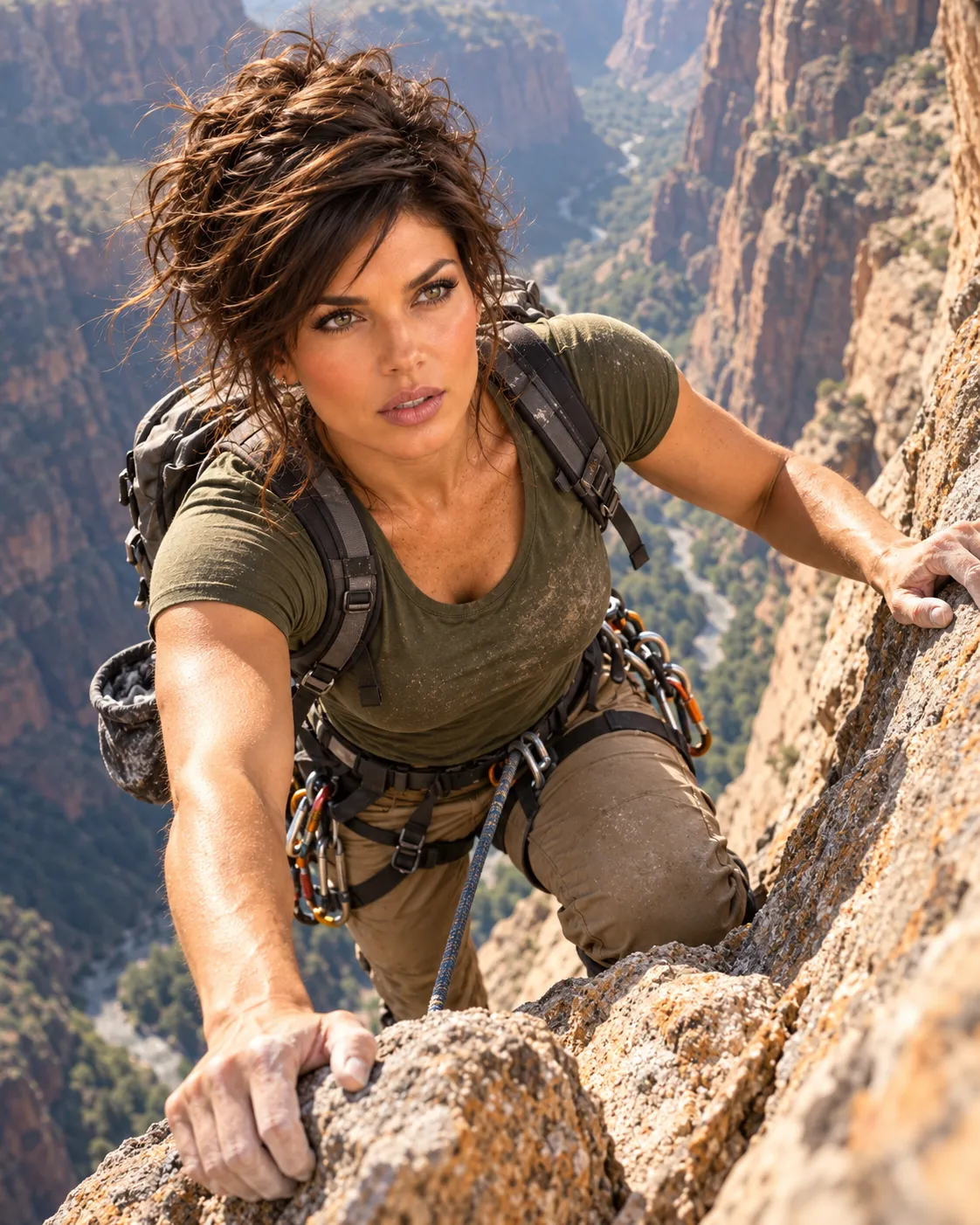
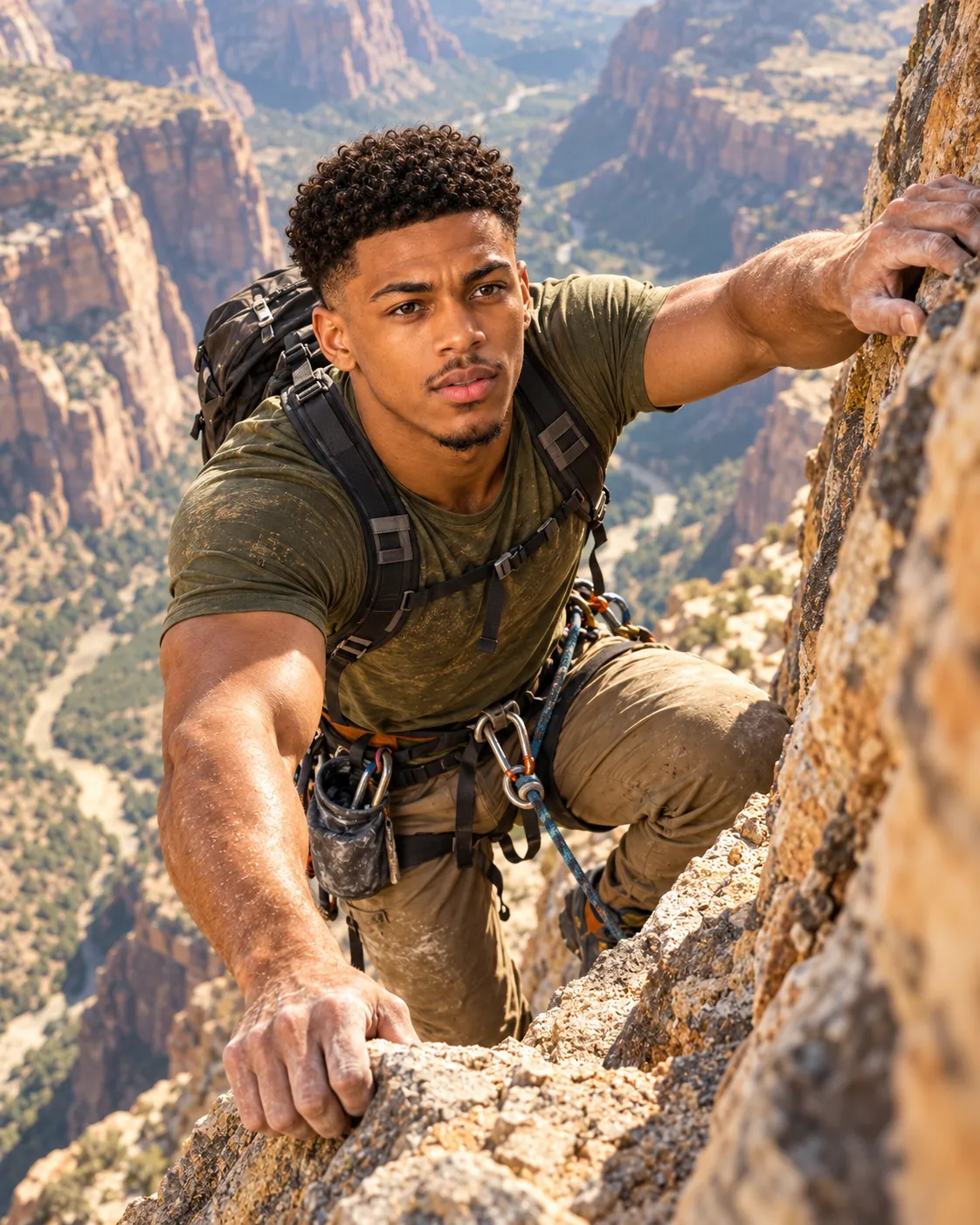
Create a cinematic adventure photograph of the person in a reference photo climbing a rugged cliff above a dramatic canyon.
Example outputs
Prompt template
- Format
- Text
- Inputs
- Uploaded_person_photo (image) · Required
- Outputs
- Climbing_portrait (image)
Create an image using the uploaded image as the sole authoritative facial identity reference.

STYLE AND SUBJECT IDENTITY:
Create an ultra-photorealistic, cinematic action-adventure photograph of an athletic adult rock climber scaling a steep, rugged cliff face high above a dramatic canyon. Preserve the reference person's recognizable facial structure, apparent age, natural skin tone, eye color, nose, lips, cheekbones, jawline, hairline, and distinguishing characteristics. Do not substitute a generic face, artificially de-age, excessively beautify, or otherwise alter their identity. Adapt body proportions and physique naturally to the subject.

CAMERA ANGLE AND FRAMING:
Use a vertical 4:5 portrait composition, captured from a dramatic elevated three-quarter frontal perspective. Position the camera slightly above the climber and angle it downward approximately 30–40 degrees. Simulate a professional full-frame DSLR camera with a 35mm prime lens, emphasizing immersive action photography, natural perspective, and realistic environmental scale.

Frame the subject from the entire head to approximately the upper thighs, with both arms extending diagonally toward the rocky foreground. The subject occupies most of the image, slightly left of center, with the cliff extending diagonally across the right side. Keep the entire head and hairstyle comfortably within the frame. Hands and arms may extend naturally beyond the image edges to recreate the dynamic composition.

POSE AND EXPRESSION:
Capture the climber during an intense, physically demanding ascent. Their torso leans forward toward the rock face, one knee raised and bent against the cliff, and both arms reach outward to secure strong climbing holds.

Show serious determination, intense concentration, and controlled physical effort. The eyebrows are slightly furrowed, the eyes focus on the next handhold, and the mouth is slightly open as the climber breathes heavily from exertion. Avoid smiling, exaggerated fear, or theatrical facial expressions.

Give the subject a fit, naturally athletic physique with subtle visible muscle definition. The shoulder, forearm, bicep, and upper-body muscles appear slightly tightened from climbing, with realistic muscle tension and naturally visible tendons. Avoid exaggerated bodybuilding proportions.

HAIR AND FACE:
Preserve the subject's natural hairstyle, hair color, and facial features. Longer hair may be secured in a loose, practical ponytail, with windblown strands framing the face. Keep shorter hairstyles natural and slightly windswept.

The subject wears no sunglasses or eyewear. Both eyes remain clearly visible and anatomically accurate, with realistic iris detail, natural reflections, and a focused expression.

Include realistic skin pores, subtle freckles where appropriate, fine facial hairs, light perspiration, sun-kissed highlights, natural skin texture, and scattered dust or dirt from climbing. Preserve authentic facial characteristics without excessive skin smoothing.

WARDROBE AND EQUIPMENT:
Dress the subject in a fitted, muted olive-green technical short-sleeved climbing shirt and rugged tan or khaki outdoor climbing trousers. Make the clothing fit naturally to the subject's gender and physique.

Include a realistic professional climbing harness around the waist and thighs, secured with metallic carabiners, climbing rope, chalk bag, straps, and practical mountaineering accessories. Place a compact, weathered hiking backpack against the upper back.

Show realistic fabric stretching, tension folds, sweat-darkened areas, dust accumulation, detailed stitching, and subtle wear. Equipment must appear physically functional and accurately attached.

ENVIRONMENT AND COMPOSITION:
Place the climber on an immense, steep, sunlit rock formation overlooking a deep, dramatic canyon. Render the foreground rock sharply, with fractured stone, rough mineral textures, natural cracks, uneven ledges, and dusty surfaces.

The background drops dramatically into a distant canyon with massive weathered stone walls, atmospheric haze, and a softly blurred valley far below. Create a powerful sensation of height, danger, adventure, and vertical exposure without unrealistic climbing positions or equipment.

Maintain a striking diagonal composition, with the rock face dominating the right foreground while the expansive canyon creates depth on the left.

LIGHTING AND COLOR:
Use intense natural midday-to-afternoon sunlight with a warm, golden cinematic character. Strong directional sunlight illuminates the subject's hair, face, shoulders, and forearms, creating bright highlights and pronounced natural shadows beneath the arms and around clothing folds.

Maintain rich earthy browns, warm sandstone tones, subdued olive greens, dusty beige fabrics, and softly desaturated canyon backgrounds. Use realistic reflected light from surrounding rock, subtle atmospheric scattering, controlled highlight roll-off, and naturally contrasting shadows.

PHOTOGRAPHIC SETTINGS:
Use a full-frame professional camera, 35mm prime lens, f/2.8 aperture, 1/1600-second shutter speed, ISO 200, daylight white balance approximately 5600K, high dynamic range, and precise focus on the face and upper torso.

Use a moderately shallow depth of field, preserving sharp facial features, detailed climbing equipment, and nearby rock textures while gradually softening distant canyon walls. Apply natural cinematic color grading, realistic photographic grain, exceptional microcontrast, and professional adventure-editorial image quality.

REALISM REQUIREMENTS:
Create ultra-photorealistic 8K-quality detail, realistic anatomy, believable climbing mechanics, authentic weight distribution, accurate hands and fingers, natural muscle tension, detailed individual hair strands, lifelike skin, realistic clothing materials, and physically accurate shadows.

Avoid sunglasses, helmets, cartoon effects, a CGI appearance, artificial plastic skin, excessive muscles, distorted limbs, extra fingers, unnatural climbing equipment, overprocessing, and unrealistic backgrounds.

Use a vertical 4:5 aspect ratio, full-frame height emphasis, and cinematic poster layout.
What you'll create
An adult climber scales rugged stone with the face viewed from an elevated three-quarter angle. A slightly downward camera view emphasizes the cliff and canyon scale while preserving recognizable facial detail.
Frequently asked questions
How steep is the downward camera angle?
Approximately 30–40 degrees.




Comments
Tried this prompt? Share what you made, compare results, or ask a question