Water-Drop Macro Portrait
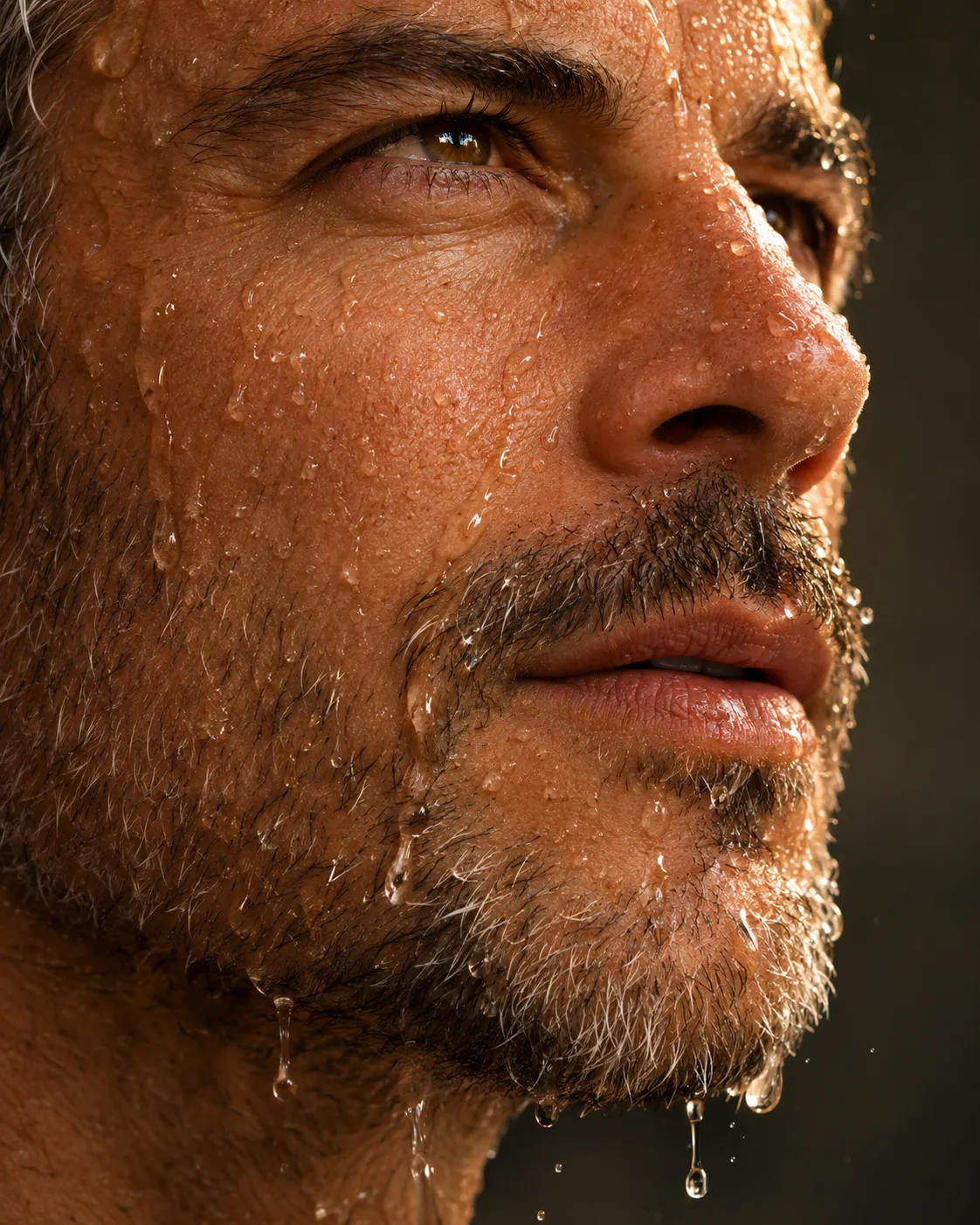
Create a cinematic, photorealistic macro portrait of the person in an uploaded reference photo, with wet skin, detailed facial texture, and dramatic studio lighting.
Example outputs
Prompt template
- Format
- Markdown
- Inputs
- Reference_photo (image) · Required
- Outputs
- Portrait (image)
Create an ultra-photorealistic, hyper-detailed cinematic macro portrait of the adult person in the uploaded photo, emphasizing extraordinary skin texture, individual facial hairs, water droplets, and dramatic photographic realism.

## Style and subject identity

Use the uploaded photograph as the sole authoritative facial identity reference. Preserve the person’s recognizable facial structure, apparent age, natural skin tone, eye colour, nose shape, lips, jawline, cheekbones, facial hair, and distinguishing characteristics. Do not substitute a generic face, artificially de-age, excessively beautify, or reshape their features.

## Camera angle and framing

Create an extreme close-up macro portrait in a vertical 4:5 composition. Position the camera approximately 20–35 cm from the face, capturing an intimate three-quarter side perspective from slightly below eye level.

Turn the face toward the right side of the frame, with the visible eye near the upper-left corner. The nose should dominate the upper-right portion, while the lips, cheek, chin, and lower jaw fill the remaining composition.

Crop tightly around the face, intentionally excluding the forehead, hair, opposite eye, and portions of the neck to create dramatic macro framing. Let the face extend beyond the image boundaries. Maintain precise anatomical proportions and realistic facial geometry without wide-angle distortion.

## Facial expression and details

Give the subject a calm, serious, contemplative expression. The visible eye gazes slightly upward and into the distance. Keep the lips naturally relaxed and slightly parted, revealing a subtle separation between them.

Capture exceptional micro-details, including individual eyelashes, realistic iris reflections, delicate facial creases, visible pores, fine skin lines, tiny imperfections, natural lip texture, and authentic facial hair.

Where appropriate to the reference identity, show dense, short, dark beard stubble across the upper lip, cheeks, jawline, and chin. Render each individual hair with realistic thickness, direction, and specular highlights.

## Water and skin texture

Cover the entire visible face with crystal-clear water droplets of varying sizes. Add hundreds of microscopic beads clinging to the forehead edge, cheek, nose, moustache area, lips, and chin. Let larger droplets gather into irregular rivulets flowing naturally downward across the cheek and jawline. Include several elongated droplets hanging beneath the chin, captured mid-fall, with smaller suspended water particles visible against the dark background.

Emphasize realistic surface tension, transparent reflections, refraction, liquid thickness, and the interaction between water, skin pores, and facial hair. Make the skin appear genuinely wet, with natural oily highlights, moisture, subtle imperfections, and exceptionally realistic surface microtexture. Avoid artificial smoothing, waxy surfaces, and exaggerated cosmetic retouching.

## Lighting and colour

Use dramatic cinematic studio lighting with a strong, warm directional key light originating from the upper-right and slightly in front of the subject. Create brilliant reflections across the bridge of the nose, cheek, lips, individual whiskers, and water droplets. Maintain deep, soft-edged shadows along the left side of the face and beneath the nose and jaw.

Preserve rich, natural warm-brown skin tones, subtle copper and amber highlights, realistic pinkish-brown lips, and deep charcoal shadows. The water droplets should shimmer with delicate white highlights while remaining transparent. Use high contrast, controlled exposure, realistic dynamic range, and sophisticated cinematic colour grading.

## Background and atmosphere

Use a dark, muted charcoal-grey and olive-toned studio background. Keep it completely out of focus, smooth, unobtrusive, and free of visible objects or distractions.

Create an intimate, dramatic, almost tactile atmosphere reminiscent of luxury skincare advertising, fine-art portraiture, and high-end commercial macro photography.

## Camera and photographic settings

Use a professional full-frame camera with a premium 100mm macro lens.

- Aperture: f/4 for shallow but controlled depth of field.
- Shutter speed: 1/1000 second to freeze falling water droplets.
- ISO: 100–200 for exceptionally clean detail.
- White balance: approximately 4500K–5000K, maintaining warm natural skin tones.

Focus precisely on the visible eye, central cheek texture, wet moustache area, and nearest water droplets, allowing distant facial contours and background elements to soften naturally. Preserve realistic optical compression, fine highlight roll-off, crisp microcontrast, subtle cinematic depth, and professional photographic sharpness.

## Final rendering requirements

Render ultra-photorealistic, 8K-quality detail with natural anatomy, physically accurate water simulation, authentic facial identity, visible skin pores, individually rendered facial hairs, and lifelike liquid reflections.

Do not include beauty filters, artificial skin smoothing, cartoon effects, illustration, painting, plastic textures, excessive sharpening halos, distorted features, text, logos, or watermarks.

Recreate the reference image’s dramatic intimacy, extreme macro perspective, directional illumination, wet-skin realism, and compelling visual composition while faithfully preserving the uploaded person’s identity.

Use a vertical portrait composition with a 4:5 aspect ratio, full-frame-height emphasis, and a cinematic poster layout.

-- ar 4:5
What you'll create
A face turns right in an extreme three-quarter crop, excluding the forehead and opposite eye. Droplets, fine facial hairs and relaxed lips form an intimate cinematic texture study.
Frequently asked questions
Are both eyes included?
No. The crop intentionally excludes the opposite eye.
Is the camera far from the face?
No. It sits roughly twenty to thirty-five centimeters away.



Comments
Tried this prompt? Share what you made, compare results, or ask a question