Monochrome Portrait Through Textured Glass
Replace the facial identity in a reference portrait while preserving its pose, blurred foreground hand, textured glass, and austere black-and-white editorial mood.
Example outputs
Prompt template
- Format
- Text
- Inputs
- img1 (image) · Required img2 (image) · Required
- Outputs
- Monochrome_portrait (image)
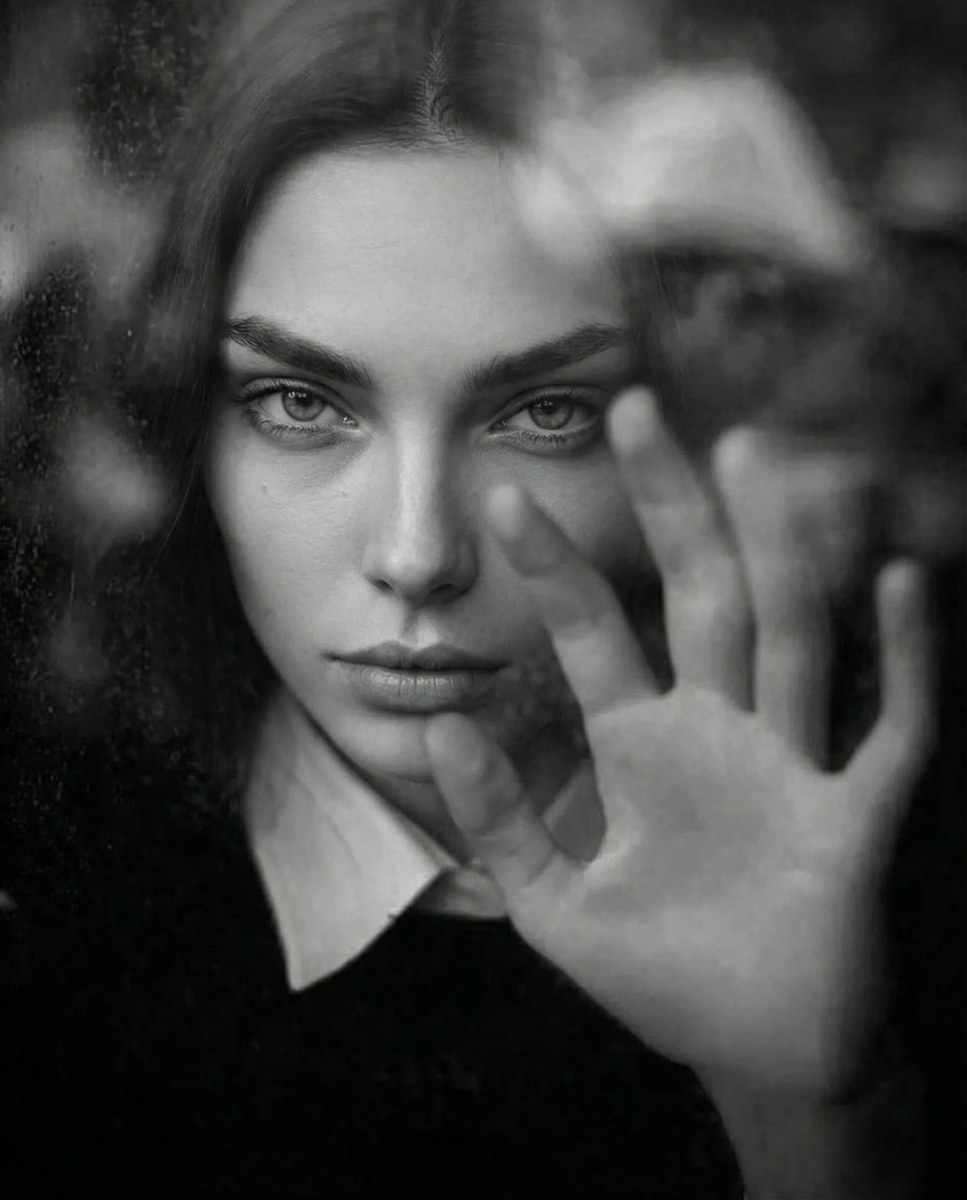
Generate a frame from @img1 . Replace only the face identity with the woman from @img2 while preserving the exact image language of @img1 . Keep the exact composition, framing, pose, anatomy, head position, direct eye line, hand placement against the glass, hairstyle structure, clothing, white pointed collar, black outfit, glass texture, reflections, grayscale tonality, soft contrast, shallow depth of field, foreground blur, and overall psychological mood of the original frame.

The result must look like the same black-and-white fine art photographic portrait shot through textured glass. Tight close-up composition. The woman is positioned centrally behind the glass, staring directly into camera with a calm, severe, emotionally restrained expression. One open palm is raised in the foreground against the glass, large and out of focus, partially obscuring the right side of the face. The glass surface shows subtle smudges, haze, organic reflections, and soft veiling artifacts. Hair is smooth, parted to the side, pulled back with a few soft strands near the face. Lighting is soft, diffused, low-key, naturalistic, with delicate grayscale transitions, gentle shadow falloff, and no hard highlights. Preserve the photographic softness, intimate tension, cinematic stillness, and analog editorial mood.

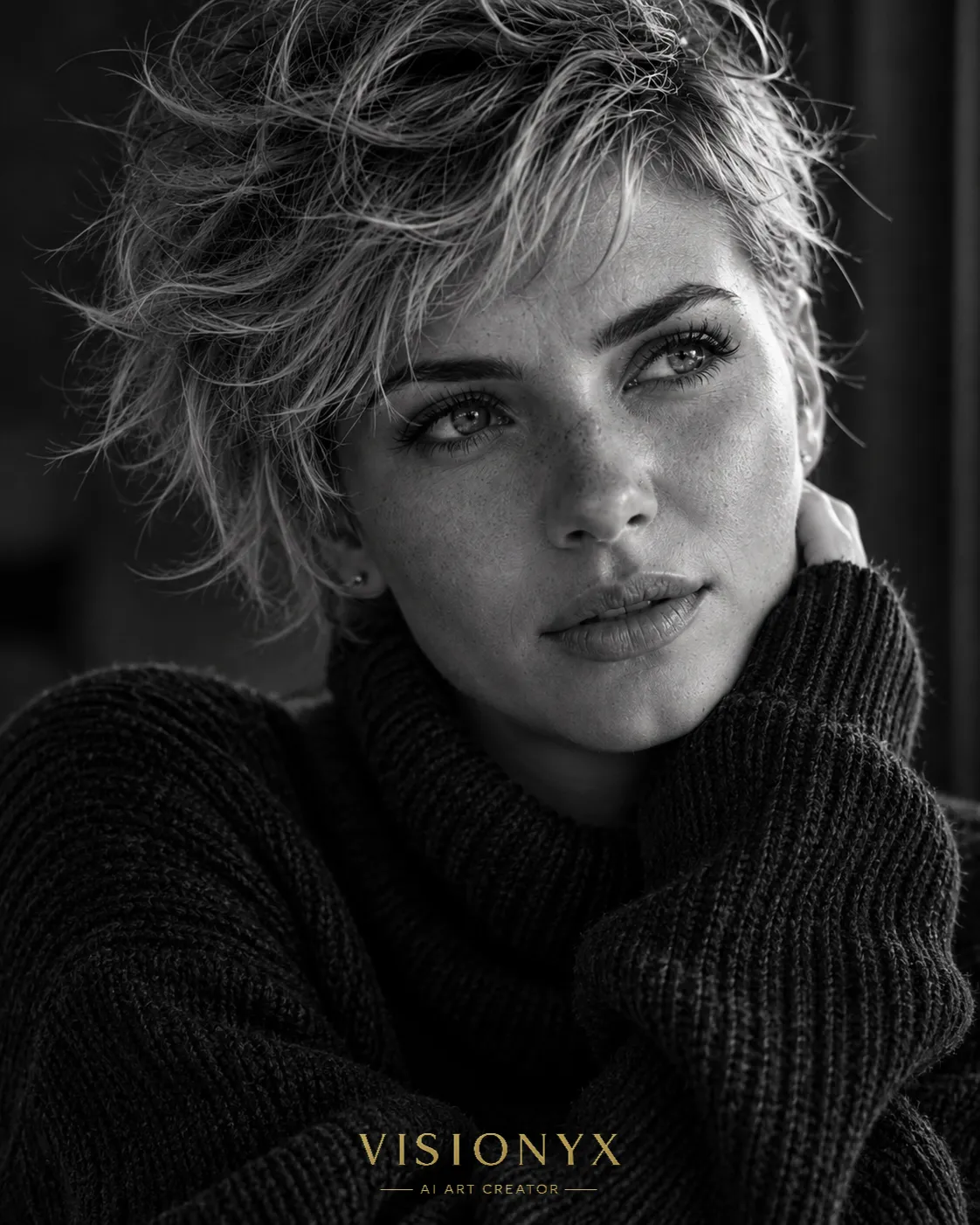
Adapt only the facial identity from @img2 into this exact setup: face shape, eyes, nose, lips, skin structure, and natural proportions should reflect @img2 , but fully integrated into the lighting, lens behavior, monochrome texture, and emotional restraint of @img1 . The inserted face must feel native to the frame, not composited. Realistic skin texture, natural pores, subtle tonal depth, true monochrome rendering, no glamour retouching, no beauty glow, no modern digital polish. Fine art editorial photography, understated, austere, haunting, intimate.

Negative prompt:
do not change pose, do not change composition, do not change hand position, do not change gaze direction, do not change hairstyle design, do not change clothing, do not change collar shape, do not change glass reflections, do not change black-and-white treatment, no color, no smile, no beauty retouching, no glossy skin, no HDR, no hard light, no extra fingers, no deformed hand, no warped palm, no broken anatomy, no asymmetrical eyes, no drifting identity, no face swap artifacts, no double face, no mismatched perspective, no sharp foreground hand, no clean transparent glass, no modern fashion polish, no makeup glamour, no plastic skin, no over-contrast, no background detail, no text, no watermark
What you'll create
The reference identity appears behind the same soft glass, reflections and foreground blur. A white pointed collar and dark clothing remain within the tight psychological fine-art composition.
Generation settings
Advanced settings
- Negative prompt
- do not change pose, do not change composition, do not change hand position, do not change gaze direction, do not change hairstyle design, do not change clothing, do not change collar shape, do not change glass reflections, do not change black-and-white treatment, no color, no smile, no beauty retouching, no glossy skin, no HDR, no hard light, no extra fingers, no deformed hand, no warped palm, no broken anatomy, no asymmetrical eyes, no drifting identity, no face swap artifacts, no double face, no mismatched perspective, no sharp foreground hand, no clean transparent glass, no modern fashion polish, no makeup glamour, no plastic skin, no over-contrast, no background detail, no text, no watermark
Frequently asked questions
Should the foreground hand be sharp?
No. The original foreground blur is retained.
Can the glass become clear?
No. Its texture remains essential.



Comments
Tried this prompt? Share what you made, compare results, or ask a question