Russian Literature Personality Analysis Infographic
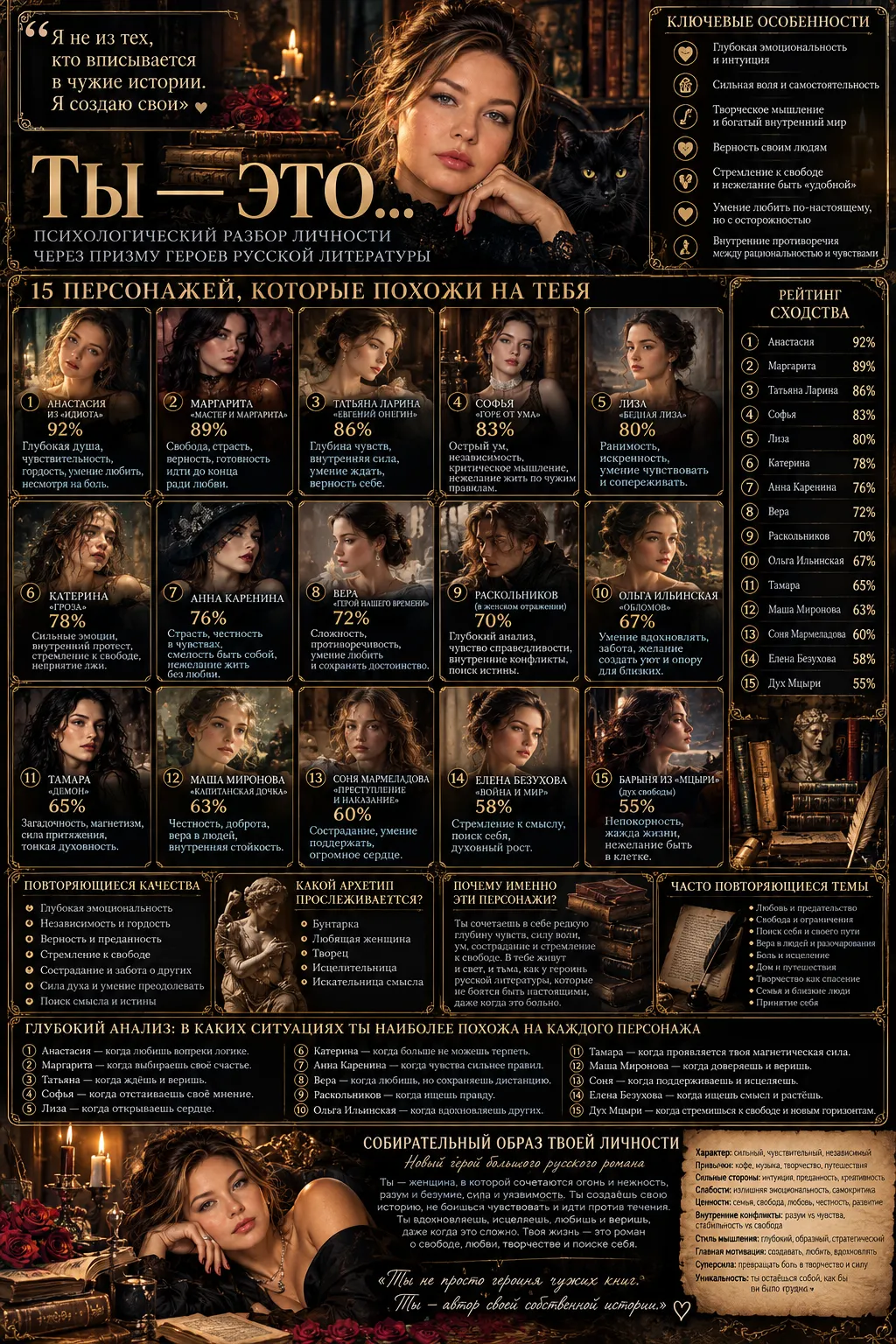
Create a dense, dark cinematic vertical infographic comparing the user’s personality with characters from 19th–20th-century Russian literature, using only the supplied conversation history.
Example outputs
Prompt template
- Format
- Text Parameterized
- Inputs
- conversation_history (text) · Required
- Outputs
- vertical_personality_analysis_infographic (image)
Create one large, vertical infographic card featuring a deep psychological analysis of my personality through the characters of Russian literature. Base the analysis only on the real context of our conversation:

${conversation-history}

Write all infographic text in Russian. Preserve the following headings and labels exactly:

- «ТЫ — ЭТО...»
- «Ключевые особенности»
- «15 персонажей, которые похожи на тебя»
- «Повторяющиеся качества»
- «Какой архетип прослеживается?»
- «Почему именно эти персонажи?»
- «Часто повторяющиеся темы»
- «Глубокий анализ: в каких ситуациях ты наиболее похож на каждого персонажа»
- «Собирательный образ твоей личности»

Infographic style (follow closely): dark and cinematic, like a premium psychological poster. Use a deep black background, elegant gold and white typography, fine ornamental borders, dramatic lighting, and the atmosphere of old books and literary salons. Make the composition dense and information-rich, with character portraits.

Structure:
1. At the upper left, include a short, succinct quote about me.
2. Add the large headline «ТЫ — ЭТО...».
3. Add the subtitle: «Психологический разбор личности через призму героев русской литературы».
4. At the upper right, create a «Ключевые особенности» section with 6–7 points and icons.
5. Create the main section, «15 персонажей, которые похожи на тебя»: a grid of 15 portraits, each with a name, similarity percentage, and brief characterization.
6. Add a vertical similarity ranking with percentages on the right.
7. Include these middle sections:
   - «Повторяющиеся качества»
   - «Какой архетип прослеживается?»
   - «Почему именно эти персонажи?»
   - «Часто повторяющиеся темы»
8. Add a section titled «Глубокий анализ: в каких ситуациях ты наиболее похож на каждого персонажа».
9. At the bottom, add a large section titled «Собирательный образ твоей личности», presenting a new hero of a great Russian novel. Include a portrait and describe the character’s personality, habits, strengths, weaknesses, values, inner conflicts, thinking style, main motivation, superpower, and uniqueness.

Analysis requirements:
- Use only the real context of our conversation.
- Select characters based on deep psychological similarity, not popularity.
- Assign realistic similarity percentages; do not inflate them.
- Do not flatter or romanticize.
- Include both obvious and unexpected characters from 19th–20th-century Russian literature.

Make the infographic closely match the density, composition, and atmosphere of premium dark-style psychological posters.
Replace the ${…} placeholders with your values
before using this prompt. See parameters
and defaults below
Parameters
Replace each placeholder with your own value, or use its default when one is provided
${conversation-history}
conversation-history
Required
What you'll create
Conversation context supplies the requested interpretive similarities, shared traits and archetype sections. A dense portrait grid, ranked percentages and a final composite fictional hero appear within fine ornamental borders evoking old books and literary salons.
Frequently asked questions
Should characters be chosen simply because they are popular?
No; the brief asks for context-based psychological resemblance, including unexpected choices.



Comments
Tried this prompt? Share what you made, compare results, or ask a question