First Love Beneath the Apple Tree
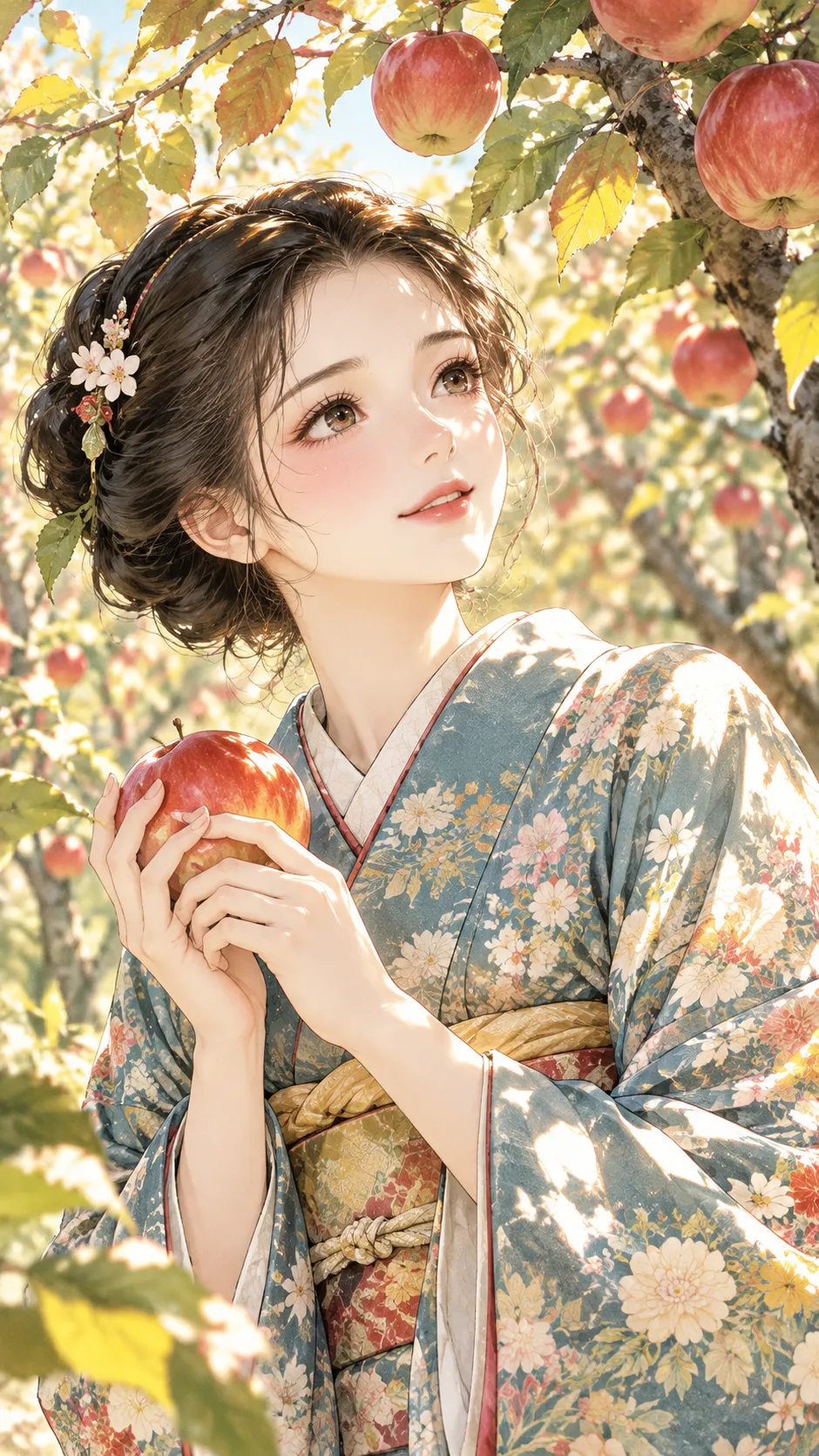
Create a luminous 2D shoujo-manga illustration of a woman in an elegant Meiji-inspired kimono beneath an autumn apple tree, capturing the tender feeling of first love.
Example outputs
Prompt template
- Format
- Text
- Outputs
- Illustration (image)
Create a complete 2D shoujo-manga illustration inspired by the world of Toson Shimazaki’s poem “First Love” and the Japanese observance of First Love Day on October 30. Combine the beauty of Meiji-era romantic fashion with the fresh, tender emotions of discovering love for the first time. Create a single, poetic image with the splendor of a modern shoujo-manga color-page illustration.

## Concept
The heroine is a fictional Japanese woman whose refined, dignified beauty recalls a Western doll, balanced with the delicate charm of a shoujo-manga heroine. Evoke the encounter beneath an apple tree described in Toson Shimazaki’s poem “First Love.” In an orchard bathed in soft autumn light, she stands quietly beneath an apple tree with a floral hair comb in her hair. Express the flutter of seeing someone she is falling in love with for the first time, her fresh shyness, and her sincere affection. Honor the poem’s atmosphere while pursuing a glamorous, delicate, contemporary shoujo-manga color-page aesthetic.

## Face and expression
Give her a naturally rounded, beautiful face, large, clear, luminous eyes, finely balanced features, and a soft, graceful mouth. Harmonize refined, doll-like beauty with the delicate charm of a Japanese shoujo-manga heroine. Keep her features naturally Japanese; avoid an overly childlike expression and excessively large eyes. Her expression should convey the happiness of first love and a restrained shyness. Use the sparkle in her eyes, a faint blush, and a gentle smile to express unspoken affection.

## Kimono and styling
Dress her in a dignified, graceful kimono inspired by the clothing of Japanese women in the Meiji era. Use a natural fabric texture reminiscent of fine silk or cotton, with a beautifully arranged obi. Choose an elegant, period-appropriate pattern, such as small flowers, grasses and flowers, flowing water, stripes, or a restrained traditional motif.

Neatly layer the collar and fully cover the chest. Keep the sleeve length, obi placement, and overlapping hem natural, respecting the kimono’s authentic construction. Avoid excessively ornate formal furisode, modern coming-of-age ceremony attire, and flashy, theatrical decoration.

Keep the fundamental kimono style consistent, while allowing the colors, patterns, obi combinations, fabric textures, and small decorative details to vary from one generation to the next. Use a varied palette of traditional Japanese colors, such as cherry blossom pink, wisteria, young grass, pale blue-green, indigo, golden yellow, pale crimson, and natural unbleached white. Do not default to pink and white; choose a beautiful, different color combination each time.

## Hair and floral comb
Draw inspiration from the woman at the beginning of Toson Shimazaki’s poem “First Love,” who has begun to pin up her bangs. Arrange her glossy black or naturally dark hair in a neat updo suggestive of Meiji-era Japanese women. Raise the bangs so that the forehead is naturally visible, with soft hair movement and an elegant silhouette. Insert a single floral hair comb decorated with a small, delicate flower. Treat the floral comb as an important motif and harmonize it with the hairstyle. Avoid oversized hair ornaments, excessively elaborate kanzashi, and modern hair accessories.

## Setting and atmosphere
Set the scene in an autumn apple orchard. Include lush green apple trees, pale pink apples growing on the branches, soft dappled sunlight, and leaves stirred by a gentle breeze. Present the scene beneath the apple tree from the poem’s opening as a bright, beautiful shoujo-manga world. Keep apples natural in size and shape; do not make them excessively large or crowd them together unnaturally. The season is autumn, when apples ripen; do not depict apple trees in full bloom.

Render the background delicately enough to enhance the heroine without competing with her. Use soft natural light, clear air, and subtle light and shadow to convey the freshness and poetry of first love.

## Composition and pose
Make the woman the sole main subject in a natural, story-rich composition. Depict her beneath an apple tree from the viewpoint of someone whose heart has just been captured by her. Suggest that someone is within her line of sight, using a restrained smile and a natural gesture. Choose a natural pose suited to the poem’s world, such as looking up at the apple tree, glancing gently toward apples on a branch, or turning back softly.

Prioritize a composition that brings out her features, expression, and beautiful kimono. Let the pose, gaze, face angle, and camera angle vary from one generation to the next. If she is holding an apple, show only one and depict its contact with her hand naturally.

Maintain accurate, natural anatomy: two arms, two hands, and five fingers on each hand, with a natural connection from shoulders to fingertips. Avoid crossed arms, resting her cheek on her hand, unnatural overlapping fingers, hands disappearing inside sleeves, and reversed hands. Keep the proportions of her face and body natural; avoid disproportionate exaggeration that makes the head appear too large.

## Art style and finish
Create exquisite, fully 2D shoujo-manga art. Use delicate, crisp, hand-drawn-style linework; beautiful, clear eyes; soft skin coloring; and carefully rendered shine and flow in the black hair. Render the kimono’s fine fabric, delicate patterns, beautiful obi knot, and charming floral comb in precise detail. Use bright, glamorous colors, translucent natural light, and delicate, beautiful shading. Aim for a polished finish reminiscent of a lavish modern shoujo-manga color-page illustration.

Emphasize the delicate beauty of shoujo-manga linework rather than realistic human rendering or heavily painterly impasto. Do not use a photographic or live-action look, 3D, CG rendering, or dimensional anime style.

Use a vertical 9:16 composition and ultra-high detail. Include no text, logos, or watermarks. Preserve the defining appeal of the floral comb and Meiji-inspired kimono, while varying the expression, kimono colors and patterns, pose, composition, and lighting to create a one-of-a-kind original work each time.
What you'll create
A fictional Japanese heroine stands quietly in an orchard with a floral comb in her hair. Soft autumn light and shy affection evoke the literary first-love theme through delicate contemporary shōjo color.
Frequently asked questions
What accessory remains a defining feature?
A floral hair comb accompanies the Meiji-inspired kimono.
Can the colors and composition vary?
Yes. Expression, kimono pattern, pose and light can change while retaining the core theme.


Comments
Tried this prompt? Share what you made, compare results, or ask a question