Retro Western Couture Fashion Illustration
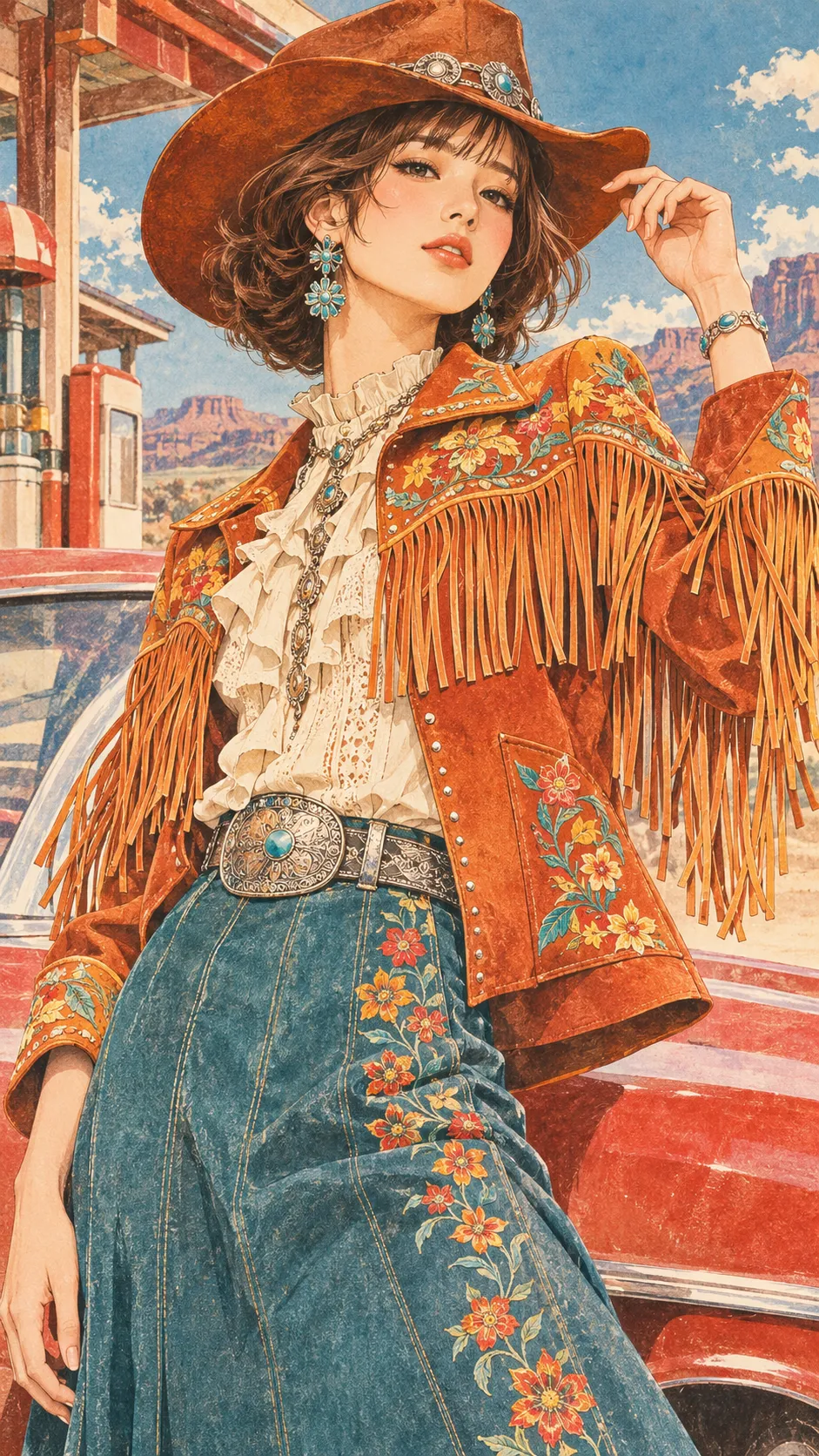
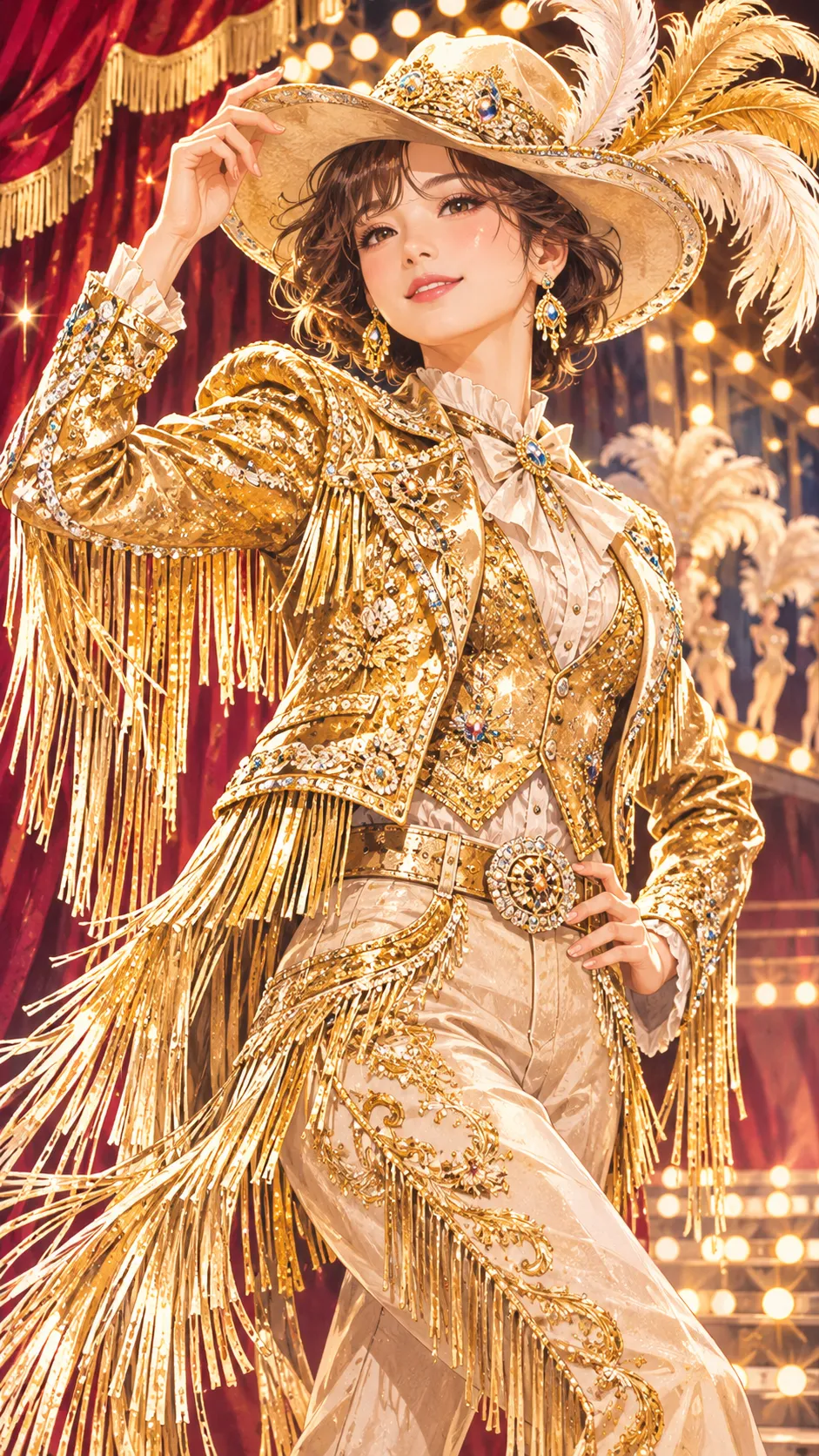
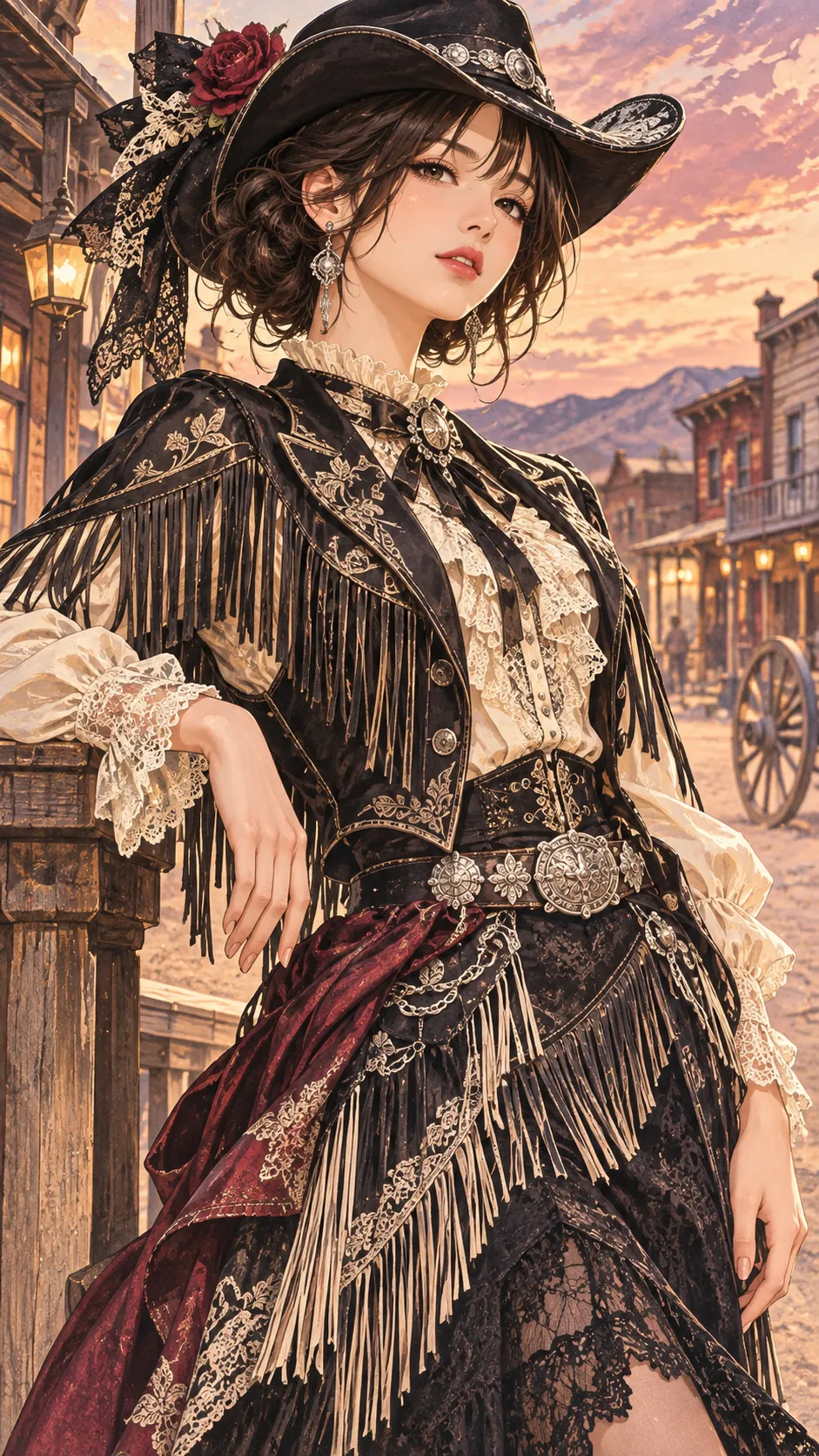
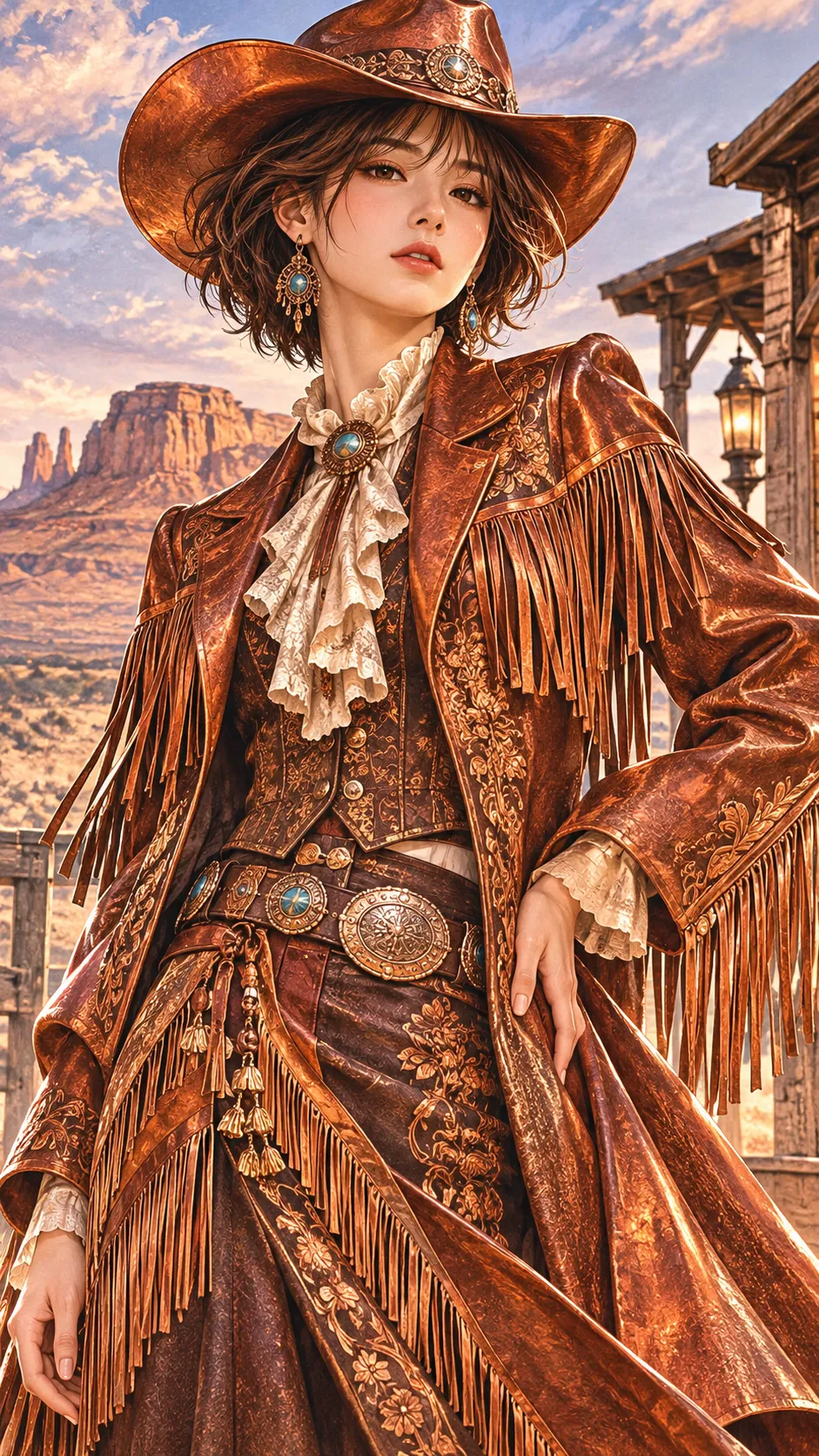
Create a polished, hand-drawn 2D fashion illustration of a fictional adult Japanese woman in vibrant 1970s-inspired luxury Western couture.
Example outputs
Prompt template
- Format
- Text
- Outputs
- Fashion_illustration (image)
The title and subtitle are for artwork management only; do not include them in the generated image.

## Concept
Create a completely 2D, original, elaborate fashion illustration combining 1970s American retro, vintage Western fashion, ornate fringe, colorful embroidery, fine suede and leather, contemporary haute couture, vintage American advertising, and delicate hand-drawn fashion illustration.

The theme is a woman enjoying her own freedom and radiance, unconstrained by her era. Blend the bold colors, free-spirited fashion, and musical exuberance of 1970s America with the strength of Western style. Create a sophisticated retro-Western muse worthy of a luxury fashion advertisement. Do not merely reproduce 1970s clothing or depict a country girl; transform vintage appeal into distinctive contemporary luxury fashion.

## Heroine and face
Depict one fictional, youthful adult Japanese woman. Combine refined, doll-like beauty with the delicate charm of a heroine from modern Japanese girls’ manga. Give her beautiful features, clear eyes, delicate eyelashes, and elegant lips. Convey star quality, confidence, poise, a free spirit, playfulness, and supple strength. Leave her expression, gaze, and head direction open to interpretation.

## Hair and headwear
Do not fix her hairstyle, hair color, length, bangs, part, or arrangement. Freely choose among very short, short, bob, medium, semi-long, long, or updo styles, and among straight, wavy, curled, outward-curled, gathered, or braided hair. A 1970s-inspired hairstyle is optional, but do not default to long hair or large curls.

Whether she wears a Western hat is also open. If included, give it a sophisticated design using details such as leather, suede, embroidery, or metal ornament. If she wears no hat, express the retro-Western character through her clothing and accessories.

## Clothing and retro-Western couture
Create elaborate, original haute couture that blends 1970s American retro with contemporary luxury Western fashion. Choose freely from mustard yellow, burnt orange, cherry red, turquoise, emerald green, cobalt blue, rose pink, cream, camel, chocolate brown, gold, and other fitting colors. Do not make any one color the fixed focal color; create a different, vivid yet sophisticated retro palette for each result.

Freely combine fine suede, leather, vintage denim, velvet, satin, and embroidered fabric. Do not fix the clothing type, length, or silhouette. Options include flared or bell-bottom trousers, high-waisted or tailored trousers, short jackets, embellished vests, blouses, long or midi skirts, dresses, long coats, and coordinated sets. Do not over-rely on bell-bottoms or trousers; skirts and dresses are equally welcome. Blend bold 1970s silhouettes with beautiful contemporary tailoring.

Include fringe as an important design element. Freely create its length, density, placement, material, color, and movement, placing it where it harmonizes with the clothing, such as the shoulders, sleeves, chest, hem, or back. Add details as appropriate, such as delicate Western embroidery, geometric decorative stitching, retro florals, antique silver, gold metalwork, a statement buckle, an embellished belt, or Western boots. Keep embroidery and ornament luxurious while conveying 1970s playfulness and exuberance. Do not overload the outfit with decoration; prioritize a beautiful balance of silhouette, materials, and color.

Avoid revealing necklines and excessive exposure of the abdomen, back, or legs. Any skirt must use opaque fabric.

## Composition and pose
Use the vertical 9:16 frame for a striking, elaborate luxury-fashion-advertisement composition. Blend the bold composition of 1970s vintage advertising with the refined aesthetic of a contemporary luxury fashion magazine. Make the heroine large enough in the frame to show her features, clothing silhouette, retro decoration, and fringe clearly.

Do not fix her pose, body direction, gaze, hand position, action, weight distribution, or camera angle. Freely choose a posture that suits the scene, such as standing naturally, walking, turning around, moving lightly, or holding a confident pose. Do not fix the crop; it may show her from the waist up, above the knees, or full length. Do not favor a particular pose or gesture. Create a striking, glamorous composition reminiscent of a film still or vintage fashion advertisement.

## Anatomy and posture — highest priority
Prioritize natural, anatomically plausible body structure. Keep the relationships among head, neck, shoulders, rib cage, spine, pelvis, and legs natural. Depict the orientation of shoulders and pelvis, torso twist, waist angle, weight distribution, and foot contact naturally. Avoid unnatural twisting between upper and lower body, excessive arching of the lower back, strained waist twists, and implausible shifts of weight.

If she leans against a wall, fence, furniture, or another object, show a natural point of contact and believable support of her weight. Do not use props when they would create awkward contact. Never distort the body to improve the clothing silhouette. Find an appealing fashion pose within a natural posture.

## Arms and hands
Depict two arms total, one on each side, and two hands total, one on each side. Each hand has five fingers, including the thumb. Connect shoulders, elbows, wrists, palms, and fingers naturally. Avoid extra, fused, missing, or unnaturally bent fingers and misshapen joints. Avoid complex arm crossings, excessive overlap of fingers, and extreme perspective. Avoid resting her cheek on a hand or intricately overlapping hands in front of her face. Let hand placement suit the chosen pose naturally.

It is acceptable for arms or hands to be naturally hidden by clothing or outside the frame, but do not make them end awkwardly. Clearly distinguish the body from the clothing so fringe and ornament do not look like extra fingers or limbs. The hands do not need to be conspicuous.

## Background and retro America
Create an elegant, richly evocative background suggesting 1970s American retro and Western culture. Possible inspiration includes vintage American streets, a classic motel, a retro gas station, Western architecture, a space suggestive of music culture, a cinematic street set, or a sunset wilderness. Do not fix the location, time of day, architecture, colors, or direction of light.

Freely incorporate bold areas of color and warm retro hues associated with 1970s advertising, but do not fill the background with excessive geometric patterns or ornamental swirls. Avoid a flat, single-color backdrop; create a sophisticated palette with a sense of depth and glamour. Keep background detail moderate and give the heroine and her outfit priority. Preserve the refinement of a contemporary luxury fashion advertisement rather than making the scene feel old or worn.

## Style and finish
Create a delicate, completely 2D hand-drawn fashion illustration. Blend the bold composition of 1970s vintage American advertising with the refined aesthetic of a contemporary luxury fashion magazine. Finish with beautiful contour lines, rich colors, carefully rendered clothing, and elegant shading.

Use artistic lines and color, suited to a flat illustration, to convey soft suede, fine leather, denim weave, velvet depth, intricate embroidery, gleaming metal ornament, and the graceful flow of fringe. Harmonize the warmth of 1970s color with the vivid color of contemporary fashion.

Do not use photography, live-action realism, 3D CGI, dimensional rendering, a figurine-like look, or excessively typical anime shading. Create an elegant, striking artwork that makes a strong impression in a vertical Threads display.

## Creative variation
Keep the shared themes: 1970s American retro, elaborate fringe, vintage materials, vivid retro colors, and luxury Western style. Do not fix the hairstyle, hair color, whether she wears a hat, expression, pose, clothing type, silhouette, ornament, palette, background, or composition.

Create a retro-Western heroine with a different appeal each time; do not repeatedly favor one hairstyle, a hat, bell-bottoms, a particular outfit, or a particular pose. Aim for variety in fashion design, hairstyle, color, pose, and atmosphere while never sacrificing natural anatomy.

## Final requirements
Vertical 9:16. Completely 2D. One fictional adult Japanese woman. 1970s American retro. Elaborate fringe. Fine suede, leather, and vintage denim. Bold, vivid retro colors. A fusion of contemporary haute couture and Western ornament. Glamorous, sophisticated retro-Western style. Luxury fashion-advertisement aesthetic. Delicate hand-drawn fashion illustration. Do not fix the hairstyle, hair color, whether she wears a hat, outfit, pose, or composition. Prioritize natural, accurate anatomy and hands. No text, logos, signatures, or watermarks.
What you'll create
An original fashion muse combines bold American retro energy with polished modern tailoring. Ornate fringe and colorful surface detail evoke freedom and musical exuberance.
Usage instructions
No additional input is required; the prompt defines a fictional adult Japanese woman and leaves her styling, pose, and setting open for variation. It combines 1970s American retro with luxury Western fashion in a hand-drawn 2D illustration, using a vertical 9:16 composition. To shift the look between generations, vary the palette among the listed retro colors while keeping the fringe and natural anatomy requirements.
Frequently asked questions
Does the brief simply reproduce period clothing?
No. It reinterprets seventies influences as contemporary luxury couture.
Is the medium photographic?
No. It is fully two-dimensional hand-drawn fashion art.


Comments
Tried this prompt? Share what you made, compare results, or ask a question