The Illusionist’s Muse — Circus Couture
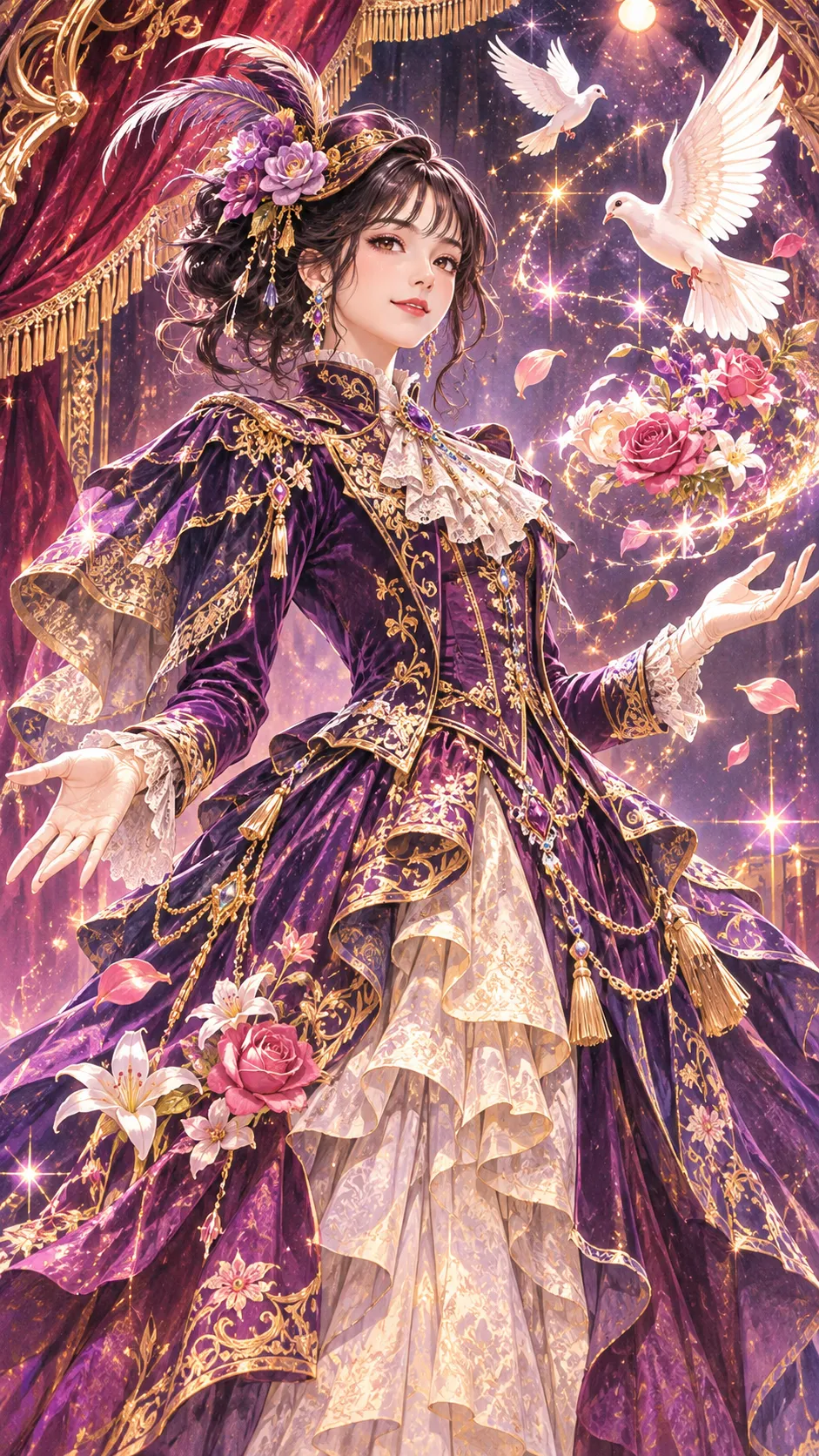
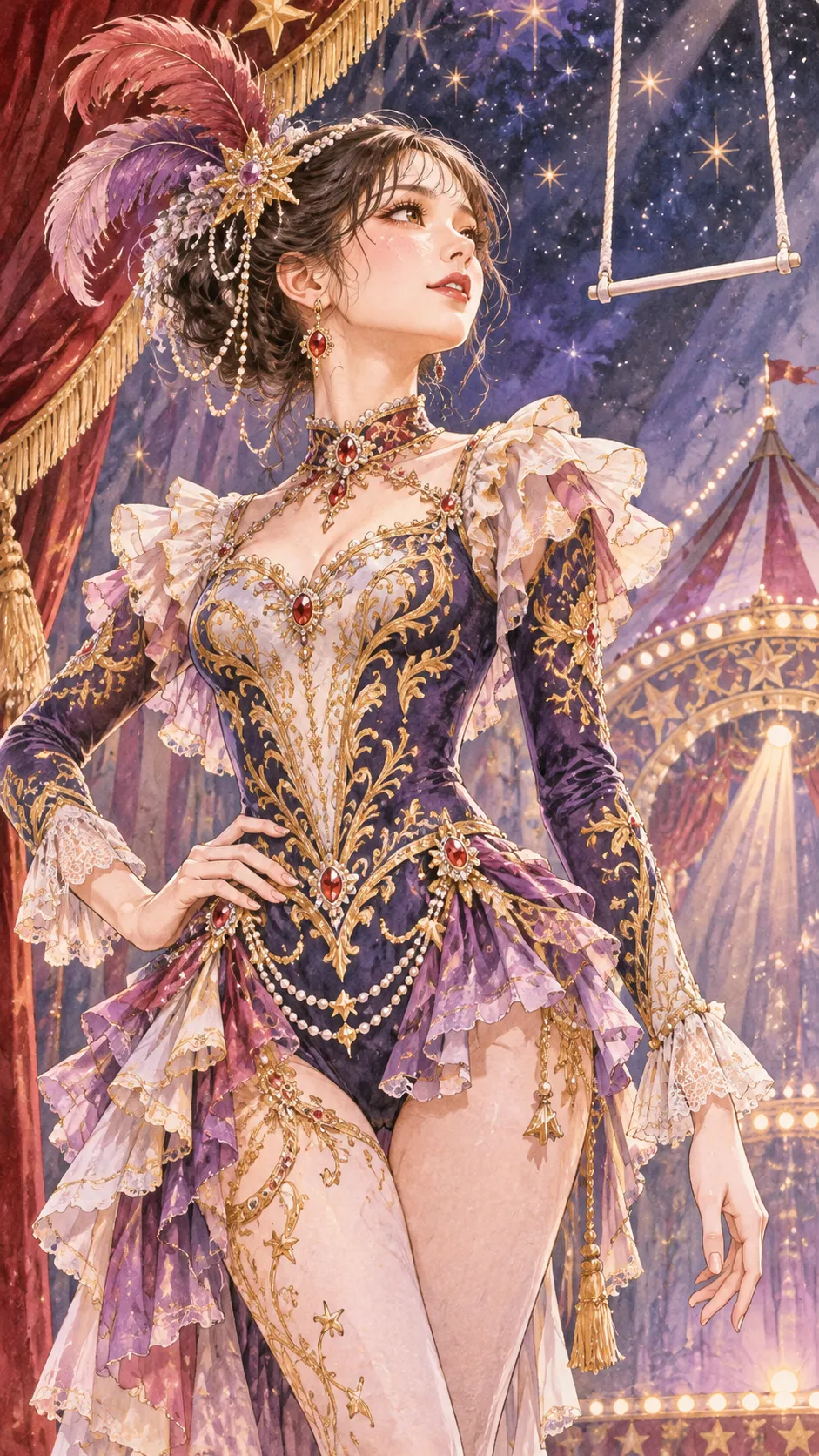
Create a lavish 2D fashion illustration of an adult Japanese illusionist performing a magical feat on a vintage European circus stage, styled like a luxury couture advertisement.
Example outputs
Prompt template
- Format
- Text
- Outputs
- Fashion_illustration (image)
THE CIRCUS COUTURE COLLECTION
No. 04 | THE ILLUSIONIST'S MUSE

The title and subtitle are for organizing the artwork only. Do not render any text in the image.

## Concept
Create an original, lavish, entirely 2D work of hand-drawn fashion illustration that fuses vintage European circus aesthetics, an elegant woman illusionist, varied stage magic, a fantastical magic show, contemporary haute couture, and the look of a luxury fashion advertisement.

The theme is a woman who crosses the boundary between reality and illusion to create a beautiful miracle no one has ever seen. Combine the mystery, surprise, elegance, and playfulness of magic with the artistry of high fashion.

Do not create merely a magician's stage costume. Invent distinctive, refined circus couture worthy of an advertisement for a world-class luxury fashion house.

## The heroine
Depict one fictional, youthful adult Japanese woman. Give her refined features reminiscent of a Western doll, combining delicacy, intelligence, and mysterious beauty. Her expression should be confident enough to captivate an audience, with an alluring air as though she is keeping a secret.

Choose her hairstyle, hair color, hair length, hair arrangement, and expression freely to suit the scene. Balance charm with glamour, elegance, refinement, and mature appeal.

## Couture
Design an exceptional illusionist's fashion look inspired by classic European magician attire, fantastical stage art, and contemporary haute couture. Artistically combine details such as intricate gold-thread embroidery, gemstones, pearls, bijoux, velvet, satin, jacquard, delicate lace, and ornate buttons.

Choose the silhouette freely: possibilities include a decorative tailored jacket, elegant cape, sculptural bodice, asymmetric skirt, or refined trousers. You may incorporate tasteful magic-inspired motifs such as stars, moons, jewels, flowers, butterflies, patterns of fantastical light, or card suits. Do not limit the design to playing-card motifs, a traditional black tailcoat, or a top hat.

Keep chest, abdomen, back, and leg exposure modest. If using a skirt, make it opaque and not too short. Hats, headpieces, jeweled hair ornaments, and long gloves are optional. Choose the colors freely, combining vivid jewel tones, fantastical iridescence, or deep classic colors as appropriate.

Balance glamour with mystery and pursue an original costume design distinct from a ringmaster's outfit.

## Magic performance
Depict a fantastical, elegant moment in a magic show in which the woman creates a miracle. Choose one primary illusion that best suits the artwork, drawing inspiration from the following possibilities; add a supporting effect only if useful. These are examples, and the image does not need to include them all:

- Silk magic: vivid silk scarves dance in the air and transform into flowers or butterflies.
- Flower magic: luxurious roses or fantastical flowers appear from empty space and bloom amid sparkling particles of light.
- Dove appearance: a pure-white dove emerges from soft light and spreads its wings gracefully.
- Ring magic: beautiful, shining metal rings float and overlap in the air.
- Levitation: jewels, antique objects, or beautiful ornaments quietly float against gravity.
- Light illusion: countless particles of light gather to form beautiful shapes such as stars, butterflies, flowers, or gemstones.
- Card magic: elegant playing cards float and dance amid fantastical light.
- Other original magic inspired by a vintage circus show.

Do not make playing cards a required motif. Make the selected illusion clearly recognizable, and render its props and motifs with natural-looking shapes, quantities, and spatial relationships. Do not let effects overlap the woman's face or body awkwardly. Avoid forcing her to hold complicated magic props; prioritize effects that work with a natural pose.

Convey not only fantastical beauty but also the surprise of a magic trick that makes the audience wonder what just happened.

## Pose and composition
Create a lavish vertical 9:16 fashion illustration. As a general composition, show the woman from head to around the knees. Make her face, upper-body costume details, waistline, and skirt or trousers easy to appreciate. Keep her large and central, highlighting the costume's fine embellishments and the magical effect. Do not crop her head awkwardly at the top, including any hat or headpiece.

Choose her body orientation, balance, shoulder angle, arm positions, gaze, and expression freely to suit the artwork. Give her an elegant, captivating stance and convey the grace, motion, and mysterious beauty of a moment when she creates a miracle onstage.

Avoid crossed arms, hands overlapping in front of the face, complicated finger poses, extreme body twists, and extreme perspective. Do not thrust a hand unnaturally toward the camera or make a palm appear disproportionately large. Create a natural pose suited to the magic effect; do not force an exaggerated gesture.

## Anatomy
Depict two arms and two hands, with five fingers on each hand. Render the connections between shoulders, elbows, wrists, and fingers naturally. Avoid fused, duplicated, missing, or unnaturally jointed fingers. Do not let costume ruffles, capes, or ornaments obscure the arms or hands in a way that makes their structure appear unnatural. Balance natural anatomy with a beautiful fashion silhouette.

## Background
Set the scene on a dreamlike, fantastical vintage European circus magic stage. Include details such as sumptuous velvet curtains, antique-gold stage decoration, fantastical spotlights, sparkling stars, and jewel-like particles of light. Create a mysterious, lavish space where the real stage seems to merge with a world of fantasy.

Choose the background colors and lighting to complement the selected illusion. Keep scenery understated so the woman, her couture, and the magical effect remain the focus. Do not depict other performers, a flying trapeze, or complicated stage machinery.

## Art style
Use a refined, entirely 2D, hand-drawn fashion-illustration style, with delicate beautiful outlines, rich color, elegant shading, and intricate decorative detail. Blend the elegance of vintage fashion advertising with the refined aesthetic of contemporary haute couture. Give the woman's features a graceful, delicate appearance and the costume a luxurious look with dimensional ornamentation. Let light, jewels, and metal decorations sparkle while keeping the whole image consistently hand-drawn and 2D.

Do not make it photographic or photorealistic, 3D CGI, figure-like, or like a screenshot from an anime.

## Final requirements
- Vertical 9:16 composition.
- One adult Japanese woman, depicted as a glamorous illusionist.
- Frame her from head to around the knees.
- Invent the hairstyle, costume, colors, and pose freely.
- Keep skin exposure modest.
- Prioritize natural anatomy and hands.
- Freely select one primary effect from the range of magic tricks; do not limit the design to playing cards or a top hat.
- Aim for the glamour and refinement of a luxury fashion advertisement.
- Entirely 2D, hand-drawn fashion art.
- No text, logos, signatures, or watermarks.

Create an artwork full of mystery, glamour, playfulness, and fantastical beauty that immediately captivates the viewer and invites them to wonder what miracle has just taken place.
What you'll create
A lavish hand-drawn fashion artwork joins vintage circus mystery with modern couture. One primary illusion provides the visual focus amid refined theatrical decoration.
Usage instructions
The prompt specifies a vertical 9:16 composition and asks the model to choose one primary illusion from its examples. For a more directed result, replace the instruction to choose freely with a particular effect, such as a dove appearing or flowers blooming.
Frequently asked questions
Is the design limited to a top hat and cards?
No. It explicitly welcomes varied stage-magic ideas beyond those motifs.
Should the collection heading be printed?
No. Organizing text stays outside the illustration.


Comments
Tried this prompt? Share what you made, compare results, or ask a question