The Royal Hospital Visit — Royal Fashion Manga Art
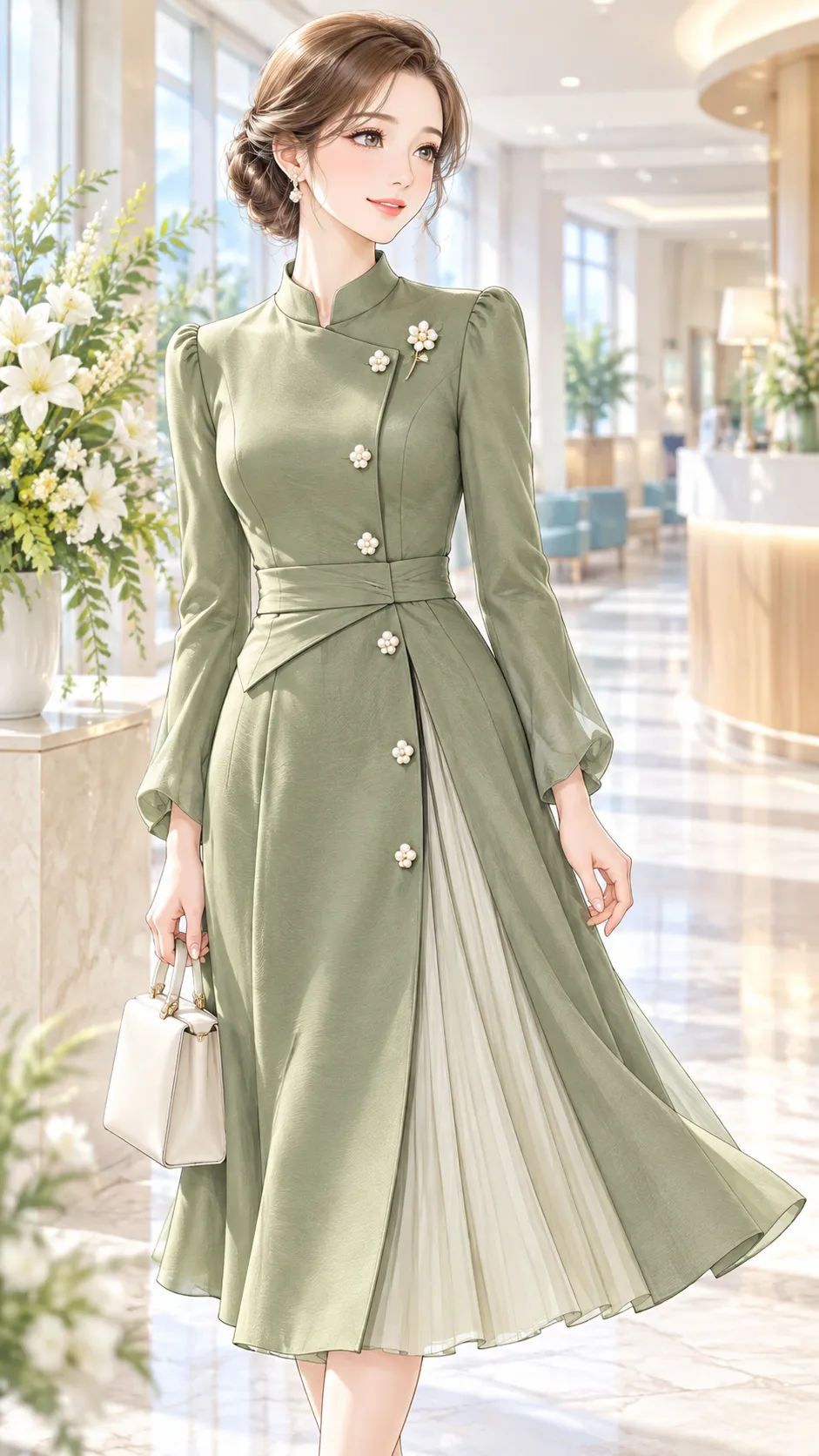
Create an elegant 2D shoujo-manga fashion illustration of a fictional adult royal woman on an official visit to a modern healthcare or welfare facility.
Example outputs
Prompt template
- Format
- Text
- Outputs
- Royallydressedwomaninahealthcarefacility (image)
Create an exquisitely detailed, fully 2D shoujo-manga fashion illustration inspired by the refined Western-style clothing worn by modern Japanese female members of the imperial family during official visits to hospitals, medical institutions, welfare facilities, and rehabilitation centers.

## Concept

The central figure is one fictional adult woman whose poised, aristocratic beauty evokes a finely made Western doll, combined with the delicate charm of a shoujo-manga heroine. Set the scene in a bright, clean, contemporary healthcare or welfare facility. Convey a royal woman who wishes people good health and happiness and takes a warm, thoughtful interest in the work of medical and welfare professionals. Express the refinement, courtesy, kindness, intelligence, and restrained elegance associated with Japanese imperial fashion.

Do not portray a real member of a royal family or reproduce a specific real outfit. Create original royal fashion.

## Choose and design the outfit

Each time, create a new outfit for an official visit to a healthcare or welfare facility. First choose one of the following ten outfit categories as an equally viable option, then make its defining characteristics clearly visible:

1. **REFINED SHEATH DRESS** — An intelligent, formal dress with a clean, elongated silhouette and beautiful tailoring.
2. **GRACEFUL PLEATED DRESS** — An elegant dress that makes use of delicate pleats and the natural movement of fabric.
3. **MODERN COAT DRESS** — A sophisticated coat dress with a beautiful front opening and sculpted paneling.
4. **ELEGANT BLOUSE ENSEMBLE** — A softly styled ensemble pairing an original blouse with a refined skirt.
5. **CLASSICAL TWEED COUTURE** — A classic outfit showcasing fine tweed texture and a polished silhouette.
6. **SOPHISTICATED PANTS ENSEMBLE** — Contemporary royal fashion pairing a beautiful blouse or tunic-length top with tailored straight-leg trousers.
7. **SOFT DRAPED DRESS** — A warm, elegant dress shaped by soft draping and a natural fabric fall.
8. **CONTEMPORARY ASYMMETRIC COUTURE** — Sophisticated modern fashion incorporating an asymmetrical collar or sculptural paneling.
9. **ROMANTIC FORMAL TWO-PIECE** — A refined skirt paired with a top featuring a beautifully designed neckline or sleeves.
10. **ARCHITECTURAL ROYAL FASHION** — Contemporary royal couture with sculptural sleeves, a dimensional waist, or distinctive paneling.

Do not repeatedly turn the outfit into a similar jacket-and-flared-skirt combination. Make the neckline, sleeves, waist, hem, and overall silhouette meaningfully distinct from one design to the next, not merely different in color.

## Select the colors independently

After choosing the outfit category, independently choose its main color from these ten equally valid color families. Do not let the healthcare setting, a generalized idea of feminine gentleness, or a conventional idea of royal fashion automatically determine the outfit color:

1. **ROSE FAMILY:** rose, coral, pink
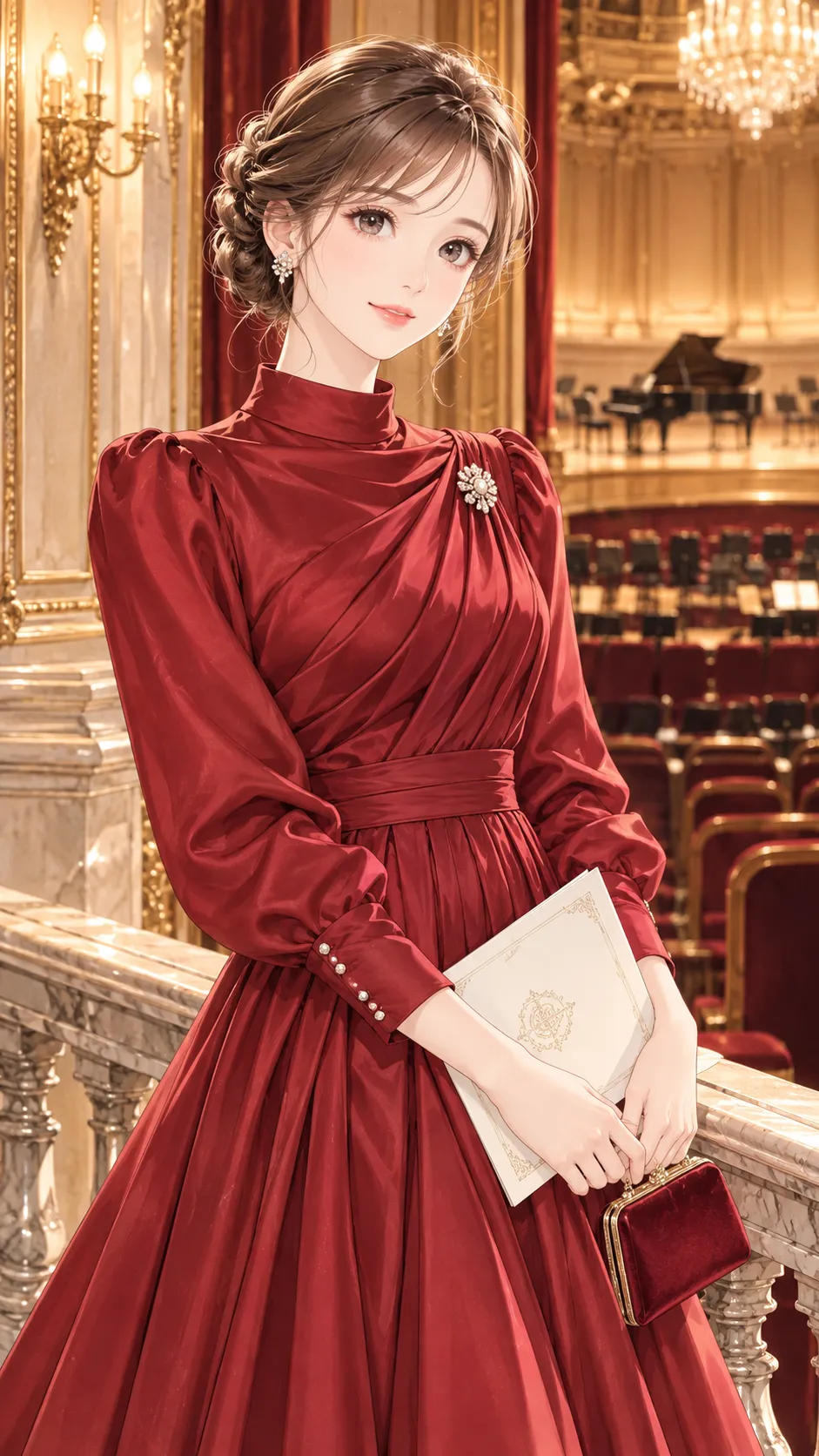
2. **RED FAMILY:** ruby red, wine red, burgundy
3. **BLUE FAMILY:** royal blue, navy, sky blue
4. **GREEN FAMILY:** emerald, sage, mint
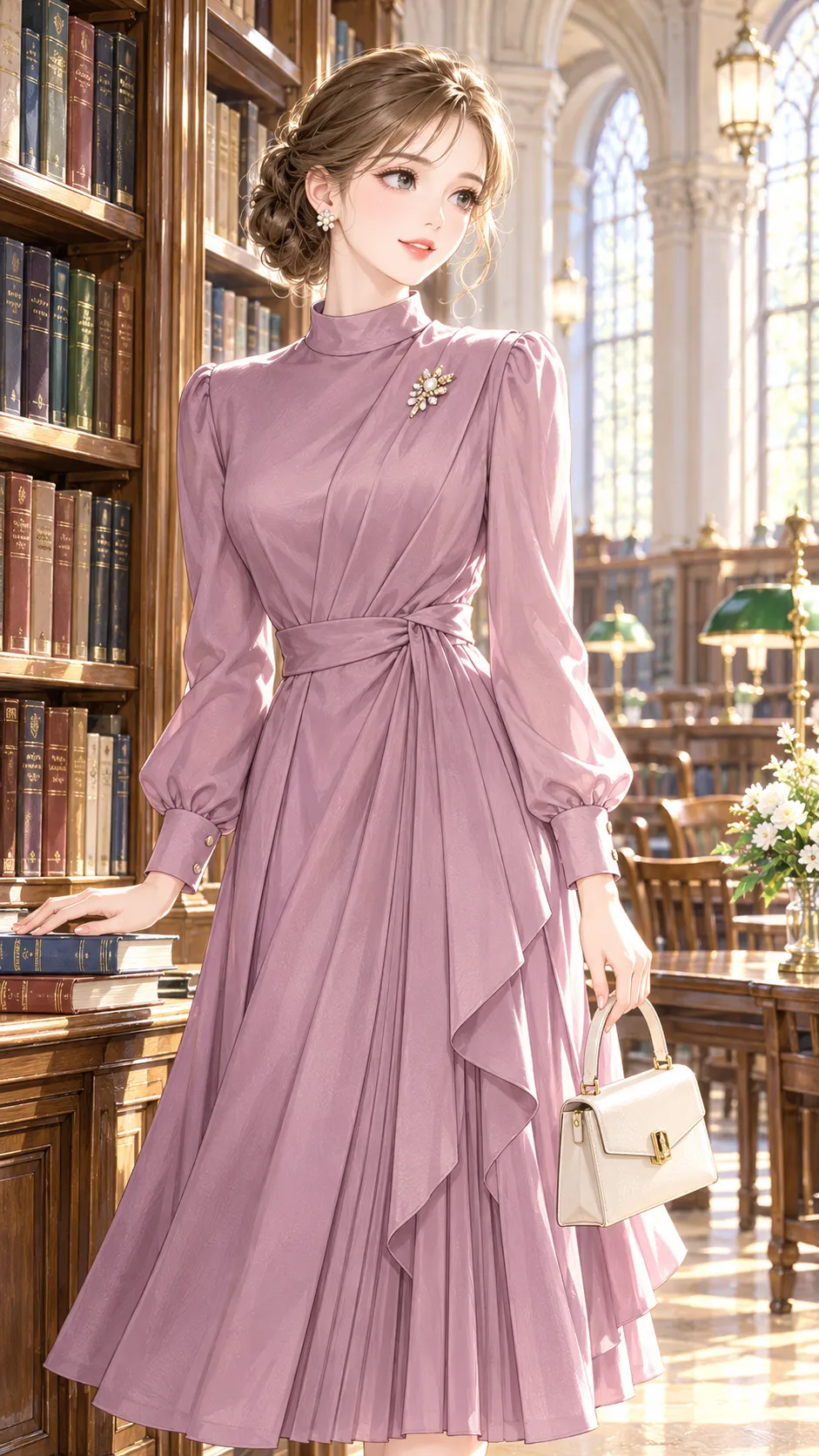
5. **PURPLE FAMILY:** lavender, lilac, amethyst
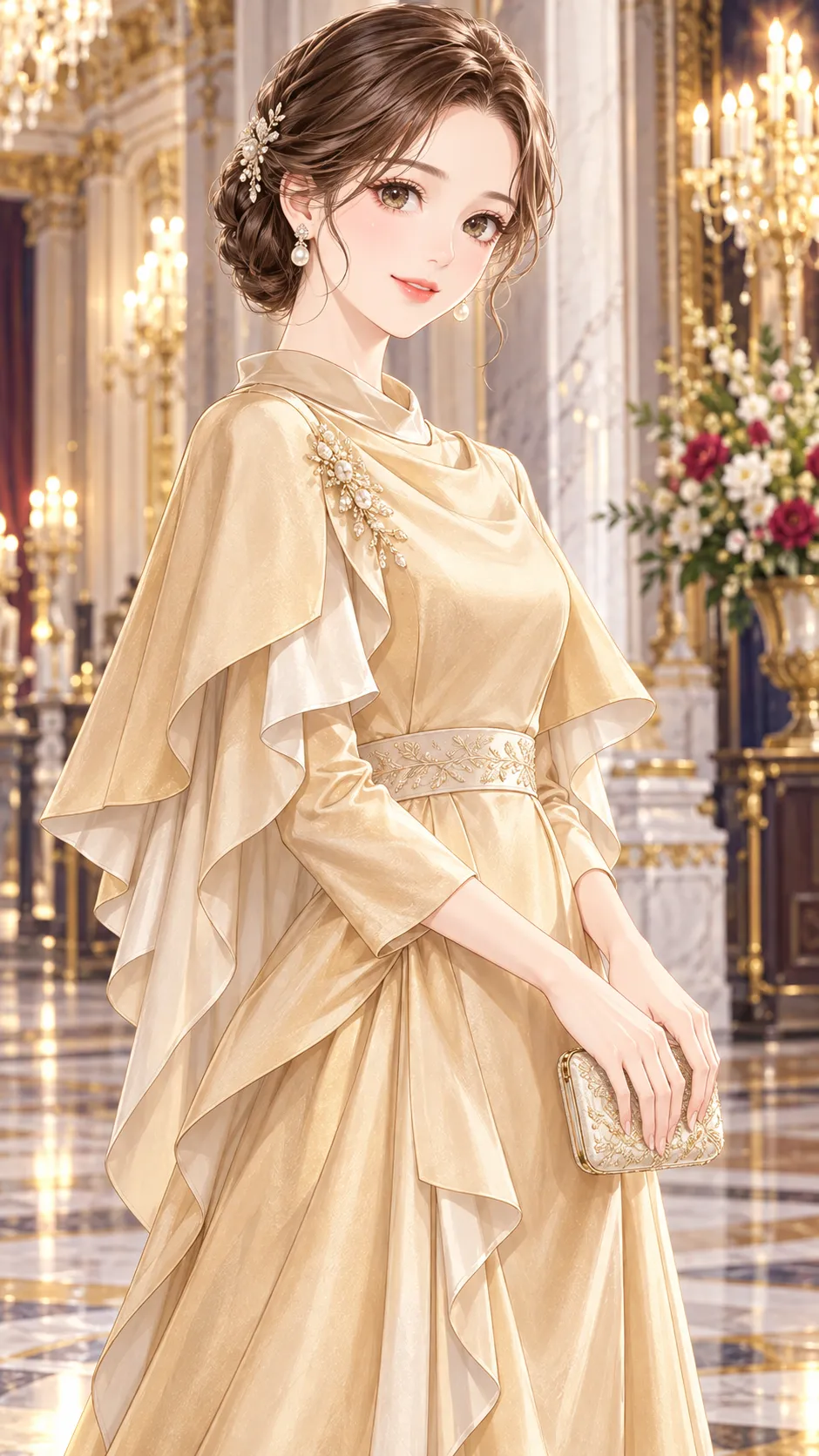
6. **YELLOW FAMILY:** cream, champagne, yellow
7. **ORANGE FAMILY:** apricot, orange, terracotta
8. **WHITE FAMILY:** ivory, white, pearl
9. **BROWN FAMILY:** greige, mocha, brown
10. **MONOCHROME FAMILY:** silver gray, charcoal, black

Treat every family as equally available; do not make pink, blue, or ivory the default. Use a broad range of pale, vivid, deep, and subdued colors. Do not lock particular colors to particular outfit categories or let the background dictate the outfit’s main color. Vary the color arrangement as well: use a solid color, tonal variations, or an elegant two-color combination. Do not favor colors that resemble previous works.

Express refinement and kindness through beautiful tailoring, quality materials, a sophisticated silhouette, and a gentle expression—not through a particular color.

## Silhouette, materials, and details

Design the neckline, sleeves, waist, and hem to suit the chosen outfit category. Possible necklines include a stand collar, high neck, boat neck, round neck, square neck, asymmetrical collar, or collarless neckline. Sleeve options include neat long sleeves, three-quarter sleeves, restrained puff sleeves, sculpted set-in sleeves, or soft flared sleeves. Waist options include natural shaping, a high waist, a straight line, a peplum, sculptural paneling, or a narrow belt. Skirts may be A-line, straight, semi-fitted, subtly flared, pleated, or softly draped. For trousers, use refined straight lines or a restrained wide-leg silhouette in quality fabric.

Keep the chest fully and modestly covered, with no exposed shoulders, back, or abdomen. Skirts should generally fall below the knee to mid-calf and use opaque fabric. Do not make large bows, excessive ruffles, or floral patterns the default. Give equal consideration to the beauty of clean tailoring and the beauty of delicate decoration.

Choose suitable quality materials such as silk, crepe, jacquard, shantung, tweed, satin, or fine lace. Carefully depict soft fabric sheen, weave, natural drape, and dimensional tailoring. Where appropriate, add tasteful buttons, fine piping, delicate embroidery, restrained lace, or a small brooch. Also consider beautifully tailored, unpatterned outfits.

A hat is optional. Prioritize a clean, polished appearance appropriate for a healthcare or welfare visit. If worn, the hat should be small and understated; if not, express elegance through a beautiful hairstyle. Add accessories only as appropriate, such as pearl earrings, a delicate necklace, an elegant brooch, fine jewelry, or a small handbag. Avoid excessive layering of accessories; value the elegance of restraint.

## The heroine

Depict an adult woman with poised, aristocratic, doll-like beauty and the delicate charm of a shoujo-manga heroine. Give her a naturally rounded face, large, clear, luminous eyes, fine eyelashes, an elegant nose, and a soft mouth. Her face should look mature rather than childlike, with natural, beautiful proportions. Choose a hairstyle that suits the outfit, such as short hair, a bob, half-up hair, a classic chignon, or another elegant updo. Give her a warm, gentle smile that conveys compassion for others.

## Pose and scene

Show the natural, graceful bearing of a royal woman on an official visit to a healthcare or welfare facility. Choose a fitting moment, for example:
- Smiling gently in a bright hospital lobby.
- Walking gracefully down a beautiful corridor.
- Quietly viewing an exhibit about medical or welfare work.
- Turning naturally beside a window in the facility.
- Standing elegantly with a small handbag in one hand.
- Standing beside an exhibit panel introducing medical activities.
- Wearing a warm expression in a bright communal space.
- Walking slowly through a beautiful staircase or gallery inside the facility.

Do not fix the pose; choose natural movement appropriate to the outfit and setting. Avoid awkwardly crossed arms, resting the chin on a hand, and extreme body twists. Even when the scene suggests interaction with medical staff or patients, depict only the central woman; no other people should appear.

## Background and composition

Use a bright, clean, contemporary hospital or medical, welfare, or rehabilitation facility. Choose a suitable setting, such as a sophisticated hospital entrance filled with natural light; a lobby with softly colored interiors; a bright corridor lined with large windows; a communal area with the warmth of wood; an elegant exhibition hall introducing medical activities; a bright waiting area decorated with green plants; or a medical facility where modern architecture harmonizes with soft lighting.

The background should feel clean, reassuring, and warm without drawing attention away from the woman. Depict medical equipment and exhibits with natural shapes; avoid complex lettering and implausible machinery. Favor shared public spaces appropriate for an official visit rather than a patient room or an examination in progress.

Show exactly one person: the fictional adult woman. Choose the composition that best showcases the outfit. It may be framed from the waist, knees, or upper thighs upward, or show her full figure; do not automatically favor a full-body composition. Prioritize a framing that communicates her beautiful features, neckline, sleeves, waist, and the texture of the materials.

## Art style and required constraints

Create exquisite, fully 2D shoujo-manga illustration with delicate hand-drawn contours, large translucent beautiful eyes, soft shading, and a vivid, sophisticated palette. Carefully render garment construction, fabric texture, the gleam of accessories, and the flow of her hair. The result should evoke a lavish full-color cover illustration from a contemporary shoujo manga, combining refinement and delicate charm.

Do not use a photographic or live-action appearance, 3D, or CGI rendering. Use a vertical 9:16 composition. Include no text, logos, or watermark. Depict exactly one fictional adult woman wearing clean, intelligent Western-style clothing appropriate for an official visit to a healthcare or welfare facility. Vary the outfit category, silhouette, neckline, sleeves, materials, and colors freely, and make structural differences in the clothing clear. Do not treat blue, pink, or ivory as default colors. Treat dresses, two-piece outfits, coat dresses, and trouser outfits as equally viable. A hat and gloves are optional.

Avoid excessive exposure of the chest, shoulders, back, abdomen, or legs. Any skirt must be made of opaque fabric. Keep clothing construction and layering natural. Use beautiful, natural adult proportions. The woman must have two arms, two hands, and two legs, with five naturally formed fingers on each hand; do not duplicate or omit fingers. Avoid crossed arms and resting her chin on a hand. Include no mirrors or reflections. Do not recreate the likeness of a real royal person or a specific real outfit.

## Generation sequence

1. **Choose the outfit category:** Select one of the ten categories and complete an original design whose defining features are clear.
2. **Choose the colors independently:** Select the main color from the ten color families without defaulting to conventional healthcare or royal colors; consider the full range.
3. **Build the details:** Combine the neckline, sleeves, waist, hem, materials, and decoration to suit the chosen category and colors.
4. **Choose the character and staging:** Select a suitable hairstyle, accessories, pose, and composition for the completed outfit.
5. **Unify the scene:** Harmonize the heroine’s delicate beauty, original royal fashion, and the clean, warm atmosphere of the healthcare or welfare facility.

Create a warm atmosphere of compassion and kindness toward people, distinct from scenes at garden parties, welcoming ceremonies, award ceremonies, imperial banquets, museum visits, charity galas, concerts, diplomatic receptions, or visits to academic institutions. Do not default to a similar jacket ensemble or pale-colored outfit. Explore a wide range of colors and fashion designs, and finish with an exceptional royal fashion artwork combining refinement, delicate charm, kindness, and originality.
What you'll create
A fictional adult royal woman appears in a clean healthcare or welfare setting. Thoughtful expression and original refined clothing give the delicate shoujo fashion scene a kind, approachable mood.
Frequently asked questions
Does this request depict a medical procedure?
No. It centers a warm official visit and wishes for health and happiness.
What kind of venue is permitted?
A hospital, medical institution, welfare facility or rehabilitation center.


Comments
Tried this prompt? Share what you made, compare results, or ask a question